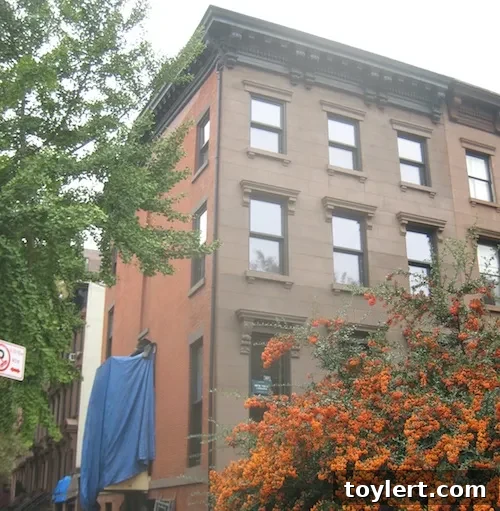
A Renaissance in Clinton Hill: The Transformative Passive House Renovation of 228 Washington Avenue
In the heart of Brooklyn’s historic Clinton Hill neighborhood, a remarkable transformation is underway at 228 Washington Avenue. This corner brownstone, once marked by years of neglect, is now undergoing a meticulous and groundbreaking renovation that promises to redefine the future of sustainable historic preservation. What makes this project particularly noteworthy is its ambitious goal: to merge a full interior renovation to stringent Passive House standards with the faithful restoration of its original architectural grandeur, including a stunning new cornice and an authentic bay window.
This endeavor represents a pioneering effort, potentially marking the first time a Passive House renovation also embraces such extensive historic detail restoration. It’s a testament to a vision that prioritizes both environmental responsibility and the enduring beauty of Brooklyn’s architectural heritage. The homeowners, in collaboration with the innovative minds at Loading Dock 5 architects, have embarked on a journey to breathe new life into this property, ensuring it stands as a beacon of energy efficiency without sacrificing its intrinsic character.
Unveiling a New Era for a Historic Gem
The visual evidence of this restoration is already striking. Observers can marvel at the recently installed cornice on 228 Washington Avenue, a feature that immediately elevates the building’s aesthetic appeal and restores much of its original Victorian charm. This isn’t merely a cosmetic upgrade; it’s a careful act of historical accuracy, bringing back a decorative element that had long been lost or severely deteriorated.
Beyond the impressive facade, the project delves deep into the structure’s core. The interior renovation is designed to meet Passive House standards, a globally recognized benchmark for ultra-low energy buildings. This means optimizing insulation, achieving exceptional airtightness, installing high-performance windows, and integrating advanced ventilation systems to create a supremely comfortable, healthy, and energy-efficient living environment. Simultaneously, the restoration efforts extend to critical exterior elements, with work having just commenced on the intricate bay window, another signature feature that defines the brownstone’s unique character.
The synergy between cutting-edge sustainable technology and traditional craftsmanship is at the heart of this project. It challenges the conventional notion that modern efficiency must come at the expense of historical authenticity, proving that with careful planning and expert execution, both can be achieved harmoniously.
The Enduring Legacy of Brooklyn Brownstones and the Revival of 228 Washington
Brooklyn’s brownstones are more than just buildings; they are cultural icons, emblematic of a bygone era’s craftsmanship and the borough’s rich history. Built primarily in the 19th and early 20th centuries, these distinctive row houses with their brown sandstone facades have shaped the urban landscape and character of neighborhoods like Clinton Hill, Park Slope, and Cobble Hill.
Unfortunately, many of these architectural treasures have faced periods of neglect over the decades, enduring wear and tear, insensitive modifications, or simply a lack of necessary maintenance. The brownstone at 228 Washington Avenue was no exception, having suffered through many years of neglect before its current owners stepped in with a vision for its complete rehabilitation. This narrative of decline and subsequent revival is a common, yet always inspiring, theme within Brooklyn’s architectural story. The restoration of properties like 228 Washington Avenue is crucial not only for preserving individual structures but also for maintaining the architectural integrity and historic charm of entire neighborhoods.
Embracing Passive House Standards: A Commitment to Sustainable Living
What is Passive House?
Passive House (or Passivhaus) is a rigorous, voluntary standard for energy efficiency in buildings, resulting in ultra-low energy consumption for heating and cooling, and a significantly reduced ecological footprint. Developed in Germany, the concept is simple yet profound: design and construct buildings that are so energy-efficient they require minimal energy input to maintain comfortable indoor temperatures. Key principles include:
- Superior Insulation: Utilizing thick, continuous layers of insulation to minimize heat transfer through walls, roofs, and floors.
- Airtightness: Meticulously sealing the building envelope to prevent uncontrolled air leakage, which is a major source of energy loss.
- High-Performance Windows and Doors: Installing triple-pane, low-emissivity windows and insulated doors to eliminate thermal bridges.
- Thermal Bridge-Free Design: Careful detailing to avoid areas where heat can easily escape or enter the building structure.
- Heat Recovery Ventilation (HRV) or Energy Recovery Ventilation (ERV): A system that continuously supplies fresh air while recovering heat (or coolness) from the outgoing stale air, ensuring excellent indoor air quality without significant energy loss.
Why Passive House for a Historic Renovation?
Applying Passive House standards to an existing historic brownstone presents unique challenges, yet the benefits are immense. While new construction can be designed from the ground up with these principles in mind, retrofitting an older building requires creative solutions and a deep understanding of both historic structures and modern building science. The advantages for 228 Washington Avenue include:
- Dramatic Energy Savings: Significant reduction in heating and cooling costs, leading to long-term financial benefits for the homeowners.
- Exceptional Comfort: Stable indoor temperatures year-round, elimination of drafts, and comfortable surface temperatures throughout the home.
- Superior Indoor Air Quality: Continuous filtration of fresh air, reducing allergens, pollutants, and humidity levels.
- Increased Building Longevity: A well-insulated and airtight envelope protects the building structure from moisture and temperature fluctuations, extending its lifespan.
- Reduced Environmental Impact: A smaller carbon footprint through minimized energy consumption, aligning with broader goals of sustainability.
This project demonstrates that it’s possible to upgrade a century-old structure to modern, energy-efficient standards without compromising its historical integrity. It’s a powerful statement about the adaptability and potential of existing building stock in the fight against climate change.
Meticulous Historic Restoration: Preserving the Soul of the Structure
The restoration component of the 228 Washington Avenue project is as crucial as its energy efficiency goals. Brownstones are celebrated for their intricate detailing, and preserving these elements is paramount to retaining the building’s soul and contributing to the authentic character of Clinton Hill.
The Grandeur of the Cornice
The cornice, a decorative molding that crowns the top of a building, is a defining feature of many historic brownstones. Its restoration at 228 Washington Avenue is a meticulous undertaking, requiring skilled artisans to recreate or repair elements based on historical photographs and architectural remnants. A well-executed cornice not only enhances curb appeal but also plays a vital role in protecting the facade from water damage. The new cornice is a clear sign of the owners’ dedication to bringing the building back to its original glory, acting as a visual crown for the entire structure.
Reviving the Bay Window
The bay window, often projecting from the front of the building, adds depth, light, and architectural flair. Its restoration is complex, involving structural repairs, careful replication of historic millwork, and the integration of high-performance glazing that meets Passive House requirements while maintaining a historically appropriate appearance. This blend of old and new—the aesthetic of a vintage bay window coupled with modern thermal performance—exemplifies the project’s innovative approach. The bay window is not just an architectural element; it’s a connection to the street, offering residents expansive views and inviting natural light deep into the living spaces.
The craftsmanship involved in these historic restorations is a rare and valuable skill. It speaks to a commitment to quality and an appreciation for the artistry of past builders, ensuring that these beautiful details will continue to be admired for generations to come.
A Collaborative Vision: Homeowners, Architects, and Community
The success of a project as ambitious as 228 Washington Avenue relies heavily on a collaborative vision. Loading Dock 5 architects, known for their innovative and sustainable design solutions, have played a pivotal role in marrying the rigorous demands of Passive House with the delicate requirements of historic preservation. Their expertise ensures that every design decision serves both aesthetic and performance objectives.
Equally important are the homeowners, whose dedication and foresight have driven this entire endeavor. Their commitment to investing in both the planet’s future and their home’s past is truly inspiring. They have taken the commendable step of documenting the renovation’s progress, making it accessible to a wider audience. You can track the fascinating journey of this renovation project at the owner’s website, offering a transparent look into the challenges and triumphs of such a complex undertaking.
The impact of such a project extends beyond the property line. In Clinton Hill, a neighborhood proud of its historic housing stock, the meticulous restoration and sustainable upgrade of 228 Washington Avenue serves as an inspiration. It can encourage other property owners to consider similar paths, potentially sparking a wider movement for green historic preservation and contributing to the overall beauty and sustainability of the community. It reinforces the value of preserving our built heritage while adapting it for a more sustainable future, positively influencing property values and community pride.
Tracking the Transformation: A Public Journey
For those fascinated by architecture, sustainable building practices, or simply the dramatic revival of a historic structure, the owner’s website provides a unique opportunity to follow the renovation in detail. It’s a valuable resource that showcases the intricate steps involved, from initial demolition to the final touches of a Passive House brownstone. This transparency allows enthusiasts and professionals alike to learn from this pioneering project and witness its evolution firsthand.
Conclusion: A Model for Future Renovations
The renovation of 228 Washington Avenue in Clinton Hill is more than just a home improvement project; it’s a significant case study in the evolving field of architectural restoration and sustainable design. By successfully integrating Passive House standards with the meticulous preservation of historic details, it sets a new benchmark for how our cherished historic buildings can be adapted for the 21st century and beyond. This brownstone is poised to become a living example of how we can honor our past while building a greener, more energy-efficient future. It stands as a testament to the fact that beauty, history, and sustainability can not only coexist but thrive together, offering a powerful blueprint for future-focused historic renovations across Brooklyn and beyond.
Reno Porn: 228 Washington Avenue Gets Its Cornice [Brownstoner]
Restoration of Clinton Hill Brownstone Underway [Brownstoner] GMAP