Discovering Park Slope’s Hidden Architectural Gems: The Enduring Charm of Queen Anne Row Houses on 14th Street
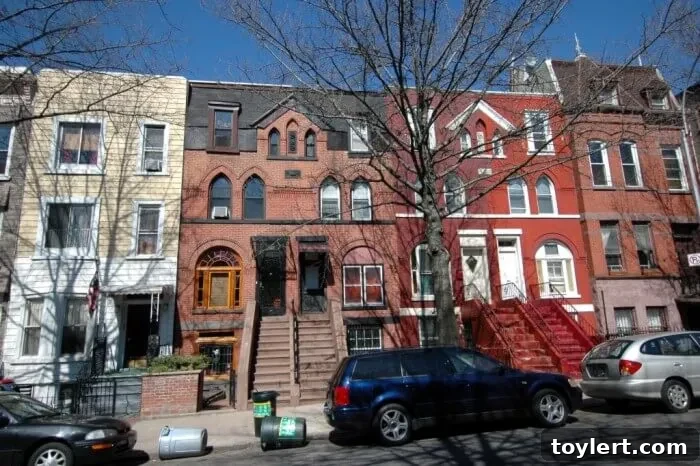
Nestled within the picturesque and historically rich neighborhood of Park Slope, Brooklyn, lie two truly delightful architectural marvels: a pair of Queen Anne row houses that stand as a testament to a bygone era of craftsmanship and design. These modest yet captivating cottages, located on 14th Street, offer a fascinating glimpse into the late 19th-century residential landscape of Brooklyn, embodying a unique blend of historical significance and enduring aesthetic appeal.
Often, the most profound stories in architecture are found not in grand, monumental structures, but in the subtle beauty of residential buildings that quietly shape a community’s character. Such is the case with these charming homes, which, despite the relative obscurity of their architect and developer, possess an undeniable magnetic presence, inviting passersby to pause and appreciate their intricate details.
Key Details: The Queen Anne Cottages of 14th Street
- Type: Row houses
- Address: 363-364A 14th Street
- Cross Streets: Between 6th and 7th Avenues
- Neighborhood: Park Slope, Brooklyn
- Year Built: 1886
- Architectural Style: Queen Anne
- Architect: Charles L. Lincoln
- Other Noteworthy Works by Architect: Charles L. Lincoln’s contributions extend beyond these charming residences to include various structures within the iconic Prospect Park, such as restrooms, potting sheds, and distinctive boulder bridges. His influence also shaped other projects across Brooklyn and Queens.
- Landmarked Status: No
A Glimpse into Park Slope’s Architectural Heritage
Park Slope is renowned for its magnificent brownstones and an architectural tapestry that tells the story of Brooklyn’s rapid expansion and prosperity in the late 19th and early 20th centuries. The neighborhood’s streets are lined with exemplary specimens of Romanesque Revival, Neo-Grec, and Italianate styles, making it a living museum of urban residential design. Within this illustrious context, the Queen Anne cottages on 14th Street, though perhaps less grand than some of their neighbors, hold a significant place, representing a particular aesthetic trend that flourished during their construction in 1886.
The development of Park Slope into a desirable residential area was fueled by improvements in transportation and a growing middle and upper class seeking spacious homes away from the bustling city center. Architects and developers converged on the area, creating a harmonious blend of styles that contribute to the neighborhood’s unique character. These Queen Anne houses are a perfect illustration of how diverse architectural expressions contributed to the rich urban fabric we appreciate today.
The Allure of Queen Anne Architecture in Brooklyn
The Queen Anne style, popular in the United States from approximately 1880 to 1910, is celebrated for its picturesque and often whimsical qualities, a stark contrast to the more rigid styles that preceded it. It drew inspiration from a revival of earlier English architectural traditions, but American interpretations evolved into a distinctive and highly decorative form. Key characteristics of Queen Anne architecture include:
- Irregular Massing: Asymmetrical facades, often with varied rooflines and projections.
- Varied Wall Textures: A playful mix of materials such as clapboard, shingles, brick, stone, and terra cotta, often applied in decorative patterns.
- Decorative Woodwork: Ornate spindles, turned columns, carved panels, and decorative trim, particularly on porches and gables.
- Bay Windows and Turrets: These elements add visual interest and often provide natural light and expansive views.
- Stained Glass: Used to add color and intricate patterns, particularly in windows and doorways.
- Tall Chimneys: Often prominent and decoratively treated.
The Queen Anne cottages on 14th Street exemplify many of these features, albeit in a more subdued and “modest” manner, which speaks to their designation as cottages rather than grand mansions. Their charm lies in this tasteful restraint, showcasing the style’s adaptability to smaller-scale residential designs without sacrificing its inherent decorative spirit. The use of varied textures and intricate detailing, even on a smaller footprint, creates a sense of warmth and inviting domesticity that resonates strongly with the Park Slope aesthetic.
Charles L. Lincoln: Architect of Enduring Charm
The architect behind these captivating homes, Charles L. Lincoln, is a figure whose name may not immediately spring to mind when discussing Brooklyn’s most famous architects. Yet, his contributions to the borough’s built environment are undeniable. While the original content notes he is “little remembered today,” his legacy is quietly preserved in structures like these Park Slope cottages and, more prominently, within the vast expanse of Prospect Park.
Lincoln’s work in Prospect Park, including functional yet aesthetically pleasing structures like restrooms, potting sheds, and the distinctive boulder bridges, demonstrates a versatility and an understanding of how architecture can integrate seamlessly with natural landscapes. These park structures, often overlooked but essential to the park’s functionality and beauty, reflect a thoughtful design philosophy. His ability to craft both public utilitarian buildings and private residences, all while imbuing them with character, speaks to a talent that perhaps deserves more recognition. The modesty of his documented output, or at least its public perception, doesn’t diminish the quality or enduring impact of his designs.
Many architects of the late 19th century operated locally, contributing significantly to their communities without necessarily achieving widespread national fame. Lincoln appears to be one such individual, whose work, though regionally focused, played a crucial role in shaping the residential and recreational spaces of Brooklyn and Queens. His Queen Anne cottages in Park Slope serve as a delightful reminder of the skilled craftspeople and designers whose collective efforts built the diverse urban fabric we cherish today.
The Unsung Developers and Their Legacy
Equally integral to the story of these homes, and indeed countless others throughout Brooklyn, are the developers whose names have also faded into obscurity. The late 19th century was a boom period for urban development, driven by an expanding population and the burgeoning industrial economy. Developers, often operating with significant risk and ambition, acquired parcels of land, commissioned architects, and oversaw the construction of entire blocks of housing.
These figures, though anonymous to most modern inhabitants, were the engine of urban growth. They understood the market demands, the prevailing tastes, and the practicalities of building efficiently and attractively. Their collaborative efforts with architects like Charles L. Lincoln resulted in the distinct streetscapes that define neighborhoods like Park Slope. The fact that the developer’s name for these particular cottages has disappeared is not uncommon; the focus of historical records often gravitates towards the architect or the eventual prominent residents. However, without these entrepreneurial individuals, the vision for these “delightful houses” would never have materialized.
The legacy of these unsung developers is the enduring quality and charm of the homes they built. These houses have stood for well over a century, adapted to changing times, and continue to provide elegant residences, underscoring the foresight and sound construction practices of their original creators.
More Than Just Houses: A Story of Preservation and Community
Despite their beauty and historical significance, these Queen Anne cottages are not landmarked. This status, or lack thereof, highlights an important aspect of urban preservation. While landmarking protects certain key structures, countless other buildings contribute significantly to the aesthetic and historical character of a neighborhood without official designation. These unlandmarked gems rely on the stewardship of individual homeowners and the collective appreciation of the community for their ongoing preservation.
The story of 363-364A 14th Street is, therefore, not just about bricks and mortar, but about the continuous life of a street, a block, and a neighborhood. These houses have witnessed generations of families, changing social landscapes, and the ebb and flow of Brooklyn’s vibrant history. They are living artifacts that contribute to the unique identity of Park Slope, a neighborhood celebrated for its architectural integrity and strong sense of community.
Their continued presence, meticulously maintained by their current owners, demonstrates a profound respect for architectural heritage and the timeless appeal of well-designed homes. They represent the quiet dignity of residential architecture, reminding us that beauty and historical value aren’t exclusive to grander, officially recognized sites.
Exploring Park Slope: A Journey Through Time
For anyone with an interest in urban history, architecture, or simply the captivating charm of Brooklyn, a visit to Park Slope offers a rewarding experience. Walking along streets like 14th Street, one can truly appreciate the intricate details and varied styles that make the neighborhood so special. These Queen Anne cottages stand as inviting beacons, prompting curiosity about the lives lived within their walls and the hands that shaped their forms over a century ago.
They are a testament to the fact that even structures built by “little remembered” individuals can hold “a great story” – a story of architectural evolution, community development, and the enduring human desire for beautiful and functional living spaces. The simple elegance and historical resonance of these row houses ensure their place as cherished elements of Park Slope’s irreplaceable architectural fabric.
In conclusion, the Queen Anne cottages on 14th Street in Park Slope are more than just buildings; they are quiet custodians of history, embodying the artistic spirit of their architect, the ambition of their developer, and the evolving narrative of one of Brooklyn’s most beloved neighborhoods. Their enduring charm continues to captivate and remind us of the rich, multi-layered stories held within Brooklyn’s architectural landscape, one building at a time.