Brooklyn’s Economic Crossroads: Artisanal Revival and the Gentrification Paradox
Brooklyn, a borough renowned for its dynamic culture and rapidly evolving urban landscape, stands as a fascinating microcosm of broader national economic trends. On one hand, it champions a burgeoning artisanal manufacturing movement, heralded by some as a potential blueprint for American economic revival. On the other, it grapples with the pervasive challenges of gentrification, widening economic disparity, and the profound transformation of its traditional industrial backbone. This complex narrative invites a closer look at the competing forces shaping its future and, by extension, offering lessons for cities across the United States.
The Rise of Artisanal Manufacturing: A New Economic Model?
The concept of a localized, craft-driven economy has gained significant traction, with publications like Slate exploring whether Brooklyn’s unique brand of artisanal manufacturing could indeed spread nationwide and help reinvigorate the American economy. This “Made in Brooklyn” movement is characterized by a commitment to high-quality, often handmade, and locally sourced products, ranging from gourmet foods to bespoke fashion and handcrafted furniture. It represents a significant departure from mass production, emphasizing craftsmanship, unique design, and a direct connection between producer and consumer.
Brooklyn’s Unique Ecosystem for Small-Batch Production
Several “special conditions” have allowed Brooklyn to become a fertile ground for this new type of production. Firstly, a robust local support infrastructure has blossomed to cater to these small businesses. This includes shared commercial kitchens that reduce overhead for food entrepreneurs, dedicated food blogs and online platforms that amplify their stories, and vibrant local markets such as Smorgasburg, which provide direct sales channels and community engagement. These incubators and marketplaces foster collaboration, shared resources, and a sense of collective identity that is crucial for fledgling businesses.
Secondly, Brooklyn boasts a large and affluent pool of high-end consumers. These residents, often part of the “creative class,” are willing and able to pay premium prices for top-quality, unique, and ethically produced goods. This discerning consumer base values the story behind a product, its sustainable practices, and the craftsmanship involved, creating a powerful demand side for artisanal wares. This symbiotic relationship between local producers and a supportive consumer base forms the bedrock of Brooklyn’s artisanal boom.
Scaling Up: Opportunities and Challenges for National Impact
The question remains whether this model, so successful in its Brooklyn niche, can transition to a mass market or achieve nationwide spread. To do so, these businesses would likely need to grow significantly, perhaps emulating the trajectory of a company like Whole Foods, which successfully scaled its natural and organic food concept. However, such expansion often comes with the risk of losing some of the “specialness” and local character that defines these artisanal brands. Maintaining quality, sourcing, and brand identity while increasing volume presents a considerable challenge.
Yet, the potential benefits are substantial. Even if individual businesses don’t achieve nationwide dominance, a proliferation of numerous small producers across the country could lead to decentralized economic growth, fostering local job creation, skill development, and resilient regional economies. This vision suggests a future where economic strength is distributed among many diverse enterprises rather than concentrated in a few large corporations.
The Hollow Boom: Unpacking Brooklyn’s Economic Disparity
However, the narrative of Brooklyn’s artisanal revival is incomplete without acknowledging its less glamorous underside. Forbes, in a story provocatively titled “The Hollow Boom of Brooklyn: Behind Veneer of Gentrification, Life Gets Worse for Many,” presented a critical counter-narrative. This perspective highlights the significant economic disparities that coexist with the borough’s booming “creative class” and vibrant artisanal scene.
Gentrification and Worsening Poverty
The article starkly points out that while certain pockets of Brooklyn flourish, poverty citywide had been rising for three consecutive years. The “real Brooklyn,” roughly half non-white, remains surprisingly poor, with a median per capita income in 2009 just under $23,000 – almost $10,000 below the national average. This alarming statistic underscores the fact that the economic benefits of gentrification and the rise of the “creative class” are not evenly distributed. The bank bailout, while stimulating growth in areas like Brownstone Brooklyn, seemed to exacerbate this divide, benefiting specific sectors while the recession decimated many other parts of the borough.
Crucially, the original discussion often overlooks the broader effects of government downsizing and recent cuts to union jobs on working-class Brooklyn. These factors have disproportionately impacted long-term residents and communities that have historically relied on stable, unionized employment, further entrenching economic hardship amidst a landscape of rising rents and property values. The influx of new wealth and businesses often displaces existing communities, leading to a loss of cultural identity and affordable housing, exacerbating the very inequalities it purports to alleviate.
Physical Evidence of Economic Transformation: The Repurposing of Industrial Spaces
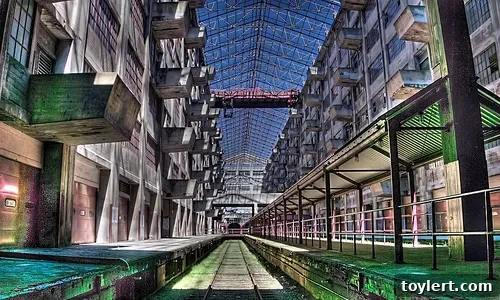
The physical transformation of Brooklyn’s landscape provides tangible evidence of this economic shift. The New York Times vividly captured this by examining the retrofitting of former manufacturing and industrial spaces along the Sunset Park waterfront. These vast, often historic, structures once hummed with the machinery of mass production, but with the offshoring of traditional manufacturing, many lay empty or underutilized.
Today, these spaces are being reimagined and redeveloped for modern tenants. The iconic Brooklyn Army Terminal, for instance, a colossal former military supply depot from World War I, now stands as a testament to this adaptive reuse. It houses a diverse array of businesses, from light manufacturing and tech startups to food processors and artistic studios, embodying the new mixed-use industrial economy. A slideshow of photos of the Brooklyn Army Terminal offers a visual journey through this impressive transformation, showcasing how architectural heritage can be repurposed for contemporary economic needs.
This repurposing reflects a broader trend: the shift from heavy industry to lighter, more specialized manufacturing, alongside an expansion of office space for creative and tech industries. While this brings new investment and jobs, it also changes the character of these industrial zones, sometimes at the expense of traditional blue-collar employment and the communities that supported them.
The Battle of Ideologies: Small Batch vs. Big Box
The tension between the local, artisanal ethos and the forces of large-scale commercial development is perhaps best encapsulated in the “battle between the small batch and the big box,” a theme highlighted by The Real Deal in an Editor’s Note. This conflict is acutely visible on the streets of Williamsburg, a neighborhood often seen as the epicenter of Brooklyn’s gentrification, where the arrival of a Whole Foods and perhaps a J.Crew store symbolizes the encroachment of mainstream retail on an area once defined by independent boutiques and local businesses.
To some degree, the tension between the mass market and the artisanal is a false canard. If people are selling $10 bags of granola or $14 pickles or $9 bottles of jam, there must be enough wealth to pay those prices. These handcrafted products are a sign of prosperity, not antithetical to it. The wealthy residents in the city are supporting this whole new borough of tinkerers, artists, graphic designers, small-batch entrepreneurs and chefs. But there seems to be a growing cultural gap between big cities and the rest of the country, which is partly being reflected in the presidential race. (I think its reasonable to assume that most rural tea partiers don’t care if their granola is organic). The divide is also economic. Given the general economic uncertainty nationally, big cities like New York have done well — and so has their real estate.
This insightful observation from the Editor’s Note argues that the very existence of a thriving artisanal market, characterized by premium-priced goods like organic granola or specialty pickles, is in itself a clear indicator of underlying prosperity. It suggests that these handcrafted products are not at odds with wealth but rather a direct consequence of it, supported by an affluent urban populace of “tinkerers, artists, graphic designers, small-batch entrepreneurs and chefs.” This perspective posits that the “creative class” not only produces these goods but also consumes them, fueling a localized economic cycle.
The Growing Urban-Rural Divide
However, the note also astutely connects this phenomenon to a broader and increasingly salient cultural and economic gap between large urban centers and the rest of the country. This divergence is evident in political discourse, where distinct values and priorities emerge. The example of “rural tea partiers” likely not prioritizing organic granola highlights different consumer preferences rooted in varying economic realities and lifestyles. While urban centers like New York thrive, attracting investment and seeing their real estate markets boom, many other regions grapple with economic stagnation. This flow of capital into major cities, often seen as safe havens amidst national economic uncertainty, further inflates urban economies and property values, intensifying the urban-rural divide and contributing to the inequalities observed within cities like Brooklyn.
Conclusion: Navigating Brooklyn’s Complex Economic Future
Brooklyn’s economic story is a complex tapestry woven with threads of innovation, aspiration, disparity, and transformation. It presents a compelling case study for understanding the modern urban economy: a place where entrepreneurial spirit thrives, giving rise to unique artisanal industries that hold the promise of localized economic renewal. Yet, this promise is shadowed by the realities of gentrification, where rising costs and shifting demographics threaten the fabric of established communities and exacerbate economic inequality.
The retrofitting of industrial giants like the Brooklyn Army Terminal symbolizes a forward-looking adaptation, converting relics of a bygone industrial era into vibrant hubs for contemporary businesses. Meanwhile, the ongoing debate between “small batch” and “big box” reflects fundamental questions about economic scale, consumer values, and the very identity of urban neighborhoods. Ultimately, Brooklyn’s experience underscores a critical challenge for national economic development: how to foster innovative, localized growth while ensuring that prosperity is broadly shared, addressing the systemic issues of poverty and displacement that often accompany rapid urban change. The borough’s future, much like the nation’s, hinges on its ability to reconcile these competing forces and forge a more inclusive path forward.
Can Brooklyn Hipsters Save the American Economy? [Slate]