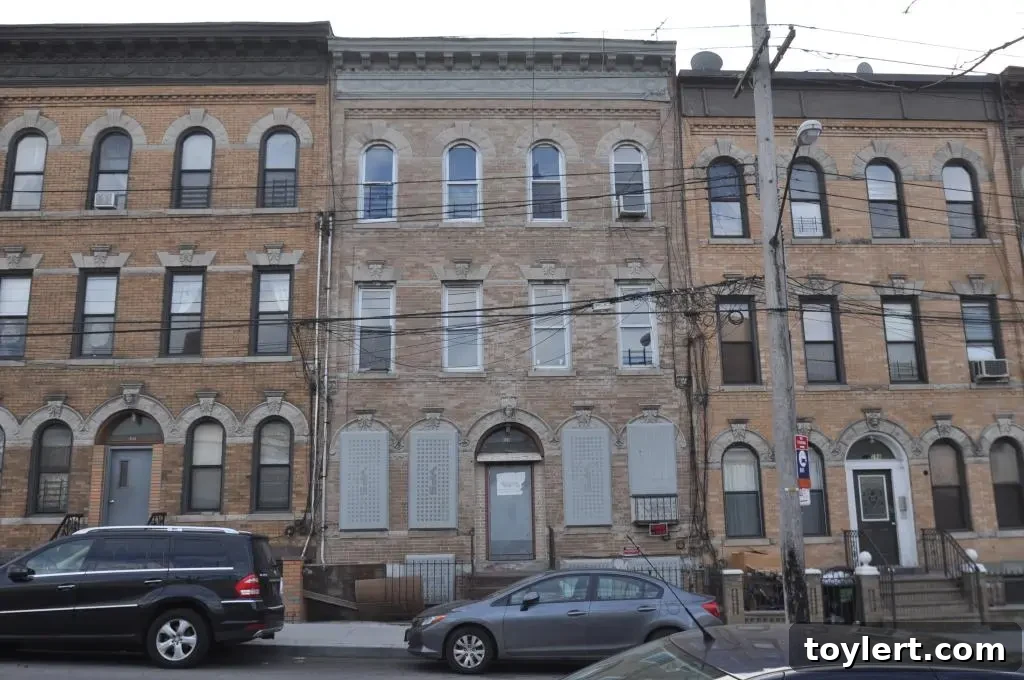
In a landmark decision sending shockwaves through Brooklyn’s real estate community, a Housing Court judge has taken the extraordinary step of barring landlord Joel Israel from his own building at 300 Nassau Avenue in Greenpoint. This unprecedented ruling also mandates the appointment of an independent administrator to oversee the comprehensive repair and ongoing management of the property. The building has been the focal point of intense controversy and legal battles since December 2013, when its rent-regulated tenants were allegedly forced out due to what their legal representation describes as the deliberate destruction of their apartments, vital water and gas lines, and essential hot water heaters. This decisive action by the court signals a stern warning against landlord harassment tactics aimed at displacing long-term residents and underscores the increasing resolve of the judicial system to protect tenant rights in New York City.
A Battle for Home: The Plight of Tenants at 300 Nassau Avenue
The saga at 300 Nassau Avenue began to unfold in late 2013, casting a harsh spotlight on the challenges faced by rent-regulated tenants in rapidly gentrifying neighborhoods like Greenpoint. According to a press release issued by the tenants’ lawyers, the landlord, Joel Israel, allegedly engaged in a systematic campaign to vacate the building. This campaign reportedly involved the dismantling of crucial infrastructure, rendering the building uninhabitable. Tenants described a harrowing experience where essential services were cut off, their living spaces damaged, and their very homes transformed into construction zones, effectively making their apartments unsafe and unlivable. The actions, widely perceived as a calculated strategy to push out existing rent-stabilized tenants and subsequently re-rent units at higher, market-rate prices, drew widespread condemnation from tenant advocacy groups and community leaders.
The legal team representing the displaced residents fought tirelessly for justice, presenting evidence of alleged severe neglect and intentional damage. Their efforts culminated in the recent ruling, which not only validates the tenants’ claims but also provides a concrete path forward. The court’s order stipulates that the former residents, who have been living in limbo for years, will finally be able to return to their homes once the necessary repairs and renovations are completed under the direct supervision of the court-appointed administrator. This decision brings a glimmer of hope to those who lost their homes and sets a powerful precedent for housing justice in Brooklyn.
An Unprecedented Judicial Intervention: The Role of the Administrator
The appointment of an independent administrator to manage a private property against the owner’s will is a rare and significant legal measure. This step is typically reserved for cases where a landlord has demonstrated egregious neglect, financial mismanagement, or a deliberate pattern of harassment that jeopardizes the safety and well-being of tenants. In the case of 300 Nassau Avenue, the judge’s decision reflects a profound concern over Joel Israel’s alleged conduct and a recognition of the severe impact it had on the lives of numerous families. The administrator’s responsibilities will be extensive, encompassing everything from securing the necessary permits and overseeing the physical reconstruction of the building to managing its finances and ensuring compliance with all housing regulations. This includes restoring all damaged apartments, repairing vital utility lines, and bringing the entire structure up to code. Crucially, the administrator will also be tasked with facilitating the smooth return of the original tenants, safeguarding their rights, and ensuring that their homes are restored to a safe, habitable, and legally compliant condition.
This judicial intervention is a testament to the court’s commitment to upholding tenant protection laws, particularly those designed to safeguard rent-regulated housing. It signifies that even in the face of alleged aggressive tactics by property owners, the legal system can and will step in to defend the rights of vulnerable residents. The administrator’s presence ensures that the repairs are conducted thoroughly and ethically, without further interference or delay from the landlord, thus paving the way for the tenants’ rightful return to their community.
A Pattern of Alleged Misconduct: Beyond Greenpoint
The troubles at 300 Nassau Avenue are not an isolated incident concerning landlord Joel Israel. Reports indicate a disturbing pattern of alleged misconduct extending to other properties he owns across Brooklyn. For instance, in Bushwick, Joel Israel is also the owner of 98 Linden Street, where he has faced similar accusations. As previously reported, tenants in two rent-regulated apartments at this address alleged that their kitchens and bathrooms were intentionally destroyed. This echoes the tactics reportedly employed at the Greenpoint property, suggesting a consistent strategy to dislodge rent-stabilized tenants and convert units to market rate. Such actions not only cause immense stress and displacement for residents but also contribute to the erosion of affordable housing options in a city grappling with an ongoing housing crisis.
Furthermore, Joel Israel has been accused of similar destructive practices at 324 Central Avenue, also in Bushwick, and at several other properties throughout the borough. These cumulative allegations paint a picture of a landlord allegedly using extreme and illegal measures to bypass rent regulations and maximize profits. The consistent nature of these accusations across multiple properties highlights a systemic issue that tenant rights advocates have been fighting for years: the calculated harassment of rent-regulated tenants. Such practices are not only morally reprehensible but also legally actionable, as demonstrated by the groundbreaking ruling concerning 300 Nassau Avenue. The court’s willingness to intervene so drastically in one case may signal a shift in how similar cases involving this landlord, and others like him, are handled in the future, providing a ray of hope for countless tenants facing similar predicaments.
The Wider Context: Landlord Harassment and Tenant Rights in NYC
The situation involving Joel Israel and his properties is unfortunately not unique in New York City. Landlord harassment, particularly targeting rent-regulated tenants, remains a persistent and pervasive problem. As neighborhoods like Greenpoint and Bushwick become increasingly desirable, the incentive for some landlords to clear out long-term, rent-stabilized tenants—who pay significantly less than market rates—becomes immense. The tactics can range from neglecting repairs and withholding essential services to initiating frivolous lawsuits and, in extreme cases, deliberately damaging property or creating hazardous living conditions, as allegedly occurred at Joel Israel’s buildings. These actions are designed to make living conditions so unbearable that tenants feel they have no choice but to vacate, thereby allowing landlords to deregulate units and dramatically increase rents.
New York City and State have a robust framework of tenant protection laws, including rent stabilization and various anti-harassment statutes. However, enforcement often requires tenants to be well-informed, organized, and willing to navigate a complex legal system, often with the support of dedicated legal aid organizations and tenant advocacy groups. The landmark decision in the 300 Nassau Avenue case serves as a crucial reminder that these laws have teeth and that the courts are prepared to use extraordinary measures to protect the integrity of rent-regulated housing and the rights of its occupants. This ruling could embolden more tenants to come forward and challenge predatory landlord practices, fostering a more equitable housing environment across the five boroughs.
A Precedent-Setting Ruling for Housing Justice
The Brooklyn Housing Court’s decision to bar Joel Israel from his own property and appoint an administrator is more than just a resolution for one building; it is a powerful precedent for housing justice in New York City. This type of intervention is exceedingly rare, reserved for cases of severe and persistent landlord misconduct that directly threaten tenant safety and well-being. By taking such a definitive stand, the court has sent an unequivocal message to landlords citywide: tactics designed to illegally displace tenants, especially those in rent-regulated units, will not be tolerated. This ruling demonstrates a heightened judicial awareness of the systemic nature of landlord harassment and a willingness to employ the most forceful legal tools available to combat it.
For tenant advocates, this decision represents a significant victory, offering a glimmer of hope that the balance of power between landlords and tenants might be shifting, albeit slowly. It underscores the critical importance of strong tenant legal representation and community organizing in holding abusive landlords accountable. The visibility of such a ruling can serve as both a deterrent for other landlords considering similar illegal schemes and an encouragement for tenants who might feel powerless against well-resourced property owners. Ultimately, this ruling at 300 Nassau Avenue strengthens the fabric of tenant protection laws and reaffirms the principle that a safe, habitable, and affordable home is a fundamental right, not a privilege to be undermined by predatory practices.
The Road Ahead: Rebuilding and Restoring Faith
As the court-appointed administrator takes control of 300 Nassau Avenue, the immediate focus will be on the arduous task of rebuilding and restoring the property to a habitable state. This process is expected to be extensive, involving not only physical repairs but also meticulous oversight to ensure every aspect of the building meets legal and safety standards. The return of the original tenants, a key component of the court’s order, will mark a poignant moment of triumph for those who endured years of uncertainty and displacement. Their journey back home will symbolize the resilience of a community and the power of legal advocacy.
Beyond this specific building, the implications of this ruling extend to the ongoing battle for affordable housing in Brooklyn and across New York City. It places greater scrutiny on landlords with similar records and potentially paves the way for more decisive actions against those who exploit the housing market at the expense of long-term residents. The case of Joel Israel and 300 Nassau Avenue will undoubtedly be studied by legal professionals, tenant rights groups, and real estate developers alike, shaping future discussions and policies surrounding tenant protections, landlord accountability, and the preservation of crucial rent-regulated housing stock. This landmark decision is a testament to the fact that justice, though sometimes slow, can prevail, offering hope for a more equitable housing future.