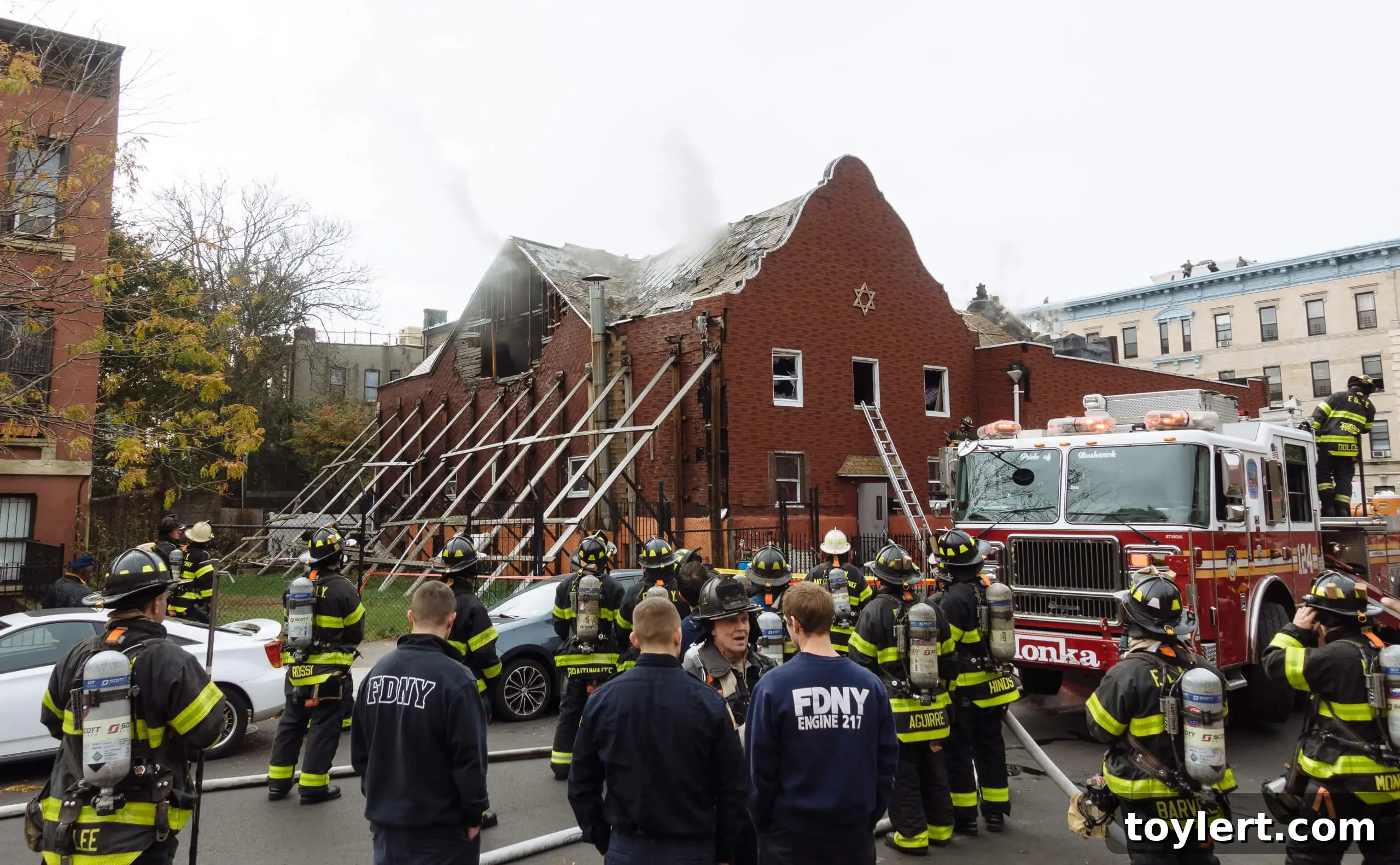
Devastating Fire Engulfs Historic B’nai Adath Kol Beth Yisrael Synagogue in Bed Stuy, Brooklyn
The early morning hours of a recent Tuesday brought profound shock and sorrow to the heart of Bedford-Stuyvesant, Brooklyn, as a massive fire engulfed the B’nai Adath Kol Beth Yisrael synagogue. This revered institution, a spiritual cornerstone for generations of Jewish families, suffered extensive damage, leaving a significant void in the community. The incident quickly drew the attention of local residents, including Nate Boguszewski, who witnessed the harrowing scene unfold. His immediate reactions and observations captured the raw emotion and immediate impact of the disaster on the neighborhood.
Boguszewski, a Bed Stuy resident, documented the unfolding tragedy and shared his poignant observations on social media, reflecting the profound sadness that permeated the community. He had this to say about the distressing situation:
Fire destroyed the B’nai Adath Kol Beth Yisrael synagogue this morning. Two blocks from us, we could see and smell it from our apartment.
The local news reported a maintenance worker is responsible. They emphasized that he was 71 years old. NYPD charged him with reckless endangerment. They said this wasn’t arson. The man had been loosening tiles on the roof with a torch and accidentally set the building on fire. 100-plus firefighters were called to the scene. Some Torah scrolls were retrieved, photos of which the New York Post prominently displays in their article.
Nate Boguszewski’s firsthand account powerfully conveys the immediate and widespread impact of the inferno. The visible flames and pervasive smell of smoke from blocks away served as a stark, grim reminder of the destruction rapidly unfolding in the midst of their vibrant community. This personal testimony underlines the collective shock and sorrow experienced by residents witnessing a cherished landmark succumbing to such a devastating blaze.
An Unfortunate Accident: Unraveling the Cause of the Blaze
Initial reports from local news outlets and subsequent investigations quickly moved to clarify the origins of the devastating fire, firmly establishing it as an unfortunate accident rather than an act of malicious intent. Authorities identified a 71-year-old maintenance worker as being responsible for the ignition of the fire. This detail was frequently highlighted in news coverage, adding a layer of human fragility to the tragedy. Following their investigation, the New York Police Department (NYPD) charged the individual with reckless endangerment, a legal step that reflects the severe and unintended consequences of the mishap, without suggesting deliberate harm.
The investigation revealed that the worker was engaged in routine building maintenance on the synagogue’s roof. Specifically, he was using a torch to loosen tiles, a common method in certain repair tasks. It was during this procedure that the accident occurred, leading to the rapid ignition of the building. The proximity of an open flame to roofing materials, which can often be dry or contain flammable components, tragically escalated what was meant to be a simple repair into a catastrophic event that consumed the revered structure. The explicit clarification from authorities that this was not arson was crucial. It helped to immediately allay fears within the Jewish community and Bed Stuy at large, shifting the narrative from potential targeted hatred to a collective understanding of a tragic accident.
The emphasis on the maintenance worker’s age in local reports implicitly underscores the delicate balance between routine work and potential hazards. While the charges of reckless endangerment reflect the gravity of the incident and the need for accountability, they also underscore the profound sorrow associated with an unintentional disaster. The community, while grappling with the significant loss of a spiritual and architectural landmark, has also been left to contemplate the unforeseen risks inherent in everyday activities and the devastating ripple effect of a single, tragic mistake.
Heroic Response: Over 100 Firefighters Battle the Inferno
The severity and rapid spread of the fire necessitated an immediate and overwhelming response from the New York City Fire Department (FDNY). Over 100 firefighters, a testament to the immense scale of the emergency, were swiftly dispatched to the scene in Bed Stuy. They arrived to find the historic synagogue engulfed in flames, battling a fierce inferno that threatened not only the building itself but also the densely packed surrounding structures. The sight of numerous fire trucks, emergency vehicles, and a vast contingent of firefighters working tirelessly against the backdrop of thick smoke and towering flames became a powerful and poignant symbol of the community’s collective trauma and the city’s unwavering commitment to emergency services.
The bravery and determination of the FDNY personnel were exemplary. Faced with extreme heat and hazardous conditions, their primary objective extended beyond extinguishing the massive blaze; they also focused on containing its spread, preventing further destruction in the vibrant Bed Stuy neighborhood. This monumental effort involved hours of intense work, deploying multiple hoses, ladders, and specialized equipment to bring the fire under control and ensure the safety of the surrounding residential and commercial properties. The collaborative and coordinated response showcased the dedication of New York City’s first responders, who put their lives on the line to mitigate the disaster.
A Glimmer of Hope: The Retrieval of Sacred Torah Scrolls
Amidst the chaos and widespread destruction, moments of profound significance and hope emerged. Despite the extensive damage to the synagogue’s interior, firefighters managed to undertake heroic efforts to retrieve invaluable artifacts from within the burning edifice. Most notably, several Torah scrolls – the most sacred texts in Judaism – were successfully salvaged from the synagogue’s interior. These hand-scribed copies of the Pentateuch represent not merely religious texts but are considered living embodiments of Jewish law and tradition, embodying centuries of faith and the enduring spirit of the congregation.
The successful retrieval of these Torah scrolls offered a powerful glimmer of hope amidst the devastation. Their survival is a tangible connection to the synagogue’s legacy, a symbol that even after the physical structure was ravaged, the spiritual heart of the community could not be entirely extinguished. For the congregation, these scrolls are irreplaceable, representing the continuous lineage of their faith and the enduring covenant with their heritage. The New York Post, recognizing their profound importance, prominently featured photographs of these retrieved scrolls in their coverage, highlighting this poignant triumph of preservation in the face of widespread destruction and underscoring their irreplaceable spiritual and historical value to the Jewish community worldwide.
The Heart of a Community: B’nai Adath Kol Beth Yisrael’s Enduring Legacy
The B’nai Adath Kol Beth Yisrael synagogue was far more than just a physical building; it was a vibrant spiritual, cultural, and communal hub that served generations of Jewish families in Bed Stuy and the wider Brooklyn area. For decades, it stood as a beacon of faith, a cherished place of worship, learning, and celebration. Its hallowed halls witnessed countless lifecycle events, from brit milahs (circumcisions) and bar and bat mitzvahs to weddings and funerals, each contributing to the rich tapestry of its history and the collective memory of its congregants. Its architectural presence was a familiar and comforting sight, an integral part of Bed Stuy’s diverse cultural and religious landscape.
The synagogue played an indispensable role in fostering strong community bonds, providing a dedicated space for regular religious observance, impactful educational programs for all ages, and vital social gatherings that strengthened the fabric of its congregation and the broader neighborhood. It was a place where traditions were upheld, stories were shared, and spiritual guidance was sought. The loss of such a significant landmark therefore extends far beyond mere physical damage; it represents a profound blow to the collective memory, spiritual identity, and social cohesion of its members. The destruction of the sanctuary means the loss of a physical space imbued with decades of prayers, hopes, joys, and shared communal experiences.
For many, the synagogue was a spiritual home, a sanctuary of solace, and a crucial connection to their heritage and identity. The emotional impact on the congregation is immeasurable, as they now grapple not only with the practical challenges of finding a new place to gather for worship and community events but also with the deep and personal sense of grief for the loss of a sacred space that was central to their daily lives and spiritual journey. This incident is a harsh reminder of how deeply intertwined physical structures can become with the very soul of a community.
Looking Ahead: Rebuilding and Resilience in the Face of Adversity
While the immediate aftermath of the fire is undoubtedly a period of profound mourning and significant uncertainty for the B’nai Adath Kol Beth Yisrael congregation, the spirit of resilience that defines both the Bed Stuy community and the Jewish faith will undoubtedly guide them through this incredibly challenging time. The successful retrieval of the Torah scrolls, often considered the very heart and soul of a synagogue, provides an incredibly powerful symbol of continuity and enduring hope. These sacred texts, which remarkably survived the devastating flames, offer a symbolic and tangible foundation upon which the congregation can begin the arduous process of rebuilding, both physically and spiritually.
The focus for the B’nai Adath Kol Beth Yisrael community will now undoubtedly shift to assessing the full extent of the damage, navigating complex insurance claims, and, most importantly, meticulously planning for their future. This will involve significant community engagement and likely extensive fundraising efforts. Support from the broader Brooklyn community, including interfaith groups, local businesses, and various Jewish organizations, is expected to play an absolutely crucial role in the synagogue’s long-term recovery efforts. Historical precedents for such tragedies demonstrate a strong collective understanding of the profound importance of preserving religious and cultural institutions, often leading to widespread outpouring of support.
The B’nai Adath Kol Beth Yisrael congregation faces a long and challenging road ahead, but their rich history of unwavering faith, deep communal strength, and remarkable resilience suggests they will ultimately emerge from this adversity with renewed determination and a strengthened spirit. The path to rebuilding will likely involve careful consideration of temporary arrangements for services, innovative fundraising campaigns, and a thoughtful process to determine how best to honor the enduring legacy of their lost sanctuary while courageously looking towards a new chapter. This heartbreaking incident, though a devastating loss, ultimately serves as a poignant reminder of the enduring power of faith, community solidarity, and the human spirit’s remarkable capacity to rebuild and persevere in the face of unexpected and profound devastation.