NYC Housing Crisis: “Tenants Not Tourists” Campaign Fights Bill Threatening Affordable Homes
By Jada Camille, amNY
New York City, a metropolis renowned for its vibrant culture and diverse communities, is currently grappling with an acute housing crisis. In response to this pressing challenge, a powerful coalition of housing advocates and concerned renters has launched the “Tenants Not Tourists” campaign. This initiative aims to vigorously oppose a recently introduced bill by the New York City Council, which critics argue will significantly worsen the city’s already strained housing market by prioritizing transient visitors over permanent residents.
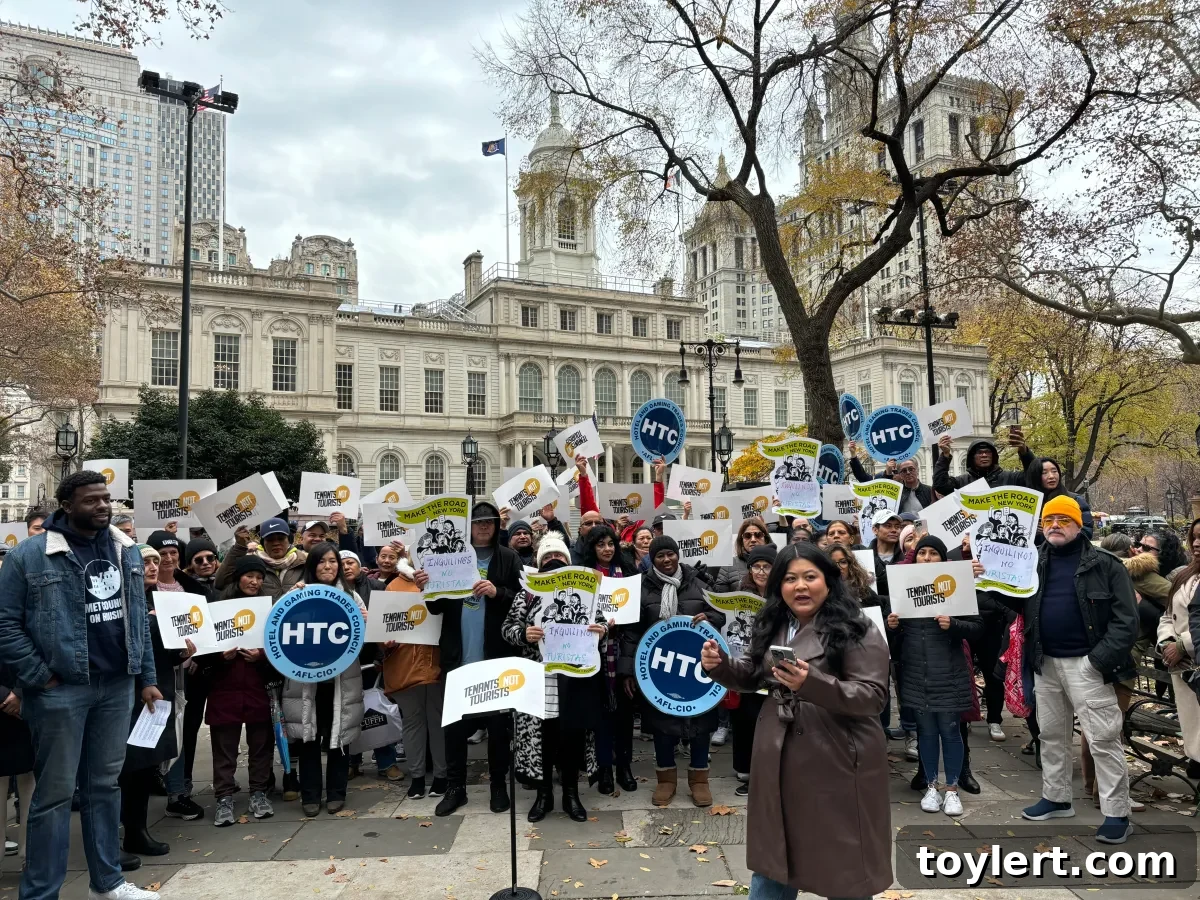
The campaign’s public debut was marked by a passionate rally held on December 9 outside City Hall. Representatives from numerous housing organizations converged, unified in their fervent opposition to the proposed measure. Their collective voice echoed a clear demand: the City Council must reject this bill and proactively safeguard New York’s increasingly scarce housing supply for its long-term inhabitants. The rally underscored the deep-seated anxieties within the community regarding the future of affordable living in one of the world’s most expensive cities.
Understanding New York City’s Housing Predicament
New York City’s housing landscape has long been characterized by fierce competition, exorbitant rents, and alarmingly low vacancy rates. For decades, residents have struggled to find and maintain affordable housing amidst a continuously expanding population and a limited physical footprint. This structural imbalance between supply and demand has created an environment where housing stability is a constant concern for many. Families and individuals across all income brackets find themselves navigating a market where even modest apartments command premium prices, pushing many to the brink of displacement or out of the city altogether.
The scarcity of housing units suitable for long-term residency is not merely an economic issue; it strikes at the heart of community identity and social equity. When housing becomes a luxury rather than a fundamental right, the very fabric of the city begins to unravel. Local businesses lose steady patronage, schools see fluctuating enrollment, and the vibrant, diverse neighborhoods that define New York face the threat of homogenization. This precarious situation sets the stage for any legislative action concerning housing to be met with intense scrutiny and debate, particularly when it appears to favor transient populations over established communities.
The Proposed Bill: A Catalyst for Concern
While the specifics of the City Council’s proposed bill (often referred to as Intro. 1107 in discussions surrounding short-term rentals) are complex, the core concern articulated by the “Tenants Not Tourists” campaign centers on its potential to exacerbate the existing housing crisis. Although the full text of the bill might present it as a means to regulate or manage aspects of the rental market, critics fear its provisions could inadvertently or directly facilitate the proliferation of short-term rentals, such as those offered through platforms like Airbnb and Vrbo, at the expense of residential units.
The primary argument against such legislation is that it would effectively remove more residential units from the long-term rental market. When apartments are converted from traditional leases to short-term accommodations for tourists, they cease to be available for New Yorkers seeking permanent homes. This reduction in the already limited supply inevitably drives up rental prices for the remaining units, making housing even less accessible. Furthermore, opponents argue that the bill could inadvertently legitimize or expand operations that currently operate in a gray area, making enforcement against illegal conversions more challenging and thus compounding the problem of vanishing long-term housing options.
“Tenants Not Tourists”: A Unified Front for Housing Justice
The “Tenants Not Tourists” campaign represents a formidable alliance of diverse groups united by a common cause: protecting New York City’s residential character and ensuring housing remains for its people. This coalition includes long-standing tenant unions, community organizations focused on neighborhood preservation, housing rights non-profits, and individual renters who have directly experienced the pressures of the city’s housing market. Their collective expertise and grassroots activism provide a powerful counter-narrative to proposals they view as detrimental to the city’s housing future.
The core arguments put forth by the campaign are compelling and resonate deeply with many New Yorkers:
- Depletion of Housing Stock: Short-term rentals transform residential apartments into commercial hotel rooms, directly reducing the inventory of homes available for permanent residents.
- Increased Rents: As supply dwindles, demand for long-term housing intensifies, pushing rental prices upward and making the city increasingly unaffordable for working-class families and even middle-income earners.
- Erosion of Community Fabric: A constant influx of transient visitors can disrupt neighborhood stability, change the character of residential blocks, and strain local services, creating a less cohesive and more transient environment.
- Quality of Life Concerns: The increase in short-term rentals has also been linked to issues such as increased noise, security concerns, and a diminished sense of neighborliness in buildings and blocks primarily designed for long-term residential use.
The December 9 rally at City Hall served as a vibrant testament to the campaign’s resolve. Hundreds gathered, chanting slogans and holding signs that passionately conveyed their message. Speakers from various advocacy groups highlighted personal stories of housing insecurity and the urgent need for the City Council to prioritize the needs of its constituents over potential tourism revenue. This demonstration was not merely a protest; it was a powerful call to action, urging elected officials to listen to the voices of the people they represent and make decisions that truly serve the long-term well-being of New York City.
Economic and Social Repercussions of Short-Term Rental Proliferation
The economic and social ramifications of an unchecked short-term rental market extend far beyond just increased rents. Economically, while some argue that short-term rentals boost tourism, critics contend that the benefits are often concentrated in the hands of a few property owners or management companies, rather than broadly benefiting the local economy. Moreover, local businesses, which thrive on the consistent patronage of permanent residents, can suffer from a transient population that spends less on local necessities and more on tourist-oriented services. The shift from stable residential communities to areas dominated by short-term stays can destabilize local retail ecosystems and reduce the vibrancy of neighborhood commerce.
Socially, the impact is profound. Displacement is a significant concern, as landlords may choose to evict long-term tenants to convert units into more lucrative short-term rentals, disrupting lives and breaking up communities. The sense of belonging and mutual support that defines a neighborhood can erode when buildings become hotels-by-another-name, leading to decreased social cohesion. Children’s access to stable schooling, access to local healthcare providers, and the general fabric of community life are all put at risk when housing units are commodified for short-term profits. These factors collectively threaten the unique character and livability that have long defined New York City’s neighborhoods.
Advocating for Solutions: Protecting NYC’s Future
The “Tenants Not Tourists” campaign is not merely about opposition; it’s about advocating for comprehensive solutions that address New York City’s housing crisis head-on. Their primary demand is the outright rejection of the proposed City Council bill, but their vision extends further to a call for stronger, more effective housing policies. Advocates propose:
- Robust Regulation of Short-Term Rentals: Implementing and rigorously enforcing laws that limit short-term rentals to primary residences only, and ensuring strict compliance with zoning and safety regulations.
- Increased Investment in Affordable Housing: Directing public and private funds towards the construction and preservation of truly affordable housing units across all five boroughs.
- Tenant Protections: Strengthening existing tenant protection laws, preventing illegal evictions, and ensuring that long-term residents have the stability they need.
- Fair Housing Policies: Developing and implementing policies that address systemic inequalities in the housing market and promote equitable access to safe, affordable homes for all New Yorkers.
By urging the City Council to consider these alternative approaches, the campaign seeks to shift the legislative focus from accommodating transient tourism to prioritizing the fundamental housing needs of the city’s permanent population. This strategic push aims to ensure that future policies contribute to a stable, equitable, and sustainable urban environment for generations to come.
The City Council’s Critical Decision
The New York City Council faces a pivotal moment in its responsibility to balance various interests within the city. On one hand, there are arguments for supporting tourism and its economic contributions. On the other, the growing chorus of voices from housing advocates and renters highlights the urgent need to protect the well-being and stability of the city’s long-term residents. The decision regarding this bill will not be merely a procedural vote; it will send a clear message about the Council’s priorities and its vision for New York City’s future.
Elected officials are tasked with representing all constituents, and in a city where housing is a daily struggle for millions, the protection of the existing housing supply must be paramount. The “Tenants Not Tourists” campaign’s efforts underscore the immense pressure on the City Council to make a choice that truly serves the public good and champions the cause of affordable housing over the commercialization of residential spaces. Their decision will undoubtedly shape the landscape of New York City’s housing market for years to come, making it a critical moment for urban policy and community advocacy.
Looking Ahead: The Ongoing Struggle for Housing Justice
The launch of the “Tenants Not Tourists” campaign and the rally outside City Hall are significant milestones in the ongoing struggle for housing justice in New York City. The outcome of the City Council’s vote on this particular bill will have immediate consequences, but the broader fight for affordable and stable housing is a continuous one. Should the bill pass, advocates warn of an intensified housing crisis, further displacement, and a more transient city. If it is rejected, it would represent a victory for community activism and a reaffirmation of the principle that housing is a human right, not just a commodity.
The campaign signals a renewed energy and determination among New Yorkers to hold their elected officials accountable and to demand policies that genuinely address the challenges faced by everyday residents. As the city continues to evolve, the voices of tenants and housing advocates will remain crucial in shaping a future where New York remains a home for all, not just a destination for tourists. The fight for housing affordability and stability is far from over, and campaigns like “Tenants Not Tourists” are at the forefront of this vital movement.
In conclusion, the “Tenants Not Tourists” campaign stands as a critical response to a proposed bill that housing advocates fear will worsen New York City’s severe housing crisis. Through public rallies, strong advocacy, and clear articulation of their concerns, the coalition is urging the City Council to prioritize the needs of its long-term residents. The decision facing the council will profoundly impact the city’s housing future, determining whether New York remains a home for its diverse communities or increasingly becomes a transient destination.