Unearthing and Elevating Narratives: A Deep Dive into Women’s Contributions at Weeksville History Center
In an era where the richness of history often remains incomplete without a comprehensive acknowledgment of all voices, the Weeksville History Center stands as a pivotal beacon, inviting scholars, specialists, and community members alike to participate in a vital initiative. This upcoming gathering is poised to shine a spotlight on the often-overlooked yet profoundly significant contributions of women throughout history, particularly those within free communities of color. It’s an opportunity not just to learn, but to actively contribute to the digital landscape of historical knowledge, ensuring these stories resonate for generations to come.
The event is meticulously designed to offer a multifaceted experience, blending insightful discourse with hands-on, impactful action. Attendees will embark on a journey that begins with a thought-provoking panel discussion, navigating complex themes of identity, parity, and the imperative of inclusive knowledge-sharing. Following this rich exchange, the focus shifts to empowerment, as participants are guided through a specialized Wikipedia editing workshop. This practical session aims to equip individuals with the tools and confidence to enhance the accuracy and breadth of women’s narratives online, directly addressing existing gaps in historical representation.
Weeksville History Center: A Sanctuary for Overlooked Histories
The choice of the Weeksville History Center as the venue for this crucial event is deeply symbolic and strategically significant. Weeksville, established in 1838, was one of the largest pre-Civil War free African American communities in the United States. It served as a haven where Black Americans could own property, build institutions, and thrive independently, free from the immediate threats of slavery and systemic discrimination prevalent elsewhere. The center meticulously preserves this legacy, offering a powerful testament to resilience, self-determination, and community building.
By hosting an event centered on women’s contributions here, the initiative intrinsically connects contemporary efforts of historical reclamation with the profound historical context of Weeksville itself. It underscores the enduring importance of understanding how women, often working in the background or facing additional layers of societal constraint, were instrumental in shaping and sustaining such vital communities. Their entrepreneurial spirit, leadership in education, healthcare, and social justice movements within Weeksville are just a few examples of the invaluable roles that demand greater recognition.
The Panel Discussion: Exploring Identity, Parity, and Knowledge-Sharing
The intellectual heart of the gathering will be a compelling panel discussion, expertly moderated by Darold Cuba, a distinguished visiting scholar. As Columbia’s first Wikipedia Fellow and Wikimedian-In-Residence, Cuba brings a unique perspective on the intersection of academic research, digital platforms, and the democratic dissemination of information. His expertise is invaluable in guiding a conversation that seeks to unpack the intricate dynamics of historical representation.
The panel will feature a diverse group of specialists, each bringing their unique insights into the exploration of identity, the pursuit of parity, and innovative approaches to knowledge-sharing. Discussions will likely delve into various facets: how identity shapes historical narratives, the ongoing struggle for gender and racial parity in historical accounts, and the methodologies by which forgotten or marginalized stories can be brought into mainstream consciousness. This dialogue is crucial for setting the stage, providing the theoretical framework and urgent context for the hands-on work that follows. It will highlight the systemic biases that have historically marginalized women’s stories and articulate the ethical imperative to rectify these omissions.
Empowering Digital Activism: The Wikipedia Editing Workshop
Following the stimulating panel, attendees will transition from passive reception to active participation in a highly anticipated Wikipedia editing training workshop. This segment is not merely about learning how to navigate a website; it is about empowering individuals to become agents of change in the digital sphere. The objective is clear: to build robust content and dramatically improve the accuracy and visibility of women’s stories online, particularly those of women from free communities of color.
Wikipedia, as one of the most widely accessed repositories of information globally, plays an undeniable role in shaping public understanding. However, its content often reflects historical biases, with significant gaps in the representation of women and people of color. This workshop directly confronts this disparity. Participants will learn the fundamentals of Wikipedia editing, including sourcing reliable information, crafting neutral and factual prose, and understanding Wikipedia’s editorial guidelines. The emphasis on women’s contributions to free communities of color is a deliberate and powerful choice, aligning perfectly with the historical mission of Weeksville. It ensures that the digital efforts are focused on the most critical areas of historical neglect, providing a platform for figures whose legacies have been vital but underserved.
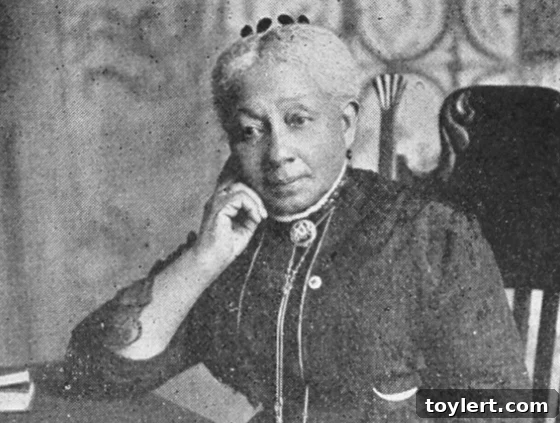
Highlighting Pioneers: The Legacy of Dr. Susan Smith McKinney Steward
The image featured, depicting Dr. Susan Smith McKinney Steward, serves as a powerful illustration of the type of extraordinary women whose stories the event seeks to amplify. Dr. Steward was a Brooklyn native, a trailblazing physician, and a fiercely dedicated advocate. Born in 1847, she became the first African American woman to earn a medical degree in New York State and the third in the entire United States. Her achievements are monumental, not only for breaking racial and gender barriers in the medical field but also for her tireless work in her community, particularly during a time of immense social and racial strife.
Dr. Steward’s career encompassed general practice, specializing in treating women and children, and also included significant contributions to public health. She co-founded the Women’s Hospital and Dispensary in Brooklyn, and later served as a physician for the Brooklyn Home for Aged Colored People. Her life exemplifies the resilience, intellectual prowess, and unwavering commitment to service that characterized many women of color in post-Civil War America. By bringing stories like hers to the forefront, the Wikipedia editing workshop aims to ensure that these crucial narratives are accurately and extensively documented for a global audience, moving them from specialized archives to readily accessible public knowledge.
Practicalities for Participation: Contributing to Collective Knowledge
To ensure the most seamless and productive experience during the Wikipedia editing workshop, prospective participants are strongly encouraged to bring a laptop. While the fundamental principles of editing can be grasped on other devices, a laptop offers the optimal interface for navigating Wikipedia’s editing tools, researching sources, and efficiently contributing new content or enhancing existing articles. This practical recommendation is a small but significant step towards maximizing individual impact during the collaborative editing session.
Recognizing the paramount importance of accuracy and informed content, the event organizers will provide a wealth of scholarly works and vetted resources that can be cited during the editing process. These materials will serve as reliable foundations for new entries and edits, reinforcing the academic rigor crucial for Wikipedia’s credibility. However, participants are also warmly invited to bring their own appropriate scholarly materials. This approach fosters a collaborative research environment, where diverse perspectives and specialized knowledge can enrich the collective effort. Whether you arrive with a specific historical figure in mind or a general passion for uncovering overlooked narratives, your contribution is highly valued and vital to the mission of the day.
Beyond the Event: Fostering Lasting Impact and Digital Equity
This initiative at the Weeksville History Center represents more than just a single-day event; it is a significant step towards fostering lasting change in how history is recorded and perceived. By merging critical academic discussion with practical digital activism, it empowers individuals to directly challenge historical imbalances and contribute to a more inclusive future. The skills gained in the Wikipedia editing workshop extend far beyond this single event, equipping participants with digital literacy tools that can be applied to countless other areas of information dissemination and advocacy.
The sustained effort to illuminate the contributions of women, especially those from free communities of color, is a testament to the Weeksville History Center’s ongoing commitment to preserving and celebrating comprehensive history. It underscores the profound realization that a truly complete understanding of our past requires every voice to be heard, every story to be told, and every achievement to be recognized. By participating, you are not just editing an encyclopedia; you are actively shaping the historical consciousness of a global community, ensuring that the legacies of extraordinary women are not only remembered but vibrantly celebrated.