The Hendrick I. Lott House: A Glimpse into Brooklyn’s Enduring Dutch Colonial Past
Brooklyn, a borough renowned for its vibrant culture and dynamic evolution, holds within its boundaries countless stories waiting to be discovered. Amidst the relentless march of modernity, certain structures stand as steadfast sentinels of earlier times, preserving the rich tapestry of its history. Among these architectural treasures is the Hendrick I. Lott House, an exceptional example of Dutch Colonial architecture nestled in the historic Flatlands neighborhood. This venerable farmhouse, designated a New York City landmark and proudly listed on the National Register of Historic Places, offers a rare and profound insight into the agricultural heritage and foundational settlement of Brooklyn.
A Legacy Etched in Time: The Lott Family and Their Enduring Homestead
The narrative of the Hendrick I. Lott House is deeply intertwined with the Lott family, one of the most prominent and historically significant Dutch-American families in Brooklyn. Their roots in what was once known as Flatlands (or Vlachte Bos, meaning “wooded plain”) stretch back to the 17th century, laying the groundwork for generations of stewardship. The house itself, as it largely appears today, evolved through several construction phases. Its earliest known sections were erected around 1719, establishing a foundational footprint on the agricultural landscape.
However, the most transformative period in the house’s development occurred around 1800, when Hendrick I. Lott undertook a significant expansion that gave the structure its distinctive T-plan form, from which it derives its current name. For an extraordinary period spanning over 270 years, the Lott family continuously inhabited and cultivated the surrounding land. This remarkable continuity allowed the house and its environs to adapt to the family’s evolving needs and agricultural innovations, all while preserving its historical integrity. The estate was far more than a mere dwelling; it functioned as a vital working farm, forming an integral part of Brooklyn’s early economy and its close-knit community structure. It served as a vibrant hub for daily life, agricultural production, and social gatherings within the burgeoning Dutch community of Kings County.
Architectural Distinctiveness: A True Dutch Colonial Masterpiece in Brooklyn
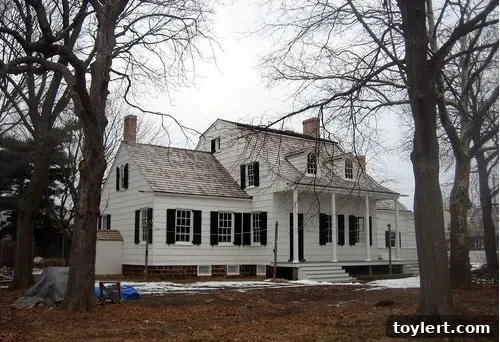
The Hendrick I. Lott House stands as one of New York City’s finest and most authentically preserved examples of a traditional Dutch Colonial farmhouse. Its architectural significance is profound, rooted in its steadfast adherence to the stylistic hallmarks that define the genre. This makes it an invaluable resource for understanding early American building practices and aesthetics:
- The Iconic Gambrel Roof: A signature feature, the gambrel roof, characterized by its distinctive two slopes on each side and broad, sweeping eaves, is not only visually striking but also supremely practical. This design maximizes usable space on the upper floors, a crucial consideration for large families and storage in an agrarian setting. The graceful curve of these eaves is a particularly elegant hallmark of the style.
- Thoughtfully Placed Dormer Windows: Integrated seamlessly into the roofline, these windows provide essential light and ventilation to the upper story, enhancing the comfort and functionality of the interior spaces without disrupting the roof’s classic profile.
- Harmonious Blend of Materials: The house showcases a fascinating combination of construction materials. Primarily a robust wood-frame structure, its foundation and certain later additions incorporate brickwork. This blend reflects both the availability of local resources and the evolving construction techniques employed during the house’s various building phases.
- The Unique T-Plan Layout: The house’s distinctive T-shaped footprint is a testament to its organic growth over time. An earlier, smaller dwelling forms one arm of the ‘T’, with a later, more substantial extension completing the shape. This unique configuration created a highly functional and adaptable floor plan tailored to the needs of its inhabitants.
- Preserved Interior Details: Stepping inside, visitors are greeted by a wealth of original detailing. Wide-plank floorboards, expertly crafted exposed timber beams, and historic fireplaces offer a tangible connection to the lives of the Lott family centuries ago. These elements provide invaluable insights into their daily routines, their sense of aesthetics, and the remarkable craftsmanship of the period.
The house’s design masterfully balances practicality with enduring tradition, meticulously tailored to meet the demands of a prosperous farming family in the late 18th and early 19th centuries. It stands as a powerful testament to the skilled artistry and durable building practices prevalent in that era, having gracefully endured through centuries of profound change in its surrounding environment.
Flatlands, Brooklyn: A Historic Setting for a Historic Home
The strategic location of the Hendrick I. Lott House within the Flatlands neighborhood is fundamental to appreciating its historical significance. Flatlands was one of the original six Dutch towns that comprised Kings County, established as early as the mid-17th century. Unlike many other areas of Brooklyn, which experienced rapid and often obliterating urbanization during the 19th and 20th centuries, Flatlands largely retained its pastoral, rural character well into the modern era. This slower pace of development proved to be a critical factor in the survival of significant historical structures like the Lott House, which might otherwise have been lost to encroaching progress and redevelopment.
The exceptionally fertile lands of Flatlands were perfectly suited for agriculture, drawing a wave of Dutch settlers who diligently established a robust and thriving farming community. The Lott House proudly serves as a potent emblem of this agrarian past, a poignant reminder of the sprawling farms and close-knit communities that once defined a significant portion of what is now metropolitan Brooklyn. Its careful preservation is essential for narrating the broader story of how New York City gradually transformed from a collection of small, self-sufficient farming villages into the global metropolis we know today.
Preservation and Public Access: Safeguarding an Irreplaceable Treasure
Recognizing its profound historical and architectural merit, the Hendrick I. Lott House received the esteemed designation of a New York City Landmark in 1989. This was followed by its inclusion on the National Register of Historic Places, providing crucial layers of protection and formally acknowledging its immense significance at both local and national levels. These designations ensure that this irreplaceable piece of history is safeguarded for future generations.
Over the past decades, dedicated efforts have been spearheaded by various committed groups, notably the Friends of the Hendrick I. Lott House, to meticulously preserve and thoughtfully restore this invaluable historical asset. These initiatives encompass rigorous historical research, essential structural stabilization, and sensitive restoration work, all undertaken to ensure the house’s integrity and authenticity remain uncompromised. The overarching goal extends beyond merely maintaining the physical structure; it aims to interpret its rich history accurately and share its compelling stories with the wider public.
While often undergoing intricate restoration or available for limited public programming due to its delicate nature, the Lott House functions as a vital educational resource. It provides school groups, history enthusiasts, and architectural aficionados with a rare and captivating opportunity to step back in time and directly experience 18th-century life. Through expertly guided tours and meticulously organized special events, visitors can explore the period rooms, gain insights into the daily routines and farming practices of the Lott family, and understand the broader social and economic landscape of early Brooklyn.
The Enduring Legacy of the Hendrick I. Lott House in Brooklyn
The Hendrick I. Lott House is far more than an antiquated structure; it stands as a living document of Brooklyn’s origins and a powerful, enduring symbol of its rich heritage. It embodies the resilience and perseverance of early settlers, chronicles the evolution of distinctive architectural styles, and silently narrates the remarkable transformation of a rural agricultural landscape into a dynamic and vibrant urban center.
As Brooklyn continues its breathtaking pace of development and reinvention, the Lott House remains a steadfast and poignant reminder of the critical importance of preserving our collective past. It encourages profound reflection on our origins and how our contemporary world is inextricably shaped by the robust foundations laid centuries ago. By diligently protecting and celebrating such invaluable landmarks, we ensure that the rich and multifaceted narrative of Brooklyn, truly “one building at a time,” continues to inspire, educate, and captivate future generations.
A personal visit or even a dedicated study of the Hendrick I. Lott House is an essential journey for anyone intrigued by the foundational history of New York City, the intricate details of Dutch Colonial architecture, or simply the captivating and deeply human stories embedded within the venerable walls of truly historic homes.