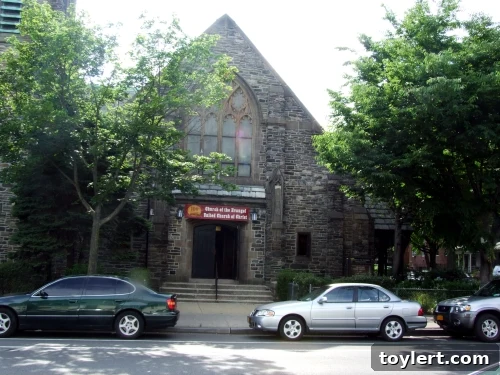
A Jewel of Flatbush: The Enduring Legacy of the Congregational Church of the Evangel at 1950 Bedford Avenue, Brooklyn
Brooklyn, one building at a time – each brick, each facade, a chapter in the borough’s grand narrative.
Name: Congregational Church of the Evangel (United Church of Christ)
Discovering Brooklyn’s Architectural Gems: The Story of 1950 Bedford Avenue
Nestled amidst the bustling vibrancy of Flatbush, Brooklyn, stands a structure that commands attention and inspires reverence: the Congregational Church of the Evangel. Located prominently at 1950 Bedford Avenue, this magnificent edifice is far more than just a place of worship; it is a profound architectural statement, a testament to enduring faith, and a pivotal cornerstone of the community it has served for generations. In an era where Brooklyn’s rapid evolution often overshadows its rich past, exploring buildings like the Congregational Church of the Evangel allows us to connect with the borough’s deep historical roots and appreciate the intricate tapestry of its heritage. This article embarks on a journey to uncover the fascinating narrative of this iconic structure, delving into its historical origins, distinctive architectural grandeur, and its profound, lasting impact on the very fabric of Brooklyn life.
A Glimpse into History: Foundations of Faith and Community
The story of the Congregational Church of the Evangel is deeply intertwined with the growth and development of Flatbush itself. As Brooklyn transitioned from a collection of independent towns into a thriving urban center in the late 19th and early 20th centuries, there was a palpable need for institutions that could serve the spiritual and social needs of a rapidly expanding population. The church was founded during a period of significant demographic change, drawing together a community eager to establish a spiritual home that would also function as a beacon of outreach and fellowship. Its establishment reflected the prevailing community spirit and the earnest desire to foster a sense of belonging among new residents and long-time Brooklynites alike. From its inception, the church was envisioned not just as a sanctuary for worship, but as an active participant in civic life, embodying the values of service, education, and mutual support.
While specific dates regarding its architects may be lost to time or require deeper archival research, the architectural style itself speaks volumes about the aspirations of its founders. Constructed during an age that prized ornate craftsmanship and symbolic design, the church’s planning and execution would have been a monumental undertaking. It represents the collective will of a congregation determined to build a lasting legacy, investing in materials and designs that promised longevity and visual splendor. This historical context underscores the building’s importance not merely as an individual structure, but as a representation of Brooklyn’s broader developmental story, marking a specific era of ambition and community building that shaped the borough into what it is today.
Architectural Splendor: A Masterpiece in Stone and Light
The Congregational Church of the Evangel stands as a prime example of period architecture, contributing significantly to the aesthetic character of Bedford Avenue. Its design showcases a thoughtful blend of historical influences and robust construction techniques, making it a compelling subject for architectural enthusiasts and casual observers alike. The meticulous attention to detail, from its imposing facade to its intricate interior elements, speaks volumes about the craftsmanship of its time.
The Exterior: Design and Details That Define
The exterior of the Congregational Church of the Evangel is often characterized by its commanding presence and distinctive stylistic elements. While specifics might lean towards Romanesque Revival or Gothic Revival influences, common to many Brooklyn churches of its era, its robust stone masonry, often featuring intricate carving and pronounced structural forms, instantly draws the eye. Key features typically include:
- Imposing Facade: A grand entrance, often framed by decorative arches and columns, inviting congregants and visitors alike.
- Stained-Glass Windows: Large, multi-paneled windows that narrate biblical stories or depict symbolic imagery, casting vibrant colors into the interior.
- Tower or Spire: A prominent vertical element that acts as a visual landmark, often housing bells that have marked time and celebrated events for over a century.
- Detailed Stonework: Elaborate carvings, gargoyles (if Gothic), or decorative motifs etched into the stone, showcasing the skill of the artisans.
- Robust Materials: Often built with durable materials like brick, brownstone, or granite, chosen for their longevity and aesthetic appeal, contributing to the building’s timeless quality.
These elements combine to create a facade that is both aesthetically pleasing and structurally sound, embodying the dignity and permanence expected of a significant community institution. The interplay of light and shadow on its textured surfaces changes throughout the day, giving the building a dynamic, living quality that enhances its historical appeal.
The Interior: A Sanctuary of Serenity and Inspiration
Stepping inside the Congregational Church of the Evangel is to enter a realm of serene beauty and spiritual calm. The interior architecture is designed to inspire awe and facilitate contemplation, with a layout that typically includes a grand nave leading to a central altar or chancel. The focus here is on creating an atmosphere conducive to worship and reflection, utilizing natural light and carefully chosen materials.
- Spacious Nave: High ceilings and expansive seating arrangements define the main worship area, capable of accommodating a large congregation.
- Artistic Stained Glass: The interior truly comes alive through the light filtered by magnificent stained-glass windows, depicting intricate scenes that tell stories of faith and hope. These windows are not merely decorative; they are integral to the spiritual experience, transforming sunlight into a kaleidoscope of colors that dance across the walls and floors.
- Ornate Woodwork: Richly carved altars, pulpits, pews, and decorative paneling contribute to a warm and inviting atmosphere, often reflecting traditional craftsmanship.
- Pipe Organ: A majestic pipe organ, an architectural marvel in itself, often graces the sanctuary, providing powerful accompaniment to services and concerts, its resonant tones filling the vast space.
- Acoustic Design: The building’s design inherently considers acoustics, ensuring that sermons, music, and congregational singing resonate beautifully throughout the sanctuary, enhancing the communal worship experience.
The collective effect of these interior features is a space that feels both grand and intimate, offering solace and inspiration to all who enter. It stands as a testament to the idea that sacred spaces can be profound works of art, reflecting human creativity and devotion.
The Church’s Enduring Role in the Flatbush Community
Beyond its architectural magnificence, the Congregational Church of the Evangel has consistently played a vital and multifaceted role in the Flatbush community. For over a century, it has served as more than just a house of worship; it has been a dynamic center for social engagement, a voice for justice, and a provider of essential services. Its doors have always been open to the diverse residents of Brooklyn, adapting to the changing needs of the neighborhood while maintaining its core mission.
Throughout its history, the church has been a hub for various community initiatives. These have often included outreach programs for the youth, educational workshops, food drives, and support groups, addressing contemporary social challenges with compassion and practical assistance. During periods of economic hardship or social unrest, the church has frequently stood as a pillar of stability and hope, offering sanctuary and solidarity. It has fostered dialogue and understanding among different cultural and ethnic groups within Flatbush, strengthening the communal bonds that define this vibrant Brooklyn neighborhood. Its commitment to social justice and community welfare underscores its enduring relevance, proving that historic institutions can remain dynamic and responsive to modern challenges.
1950 Bedford Avenue: A Landmark of Significance
The Congregational Church of the Evangel at 1950 Bedford Avenue holds significant importance not only for its congregation but for Brooklyn as a whole. It represents a living piece of architectural heritage, a monument to the craftsmanship and vision of a bygone era, yet continually adapting to the present. As one traverses Bedford Avenue, a historic thoroughfare itself, the church stands as a prominent visual anchor, contrasting with and complementing the surrounding urban landscape. Its preservation is crucial for maintaining the historical character of Flatbush and ensuring that future generations can appreciate the depth and richness of Brooklyn’s past. It serves as a reminder that urban development should thoughtfully integrate and honor existing landmarks, recognizing their intrinsic value.
The building also embodies cultural significance, having witnessed countless personal milestones – baptisms, weddings, funerals – and community events that have woven themselves into the lives of thousands of Brooklynites. It is a symbol of continuity, a steadfast presence in a borough known for its constant transformation. This enduring presence makes it an invaluable asset, not merely as property, but as a repository of collective memory and shared identity for the community it so faithfully serves.
Preserving the Past, Building the Future
Maintaining a historic structure like the Congregational Church of the Evangel comes with its own set of challenges, from the sheer scale of upkeep to the specialized knowledge required for restoration work. However, the commitment to preserve this architectural and spiritual treasure remains unwavering. Efforts to maintain its integrity often involve careful restoration projects, ensuring that its historical features are protected while also making necessary updates to ensure its functionality and sustainability for the future. These projects are often supported by the congregation and wider community, recognizing the church’s irreplaceable value.
Looking ahead, the Congregational Church of the Evangel continues to envision its role as a vital center for spiritual growth and community engagement. Its legacy is not just about bricks and mortar, but about the continuing mission to serve, inspire, and unite. By balancing preservation with progress, it ensures that its rich history informs a vibrant future, remaining a relevant and beloved institution for many years to come.
Conclusion: An Enduring Brooklyn Icon
The Congregational Church of the Evangel at 1950 Bedford Avenue is more than just a building; it is a profound testament to Brooklyn’s enduring spirit, architectural prowess, and deep-rooted community values. From its imposing facade and inspiring interiors to its tireless dedication to Flatbush residents, this church embodies a unique blend of historical grandeur and contemporary relevance. It stands as a beacon, reminding us that each building in Brooklyn tells a story, contributing to a collective narrative that is rich, diverse, and utterly captivating. As we continue to appreciate and explore Brooklyn, one building at a time, structures like the Congregational Church of the Evangel remain invaluable landmarks, guiding us through the borough’s illustrious past and into its promising future, forever etched into the heart of Flatbush.