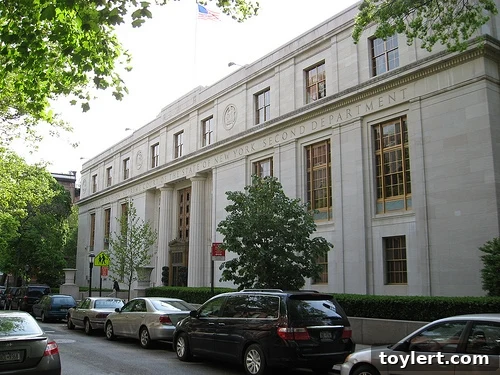
The Appellate Division, Second Judicial Department: Brooklyn’s Architectural and Legal Gem
(Photo: Joseph A. on Flickr)
Brooklyn, a borough renowned for its distinctive neighborhoods, vibrant culture, and historic architecture, is home to countless structures that tell the story of its rich past. Among these, certain buildings stand out not only for their aesthetic grandeur but also for their profound civic importance. One such edifice is the Appellate Division, New York State Supreme Court, Second Judicial Department, majestically situated at 45 Monroe Place in the heart of historic Brooklyn Heights. This iconic building is more than just a courthouse; it’s a testament to architectural artistry, a beacon of justice, and a vital cornerstone of New York State’s legal system.
Architectural Grandeur: A Symphony of Style and Substance
The building at 45 Monroe Place, completed in 1938, is a magnificent example of a blend of Art Deco and Classical Revival architectural styles, a common and elegant synthesis for public buildings of its era. Designed by the esteemed architectural firm of Herman L. Wenk & Associates, it projects an image of stability, authority, and timeless dignity. Its robust stone facade, characterized by clean lines and imposing proportions, reflects the serious nature of the legal proceedings held within its walls.
Visitors are immediately struck by the building’s impressive scale and meticulous detailing. The entrance is often adorned with classical elements such as grand columns or pilasters, hinting at the traditional values of justice and law. The windows, carefully proportioned and rhythmically spaced, allow natural light to flood the interior spaces, creating an environment that is both welcoming and inspiring. Every aspect of its exterior design, from the choice of durable materials to the careful articulation of its decorative motifs, contributes to its commanding presence on Monroe Place. The building stands as a proud embodiment of the civic pride and architectural ambition that characterized Brooklyn in the early 20th century.
A Beacon of Justice: The Role of the Appellate Division
Beyond its striking appearance, the Appellate Division, Second Judicial Department, serves a critical function within the New York State court system. As one of the four Appellate Divisions in the state, it acts as an intermediate appellate court, hearing appeals from the Supreme Court, County Court, Family Court, Surrogate’s Court, and Court of Claims in its vast jurisdiction. This jurisdiction covers ten counties: Kings (Brooklyn), Queens, Richmond (Staten Island), Nassau, Suffolk, Westchester, Dutchess, Orange, Putnam, and Rockland. This expansive territory makes the Second Department one of the busiest and most influential appellate courts in the United States, presiding over a significant volume of cases that impact millions of New Yorkers.
The court’s primary role is to review decisions made by lower courts to ensure that legal errors have not occurred and that justice has been properly administered. This involves meticulously examining trial records, legal briefs, and hearing oral arguments from attorneys. The decisions rendered by the justices of the Appellate Division set precedents that guide lower courts within its jurisdiction, shaping the interpretation and application of New York State law. From complex commercial disputes and intricate criminal appeals to sensitive family law matters, the work performed within this building is fundamental to upholding the rule of law and safeguarding the rights of citizens across a substantial portion of the state.
Historical Significance and Evolution
The establishment of such a prominent judicial building in Brooklyn Heights reflects the borough’s historical importance as a major urban center and a hub of legal activity. While the Appellate Division as an institution predates this specific building, its permanent home at 45 Monroe Place cemented its presence and significance in the borough. The completion of the building in the late 1930s coincided with a period of significant urban development and civic investment in Brooklyn, reinforcing its role as a key part of New York City’s municipal infrastructure.
Over the decades, the building has witnessed countless pivotal legal battles and has been the forum for decisions that have profoundly shaped New York’s jurisprudence. Its continued operation underscores the enduring need for a robust and accessible appellate system. The justices, clerks, and staff who have worked within its walls have contributed immeasurably to the legal fabric of the state, ensuring that the principles of fairness, equity, and due process are meticulously applied. The building itself has adapted to modern demands while preserving its historical integrity, standing as a living monument to the continuous pursuit of justice.
Interior Elegance: Where Form Meets Function
While the exterior of 45 Monroe Place exudes power and formality, the interior spaces are designed to facilitate serious legal work while providing an environment conducive to deliberation and respectful discourse. The grand public areas, such as the main lobby and corridors, often feature high ceilings, polished marble, and ornate detailing consistent with the building’s classical-Art Deco aesthetic. These elements create an atmosphere of reverence and solemnity befitting a court of law.
The courtrooms themselves are meticulously arranged, designed for clarity of sound and vision. They typically feature judicial benches, jury boxes (though appellate courts do not have juries, the design may echo traditional courtrooms), and seating for attorneys, clerks, and the public. These spaces are functional yet elegant, reflecting the gravity of the proceedings. Throughout the building, careful attention has been paid to combining durable, high-quality materials with thoughtful design, ensuring that the building serves its purpose effectively while maintaining its architectural distinction.
Neighborhood Integration: A Landmark in Brooklyn Heights
Located in the prestigious Brooklyn Heights neighborhood, 45 Monroe Place is surrounded by historic brownstones, tree-lined streets, and other significant civic buildings. The neighborhood itself is a designated historic district, renowned for its charm, tranquility, and stunning views of the Manhattan skyline. The Appellate Division building fits seamlessly into this esteemed environment, contributing to the area’s distinguished character. Its presence adds a layer of governmental gravitas to a residential area celebrated for its architectural heritage.
The building is easily accessible and forms part of a broader civic complex in Downtown Brooklyn, including other courthouses and governmental offices. This strategic location reinforces its importance as a center of legal and administrative activity, drawing legal professionals, litigants, and researchers from across its wide jurisdiction. Its integration into the urban fabric of Brooklyn Heights means it is not just an isolated institution but a dynamic part of the community, quietly performing its vital duties amidst the daily rhythm of one of New York City’s most cherished neighborhoods.
Preserving a Legacy for Future Generations
The Appellate Division, New York State Supreme Court, Second Judicial Department, at 45 Monroe Place, stands as a critical pillar of the justice system and a remarkable piece of Brooklyn’s architectural legacy. Its majestic facade and significant purpose make it an enduring symbol of law, order, and the continuous pursuit of justice. For residents and visitors alike, it represents a tangible link to Brooklyn’s rich history and its ongoing role as a vital center of civic life.
As Brooklyn continues to evolve, structures like the Appellate Division building serve as important reminders of the values and institutions that underpin our society. Preserving and appreciating such landmarks ensures that future generations can understand and connect with the architectural and legal heritage that shapes their world. It is a building that not only houses justice but also embodies the very principles of enduring quality and public service that define its existence.