Discovering the Enduring Charm: The Historic Wood-Framed Row Houses of 710-712 Bushwick Avenue, Brooklyn
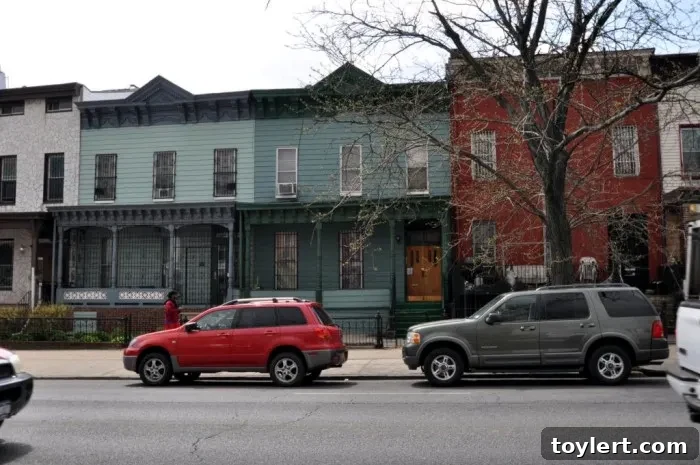
Brooklyn: a borough rich in history, defined by its diverse communities, vibrant culture, and above all, its iconic architecture. Each building tells a story, contributing to the larger narrative of one of New York City’s most dynamic areas. Today, we turn our attention to a pair of structures that quietly embody a significant chapter of Brooklyn’s past: the wood-framed row houses located at 710-712 Bushwick Avenue. These homes stand as enduring testaments to the craftsmanship and residential development that shaped the Bushwick neighborhood, long before its current renaissance.
The Legacy of Wood-Framed Row Houses in Brooklyn
When one thinks of historic Brooklyn architecture, the stately brownstone often comes to mind. However, beyond the grandeur of stone and brick, a quieter, yet equally significant, architectural legacy thrives: the wood-framed row house. These structures represent an earlier era of development, often predating their masonry counterparts, or offering a more accessible and economical housing solution for the burgeoning working and middle classes of the 19th century.
The wood-framed row houses of Brooklyn, especially prevalent in neighborhoods like Bushwick, Greenpoint, and parts of Williamsburg, are characterized by their timber construction, often clad in clapboard or decorative shingles. While they may lack the imposing presence of a brownstone, they compensate with intricate detailing, charming facades, and a distinctive warmth that speaks to their origins. Many feature elaborate cornices, bay windows, decorative porches, and mansard or gable roofs, reflecting popular Victorian-era architectural styles such as Italianate, Second Empire, and Queen Anne, adapted for wood construction.
Bushwick: A Neighborhood Forged in History
To truly appreciate 710-712 Bushwick Avenue, it’s essential to understand the historical context of its setting. Bushwick, originally named Boswijck by Dutch settlers in 1661, grew from a collection of small farming villages into a bustling industrial and residential hub during the 19th century. Attracting waves of German immigrants, it became renowned for its breweries, factories, and a thriving commercial district. This rapid expansion necessitated a significant amount of housing, leading to the construction of thousands of row houses, many of them wood-framed.
Bushwick Avenue itself was, and remains, a significant thoroughfare. Lined with a mix of grand mansions, churches, and more modest residential dwellings, it offered a blend of urban sophistication and neighborhood charm. The stretch where 710-712 Bushwick Avenue resides likely developed in the late 19th or early 20th century, a period of immense growth and architectural experimentation in Brooklyn.
Architectural Details of 710-712 Bushwick Avenue
The pair of wood-framed row houses at 710-712 Bushwick Avenue epitomize the practical elegance of their era. While specific historical records for these exact buildings might be deeply embedded in local archives, we can infer much about their design and construction from their general appearance and the architectural trends of the period. Typically, these homes were built with solid wood frames, often balloon-framed, allowing for efficient construction and flexible interior layouts.
Visually, such buildings often display a characteristic facade featuring:
- Clapboard or Shingle Siding: Providing both weather protection and aesthetic appeal, these materials were common and allowed for varying textures and finishes.
- Bay Windows: A popular feature in Victorian architecture, bay windows extend outwards from the main wall, increasing interior light and space, and adding architectural interest to the streetscape.
- Decorative Cornices and Brackets: Ornate detailing along the roofline and under eaves was a hallmark of late 19th-century design, showcasing the skill of local carpenters.
- Front Stoops or Porches: Often featuring iron railings or turned wooden balusters, these provided a transitional space between the public street and private residence, fostering a sense of community.
- Pitched Roofs: Unlike the flat roofs common on many brownstones, wood-framed houses often have pitched roofs, sometimes incorporating dormer windows for attic spaces.
These architectural elements, combined with the inherent warmth of wood, create a distinct charm that sets them apart from the more formal appearance of brick or stone structures. They reflect a time when skilled tradespeople crafted homes with attention to detail and a commitment to durability, using readily available materials.
Preserving Brooklyn’s Architectural Fabric
In a rapidly evolving city like New York, the preservation of historic buildings is paramount. Structures like those at 710-712 Bushwick Avenue are more than just old houses; they are tangible links to Brooklyn’s past, offering insights into its social, economic, and architectural development. As Bushwick continues to experience significant transformation and revitalization, these wood-framed gems serve as important anchors, reminding residents and visitors of the neighborhood’s rich heritage.
The challenges of maintaining and preserving wood-framed homes include protecting them from the elements, updating them to modern safety and energy standards, and resisting the pressures of demolition for new development. However, many owners and local preservation groups are dedicated to their upkeep, understanding that these buildings contribute significantly to the unique character and appeal of Bushwick.
These homes also represent an alternative to the often sky-high prices of brownstones, offering a different entry point into historic Brooklyn living. Their unique aesthetic and historical significance make them highly desirable for those seeking a home with character and a story to tell.
Living History on Bushwick Avenue
Today, 710-712 Bushwick Avenue stands as a vibrant part of the modern Bushwick landscape. Residents here enjoy proximity to an eclectic mix of art galleries, trendy cafes, innovative restaurants, and lush community gardens, all while being immersed in a neighborhood celebrated for its street art and diverse cultural scene. The presence of these historic homes alongside contemporary developments creates a captivating juxtaposition, highlighting Bushwick’s ability to honor its past while embracing its future.
Walking along Bushwick Avenue, one can’t help but feel a connection to generations past. Each bay window, each carefully carved detail, whispers tales of families, community life, and the enduring spirit of Brooklyn. These wood-framed row houses are not just buildings; they are living artifacts, continuing to shelter new generations and contribute to the vibrant tapestry of one of New York City’s most beloved boroughs.
Conclusion
The wood-framed row houses at 710-712 Bushwick Avenue are more than just architectural examples; they are integral components of Brooklyn’s identity. They remind us that the borough’s charm extends beyond its most famous landmarks, into the streets and residences that form the backbone of its neighborhoods. Their continued presence is a testament to the resilience of historic architecture and the enduring appeal of homes built with care and character. As Brooklyn evolves, these buildings stand as proud guardians of its past, ensuring that its rich story continues to be told, one captivating structure at a time.