Barclays Center Parking Decision: Navigating Brooklyn’s Urban Planning Crossroads
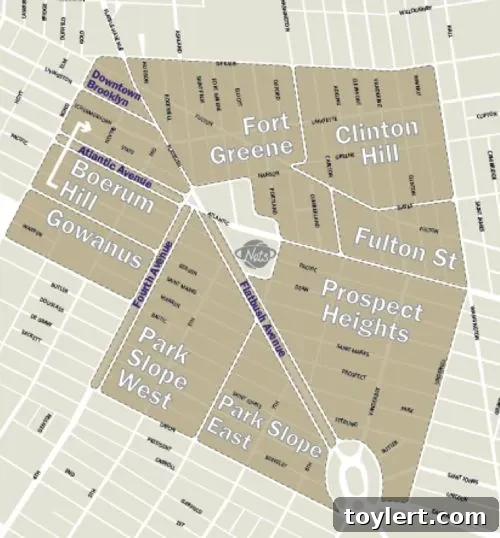
The highly anticipated opening of the Barclays Center in Brooklyn brought with it not just excitement for sports and entertainment, but also significant concerns for the surrounding neighborhoods. Among the most contentious issues was the call for residential parking permits (RPPs) to mitigate the inevitable influx of traffic and visitors. However, in a move that sparked widespread disappointment among residents across Fort Greene, Prospect Heights, Park Slope, Boerum Hill, and Clinton Hill, the New York City Department of Transportation (DOT) ultimately decreed that such permits were not warranted. This decision has ignited a crucial discussion about urban planning, community impact, and the balance between development and quality of life in one of New York City’s most vibrant boroughs.
The Contention: Residential Parking Permits Denied
The primary argument put forth by community advocates for residential parking permits was straightforward: the Barclays Center, a major entertainment venue, would attract thousands of attendees, many of whom would drive. This influx, they argued, would overwhelm existing street parking, displace long-term residents, exacerbate traffic congestion, and diminish the overall quality of life in these densely populated residential areas. Residents envisioned a future where finding a parking spot near their homes would become a daily struggle, impacting everything from commuting to local commerce.
Neighborhood groups articulated their concerns about increased noise, potential safety issues stemming from unfamiliar drivers circling blocks, and the general disruption to the peaceful, established character of their communities. They saw RPPs as a vital tool to prioritize residents, discourage arena visitors from using residential streets as free parking lots, and encourage the use of Brooklyn’s robust mass transit options. The proposed permits were not about entitlement, as some might suggest, but rather a mechanism for responsible urban management, designed to protect the very fabric of these neighborhoods.
DOT’s Stance and the Parking Study
The Department of Transportation based its controversial decision on a comprehensive study of the parking conditions around both the Barclays Center and Yankee Stadium in the Bronx. According to the agency’s findings, the existing parking vacancy rates in the affected areas were deemed sufficient to absorb the anticipated parking demand from arena visitors. Specifically, the DOT reported nighttime vacancy rates of 19 percent during the week and 27 percent on weekends. Their conclusion was that these available spaces could comfortably accommodate those arena-goers who opted not to utilize parking garages or public transportation.
A key differentiator in the DOT’s analysis was the projected mode of transport for Barclays Center attendees compared to Yankee Stadium visitors. The study noted that a significant 60 percent of individuals attending events at Yankee Stadium typically arrive by car. In contrast, officials projected that this number would be substantially lower for the Barclays Center, estimated at only 30 percent, primarily due to the superior mass transit connectivity available at the Atlantic Yards location. The Barclays Center is strategically positioned at a major transportation hub, offering unparalleled access to multiple subway lines and bus routes, making it highly accessible without a personal vehicle.
Critique of the Study’s Methodology
However, many community members and local politicians were quick to point out what they perceived as inherent flaws in the DOT’s study. A significant criticism revolved around the study’s broad-brush approach, which seemingly failed to account for the granular nuances of urban residential parking. Critics argued that the study treated vast areas with widely differing parking realities as a monolithic entity. For instance, a resident living and parking just a couple of blocks from the arena, such as at Carlton and Bergen, would experience a drastically different parking scenario than someone residing further away, perhaps at Park Place and Underhill.
This averaging of data, detractors argued, obscured the severe impact that concentrated parking demand could have on the blocks immediately adjacent to the arena. While overall vacancy rates might appear adequate when spread across a larger geographical area, the reality on specific, highly sought-after streets could be dire, leading to intense competition for spaces and significant inconvenience for those living closest to the venue. This methodological oversight fueled the sentiment that the DOT had “missed the boat” in understanding the true nature of local parking challenges.
Community Backlash: Voices of Disappointment
The DOT’s decision was met with immediate and strong opposition from local residents and their elected representatives. Gib Veconi of the Prospect Heights Neighborhood Development Council eloquently summarized the community’s frustration, telling The New York Post, “DOT missed the boat. The permits aren’t about entitlement or guaranteeing parking for residents. They’re about discouraging people from driving to games.” This statement underscored the proactive nature of the proposed permits – a measure intended to manage demand and promote sustainable transportation choices, rather than merely addressing a symptom after the problem had manifested.
Council Member Letitia James, a vocal advocate for the affected communities, also expressed her displeasure with the decision. Her stance mirrored the widespread sentiment that the city had failed to adequately protect the interests of its residents in the face of major commercial development. The collective disappointment highlighted a perceived disconnect between city policy and the practical realities faced by everyday Brooklynites. The frustration wasn’t just about parking spots; it was about the broader implications for neighborhood character, pedestrian safety, and the right of long-term residents to maintain their quality of life amidst rapid urban transformation.
Advocacy groups pointed out that relying solely on mass transit, while admirable, might not always be feasible for all arena visitors, especially those coming from outer boroughs or suburban areas lacking direct subway access. Without an incentive to park in designated garages or use transit, they argued, the default choice for many would inevitably be free street parking, shifting the burden onto the local community. The lack of RPPs, in their view, represented a missed opportunity to implement a smart, integrated transportation strategy that balanced the needs of the arena with the welfare of its neighbors.
The Broader Implications: A Citywide Precedent
One of the underlying reasons for the DOT’s cautious approach, and a point often acknowledged even by those who disagreed with the decision, was the potential for setting a significant citywide precedent. New York City, unlike many other major metropolitan areas, has historically not offered residential parking permits anywhere within its five boroughs. Implementing RPPs around the Barclays Center could indeed open the floodgates for similar requests from virtually every other neighborhood in the city, particularly those adjacent to other large venues, commercial districts, or commuter hubs.
Such a policy shift would represent a massive undertaking, requiring extensive planning, infrastructure, and enforcement mechanisms. The city government likely viewed this particular decision as a critical juncture, understanding that approving RPPs for Brooklyn could trigger an avalanche of demands that the city was not yet prepared to handle. This broader administrative and logistical challenge undoubtedly played a role in the cautious stance taken by the DOT, even amidst compelling local arguments.
However, residents argued that delaying RPP implementation due to citywide precedent concerns meant sacrificing the immediate needs of specific communities. They contended that each neighborhood should be evaluated on its own merits and unique circumstances, rather than being held hostage by potential future requests from unrelated areas. The debate thus highlighted the tension between localized community needs and the challenges of citywide policy implementation in a complex, diverse metropolis like New York.
What Lies Ahead: A Promise to Revisit
Despite the initial denial, the DOT did offer a glimmer of hope to frustrated residents. The agency stated that it would revisit the issue of residential parking permits after the Barclays Center had officially opened and its initial operational impact could be properly assessed. This commitment suggests that the city is open to re-evaluating its position based on empirical data and real-world conditions, rather than solely on pre-opening projections.
The monitoring phase will be crucial. It will allow community groups, elected officials, and the DOT to collect actual data on parking occupancy rates, traffic patterns, and the overall quality of life impact on Fort Greene, Prospect Heights, Park Slope, and other affected areas. Should the post-opening reality prove to be significantly worse than the study predicted, there might be renewed pressure and a stronger case for the implementation of residential parking permits. Residents will undoubtedly be vigilant in documenting any adverse effects, providing concrete evidence to support their ongoing advocacy efforts.
The saga of parking permits around the Barclays Center is far from over. It serves as a powerful illustration of the ongoing challenges in urban development, where the excitement of new venues must be carefully balanced with the enduring needs and well-being of the communities that host them. As Brooklyn continues to evolve, the ability to find innovative and equitable solutions to issues like parking will remain central to fostering sustainable growth and preserving the unique charm that defines its neighborhoods. For a more detailed analysis of the news, readers are encouraged to consult the Atlantic Yards Report.