Atlantic Yards’ B2 Tower: Unpacking Brooklyn’s Ambitious Affordable Housing Promise
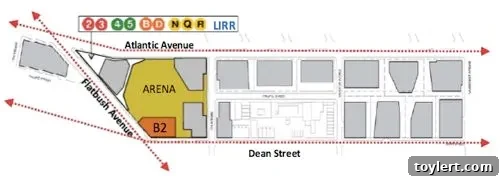
The Atlantic Yards project, now largely known as Pacific Park, stands as one of Brooklyn’s most ambitious and controversial urban development endeavors. Envisioned as a sprawling mixed-use complex encompassing residential towers, commercial spaces, and the Barclays Center arena, it promised to redefine the fabric of downtown Brooklyn. Among its initial and most closely watched components was B2, the first residential building set to rise within this colossal development. However, the path to realizing B2’s full potential, particularly its commitment to affordable housing, has been fraught with challenges and a persistent lack of transparency from its earliest public discussions.
Early public hearings concerning B2 (later known as 461 Dean Street, a pioneering modular high-rise) were conspicuously undersubscribed. A public hearing held early in the project’s development cycle saw minimal attendance, notably lacking a single board member, signaling an alarming disengagement or perhaps a general public unawareness regarding critical aspects of such a monumental undertaking. This early disinterest or lack of robust oversight immediately cast a shadow over the project’s commitment to public accountability, setting a precedent that would fuel ongoing concerns among community activists and watchdog organizations.
The Evolving Landscape of Atlantic Yards: A Brief Overview
To fully grasp the significance of B2 and the debates surrounding it, it’s essential to understand the broader context of Atlantic Yards. Spearheaded by Forest City Ratner (and later a partnership with Greenland USA), the project was initially heralded as a catalyst for economic growth, job creation, and a substantial boost to Brooklyn’s affordable housing stock. From its inception, however, it faced fierce opposition over issues ranging from eminent domain and environmental concerns to the scale and density of the proposed development. The promise of thousands of affordable units was a cornerstone of public support and a critical bargaining chip in securing approvals. B2 was meant to be the first tangible delivery on that promise, making its details all the more critical for public scrutiny.
B2: The First Residential Cornerstone and Its Modular Innovation
At the heart of the initial residential rollout was B2, a 32-story tower that was slated to feature 363 apartments. This particular building garnered additional attention for its innovative, though ultimately challenging, modular construction method, which was touted as a way to speed up construction and potentially reduce costs. While the modular aspect was a design and construction marvel, the public’s primary concern revolved around the units themselves, specifically their affordability and suitability for the diverse needs of Brooklyn residents. The developer, Forest City Ratner, had committed to making 50 percent of these units subsidized across five distinct income levels—a promise that, on paper, appeared to address a pressing need for affordable housing in one of New York City’s rapidly gentrifying boroughs.
Navigating the Murky Waters of Affordability and Transparency
Despite the grand pronouncements of affordable housing, many critical details surrounding B2 remained stubbornly opaque during its crucial early phases. Key questions lingered about the precise size of the units, the actual rent prices for different income tiers, and the intricacies of the project’s complex financing and subsidy structures. This lack of clear, publicly available information fueled skepticism and frustration among community advocates and policymakers alike.
The Unit Mix Dilemma: A Mismatch with Community Needs
One of the most vocal criticisms, highlighted by figures like City Councilwoman Tish James and extensively documented by the independent watchdog publication Atlantic Yards Report, centered on the proposed unit mix. Observers noted that the plans for B2 heavily skewed towards smaller units, primarily studios and one-bedroom apartments. This bias seemed to ignore the city’s well-documented and pressing need for larger, family-sized units for low-income households. In a city where housing large families affordably is a constant struggle, a development promising significant affordable housing yet offering predominantly smaller units raised serious questions about its true impact on alleviating the housing crisis for those most in need.
The Shifting Sands of Affordability: Area Median Income (AMI) Concerns
Another significant point of contention revolved around how “affordable” the units would truly be. Pricing for subsidized units is typically based on a percentage of the Area Median Income (AMI), which in New York City often reflects a broader metropolitan area rather than just the immediate neighborhood. With the median income in Brooklyn and the wider metropolitan area steadily rising, there was a legitimate concern that by the time units became available, the income thresholds would have shifted. This meant that what was conceived as “affordable” in the planning stages might no longer be genuinely accessible to the target low-income demographic, potentially pricing out the very residents the program was designed to assist.
Speculated Unit Sizes: Compromising on Space
Further compounding these affordability concerns were speculations regarding the actual dimensions of the residential units. Based on typical standards adopted by the New York City Housing Development Corporation (HDC), Atlantic Yards Report speculated on decidedly modest sizes: approximately 400 square feet for studios, 575 square feet for one-bedroom apartments, and 775 square feet for two-bedroom units. These dimensions, while common in dense urban environments, suggest a stark reality for residents, particularly families. The prospect of living in such compact spaces immediately brought up questions about living quality, personal space, and even practical considerations like storage – making the idea of ample closet space a distant dream for many potential occupants.
The Crucial Role of Financing and Subsidies in Public Projects
The financing mechanisms behind large-scale developments like Atlantic Yards are inherently complex, often involving a blend of private investment, public subsidies, tax breaks, and various forms of government support. The absence of clear, detailed information regarding B2’s financial structure was a significant red flag for transparency advocates. Understanding how public funds are utilized and the exact nature of subsidies is paramount for ensuring accountability and verifying that taxpayers’ money is being spent in a manner that truly serves public interest goals, such as providing genuinely affordable housing. Without this clarity, it becomes challenging for the public and oversight bodies to assess the true cost-benefit of such projects and to hold developers and public officials to their commitments.
The Watchdogs: Advocacy, Scrutiny, and the Fight for Accountability
In the face of these unknowns and concerns, the role of independent watchdogs and community advocates became indispensable. Publications like the Atlantic Yards Report, known for its exhaustive and meticulous coverage, served as a vital resource for tracking the project’s evolution, analyzing its often-complex documentation, and articulating community concerns. Their persistent efforts, alongside the advocacy of elected officials like Tish James, ensured that the critical questions about affordability, unit mix, transparency, and public benefit were kept in the public discourse. These independent voices are crucial in large urban development projects to bridge the information gap between developers and the public, championing community interests and pushing for greater accountability.
Looking Ahead: Lessons from B2 and the Atlantic Yards Legacy
The early struggles and ongoing debates surrounding B2 encapsulate the broader challenges inherent in massive urban regeneration projects. They underscore the delicate balance between urban development, economic objectives, and the critical need to address social equity and community needs, particularly regarding affordable housing. While Atlantic Yards (Pacific Park) has since progressed, the foundational issues raised during B2’s initial planning stages—concerning transparency, the genuine definition of affordability, and the responsiveness to diverse community housing needs—remain pertinent lessons for future urban planning initiatives not just in Brooklyn, but across major cities worldwide.
The journey of B2, from its ambitious conception as the first residential tower to its eventual realization as 461 Dean Street, highlights the complexities of delivering on large-scale promises within a dynamic urban landscape. It serves as a potent reminder that the success of such projects is not solely measured by their physical completion, but by their ability to genuinely serve the needs of the community, fostering inclusive growth and sustainable urban living for all residents.
A Confounding Hearing on First Atlantic Yards Tower [AYR]