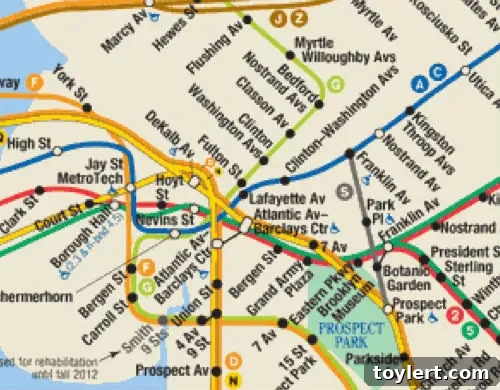
Barclays Center Officially Makes Its Mark on MTA Subway Maps: A New Era for Brooklyn Transit
The urban landscape of Brooklyn is constantly evolving, and with it, the nomenclature of its vital transit hubs. A recent and significant update to the Metropolitan Transportation Authority (MTA) subway map has officially welcomed the “Barclays Center” into its fold, marking a new chapter for one of New York City’s busiest interchange stations. This crucial revision, initially spotted on the online versions of the subway map, signifies not just a name change but a deeper integration of modern commercial landmarks with the city’s historic public transit system.
For years, the intersection of Atlantic Avenue and Flatbush Avenue in Brooklyn has served as a pivotal transportation nexus. It’s a gateway not only to diverse Brooklyn neighborhoods but also a critical link for commuters traveling to and from Long Island via the Long Island Rail Road (LIRR). The addition of “Barclays Center” to the station’s official designation, transforming it into “Atlantic Avenue-Barclays Center,” reflects the growing prominence of the multi-purpose arena as a cultural and economic anchor for the borough.
The Genesis of the Name Change: A Strategic Naming Rights Deal
The decision to incorporate “Barclays Center” into the subway station’s name wasn’t a spontaneous one; it was the result of a meticulously planned naming rights agreement approved back in 2009. This deal, a strategic partnership between the MTA and Barclays Center developer Bruce Ratner, underscores a modern trend where public transit authorities leverage commercial partnerships to secure much-needed funding.
According to reports, Bruce Ratner’s development company agreed to pay the MTA a substantial sum of $200,000 over a span of 20 years for the privilege of integrating the arena’s name into the iconic subway map and station signage. While some may debate the ethics or aesthetics of commercializing public infrastructure, such agreements provide a crucial revenue stream that can support operational costs, maintenance, and future upgrades for the vast and complex transit network that serves millions daily.
This financial injection, though seemingly modest in the grand scheme of the MTA’s multi-billion dollar budget, represents a tangible benefit derived from the burgeoning development surrounding the Atlantic Yards/Pacific Park project. It highlights a pragmatic approach by the MTA to explore alternative funding mechanisms beyond traditional farebox revenue and government subsidies.
Phased Implementation: Online First, Physical Signage to Follow
As is often the case with large-scale logistical changes within a system as expansive as the MTA, the implementation of the new name is being rolled out in phases. The initial update saw “Atlantic Avenue-Barclays Center” appear on the online versions of the subway map, providing immediate visibility for digital users and early adopters of information. This digital-first approach allows for rapid dissemination of updates and reaches a tech-savvy segment of commuters and visitors.
However, the more tangible and universally recognized elements of the transit system—the printed subway maps distributed throughout the city, and the prominent station signage—are slated for updates later in the summer. This delay is understandable given the logistical complexities and costs associated with manufacturing and installing new signage across a major transit hub that connects nine subway lines (2, 3, 4, 5, B, D, N, Q, R, W) and the LIRR at Atlantic Terminal. Once these physical updates are complete, the new name will be fully integrated into the everyday experience of countless commuters and visitors.
Public Scrutiny and the “Sloppy” Criticism: A Debate on Precision
While the addition of “Barclays Center” to the station name is a significant development, it has not been without its critics. The Atlantic Yards Report, a notable voice in monitoring the Pacific Park (formerly Atlantic Yards) development, was quick to weigh in, characterizing the MTA’s execution of the name change as “sloppy.”
The crux of the criticism revolves around the comprehensive historical naming of the transit hub. The station has long been known as Atlantic Avenue/Pacific Street, acknowledging its significant entrances and platforms on both major thoroughfares. Specifically, the entrance to the N, R, and D lines along Fourth Avenue historically featured both names, as evidenced by earlier maps. Critics argue that by simply appending “Barclays Center” to “Atlantic Avenue” and seemingly omitting “Pacific Street,” the MTA might be misleading straphangers, particularly those who rely on the Pacific Street entrance or are less familiar with the area’s geography.
The argument posits that if consistency were paramount, the station along the N/R/D lines should logically be renamed “Pacific St-Barclays Center” or, at the very least, the full historic “Atlantic Av/Pacific St-Barclays Center” should have been adopted. This level of detail highlights the public’s expectation of accuracy and clarity from a transit authority, especially when dealing with fundamental wayfinding information. The debate underscores the delicate balance between commercial branding, historical accuracy, and user-friendly navigation in urban planning.
The Broader Context: Atlantic Yards/Pacific Park and Urban Transformation
The renaming of this crucial transit hub is inextricably linked to the much larger Atlantic Yards/Pacific Park development project, a controversial yet transformative undertaking in the heart of Brooklyn. The Barclays Center arena itself, which opened in 2012, was the centerpiece of this massive urban renewal effort. It brought not only a major sports and entertainment venue to Brooklyn but also catalyzed significant residential and commercial construction in the surrounding area.
The development has fundamentally altered the physical and social fabric of the neighborhood, bringing thousands of new residents, businesses, and increased foot traffic. The transit hub, already a major artery, has seen its importance amplified by the sheer volume of people attending events at the Barclays Center, commuting to new residences, or working in the revitalized commercial spaces. The name change, therefore, is more than just a marketing ploy; it’s an acknowledgment of the area’s profound transformation and the arena’s central role within this new urban paradigm.
Connectivity and the Unparalleled Importance of the Hub
Regardless of the naming specifics, the Atlantic Avenue-Barclays Center transit hub remains an unparalleled nexus of connectivity in New York City. It serves as a vital interchange for nine distinct subway lines—the 2, 3, 4, 5, B, D, N, Q, R, W—providing comprehensive access across Brooklyn, Manhattan, Queens, and beyond. Moreover, its direct connection to the LIRR at Atlantic Terminal makes it an indispensable link for suburban commuters from Long Island, effectively bridging regional transportation networks.
This multi-modal connectivity underscores its strategic importance, not only for daily commuters but also for the economic vitality of Brooklyn. It facilitates the movement of people to jobs, educational institutions, cultural sites, and now, a premier entertainment venue. Its role in regional mobility and accessibility cannot be overstated, making its official nomenclature a point of interest for millions.
Impact on Local Residents, Visitors, and Branding
For local residents, the name change might be a minor adjustment, but for visitors and tourists, especially those attending events at the Barclays Center, the clear inclusion of the arena’s name on subway maps provides immediate and intuitive guidance. It simplifies wayfinding, reducing potential confusion and enhancing the visitor experience.
From a branding perspective, the renaming strengthens the identity of the Barclays Center as a landmark deeply integrated into the city’s infrastructure. It reinforces its status as a major destination, much like Madison Square Garden or Lincoln Center, which are directly associated with their nearest transit stops. This symbiotic relationship between a venue and its transit access is crucial for its long-term success and accessibility.
MTA’s Evolving Approach to Naming Rights and Public-Private Partnerships
The Atlantic Avenue-Barclays Center naming rights deal is not an isolated incident but part of a broader trend where public transit agencies explore commercial partnerships to augment funding. While these deals can generate revenue, they also spark conversations about the balance between public service, historical preservation, and commercial interests. The MTA, like many other large public entities, continuously navigates these complex waters, seeking innovative ways to fund its operations and maintain its aging infrastructure without solely relying on fare increases or diminishing public subsidies.
These partnerships highlight an evolving landscape in urban development and public transit. They underscore a shift towards more integrated approaches where private development, public infrastructure, and commercial branding converge to create dynamic urban centers.
Conclusion: A Symbol of Brooklyn’s Dynamic Growth
The official integration of “Barclays Center” into the MTA subway map is more than just a trivial update; it’s a symbolic marker of Brooklyn’s continued transformation and dynamic growth. It encapsulates the interplay between large-scale urban development, public transportation infrastructure, and commercial branding. While the meticulous scrutiny from watchdogs like the Atlantic Yards Report reminds us of the importance of precision and historical context in such changes, the new name ultimately reflects the contemporary reality of the Atlantic Avenue transit hub as a gateway to both historic Brooklyn and its vibrant, modern future.
As the summer progresses and physical maps and signage are updated, “Atlantic Avenue-Barclays Center” will become a universally recognized designation, guiding countless individuals to one of New York City’s most energetic and strategically vital locations. It stands as a testament to the ongoing evolution of our urban spaces and the ever-adapting systems that connect them.