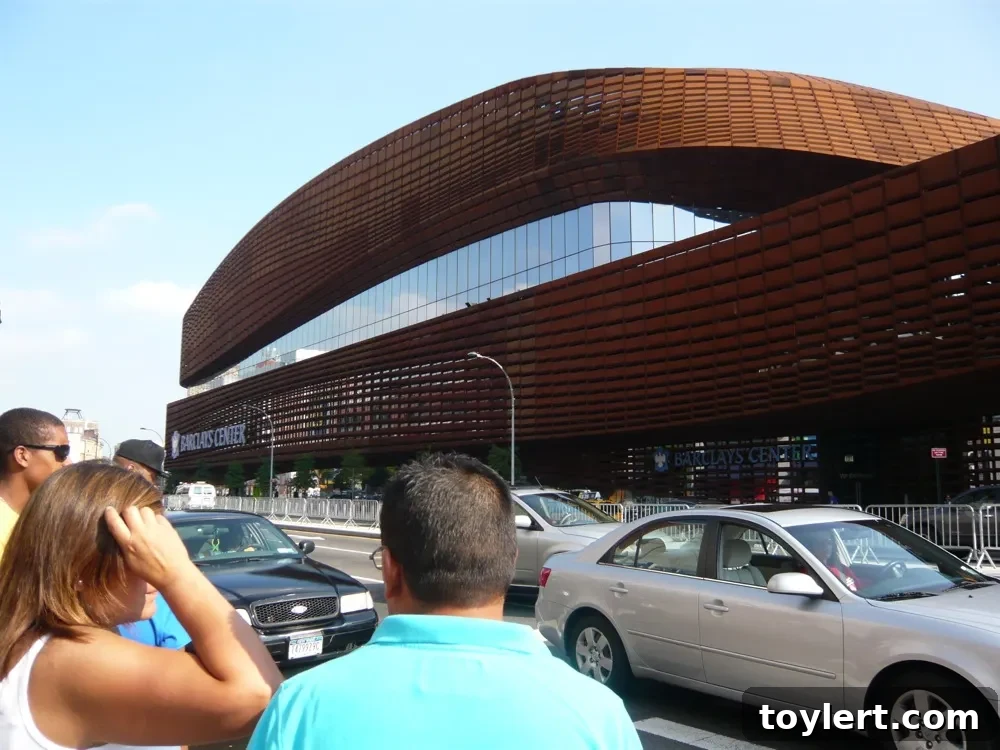
This month marks Brownstoner’s Steel Anniversary. As we reflect on our past achievements and look forward to shaping new futures, we turn our gaze to an architectural landmark that has not only redefined Brooklyn’s skyline but also set a groundbreaking trend in modern design: the Barclays Center and its iconic Corten steel facade. Its bold presence serves as a testament to innovation, blending history with modernity in a truly captivating way.
The Barclays Center: A Brooklyn Landmark Forged in Weathered Steel
Standing prominently at the intersection of Atlantic and Flatbush Avenues, the Barclays Center in Brooklyn is far more than just a sports and entertainment arena. Since its grand opening in September 2012, it has emerged as a powerful architectural statement, instantly recognizable for its distinctive and somewhat rebellious exterior. The weathered steel facade, a material choice that was audacious at the time, has since captivated the imagination of architects and urban planners worldwide, evolving from a unique design element into a widespread and celebrated architectural trend. This structure doesn’t just house events; it embodies a narrative of urban regeneration, industrial legacy, and audacious design, making it a true centerpiece of Brooklyn’s evolving identity.
A Bold Vision: Connecting to Brooklyn’s Industrial Heritage Through Design
The design philosophy behind the Barclays Center was a deliberate departure from the glossy, often sterile aesthetic typically associated with contemporary stadiums. Led by AECOM in collaboration with the innovative minds at SHoP Architects, the aim was to create a building that felt intrinsically “Brooklyn” – a structure that resonated with the borough’s gritty industrial past while simultaneously signaling its vibrant future. Corten steel, commonly known as weathering steel, was chosen as the primary material for its remarkable ability to develop a stable, rust-like patina when exposed to the elements.
This deliberate choice endowed the building with an immediate sense of character and permanence, creating a facade that appears both ancient and strikingly modern. The intricate, basket-weave pattern of the facade, meticulously crafted from 12,000 unique panels, further enhances its visual complexity. This isn’t merely a static skin; it’s a dynamic surface that continually changes with the play of light and shadow, evolving in color and texture over time. The initial reddish-brown hues have deepened into a rich, dark umber, offering a tactile and visual experience that perfectly harmonizes with the urban fabric while making an unmistakable and powerful architectural statement. The way the light catches the textured surface at different times of day, from the warm glow of sunrise to the dramatic shadows of dusk, ensures the building is always presenting a fresh perspective to passersby.
Decoding Corten Steel: The Science Behind the Self-Protecting Patina
Understanding the properties of Corten steel is key to appreciating the visionary design of the Barclays Center. Unlike conventional steel, which would corrode and deteriorate when exposed to atmospheric conditions, Corten steel is a special alloy developed to form a protective layer of rust – its celebrated “patina.” This dense, impermeable layer acts as a barrier, effectively sealing the underlying metal from further environmental degradation. This innovative characteristic offers a myriad of advantages that made it an ideal choice for a landmark like the Barclays Center:
- Exceptional Durability and Longevity: Corten steel boasts superior strength and resilience, capable of withstanding extreme weather conditions, ensuring the structural integrity and aesthetic appeal of buildings for decades with minimal intervention. Its robust nature makes it an excellent choice for high-traffic urban environments.
- Remarkably Low Maintenance: Once the protective patina fully develops (a process that typically takes 1-3 years depending on the environment), the material requires virtually no ongoing painting, coating, or extensive repairs. This translates into substantial long-term cost savings and reduced maintenance efforts compared to facades that demand regular upkeep and chemical treatments.
- Unique and Evolving Aesthetic Appeal: The warm, earthy tones of Corten steel provide a distinctive visual warmth and rugged sophistication. Its color palette subtly shifts with the changing seasons, rainfall, and sunlight, ensuring the facade remains a captivating and ever-evolving work of art. This natural, organic aging process is a core part of its charm, offering a connection to natural cycles within a man-made structure.
- Sustainability and Environmental Responsibility: Corten steel is a highly recyclable material, aligning with contemporary demands for sustainable construction practices. Furthermore, its low maintenance requirements minimize the environmental impact associated with chemical paints, solvents, and frequent refurbishment activities, contributing to a greener urban footprint.
The selection of Corten for the Barclays Center was a bold architectural gambit, challenging conventional notions of pristine urban development. It embraced the natural process of oxidation, transforming what might traditionally be perceived as a flaw into a defining characteristic of beauty, authenticity, and enduring resilience, ultimately setting a new precedent for material application in public architecture.
The Barclays Center’s Profound Influence on Contemporary Architecture and Urban Planning
The completion of the Barclays Center marked a pivotal moment, not just for Brooklyn, but for the broader architectural discourse. Its celebrated facade demonstrated unequivocally that raw, industrial materials could be elevated to create structures of profound sophistication and iconic status. This success ignited a burgeoning trend, inspiring a new generation of architects and developers globally to explore similar materials and finishes to evoke a deeper sense of authenticity, place, and environmental responsiveness in their designs. The building proved that an arena could be both a massive public venue and a piece of public art.
Redefining the Modern Arena Aesthetic
Prior to the Barclays Center, the prevalent trend for major sports and entertainment venues leaned towards sleek, often ethereal designs dominated by glass, polished metal, and large digital screens. The Corten facade offered a compelling alternative narrative—one that celebrated an industrial heritage and rugged individuality. It powerfully demonstrated that a colossal public building could be both monumental in scale and intimately connected to its urban context, fostering a sense of belonging and local pride rather than imposing an impersonal, monolithic structure. It became a model for how arenas could engage with their surroundings.
A Catalyst for Transformative Urban Regeneration
The construction of the Barclays Center was a cornerstone of the ambitious Atlantic Yards development project, now known as Pacific Park. Its presence has proven instrumental in the revitalization and dynamic transformation of the surrounding neighborhoods. By drawing millions of visitors annually, attracting new businesses, and fostering residential growth, the arena has become a potent economic and cultural engine. The building’s distinctive design acts as a powerful beacon, significantly contributing to Brooklyn’s burgeoning global image as a vibrant hub of culture, innovation, and dynamic urban life. It symbolized a new era for downtown Brooklyn, anchoring development and injecting fresh energy into the area.
Corten Steel’s Enduring Legacy: A Global Architectural Phenomenon
While Corten steel had been utilized in various capacities before, the Barclays Center undeniably propelled it into the architectural mainstream. What was once largely confined to specific industrial applications or the portfolios of avant-garde designers swiftly became a sought-after material for high-profile cultural institutions, commercial complexes, and even bespoke residential projects worldwide. Architects and developers embraced Corten for its compelling combination of low maintenance, inherent durability, and, crucially, its unparalleled aesthetic versatility. From striking building facades that tell a story of time and exposure to intricate public art installations that meld seamlessly with their natural surroundings, Corten steel now symbolizes a refined design philosophy that champions authenticity, longevity, and a nuanced interplay between material and environment.
However, this widespread adoption has also illuminated critical design considerations. Architects must diligently plan for the initial runoff of rust particles during the patina formation stage, as this can potentially stain adjacent surfaces like light-colored concrete, pavement, or glass. This necessitates meticulous detailing, strategic drainage solutions, and careful site management during the construction and early operational phases—valuable lessons continually refined since the pioneering architectural applications of Corten steel. Despite these challenges, the material’s benefits and distinctive character continue to outweigh potential drawbacks for many visionary projects.
More Than Just a Facade: The Vibrant Heartbeat of Brooklyn Life
Beyond its undeniably captivating exterior, the true impact and enduring legacy of the Barclays Center reside in its role as a pulsating community and cultural hub. It proudly serves as the home court for the NBA’s beloved Brooklyn Nets and previously hosted the NHL’s New York Islanders, successfully bringing major league sports back to the borough and igniting a profound sense of local pride and identity. Far exceeding its sporting functions, the arena continuously hosts an array of world-class concerts, theatrical performances, family shows, and diverse cultural events, attracting millions of patrons each year and firmly establishing its status as a major economic and cultural catalyst for Brooklyn.
Its strategic and unparalleled location, directly integrated with one of New York City’s largest and most bustling transit hubs—the Atlantic Avenue-Barclays Center subway and LIRR station—ensures exceptional accessibility for audiences from across the city and beyond. This seamless integration with multiple public transportation arteries underscores its role as a truly urban arena, thoughtfully designed to serve the needs and rhythms of a dynamic modern metropolis, making it a truly accessible destination for all. The presence of such a landmark has not only stimulated economic growth but has also fostered a renewed sense of community pride and engagement throughout the borough.
A Timeless Structure in a Constantly Evolving Cityscape
The weathered Corten steel exterior of the Barclays Center, which initially sparked considerable debate and intrigued curiosity upon its unveiling, has since gracefully matured into an undisputed iconic landmark. Its unique aesthetic, born from the very natural process of aging and exposure, powerfully embodies a message of resilience, authenticity, and the inherent beauty of evolution. As Brownstoner commemorates its own significant milestones, looking back at a rich history while eagerly charting a course for the future, the Barclays Center stands as a remarkable testament to innovative design that not only endures but profoundly inspires. It consistently redefines the urban landscape and enriches the fabric of Brooklyn. It is unequivocally more than just a building; it is a permanent, living, evolving fixture—a rusted masterpiece that will continue to tell its compelling story to generations yet to come, firmly etched into the soul of New York City, solidifying Brooklyn’s place on the global architectural stage.