Barclays Center Opens: A New Era for Brooklyn’s Sports and Entertainment Landscape
After a monumental journey spanning nine years of intricate planning, fervent protests, and diligent construction, the Barclays Center officially opened its doors today, marking a transformative moment for Brooklyn and the greater New York City area. The grand inauguration ceremony drew a significant crowd and featured a host of influential figures who gathered to herald the new Atlantic Avenue development project. Among the prominent attendees were Mayor Bloomberg, Borough President Markowitz, Nets owner Mikhail Prokhorov, and developer Bruce Ratner, all of whom delivered speeches brimming with praise for the newly unveiled multi-purpose arena.
The celebratory atmosphere was palpable, with a clear current of self-congratulation flowing throughout the event. Mayor Bloomberg captured the sentiment of the day, declaring, “This is a great day for Brooklyn and a great day for New York City.” His words underscored the perceived triumph of the project, a sentiment echoed by other dignitaries. Bruce Ratner and Mikhail Prokhorov, the key architects of the arena’s realization, exchanged effusive compliments, each referring to the other as “the best partner” they had ever collaborated with. The gathering of such powerful and wealthy individuals did not go unnoticed, with one observer from McBrooklyn astutely noting that the four main figures represented “about $41 billion dollars worth of humanity,” highlighting the immense financial power behind this ambitious urban undertaking.
In a gesture seemingly aimed at connecting with everyday New Yorkers and promoting public transit, Mayor Bloomberg announced that he had purchased a season pass for the newly relocated Brooklyn Nets and arrived at the arena “by subway, naturally.” This public display was undoubtedly an effort to encourage future arena-goers to utilize the city’s extensive subway system, alleviating potential traffic congestion and reinforcing the accessibility of the new venue.
A Decade of Development and Disagreement: The Atlantic Yards Project
The opening of the Barclays Center is not merely the unveiling of a new building; it’s the culmination of the much larger and often contentious Atlantic Yards project, now known as Pacific Park. This ambitious urban redevelopment initiative aimed to revitalize a significant area of Brooklyn, promising a sprawling complex that would include not only the arena but also thousands of residential units, office spaces, and retail opportunities. The journey from conception to completion was fraught with challenges, becoming a microcosm of the complex dynamics inherent in large-scale urban development.
For nearly a decade, the project faced intense scrutiny and persistent opposition. Community groups, local residents, and activists voiced significant concerns over issues such as the use of eminent domain to acquire private property, the environmental impact of such a massive construction, and the potential displacement of existing communities. These protests were not just isolated incidents; they represented a sustained effort by many to hold developers and city officials accountable for the promises made and the potential repercussions of the project on Brooklyn’s vibrant neighborhoods.
The Unheard Voices: Protests and Unmet Promises at the Gates
While the ribbon-cutting ceremony unfolded inside, a starkly different scene played out just outside the Barclays Center. A vocal contingent of protesters gathered, turning the celebration into a platform for dissent and a reminder of the project’s controversial underpinnings. Among them were three individuals cleverly disguised as puppets representing Mayor Bloomberg, Governor Cuomo, and Borough President Markowitz, a satirical act designed to highlight their perceived detachment from the concerns of ordinary citizens.
These protesters actively distributed fliers detailing what they claimed were unmet promises from the developers regarding the creation of 10,000 jobs and the provision of 2,250 units of affordable housing. For many, these pledges were a cornerstone of the project’s justification, and their perceived failure to materialize fueled ongoing anger and frustration. Representatives from various unions also joined the demonstration, vociferously calling for “good-paying union jobs,” arguing that local labor should benefit significantly from such a massive public-private venture. The sentiment of being ignored was palpable, with one protestor lamenting, “They won’t even return our calls,” underscoring a feeling of marginalization and powerlessness against powerful economic forces.
The protests were not a one-off event; they were part of a planned series of “pop-up actions” scheduled to continue outside the arena, demonstrating the deep-seated nature of the grievances and the determination of activists to keep the conversation about accountability alive. The demonstrations highlighted the persistent tension between the vision of urban renewal championed by developers and politicians, and the lived experiences and demands of the local communities directly impacted by such developments.
The Economic and Cultural Ripple Effect for Brooklyn
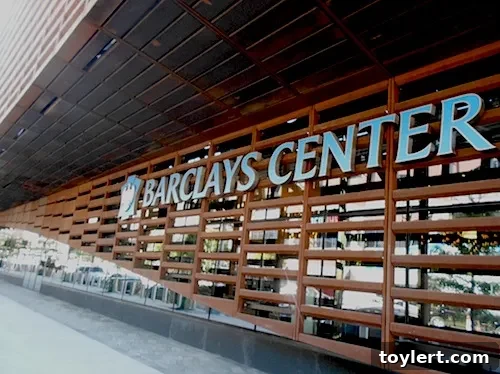
Despite the controversies, the Barclays Center is poised to be a significant economic and cultural engine for Brooklyn. Its presence as a major sports and entertainment venue is expected to generate new revenue streams, attract tourism, and create a multitude of job opportunities, albeit the nature and extent of these jobs remain a point of contention for some. The arena’s distinctive corten steel façade, designed by SHoP Architects, has also added a striking architectural landmark to the Brooklyn skyline, contributing to the borough’s evolving identity.
A notable aspect of the arena’s operation is its commitment to integrating local flavor. Several beloved Brooklyn-based food vendors are slated to sell their offerings within the arena, including Brooklyn Farmacy, known for its nostalgic sodas and ice cream; Fatty ‘Cue, bringing its unique take on barbecue; and Calexico, offering its popular Mexican street food. This initiative not only provides diverse dining options for attendees but also supports local businesses, fostering a sense of community engagement within the large-scale venue.
The arrival of the Brooklyn Nets from New Jersey signifies a homecoming for professional basketball to the borough, invigorating local sports fans and establishing a strong sense of team identity. The much-anticipated first game on November 1st against the New York Knicks is set to ignite a fierce cross-city rivalry, adding a new chapter to the storied history of New York sports.
A New Era of Entertainment: Jay-Z and Beyond
Beyond sports, the Barclays Center is set to become a premier entertainment destination. The honor of being the arena’s inaugural performer goes to Brooklyn’s own music icon, Jay-Z. His series of sold-out concerts, commencing next Friday, will not only christen the venue but also solidify its status as a major cultural hub. Jay-Z’s deep roots in Brooklyn, coupled with his global appeal, make him an ideal choice to launch what promises to be an impressive lineup of future events. His performances are more than just concerts; they are a symbolic moment for the borough, celebrating its cultural vibrancy and its new position on the global entertainment stage.
The arena’s programming schedule extends far beyond basketball games and hip-hop concerts. It is designed to host a wide array of events, including other major musical acts, family shows, conventions, and community gatherings, establishing itself as a versatile multi-purpose venue capable of accommodating diverse audiences and interests. This comprehensive approach ensures that the Barclays Center will be a dynamic and constantly evolving center of activity, contributing significantly to Brooklyn’s cultural life and economic vitality for years to come.
Conclusion: A Landmark with a Legacy
The opening of the Barclays Center is undoubtedly a landmark event, ushering in a new chapter for Brooklyn. It represents a significant investment in urban infrastructure and entertainment, promising economic growth and cultural enrichment for the borough and New York City. Yet, its story is also intertwined with a decade of fervent community activism and ongoing questions about equitable development and social responsibility. As the cheers of fans and the melodies of performers fill the arena, the echoes of protest outside serve as a powerful reminder that large-scale urban transformation invariably carries multifaceted impacts, creating both celebrated opportunities and enduring challenges.
For those eager to delve deeper into the architectural marvel and vibrant atmosphere of the Barclays Center’s inaugural moments, numerous photo galleries are available, showcasing the arena’s stunning interiors and the enthusiastic crowds that flocked to witness this historic opening.