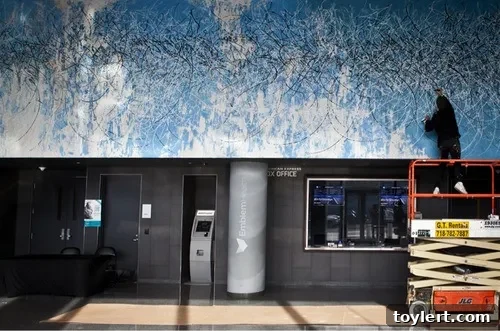
The Epic Narrative of Brooklyn: José Parlá’s “Diary of Brooklyn” Mural at Barclays Center – A Deep Dive into Brooklyn’s Artistic Soul
At the heart of Brooklyn’s vibrant cultural landscape, within the modern grandeur of the Barclays Center, lies a monumental artistic achievement that beautifully encapsulates the borough’s dynamic spirit: José Parlá’s “Diary of Brooklyn.” This spectacular 70-foot-long mural, unveiled to the public in early 2013, stands as a testament to Brooklyn’s rich history, diverse communities, and pulsating energy. Conceived by the Brooklyn-based artist, this abstract masterpiece was designed to serve as a visual narrative, offering visitors and residents alike a profound connection to the essence of one of New York City’s most iconic boroughs.
Capturing Brooklyn’s Soul: The Vision Behind the Mural
The “Diary of Brooklyn” is far more than just a large painting; it is a meticulously crafted visual poem. Spanning an impressive 70 feet, the artwork instantly commands attention, drawing viewers into its intricate layers of color, texture, and calligraphy. Its primary mission, as envisioned by Parlá and articulated by sources like Curbed, was to “capture the energy and vitality of the borough.” This ambition necessitated an artwork that could simultaneously reflect the historical depth and the relentless forward momentum of Brooklyn. The mural’s abstract nature allows it to transcend specific moments or landmarks, instead offering an emotional and experiential representation of the borough, making it universally relatable to anyone who has lived in, visited, or dreamed of Brooklyn.
Parlá’s unique artistic language, characterized by layered gestures, calligraphic marks, and an aesthetic deeply rooted in urban landscapes, makes him the perfect interpreter for Brooklyn’s story. The “Diary of Brooklyn” is a vibrant tapestry woven from the threads of countless experiences, voices, and eras. Each stroke and splash of color contributes to a complex narrative that evokes the borough’s diverse architecture, the rhythm of its streets, the echoes of its past, and the aspirations for its future. It’s a dynamic composition that invites contemplation, revealing new details and perspectives with every glance, truly embodying the ever-evolving nature of Brooklyn itself.
José Parlá: A Voice from Brooklyn
The genius behind “Diary of Brooklyn” is José Parlá, an artist whose personal history is as intertwined with urban landscapes as his art. Born in Miami to Cuban parents, Parlá’s formative years were heavily influenced by the vibrant street art scene of cities like Miami and New York. His artistic journey began with graffiti, honing his distinctive calligraphic style that seamlessly blends abstract painting with the raw energy of urban expression. Moving to Brooklyn, he immersed himself in its culture, finding endless inspiration in its grittiness, its beauty, and its profound sense of community. This deep personal connection to the borough is palpable in the “Diary of Brooklyn,” making it an authentic and heartfelt tribute.
Parlá’s work is renowned for its layers—both literally and metaphorically. He employs a process that involves building up surfaces with plaster, paint, and found materials, then etching, scratching, and painting over them. This technique creates a rich, textural depth that mimics the weathered walls and layered histories found in urban environments. His abstract compositions often incorporate elements resembling ancient scripts or fragmented writings, hinting at narratives without explicitly defining them. This allows viewers to project their own stories and interpretations onto the canvas, fostering a deeply personal engagement with the artwork. “Diary of Brooklyn” exemplifies this approach, offering a visual diary that chronicles the spirit of the borough through his unique lens.
“Brooklyn Is”: The Literary Muse
A significant source of inspiration for “Diary of Brooklyn” was James Agee’s poetic essay, “Brooklyn Is.” Agee, a Pulitzer Prize-winning author and journalist, penned this evocative piece in the 1930s, offering a meditative and deeply personal exploration of the borough. His words transcend mere description, delving into the emotional resonance and intangible qualities that define Brooklyn. Agee captured the borough’s unique blend of stoicism and charm, its industriousness and its quiet moments, its stark realities and its enduring hope. It’s a testament to the idea that Brooklyn is not just a place on a map but a complex, living entity with its own distinct personality.
Parlá’s decision to draw from “Brooklyn Is” speaks volumes about his artistic intention. He aimed to translate Agee’s literary introspection into a visual equivalent, transforming prose into paint. The abstract nature of the mural allows it to mirror the lyrical, non-literal quality of Agee’s essay. Instead of depicting specific landmarks, Parlá evokes the feeling of Brooklyn—the hustle of its streets, the quiet dignity of its brownstones, the diverse tapestry of its people, and the layers of history that permeate its every corner. Just as Agee sought to understand the soul of Brooklyn through words, Parlá endeavors to make it visible through his intricate, expressive marks, creating a timeless dialogue between literature and visual art.
Public Art and Urban Spaces: Barclays Center’s Commitment
The installation of “Diary of Brooklyn” within the Barclays Center highlights a growing trend in urban development: the integration of significant public art into commercial and entertainment venues. Barclays Center, a state-of-the-art arena and cultural hub, serves as more than just a venue for sports and concerts; it’s an anchor for the revitalized Atlantic Yards neighborhood. By commissioning a piece of this magnitude from a Brooklyn-based artist, the Barclays Center demonstrates a commitment to enriching the public experience beyond its primary functions. Such installations elevate the space, transforming it from a mere transit point or event venue into a destination for cultural engagement and reflection.
Public art plays a crucial role in shaping urban identity and fostering community pride. It makes art accessible to a broader audience, sparking conversations and offering moments of unexpected beauty in daily life. For the millions of visitors passing through Barclays Center each year, “Diary of Brooklyn” offers a powerful introduction to the borough’s artistic and cultural depth. It grounds the modern structure in the rich historical and social fabric of its surroundings, ensuring that even as Brooklyn evolves, its essential character is celebrated and preserved. This mural stands as a beacon, reminding us that art is not confined to galleries but thrives in the heart of our public spaces.
A Lasting Legacy for the Borough
“Diary of Brooklyn” has quickly become an indelible part of Brooklyn’s cultural fabric. It serves as a visual emblem, embodying the borough’s resilience, its innovative spirit, and its diverse population. The mural acts as a dynamic historical record, archiving the energy of its time while remaining open to future interpretations, much like Brooklyn itself. For residents, it’s a source of pride, a large-scale representation of their home’s unique identity. For visitors, it offers an immediate, immersive insight into what makes Brooklyn so special, drawing them into its narrative even before they explore its streets.
This collaboration between an internationally recognized artist and a major urban institution sets a precedent for how public art can be integrated into large-scale developments. It emphasizes that cultural enrichment is not an afterthought but an essential component of creating meaningful and sustainable urban environments. The “Diary of Brooklyn” will continue to inspire, provoke thought, and serve as a vibrant backdrop to countless memories, solidifying its place as a cherished landmark and a profound artistic statement that will resonate for generations to come.
The Unveiling: A Moment in Brooklyn’s Art History
The unveiling of “Diary of Brooklyn” in January 2013 was a significant moment for both the art world and the Brooklyn community. Anticipation had been building around the project, with reports from outlets like Curbed and the Atlantic Yards Report detailing Parlá’s work and the mural’s imminent debut. The event marked not just the presentation of a new artwork but the solidification of Barclays Center’s role as a cultural contributor, demonstrating how contemporary art could find a prominent home within a bustling sports and entertainment venue. It was a celebration of Brooklyn’s artistic vibrancy, shared with an eager public.
Exploring Brooklyn Through Art
José Parlá’s “Diary of Brooklyn” offers a compelling invitation to explore the borough with an artist’s eye. It encourages us to look beyond the surface, to appreciate the layers of history, culture, and individual experiences that coalesce to form Brooklyn’s unique identity. As a permanent installation, it invites repeated viewing, offering new insights each time. Whether you are a long-time resident, a new arrival, or a curious visitor, this mural serves as a powerful reminder of the profound impact that art can have in shaping our perception of place and fostering a deeper connection to our surroundings.
The enduring power of “Diary of Brooklyn” lies in its ability to tell an epic story without words, capturing the unyielding rhythm and soul of a borough that continues to inspire. It stands as a beacon of artistic excellence and a heartfelt homage to Brooklyn, ensuring that its narrative is continuously celebrated and reinterpreted by all who encounter this magnificent work.
Sources & Further Reading:
- Curbed: New Mural for Barclays Center
- Atlantic Yards Report: An Art Opening at Barclays Center
- Photo Credit: Curbed