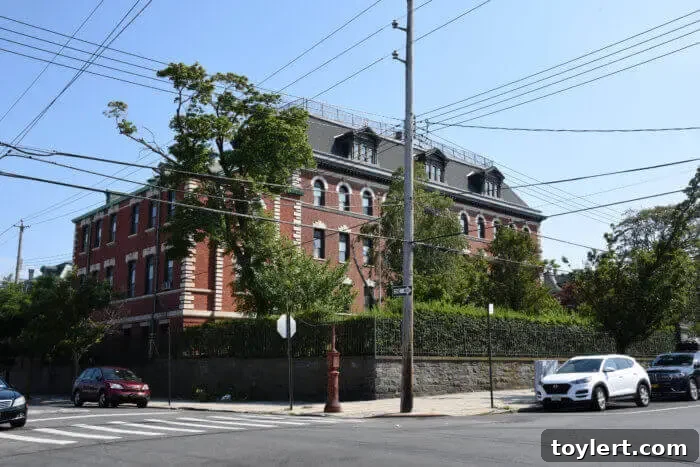
Dyker Heights Community Rallies Against Nine-Story Development Adjacent to Historic Angel Guardian Home
By Adam Daly, Brooklyn Paper
A wave of fervent opposition is sweeping through Dyker Heights, Brooklyn, as local residents and dedicated stakeholders unite against the proposed construction of a towering nine-story building. Slated to rise directly adjacent to the beloved and landmarked Angel Guardian Home on 12th Avenue, this ambitious development has ignited a fierce community debate. Residents are urgently demanding that developers address a litany of serious concerns and, crucially, halt the project altogether, asserting that the proposed structure threatens the very fabric of their historic neighborhood.
At the heart of this burgeoning protest is a grassroots organization aptly named “The Guardians of the Guardian.” This proactive group of local stakeholders orchestrated a significant rally on July 19th at the very construction site, drawing attention to the planned ambulatory diagnostic and treatment facility. The prospect of such a large-scale medical complex has generated profound anxieties among the community, primarily centered on the building’s “overwhelming scale,” which many believe is entirely out of character for the area. Beyond its sheer size, profound concerns have been raised regarding its potential detrimental impact on existing traffic congestion, the long-term stability of local property values, and the fundamental right to privacy for adjacent homes.
The Enduring Legacy of the Angel Guardian Home: A Community Anchor
To fully grasp the depth of the community’s resistance, one must understand the profound significance of the Angel Guardian Home. This architectural gem, a beacon of history in Dyker Heights, is not merely an old building; it is a designated landmark, a testament to Brooklyn’s rich past and a cherished symbol of local identity. Originally established in the late 19th century by the Sisters of Mercy, the institution served for decades as a vital orphanage and a haven for countless children in need. Its stately presence, characterized by distinctive architectural features, evokes a sense of timeless grace that profoundly contributes to the unique character of Dyker Heights.
For generations, the Angel Guardian Home has stood as a quiet sentinel, witnessing the evolution of the neighborhood around it. Its landmark status reflects not only its historical role but also its architectural merit, preserving a piece of Brooklyn’s heritage for future generations. Residents view it as an irreplaceable part of their community’s soul, a connection to the past that imbues the present with a sense of continuity and stability. The concern is that a modern, imposing nine-story structure immediately next to such a revered landmark would not only overshadow its physical presence but also diminish its historical aura, disrupting the delicate balance of the streetscape and the spiritual essence of the area.
The Proposed Development: A Clash of Modernity and Heritage
The development in question is slated to be an ambulatory diagnostic and treatment facility, a modern medical center designed to provide a range of outpatient services. While the need for accessible healthcare services is often cited as a benefit of such projects, the specific context and scale of this proposal in Dyker Heights have become a major point of contention. The building’s planned nine stories represent a significant departure from the typically lower-rise residential and commercial structures that define much of the surrounding neighborhood.
Developers often highlight the economic benefits and the provision of essential services that new facilities bring. However, for the residents of Dyker Heights, these perceived advantages are overshadowed by the very real and immediate threats they perceive. The concern isn’t necessarily about the existence of a medical facility, but its colossal footprint and height in such close proximity to a historic landmark and within a well-established residential enclave. This fundamental clash between the functional demands of contemporary development and the preservation of historical context and neighborhood character lies at the core of the ongoing dispute.
Community Concerns: A Multifaceted Opposition
The opposition to the nine-story development is not monolithic; it stems from a complex array of interconnected concerns that touch upon various aspects of urban living and community well-being. These anxieties form the bedrock of the Guardians of the Guardian’s advocacy and fuel the collective resolve of the neighborhood.
Overwhelming Scale and Aesthetic Disruption
Perhaps the most immediate and visually striking concern is the building’s “overwhelming scale.” A nine-story edifice would dramatically tower over the Angel Guardian Home and the adjacent residential properties. Residents fear that this will permanently alter the serene streetscape of 12th Avenue, creating a sense of disproportion and visual disharmony. The historic landmark, currently a dignified centerpiece, risks being dwarfed and visually diminished by the sheer mass of the new structure. This aesthetic disruption is seen as an irreversible blow to the neighborhood’s unique architectural identity and charm, fundamentally changing the character that residents cherish.
Exacerbated Traffic Congestion and Parking Woes
Dyker Heights, like many parts of Brooklyn, already grapples with significant traffic and parking challenges. The introduction of a large ambulatory diagnostic and treatment facility, which inherently generates substantial daily patient, staff, and visitor traffic, is expected to exacerbate these issues exponentially. Residents anticipate increased vehicle volume on already congested local streets, leading to longer commute times, more difficulty for local residents to find parking, and heightened noise pollution. The potential for frequent emergency vehicle traffic further complicates this picture, raising questions about accessibility and potential delays for local residents.
Impact on Property Values
The perceived impact on property values is a significant economic concern for many homeowners. Residents fear that living directly adjacent to a high-traffic, multi-story medical facility could deter potential buyers or necessitate price reductions. Factors such as increased noise, loss of privacy, and the altered aesthetic of the neighborhood can negatively influence property desirability and, consequently, market value. For many, their homes represent their most significant investment, and the threat of depreciation due to unchecked development is a powerful motivator for protest.
Erosion of Privacy
The privacy of local residents, particularly those in homes immediately adjacent to the proposed development, is gravely threatened. A nine-story building would afford its occupants direct sightlines into the private yards, living spaces, and bedrooms of neighboring homes. This loss of privacy is not merely an inconvenience; it represents a profound intrusion into personal sanctuary and a reduction in the quality of life that residents have come to expect in their neighborhood. The prospect of constant surveillance from a towering structure is a deeply unsettling thought for many.
Strain on Local Infrastructure
Beyond traffic and aesthetics, there are concerns about the strain a large new facility could place on existing local infrastructure. This includes increased demands on water supply, sewage systems, and electrical grids, which may already be operating near capacity in an older, established neighborhood. Residents worry that inadequate infrastructure upgrades could lead to service disruptions or longer-term maintenance issues, affecting the entire community.
Construction-Related Disturbances
The construction phase itself promises several years of significant disruption. Noise pollution from machinery, dust, vibrations, and increased heavy vehicle traffic are immediate concerns. Such disturbances can severely impact the daily lives of residents, affecting peace, quiet, and even the structural integrity of older homes in close proximity to the site.
The Guardians of the Guardian: A Unified Voice
The Guardians of the Guardian emerged as a direct response to these collective anxieties, uniting concerned citizens, property owners, and community leaders. Their mission is clear: to protect the historical integrity and residential quality of life in Dyker Heights, particularly in the vicinity of the Angel Guardian Home. The July 19th rally served as a powerful testament to their growing influence and the widespread nature of the opposition.
The rally drew a diverse crowd, all united under banners and chants calling for responsible development and respect for community heritage. Speakers at the event highlighted the various concerns, emphasizing the potential irreversible damage if the project proceeds as planned. This public display of solidarity was not merely symbolic; it was a strategic move to generate media attention, galvanize further community support, and send an unequivocal message to both the developers and local elected officials: the community will not stand idly by.
Beyond rallies, the Guardians of the Guardian are actively pursuing multiple avenues of advocacy. This includes organizing petitions, holding community meetings to inform and mobilize residents, engaging with local council members and borough presidents, and exploring potential legal challenges based on zoning regulations or environmental impact assessments. Their structured and sustained efforts underscore a deep commitment to preserving their neighborhood against what they perceive as an ill-conceived and overwhelming development.
Developer Accountability and Community Dialogue
While developers naturally operate with economic objectives and often highlight the societal benefits of their projects, the current situation in Dyker Heights underscores a critical need for genuine community engagement and accountability. The residents’ demand for developers to “address the concerns” is not merely a request for minor adjustments; it is an urgent plea for a fundamental re-evaluation of the project’s suitability for this specific site and context.
A truly responsible development process would involve transparent dialogue, impact studies that genuinely reflect local conditions, and a willingness to compromise or even reconsider projects that fundamentally clash with established neighborhood character and historic preservation goals. The community is not entirely against progress, but they insist that progress must be thoughtful, sustainable, and respectful of the area’s unique heritage and the well-being of its long-standing residents. The current impasse suggests a breakdown in this vital dialogue, with the community feeling unheard and their legitimate concerns unaddressed.
A Precedent for Future Urban Development
The struggle in Dyker Heights is not an isolated incident; it mirrors similar battles being waged across Brooklyn and other historic neighborhoods in New York City. As urban centers continue to densify, the tension between new development and historic preservation becomes increasingly pronounced. The outcome of the Angel Guardian Home saga could set a significant precedent for how future developments are approached in areas rich in history and community character.
This case highlights the ongoing challenge of balancing the city’s need for new facilities and housing with the imperative to protect landmarked sites and maintain the unique charm and quality of life in residential communities. It serves as a powerful reminder that while growth is inevitable, it must be managed with foresight, sensitivity, and a deep respect for the existing urban fabric and the voices of those who call these places home. The eyes of preservationists and community activists across the city will undoubtedly be on Dyker Heights as this crucial battle unfolds.