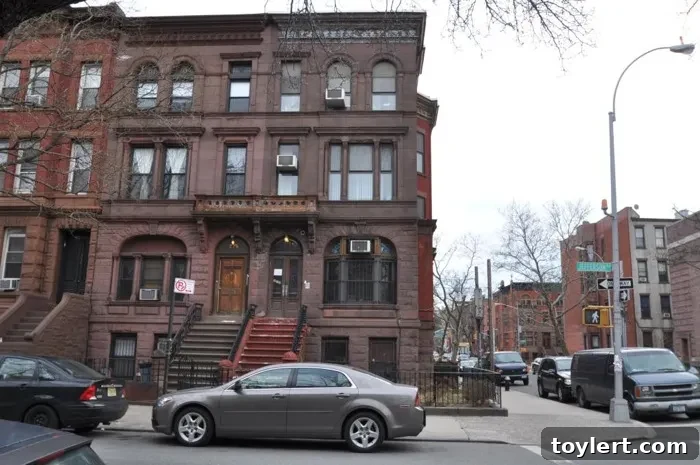
The $1.58 Million Sale of 272 Jefferson Avenue: A Deep Dive into Brooklyn’s Evolving Real Estate Market
In a significant transaction that underscores the dynamic nature of Brooklyn’s property landscape, the historic brownstone located at 272 Jefferson Avenue in Bedford-Stuyvesant recently changed hands for a staggering $1,585,000 at auction. This sale, which quickly drew attention from real estate watchers and neighborhood residents alike, was not a typical foreclosure but rather a strategic divestment by the State of New York, which had previously owned and utilized the property as an alternative school.
The acquisition, made by the prominent Australian investment firm Dixon Advisory (or one of its affiliated entities), highlights a growing trend of institutional investors targeting Brooklyn’s coveted residential market. With a minimum bid set at a comparatively modest $770,000, the final sale price sparked considerable discussion: did the buyer secure a favorable deal, or does it merely reflect the escalating values within one of New York City’s most sought-after boroughs?
The Property: A Glimpse into 272 Jefferson Avenue’s Past and Present
Brownstones are synonymous with Brooklyn’s architectural heritage, and 272 Jefferson Avenue is no exception. These iconic structures, built primarily in the 19th century, are cherished for their distinctive facades, intricate detailing, and the sense of grandeur they impart to the urban streetscape. Originally designed as single-family residences, many brownstones have undergone various transformations over the decades, adapting to the changing needs of the city.
Prior to its auction, 272 Jefferson Avenue served a unique purpose as an alternative school, a chapter that likely contributed to its current interior condition. While the exterior retains the classic brownstone charm, our sources indicate that the original interiors were largely modified during its institutional use. A Flickr page offers a revealing glimpse into the property, showing that very little of the historical detailing remains, save for a few rooms on the parlor floor. This fact is crucial for potential buyers or investors, as it signals a need for substantial renovation work to restore or modernize the space, which in turn influences the overall investment calculus.
The allure of a Brooklyn brownstone, even one requiring significant rehabilitation, remains strong. Buyers are often drawn to the inherent character, generous square footage, and the prestige associated with owning a piece of Brooklyn’s architectural legacy. Moreover, the ability to customize a property to modern standards while preserving its historic shell offers a compelling proposition for those looking to create a bespoke living or investment space.
Bedford-Stuyvesant: A Hotbed for Real Estate Investment
The location of 272 Jefferson Avenue within Bedford-Stuyvesant, affectionately known as “Bed-Stuy,” is central to understanding the property’s appeal and its robust sale price. Bed-Stuy has undergone a remarkable transformation over the past two decades, evolving from a historically underserved community into one of Brooklyn’s most vibrant and desirable neighborhoods. Its tree-lined streets, punctuated by stunning brownstones and a rich cultural tapestry, have attracted a diverse influx of residents, artists, and entrepreneurs.
The neighborhood boasts excellent transportation links, an array of trendy cafes, independent boutiques, and thriving community spaces, all contributing to its burgeoning popularity. Demand for housing in Bed-Stuy, particularly for brownstones, has consistently outstripped supply, driving property values steadily upward. This sustained growth makes the area particularly attractive to investors seeking long-term appreciation and strong rental yields.
Jefferson Avenue itself is highly regarded within Bed-Stuy, known for its picturesque blocks and proximity to various amenities. The ongoing revitalization efforts and continued investment in local infrastructure further solidify Bed-Stuy’s position as a prime location in the Brooklyn real estate market. This context is vital when assessing the final price tag for 272 Jefferson Avenue; it reflects not just the value of the physical structure but also the premium associated with its coveted address in a rapidly appreciating neighborhood.
The Auction Process and State Property Divestment
The sale of 272 Jefferson Avenue via auction by the State of New York presents an interesting case study. Government entities often acquire properties through various means, including eminent domain, donations, or as part of larger portfolio management. When such properties are no longer deemed necessary for public use, they are often divested to generate revenue and return them to the private sector. Auctions are a common and transparent method for this process, ensuring competitive bidding and fair market value.
The declared minimum bid of $770,000 served as a starting point, designed to attract interest while ensuring the state received a reasonable return. The significant jump from the minimum bid to the final sale price of $1,585,000 illustrates the intense competition among bidders and the perceived value of the asset. This gap suggests that multiple serious contenders recognized the underlying potential of the brownstone, despite its condition and the complexities of purchasing a state-owned property.
For the State of New York, an auction provides a streamlined process to liquidate assets, reduce holding costs, and contribute funds back into public coffers. For buyers, public auctions can sometimes present opportunities to acquire properties below market value, though in highly competitive markets like Brooklyn, successful bids often align closely with prevailing prices, or even exceed them, as seen in this instance.
Dixon Advisory: A Strategic Player in Brooklyn’s Rental Market
The buyer, Dixon Advisory, is an Australian investment firm with a significant footprint in the U.S. residential property market, particularly in Brooklyn. Their business model centers on acquiring properties, often single-family townhouses and brownstones, to then renovate and rent out. This strategy allows them to capitalize on the robust rental demand in urban centers and generate consistent rental income, alongside potential capital appreciation.
Dixon Advisory’s active presence in Brooklyn has been a notable trend in recent years. Their all-cash offers and efficient acquisition processes have often put them in a strong position against individual homebuyers, who typically rely on mortgage financing. While their investments contribute to the revitalization of properties and provide rental housing options, their large-scale purchasing also raises questions about market accessibility for local residents and the broader impact of institutional ownership on neighborhood dynamics. Some argue that such firms drive up prices, making homeownership less attainable for everyday Brooklynites, while others point to their role in improving housing stock and professionalizing the rental market.
For Dixon Advisory, 272 Jefferson Avenue fits perfectly into their portfolio. Its prime location in Bed-Stuy, combined with its brownstone architecture, promises strong rental appeal once renovated. The firm’s expertise in property management and renovation allows them to transform properties like this into attractive rental units, commanding premium rents in a highly competitive market.
Analyzing the Price: Was $1,585,000 a Good Deal?
The question of whether $1,585,000 represents a “good price” is multifaceted and depends heavily on perspective. From the State of New York’s viewpoint, selling a non-performing asset for more than double the minimum bid would likely be considered a successful outcome, reflecting strong market demand and a maximized return on a property no longer needed.
For Dixon Advisory, assessing the “goodness” of the price involves a complex calculation. They factor in not only the purchase price but also the substantial renovation costs required to bring the property up to their standards for rental. The firm would have conducted extensive due diligence, including comparable market analyses of similar renovated brownstones in Bed-Stuy, projected rental income, and anticipated property appreciation over their investment horizon. Their internal models would dictate whether this price, plus all associated costs, yields an acceptable return on investment.
Given the general upward trajectory of Brooklyn real estate, particularly for brownstones in prime neighborhoods like Bed-Stuy, securing such a property, even with significant renovation needs, can be seen as a strategic long-term play. The potential for future capital gains, coupled with steady rental income, could justify the initial outlay for a well-capitalized investor like Dixon Advisory.
For individual homebuyers in the market, the price might appear daunting. However, it’s essential to remember that institutional investors operate on different scales and with different financial metrics than private individuals. What constitutes a “good deal” for a large investment firm might be an entirely different calculus for someone looking to buy a primary residence.
Implications for the Future of 272 Jefferson Avenue and Bed-Stuy
The sale of 272 Jefferson Avenue to Dixon Advisory marks a new chapter for this historic brownstone. We can anticipate significant renovation work in the coming months, transforming the former alternative school into modern, high-quality rental units. This will likely enhance the immediate block and contribute to the overall aesthetic appeal of the neighborhood.
For the Bed-Stuy community, the ongoing acquisition of properties by firms like Dixon Advisory signals continued investment and development. While this often brings positive changes, such as improved housing stock and increased property values, it also contributes to discussions around affordability and gentrification. The influx of institutional landlords can alter the demographic and economic fabric of a neighborhood, impacting long-standing residents and local businesses.
As Brooklyn continues to evolve, properties like 272 Jefferson Avenue stand as testaments to its enduring appeal and the complexities of its real estate market. This transaction is more than just a property sale; it’s a microcosm of the larger trends shaping one of the world’s most dynamic urban environments.
Only time will tell the full story of 272 Jefferson Avenue under its new ownership, but one thing is certain: its journey from state-owned alternative school to a prized asset in an investment firm’s portfolio reflects the relentless energy and changing fortunes of Brooklyn’s brownstone market.