Demolition Approved: A Century-Old Wood-Frame House on Franklin Avenue in Bed-Stuy Faces the Wrecking Ball
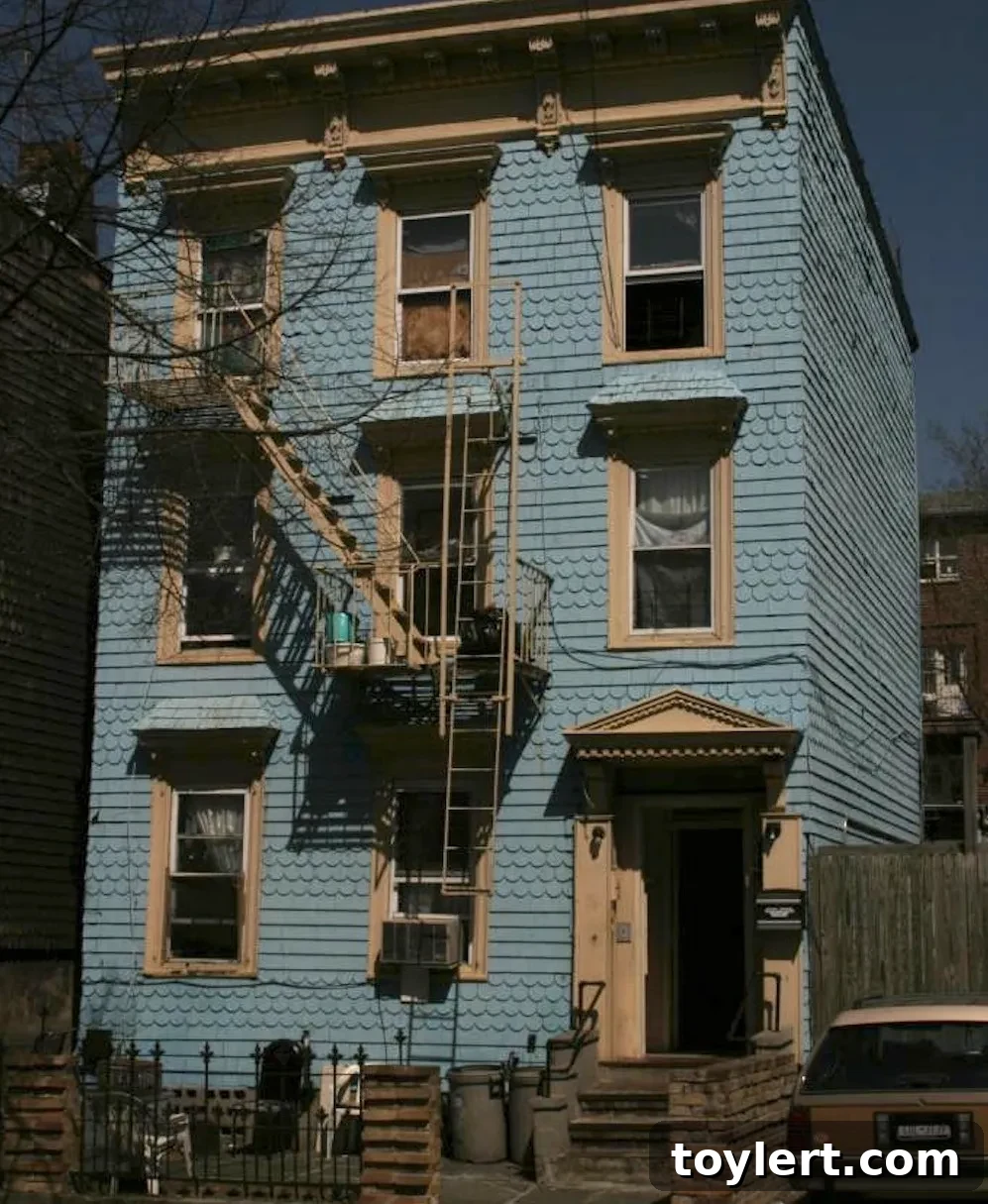
In a significant development that underscores the relentless pace of urban evolution in one of Brooklyn’s most sought-after neighborhoods, the New York City Building Department recently granted a demolition permit for the historic wood-frame house situated at 123 Franklin Avenue. This freestanding, three-family residence, located in the vibrant northwestern corner of Bed-Stuy, is now slated for removal, making way for what promises to be a transformative new development. The decision reflects a larger trend sweeping across Brooklyn, where cherished century-old structures are increasingly being replaced by modern constructions, signaling a new chapter for the borough’s architectural landscape.
The approval for 123 Franklin Avenue’s demolition has inevitably ignited conversations among local residents, preservationists, and urban planning enthusiasts. The property itself is notable not only for its distinctive wood-frame construction, a hallmark of earlier Brooklyn architecture, but also for its exceptionally oversized lot—a rare and valuable asset in today’s highly dense urban environment. Further enhancing its appeal to developers, the current owner also holds the deed to the adjacent, currently vacant lot at 125 Franklin Avenue. This strategic acquisition strongly suggests a consolidated development plan that could dramatically reshape the appearance and functionality of this specific block in Bedford-Stuyvesant.
The Franklin Avenue Property: A Vestige of Brooklyn’s Architectural Heritage
The house at 123 Franklin Avenue stands as a tangible link to a bygone era of residential architecture in Brooklyn. Wood-frame houses, once a common sight throughout the borough, encapsulate a unique segment of its history. Many of these structures, including the one now facing demolition, have proudly stood for well over a century, silently observing the dynamic tapestry of neighborhood life, the evolution of communities, and countless personal narratives interwoven with the very fabric of the city. Their architectural style, often characterized by intricate exterior detailing and a more human-scale presence, offers a stark contrast to the predominantly brick or masonry buildings that define much of New York City’s urban form.
Designed as a three-family home, this particular residence exemplifies a historical housing model that traditionally offered accessible living options and fostered close-knit community bonds. Its generous lot size further amplifies its significance. In a real estate market where every square foot is meticulously valued, an oversized parcel like this represents an unparalleled opportunity for developers aiming to maximize their investment potential. The freestanding nature of the house also confers practical advantages, as it typically involves fewer structural dependencies on adjacent buildings, which can streamline both the demolition process and the subsequent construction phase, making it an even more attractive prospect for redevelopment.
Strategic Land Consolidation: The Future of 123 and 125 Franklin Avenue
A pivotal aspect of this impending development is the developer’s ownership of the neighboring vacant lot at 125 Franklin Avenue. This adjoining parcel possesses a unique configuration, described as long and narrow, extending alongside the structure at 123 Franklin Avenue and then cleverly wrapping around its rear. This layout effectively broadens the combined backyard area, making it an ideal candidate for lot consolidation—a widely adopted strategy among developers to create larger, more financially viable building sites.
By merging these two distinct properties, the developer secures a significantly more substantial land area than either lot could offer individually. This expanded footprint opens the door for the construction of a much larger, potentially multi-unit residential building, or even a sophisticated mixed-use development, far surpassing the scale achievable on a single parcel. The ability to utilize the full depth and breadth of both properties unlocks considerable development potential, often leading to projects that are not only more economically attractive but also promise a greater return on investment within Brooklyn’s vigorously competitive real estate market. This strategic maneuver highlights the meticulous planning that often precedes such high-profile demolitions, where developers envision not just the replacement of a single structure but the creation of a comprehensive land package poised for ambitious new construction.
A Widespread Trend: The Disappearing Wood-Frame Houses of Brooklyn
The planned demolition of 123 Franklin Avenue is not an isolated incident but rather a telling manifestation of a pervasive phenomenon sweeping across Brooklyn. The borough has recently witnessed a long line of venerable 100-year-old-plus wood-frame houses facing the wrecking ball. This accelerating trend directly reflects the intense development pressure that has characterized Brooklyn’s real estate market over the past two decades, particularly impacting historically rich neighborhoods such as Bed-Stuy, Bushwick, and Prospect Heights.
Key Factors Fueling the Demolition Trend:
- Soaring Land Values: Brooklyn has experienced unprecedented growth in property values. The underlying land beneath an older, often smaller, wood-frame house now frequently commands significantly more value than the existing structure itself. This stark economic reality powerfully incentivizes demolition to make way for new, higher-density constructions.
- Demand for Modern Living: There is a robust and sustained demand for contemporary, amenity-rich housing units, catering to both rental and for-sale markets. Developers actively respond to this demand by replacing antiquated structures with modern buildings capable of accommodating more residents and offering the conveniences expected by today’s urban dwellers.
- Maintenance and Renovation Burdens: Maintaining and renovating older wood-frame houses to meet contemporary building codes and aesthetic standards can be an exceptionally costly and complex endeavor. For many property owners, selling to a developer presents a far more financially appealing alternative than undertaking extensive and expensive repairs.
- Favorable Zoning Regulations: In numerous areas, existing zoning regulations permit a greater density than what the original wood-frame houses currently provide. This regulatory flexibility creates significant opportunities for developers to construct taller and wider structures, maximizing their investment.
- Gentrification and Redevelopment Cycles: The ongoing process of gentrification in many Brooklyn neighborhoods continues to attract new populations and significant investment. This influx fuels a cycle of redevelopment that often prioritizes new, profitable construction over the painstaking efforts of historical preservation.
The systematic removal of these historic wood-frame homes undeniably alters the unique architectural fabric and historical identity of these communities. While some argue that this is an unavoidable component of urban evolution and necessary growth, others deeply mourn the loss of irreplaceable heritage, which undeniably contributes to Brooklyn’s distinctive charm and character.
The Future Landscape of Franklin Avenue: Anticipating New Developments
With the demolition permit for 123 Franklin Avenue firmly secured and the developer’s ownership of the adjoining lot at 125 Franklin Avenue, attention naturally shifts to envisioning what new structure will emerge from the site of the venerable wood-frame house. The strategic consolidation of these two parcels strongly indicates a substantial new development. It is highly probable that the site will be redeveloped into a multi-story residential building, most likely featuring modern condominium units or market-rate apartments designed to cater to the continuous influx of new residents into the dynamic Bed-Stuy neighborhood.
The precise design, scale, and density of the forthcoming construction will be meticulously governed by the prevailing zoning regulations applicable to this specific area. These regulations dictate crucial parameters such as maximum building height, the floor area ratio (FAR), and necessary setback requirements. Developers typically strive to construct to the maximum allowable envelope to optimize profitability and return on investment. A larger, contemporary building on this newly consolidated lot could potentially introduce dozens of new housing units, thereby significantly increasing the residential density of the entire block.
While such developments are often presented as solutions to the ongoing housing crisis in Brooklyn, they invariably carry broader community implications. Increased residential density can place considerable strain on existing infrastructure, including local schools, public transportation networks, and essential municipal services. Furthermore, the introduction of new, often higher-priced housing units contributes to the overall escalation of living costs in the area, which can further accelerate the process of gentrification and potentially lead to the displacement of long-term residents and established small businesses, fundamentally altering the social fabric of the neighborhood.
Preservation Versus Progress: Brooklyn’s Enduring Urban Dilemma
The narrative surrounding 123 Franklin Avenue serves as a microcosm of a persistent and complex dilemma confronting rapidly developing urban centers like Brooklyn: how to effectively balance the undeniable need for progress, increased housing capacity, and economic growth with the critical imperative of preserving historical heritage. Wood-frame houses, despite their age and unique charm, are often perceived as possessing less “historical significance” compared to their grander brownstone or brick counterparts. This perception unfortunately makes them more susceptible to the relentless pressures of demolition.
Local preservation societies and community activists frequently champion the cause of protecting these older structures, passionately highlighting their irreplaceable contribution to the unique aesthetic and cultural identity of Brooklyn’s neighborhoods. However, the stark economic realities of the New York City real estate market frequently overshadow these valiant efforts. The financial incentives for developers to embark on new, larger, and more profitable projects are immense, while the substantial costs associated with renovating, maintaining, and upgrading aging structures can prove prohibitive for individual property owners, making selling an attractive option.
The debate surrounding such demolitions extends far beyond the mere physical structures themselves; it profoundly touches upon the very soul and character of a neighborhood. Each lost wood-frame house represents the vanishing of a tangible piece of Bed-Stuy’s rich history, potentially eroding the distinct charm and authentic character that originally drew people to the area. The enduring challenge lies in forging sustainable, forward-thinking solutions that allow for thoughtful, integrated development while simultaneously honoring and seamlessly integrating the rich architectural legacy that so powerfully defines Brooklyn’s identity.
Conclusion: A Shifting Landscape in Bed-Stuy
The impending demolition of the wood-frame house at 123 Franklin Avenue stands as a potent symbol of Brooklyn’s continuous, dynamic evolution. It signifies not merely the removal of a single historical structure, but rather the ongoing continuation of a wider trend that is systematically reshaping the borough’s historical fabric in favor of modern density and urban renewal. As developers strategically consolidate valuable parcels of land, such as those at 123 and 125 Franklin Avenue, the future of iconic neighborhoods like Bed-Stuy promises an era of sustained change, driven by powerful economic forces and the ever-present demand for housing in one of the world’s most vibrant cities.
While these new developments will undoubtedly introduce fresh architectural styles and expand the housing capacity, they simultaneously raise crucial questions about the delicate balance between heritage preservation and progress, the maintenance of distinct community identities, and the long-term impact on housing affordability and overall livability. The fate of 123 Franklin Avenue is thus more than just a local story; it is a micro-narrative within the larger, ongoing saga of Brooklyn’s profound urban transformation—a saga where every demolition and every new construction meticulously reshapes the borough’s future, one vital lot at a time.