Shelley Victory’s Bed-Stuy Townhouse: A Masterpiece of Ornate Plasterwork in Brooklyn
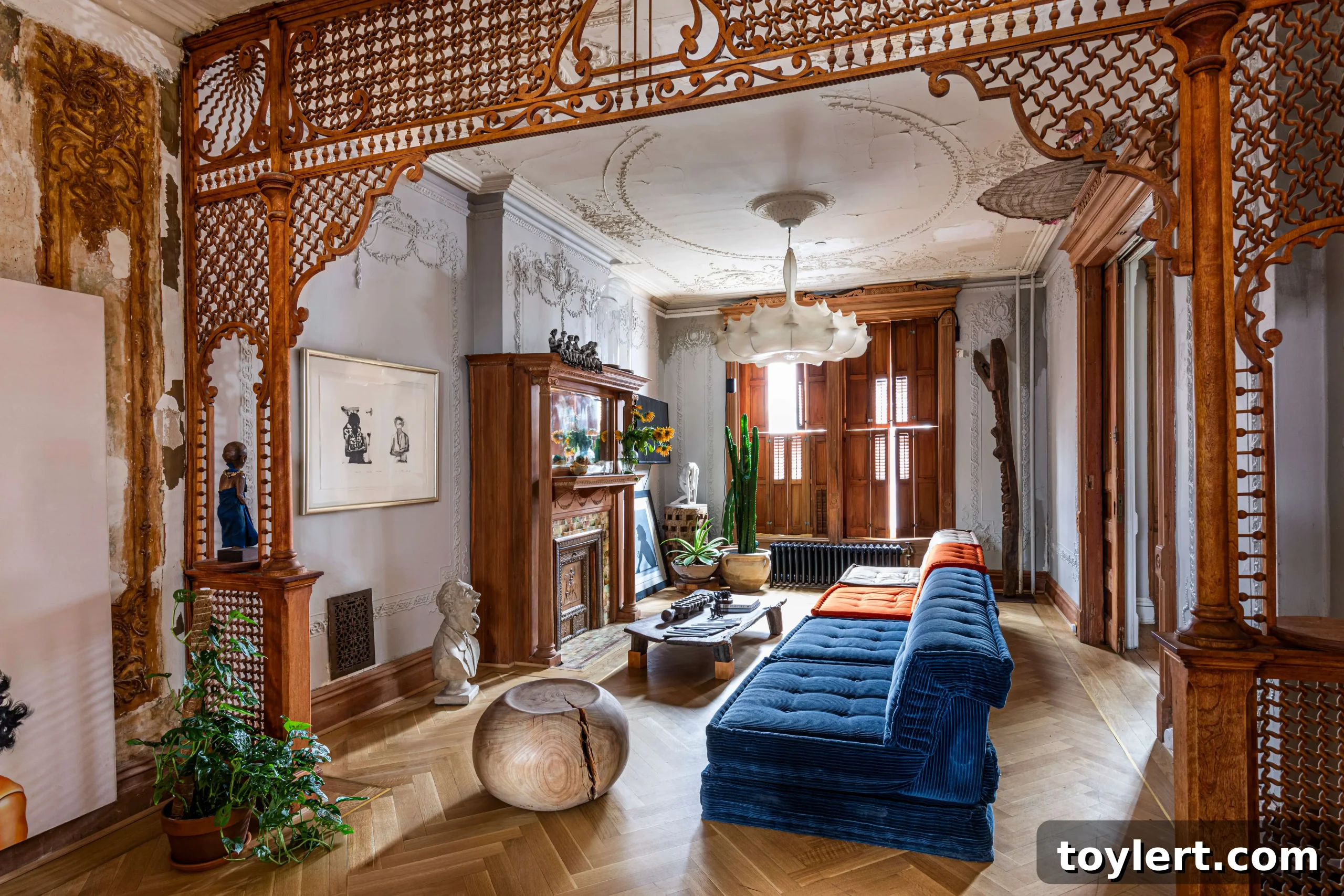
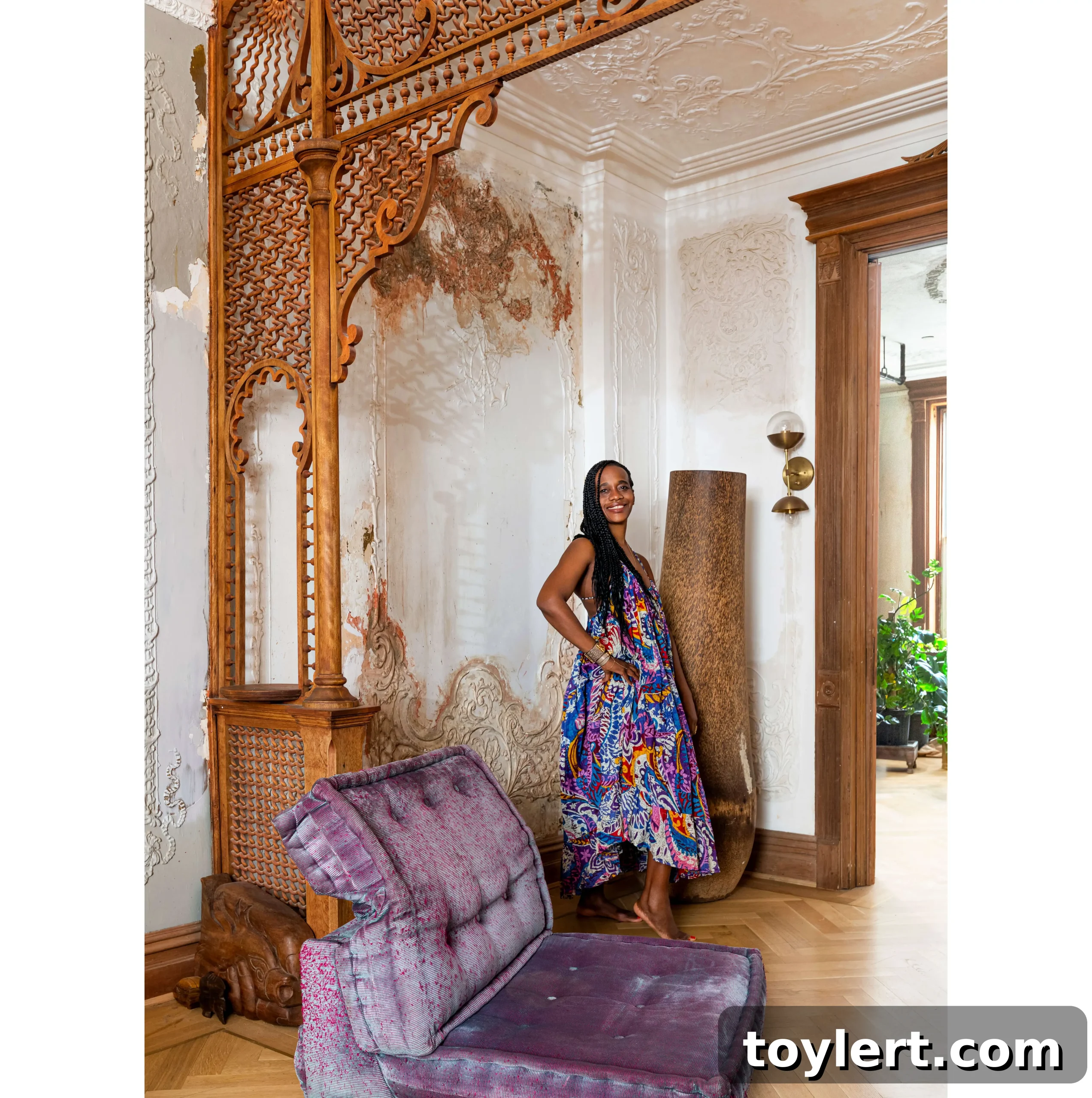
Stepping into Shelley Victory’s stunning limestone townhouse in Bedford-Stuyvesant, Brooklyn, is an experience akin to entering a vibrant, living museum. The very air seems to hum with history and an undeniable artistic flair. The most striking feature, immediately captivating the eye, is the elaborate plaster relief decoration that adorns every wall and ceiling of her front parlor. These intricate designs, ranging from delicate scrolls to grand floral motifs, exist in various states of preservation, from areas painstakingly restored to their original glory to others hinting at the journey of their repair. With a sweep of her hand, Victory gestures to the magnificent artistry overhead, exclaiming, “Look at this plasterwork! Isn’t it obnoxious?”
For Victory, “obnoxious” is far from a negative descriptor. Instead, it’s her delightful synonym for something truly fabulous, exuberantly over-the-top, and utterly beyond belief. And indeed, her choice of words perfectly captures the essence of this extraordinary home. The sheer scale and detail of the plasterwork are not merely impressive; they are a testament to a bygone era of craftsmanship and opulence. This particular townhouse, one in a distinguished row on a leafy Bed-Stuy block, was designed by the renowned architect John E. Dwyer during the final decade of the 19th century – a period marked by a flourishing of architectural innovation and decorative arts. The building itself is a prime example of the elegance and enduring quality of late Victorian-era residential design in Brooklyn, a true jewel among historic brownstones.
A Developer’s Vision: Showcasing 19th-Century Architectural Opulence
Shelley Victory harbors a compelling theory about the genesis of her home’s unusually diverse and abundant plasterwork. She conjectures that her townhouse was “more than likely” decorated by its original developer with a specific, ingenious purpose: to serve as a dazzling showcase. In the booming new-home market of late 19th-century Bedford-Stuyvesant, developers sought to entice discerning buyers with the finest available features and finishes. What better way to demonstrate the vast array of plasterwork options – from classical elegance to whimsical designs – than to incorporate a multitude of motifs throughout a single parlor floor? This innovative marketing strategy may very well explain the delightful stylistic variations found within Victory’s home, where an observer can encounter everything from graceful florals and intricate scrollwork to dramatic swags and even playful musical instruments, all coexisting in a harmonious display of decorative artistry. It’s akin to walking through a living catalogue of Victorian design possibilities, each detail a potential upgrade for the aspiring homeowner of the era.
The Enduring Appeal of Historic Bed-Stuy Brownstones and Townhouses
Bedford-Stuyvesant, affectionately known as Bed-Stuy, stands as one of Brooklyn’s most historically rich and architecturally significant neighborhoods. Its tree-lined streets are famed for their stunning rows of brownstones, limestone townhouses, and Queen Anne style homes, each telling a story of the borough’s past. John E. Dwyer’s contribution to this architectural tapestry is evident in the thoughtful design and robust construction of properties like Shelley Victory’s. These homes, built during a period of rapid urban expansion and artistic expression, represent an investment in both history and enduring quality. Victory’s home, with its distinctive limestone facade and interior grandeur, perfectly embodies the charm and character that draw so many to this vibrant Brooklyn community. Owning such a property is not just about acquiring real estate; it’s about becoming a custodian of a significant piece of New York City’s heritage, embracing the unique challenges and immense rewards that come with preserving a historic gem.
Shelley Victory: A Champion of Historic Preservation and Unique Design
Shelley Victory is more than just a homeowner; she is a passionate advocate for historic preservation and a curator of unique interior spaces. Her appreciation for the “obnoxious” plasterwork speaks volumes about her design philosophy: to celebrate and highlight the original character of a home, rather than stripping it away in favor of modern minimalism. The varying states of repair in the plasterwork itself present an ongoing project, a testament to the dedication required when living in and restoring such an old structure. Tackling tasks like careful paint stripping to reveal original details or meticulously repairing delicate plaster demands patience, expertise, and a deep respect for the craftspeople who originally created these masterpieces. Victory’s approach is a source of inspiration for anyone contemplating a historic home renovation, demonstrating that with vision and perseverance, the past can be beautifully integrated into contemporary living, creating a space that is both authentic and deeply personal.
Embracing the Maximalist Aesthetic: Decorating with Historical Grandeur
Living amidst such elaborate architectural details presents a unique opportunity and challenge for interior design. Shelley Victory’s home likely serves as a masterclass in embracing a maximalist aesthetic, where the ornate plasterwork isn’t just a backdrop but an active participant in the overall decor. Instead of competing with the intricate walls and ceilings, her design choices would complement and elevate them. This could involve careful selection of furniture that echoes the period, or conversely, introducing modern pieces that create a compelling dialogue between old and new. The key is balance and an understanding of how light interacts with the textured surfaces, bringing the plasterwork to life and highlighting its sculptural qualities. For those seeking design inspiration, Victory’s townhouse illustrates how to create a cohesive and breathtaking environment where historical grandeur and individual style coalesce into something truly spectacular, proving that bold architectural features can be a true asset.
The Craftsmanship Behind the Plaster: A Revived Art Form
The creation of such elaborate plaster relief was an incredibly skilled and labor-intensive process, a true art form. Master plasterers of the late 19th century would meticulously hand-mold and apply these decorative elements, often using traditional techniques passed down through generations. The diverse motifs found in Victory’s parlor – from the organic flow of florals and scrollwork to the structured elegance of swags and the whimsical charm of musical instruments – highlight the extensive repertoire these artisans possessed. Restoring such elements today often involves finding specialized craftspeople who can replicate these historical methods, ensuring that the integrity and beauty of the original work are maintained. This dedication to authentic restoration not only preserves the aesthetic value of the home but also keeps a vital piece of architectural heritage alive, allowing future generations to marvel at the artistry, precision, and enduring beauty of the past.
Conclusion: A Legacy Preserved in Plaster and Passion
Shelley Victory’s limestone townhouse is more than just a home; it’s a vibrant narrative woven into the very fabric of Bedford-Stuyvesant. Her enthusiastic embrace of its “obnoxious” yet utterly fabulous plasterwork serves as a powerful reminder of the beauty inherent in historical architecture and the importance of preserving these unique legacies. It stands as a beacon for those who appreciate the artistry of the past and dare to live within its grandeur. This remarkable home, a testament to John E. Dwyer’s design and a developer’s astute marketing, continues to inspire with its intricate details and a spirit that is both rooted in history and vibrantly alive in the present. Shelley Victory invites us all to look closer, appreciate the craftsmanship, and perhaps, find our own definition of ‘obnoxious’ beauty within the architectural wonders that define Brooklyn’s treasured neighborhoods.