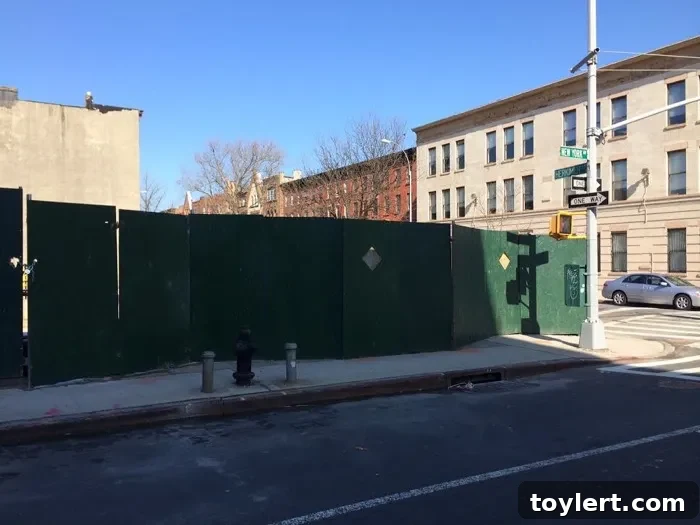
Transforming Herkimer Street: Two New Residential Buildings Bring 17 Units to Bed-Stuy
Bedford-Stuyvesant, affectionately known as Bed-Stuy, continues its vibrant evolution as a sought-after residential hub in Brooklyn. Amidst its historic brownstones and tree-lined streets, new developments are consistently emerging, meeting the burgeoning demand for urban living spaces. The latest additions to this dynamic landscape are two significant residential projects located at 186 and 194 Herkimer Street. These twin developments promise to inject 17 modern residential units into the heart of Bed-Stuy, marking a notable expansion in the neighborhood’s housing inventory.
Situated strategically at the corner of New York Avenue and remarkably close to the bustling thoroughfare of Atlantic Avenue, these four-story buildings are poised to offer contemporary living options within a community rich in history and culture. The detailed plans for these structures, which include seven units at 186 Herkimer Street and ten units at 194 Herkimer Street, have been officially filed and approved, as confirmed by public permits. This signifies a confident step forward for developers banking on Bed-Stuy’s enduring appeal and robust real estate market.
Strategic Location: The Allure of Herkimer Street
The chosen location for these new buildings is a prime example of strategic urban development. Herkimer Street itself offers a quintessential Bed-Stuy experience, characterized by a harmonious blend of residential tranquility and convenient access to urban amenities. The proximity to New York Avenue, a key artery, ensures residents will have easy access to local businesses, diverse dining options, and essential services that define the fabric of Bed-Stuy life. Furthermore, the short distance to Atlantic Avenue is a significant draw, connecting residents to one of Brooklyn’s most vital transportation and commercial corridors.
Atlantic Avenue serves as a gateway to multiple subway lines (including the A, C, G, S, 2, 3, 4, 5, B, D, N, Q, R, W trains at Atlantic Terminal/Barclays Center), as well as the Long Island Rail Road (LIRR), providing unparalleled connectivity to Manhattan, Queens, and other parts of Brooklyn. This accessibility is a major selling point for any new residential development in New York City, appealing to commuters and those who desire seamless integration into the city’s vast network. Beyond transit, the area boasts cultural landmarks, recreational green spaces like Herbert Von King Park, and a burgeoning scene of independent boutiques and cafes, all contributing to a vibrant, walkable neighborhood experience.
A Deep Dive into the Bed-Stuy Real Estate Market
The acquisition of the lots at 186 and 194 Herkimer Street for an identical sum of $1,575,000 each in November underscores the intense investment interest in Bed-Stuy. This substantial figure reflects not only the intrinsic value of the land in a high-demand market but also the developers’ optimistic projections for future returns. The consistent growth in property values and rental rates across Bedford-Stuyvesant has solidified its reputation as one of Brooklyn’s most resilient and profitable real estate markets. Historically undervalued, the neighborhood has seen a dramatic resurgence over the past two decades, attracting a diverse demographic of residents drawn to its architectural beauty, community spirit, and relative affordability compared to areas further west.
The development of 17 new units, while seemingly modest in the grand scheme of NYC housing, is a vital contribution to the local supply, catering to both prospective homeowners and renters. These units are likely to command competitive prices, whether sold as condominiums or offered as rental apartments, given the high demand for modern, well-located housing. The developers are clearly banking on the continued influx of individuals and families seeking to capitalize on Bed-Stuy’s unique blend of historic charm and contemporary amenities. This kind of investment activity is a clear indicator of the neighborhood’s ongoing appeal to both residents and real estate investors alike, reinforcing its position as a dynamic and evolving urban landscape.
Building Specifications and Potential Amenities
Each of the proposed buildings will rise four stories, a common height for new residential constructions in areas with contextual zoning that balances density with neighborhood character. While specific architectural renderings or detailed floor plans are not publicly elaborated in the initial permit filings, it is reasonable to expect that these new units will feature modern designs, high-quality finishes, and contemporary layouts. Developers in today’s competitive market often incorporate features such as open-concept living spaces, gourmet kitchens with stainless steel appliances, luxurious bathrooms, and energy-efficient systems to attract discerning buyers and renters.
Furthermore, given the trend in new Brooklyn developments, these buildings may offer a range of amenities designed to enhance urban living. Potential amenities could include shared rooftop access with city views, bicycle storage, resident lounges, fitness areas, and perhaps even communal outdoor spaces. The inclusion of such features adds significant value, contributing to a premium living experience that aligns with the evolving expectations of New York City residents. The design aesthetic is likely to be a contemporary interpretation of the neighborhood’s existing architectural style, aiming for a harmonious integration while still offering distinct modern appeal.
Impact on the Local Community and Future Outlook
The introduction of 17 new residential units on Herkimer Street, like any new development, will undoubtedly have an impact on the surrounding community. On one hand, it addresses the persistent housing shortage in New York City, providing more options for those looking to live in a desirable Brooklyn neighborhood. It also signals continued economic vitality, potentially bringing new residents who will patronize local businesses, contributing to the economic fabric of Bed-Stuy.
On the other hand, new developments often spark discussions about gentrification and affordability. The challenge for Bed-Stuy, as for many rapidly developing urban areas, is to balance growth and modernization with the preservation of its unique character and the needs of its long-standing residents. Thoughtful urban planning and community engagement are crucial to ensure that new projects contribute positively to the neighborhood without displacing existing communities or eroding the cultural essence that makes Bed-Stuy so special.
Looking ahead, these developments at 186 and 194 Herkimer Street are emblematic of Bed-Stuy’s ongoing transformation. They represent a continued investment in the neighborhood’s future, signaling that Bed-Stuy remains a frontier for growth, innovation, and vibrant urban living. As construction progresses and these new residences come to life, they will undoubtedly play a significant role in shaping the next chapter of this iconic Brooklyn community, attracting new residents while retaining the spirit that has long defined Bedford-Stuyvesant.
The journey of Bed-Stuy from a historically rich yet often overlooked area to a thriving, in-demand neighborhood is a testament to its enduring appeal. These new buildings on Herkimer Street are not just structures of brick and mortar; they are future homes, vital investments, and markers of a community continuously reimagining itself.