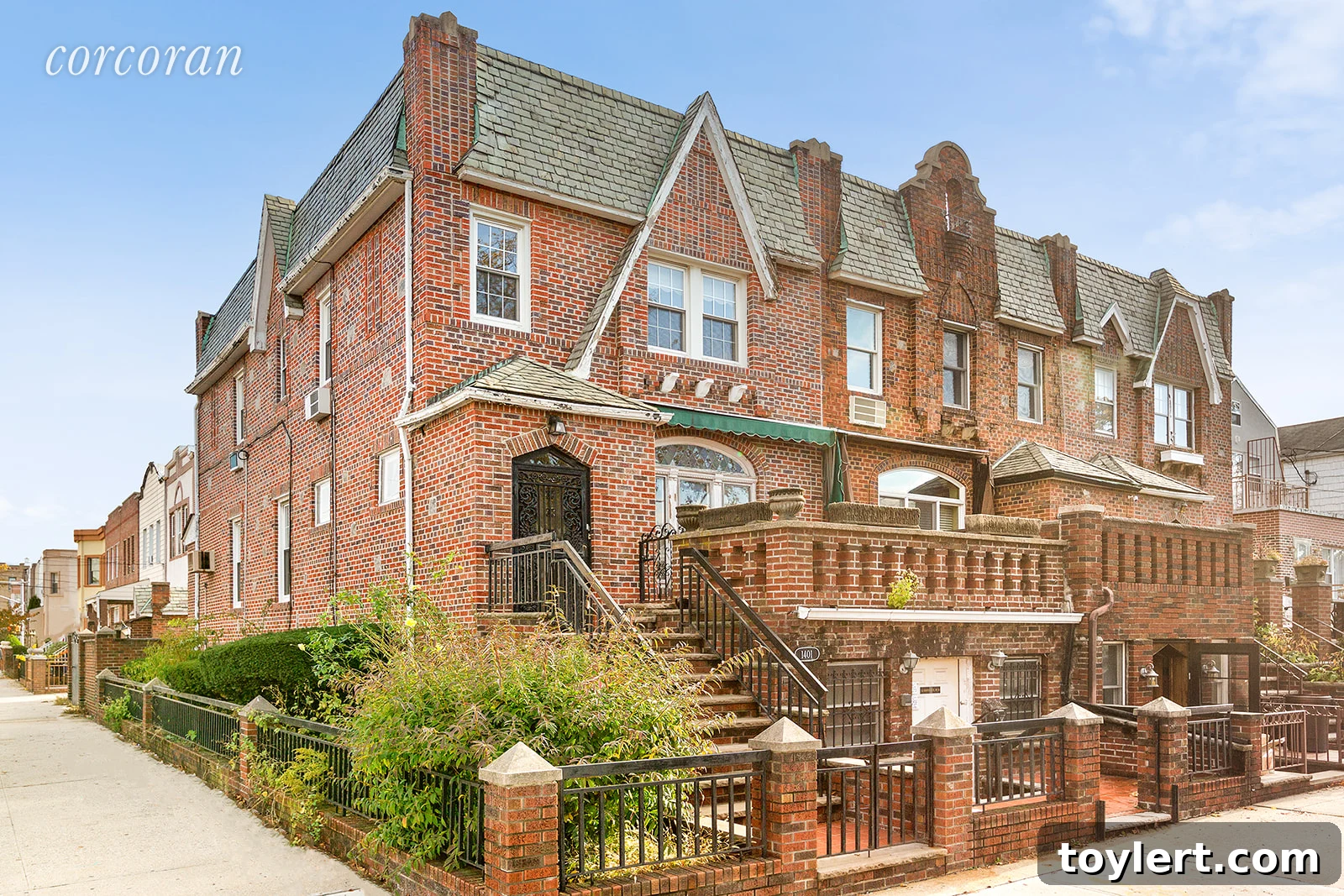
Discovering Timeless Elegance: A 1935 Neo-Tudor Gem in Bensonhurst, Brooklyn
Nestled on a prominent corner lot in the vibrant Brooklyn neighborhood of Bensonhurst stands a truly exceptional property: a 1935 Neo-Tudor semi-detached townhouse that exudes historical charm and architectural grandeur. This two-story residence, located at the coveted address of 1401 80th Street and 14th Avenue, is more than just a house; it’s a living archive of 20th-century design, offering a rare glimpse into a bygone era while providing the comfort and functionality required for modern living. With a distinctive mansard roof, a detached garage mirroring its unique style, and an interior that promises a captivating journey through period fashions, this home represents a unique opportunity for those seeking character, history, and a prime Brooklyn location. Its impressive sixty-year tenure within the same family speaks volumes about its enduring appeal and the cherished memories it holds.
Architectural Grandeur: The Enduring Appeal of Neo-Tudor Style
The Neo-Tudor architectural style, which saw a resurgence in popularity during the early 20th century, particularly in the 1920s and 1930s, masterfully blends the romanticism of medieval English design with the practicalities of contemporary construction. This particular 1935 corner house is a textbook example of the style’s captivating aesthetic. Characterized by its dramatic steeply pitched rooflines, often adorned with decorative half-timbering (though subtly integrated here), and a commanding presence, Neo-Tudor homes evoke a sense of strength, tradition, and picturesque charm. The prominent mansard roof, a feature more commonly associated with French Second Empire architecture, adds an intriguing layer of sophistication and visual interest, contributing to the home’s distinctive silhouette and maximizing upper-level living space.
Beyond its grand roof, the exterior is a veritable showcase of 1930s Neo-Tudor artistry. Elaborate details such as faux gables and faux chimneys are not merely structural elements but decorative embellishments, designed to enhance the home’s storybook appeal without the full functional requirements of their historical counterparts. These thoughtful architectural elements contribute significantly to the property’s curb appeal, making it a standout structure in the neighborhood. The intricate brickwork, a hallmark of quality construction from the era, further enriches the facade, displaying patterns and textures that add depth and character. This painstaking craftsmanship speaks to a period when homes were built with an emphasis on enduring beauty and bespoke detailing.
Captivating Details: A Closer Look at the Exterior
Every element of the exterior has been meticulously crafted to contribute to its overall charm. A welcoming porch, an essential feature for community engagement and outdoor enjoyment, invites residents and guests alike to pause and appreciate the surroundings. It serves as a transitional space, blurring the lines between the private sanctuary of the home and the lively streetscape of Bensonhurst. One of the most enchanting features is undoubtedly the picturesque arched window. This architectural marvel boasts colored, diamond-shaped panes, which diffuse natural light into the interior with a soft, kaleidoscopic glow, creating an atmosphere of warmth and old-world elegance. The window is further enhanced by fanciful wood trim, showcasing the artisan’s touch and adding another layer of intricate detail to the already rich facade. These elements combined paint a picture of a home built with an unwavering commitment to beauty and individuality.
A Walk Through Time: The Interior’s Enduring Appeal
Stepping inside this Neo-Tudor gem is akin to embarking on a curated tour through 20th-century period fashions. While specific interior details are often best experienced firsthand, the listing’s description strongly suggests a trove of original features that have been lovingly preserved over the decades. Homes from this era frequently boast hardwood floors, intricate moldings, plaster details, and built-in cabinetry, all contributing to a rich, textured living environment. Imagine an elegant living room potentially featuring a decorative fireplace with a period mantelpiece, dining areas adorned with wainscoting, and kitchens that blend vintage charm with opportunities for modern upgrades. The enduring presence of original elements is a significant draw for discerning buyers who appreciate authenticity and the narrative history embedded within a home’s walls.
The interior design trends of the 1930s often embraced a blend of Art Deco sophistication, Colonial Revival stateliness, and more traditional Craftsman influences. It’s plausible to find original tile work in bathrooms that tells a story, vintage fixtures that provide a unique accent, and layouts that prioritize both formality and familial comfort. Such an interior is not merely a space; it’s a canvas for personal expression, offering endless possibilities for restoration and sensitive modernization. For those passionate about preserving architectural heritage, the potential to honor and enhance these period fashions is an incredibly exciting prospect, allowing a new generation to become custodians of its unique legacy.
A Legacy of Ownership: Sixty Years in One Family
One of the most compelling aspects of 1401 80th Street is its remarkable history of long-term family ownership. Having remained in the same family for an impressive sixty years, this home stands as a testament to its enduring quality, comfort, and desirability. Properties that remain within a single family for generations often benefit from a unique level of care, maintenance, and emotional investment. Such homes are typically well-preserved, with original details more likely to remain intact, shielded from the transient trends and often less sympathetic renovations that frequent changes in ownership can bring. This continuity suggests a deep-rooted appreciation for the property’s character and a commitment to its upkeep, ensuring that its historical essence has been thoughtfully protected.
The story of multi-generational family homes resonates deeply with buyers seeking not just a house, but a place imbued with warmth, history, and a sense of belonging. It implies a foundation of stability and cherished memories, offering an intangible value that goes far beyond square footage or architectural style. For prospective homeowners, acquiring such a property means becoming part of its continuing narrative, stepping into a legacy that has been carefully stewarded and is now ready for its next chapter.
Designed by B. A. Glassman, Built by Buyers’ Home Inc.
The genesis of this magnificent residence can be traced back to the collaborative efforts of architect B. A. Glassman and builder Buyers’ Home Inc. Designed and constructed in 1935, this home was part of a select row of three, suggesting a cohesive vision for a particular segment of the Bensonhurst streetscape. In an era of significant urban expansion and speculative building, architects like B. A. Glassman were instrumental in shaping the residential landscape of Brooklyn, creating homes that blended aesthetic appeal with practical living spaces. Buyers’ Home Inc., as the builder, would have been responsible for bringing Glassman’s vision to life, demonstrating the quality of construction and materials prevalent during that period. This collaboration underscores the thoughtful planning and execution that went into developing residential properties of this caliber, distinguishing them from more generic mass-produced housing.
Understanding the provenance of a home adds another layer of appreciation for its architectural integrity and historical context. It allows us to connect with the original intent behind its design and construction, recognizing the specific choices made in its layout, materials, and overall aesthetic. Being part of a “row of three” implies a harmonious architectural ensemble, where each home contributes to a unified street presence while retaining its individual character—a balance often sought but rarely achieved with such grace.
Evolving Functionality: The 1959 Basement Doctor’s Office
Adding another intriguing chapter to its history, a certificate of occupancy reveals that a doctor’s office was added to the basement in 1959. This modification reflects a common practice of the mid-20th century, where professionals often operated their practices directly from their homes, offering convenience for both the practitioner and the local community. This historical adaptation highlights the home’s inherent versatility and its capacity to evolve with changing needs. The inclusion of a dedicated professional space within the residence provided an immediate live-work solution, a highly sought-after amenity even today.
For prospective buyers, the presence of a former doctor’s office in the basement presents a myriad of possibilities. While its original purpose may have faded, the space retains its potential for adaptive reuse. It could be reimagined as a modern home office, a private studio, a guest suite, a dedicated media room, or even a self-contained apartment (subject to local zoning regulations and necessary permits). This unique feature significantly enhances the property’s flexibility, offering valuable additional square footage that can cater to various lifestyle requirements, from entrepreneurial endeavors to multi-generational living arrangements. It’s a tangible link to the past that offers immense practical value for the future.
Bensonhurst: A Vibrant Brooklyn Community
The location of this distinguished townhouse in Bensonhurst, Brooklyn, further elevates its appeal. Bensonhurst is a dynamic and culturally rich neighborhood renowned for its strong community spirit, diverse culinary scene, and excellent amenities. Characterized by its tree-lined streets, a mix of historic homes, and convenient access to public transportation, it offers an ideal blend of suburban tranquility and urban connectivity. Residents enjoy proximity to local parks, highly-rated schools, and a plethora of shopping and dining options along bustling avenues like 86th Street and 18th Avenue.
The neighborhood boasts a vibrant array of independent shops, bakeries, and restaurants, reflecting its multicultural heritage and providing a rich tapestry of experiences for its inhabitants. With convenient access to the D, F, and N subway lines, commuting to Manhattan and other parts of Brooklyn is straightforward, making Bensonhurst an attractive choice for professionals and families alike. Living on a corner lot, as this property does, offers enhanced light exposure, increased privacy, and often a more prominent street presence, all desirable attributes within such a sought-after urban environment. This Neo-Tudor home is not just a structure; it’s a gateway to experiencing the best of Brooklyn living.
A Unique Investment and Lifestyle Opportunity
In a real estate market where authenticity and character are increasingly prized, this 1935 Neo-Tudor semi-detached house stands as a truly unique offering. It represents an exceptional opportunity to own a piece of Brooklyn’s architectural history, meticulously preserved and infused with generations of family warmth. From its commanding exterior with its mansard roof and elaborate brickwork to its interior promising a journey through 20th-century design, every aspect of this home speaks to its distinctive charm.
The combination of a desirable Bensonhurst location, the flexible potential of the basement’s former doctor’s office, the enduring quality of its original construction by B. A. Glassman and Buyers’ Home Inc., and its remarkable sixty-year family legacy, positions this property as more than just a residence—it’s an investment in a lifestyle rich with history, community, and unparalleled architectural beauty. For those dreaming of a home that tells a story and offers a truly unique living experience, 1401 80th Street and 14th Avenue presents an irresistible proposition.