Downtown Brooklyn’s 11 Hoyt Project Proposes Major Pedestrian-Friendly Streetscape Enhancements
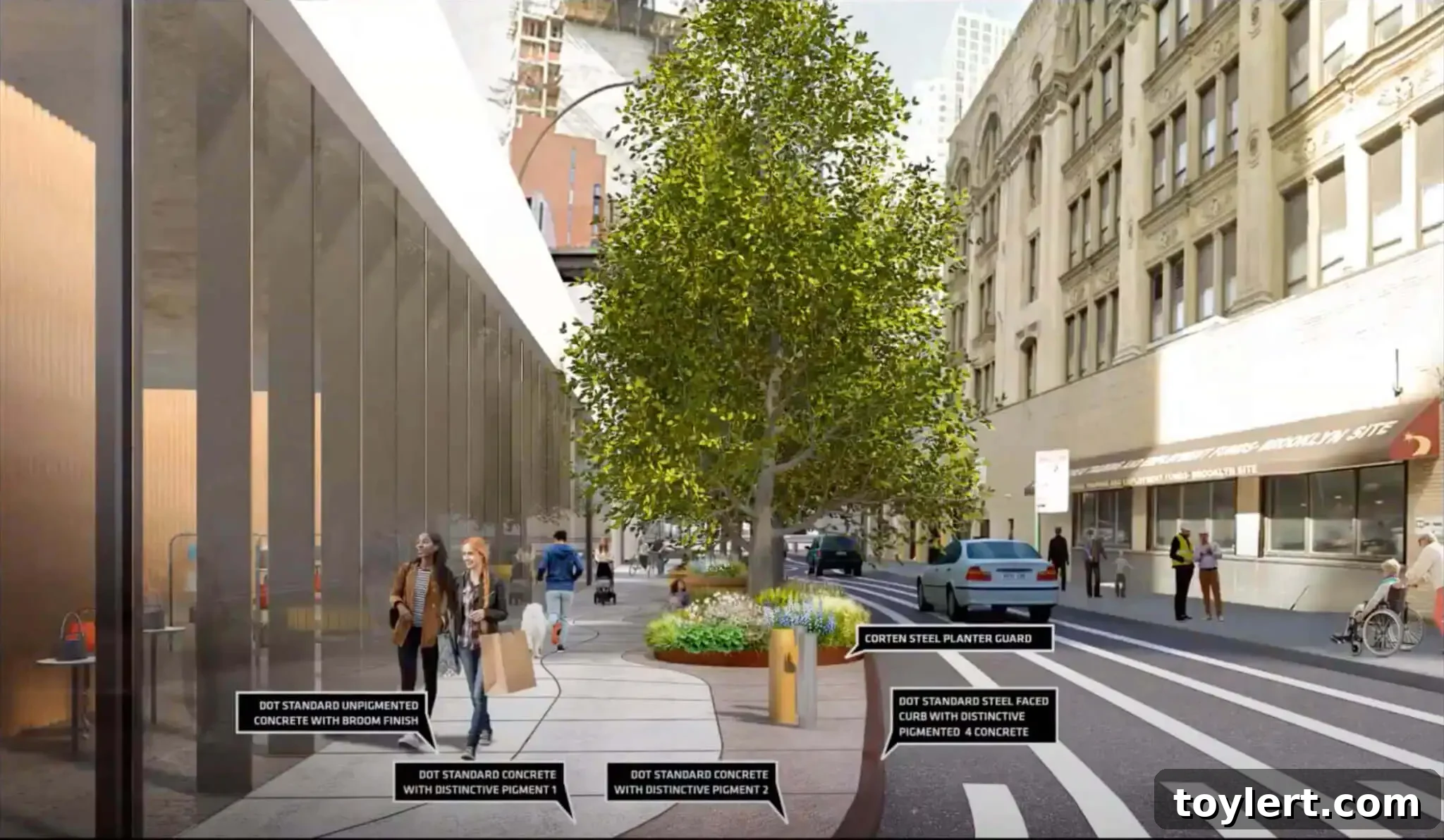
In a forward-thinking move reflecting the evolving needs of urban environments, the developer behind the luxurious 11 Hoyt high-rise in Downtown Brooklyn has unveiled plans to significantly expand and beautify the surrounding sidewalks. This initiative, aimed at creating more expansive open spaces for pedestrians, gains particular resonance in the wake of the global health crisis, emphasizing the critical importance of public space in densely populated areas. The proposal was enthusiastically presented at a Community Board 2 meeting on August 20, where it was met with a positive reception.
Responding to a New Urban Imperative: The COVID-19 Impact on City Design
The urgency of these streetscape enhancements was eloquently articulated by Regina Myer, President of the Downtown Brooklyn Partnership, during a virtual presentation to Community Board 2’s Transportation Committee. Myer highlighted the paradigm shift in urban planning precipitated by the recent health crisis. “In light of the health crisis, the idea of adding more sidewalk space and improving our sidewalk space has become more of an imperative for everyone in New York City as we realize how important it is to social distance and to walk places and bicycle places in lieu of taking transit,” she stated. This sentiment underscores a broader trend in urban development: a renewed focus on pedestrian safety, accessibility, and the promotion of active transportation methods over traditional public transit, which saw significant disruption and apprehension during the pandemic.
The pandemic laid bare the existing deficiencies in urban infrastructure, particularly the lack of sufficient public space for residents to move freely and safely. Narrow sidewalks, once perhaps an inconvenience, became significant barriers to essential social distancing. The proposed widening and beautification around 11 Hoyt directly addresses these concerns, not just as a temporary fix but as a long-term investment in public health and the quality of urban life. By creating more generous pedestrian zones, the project aims to foster a healthier, more vibrant street life, encouraging residents and visitors alike to engage with their surroundings on foot or by bicycle, thus reducing reliance on crowded transit options and promoting a more sustainable urban ecosystem.
11 Hoyt: A Landmark Development by Tishman Speyer
The centerpiece of this transformative streetscape project is 11 Hoyt, a striking 51-story condominium tower developed by Manhattan-based Tishman Speyer. Nearing completion, this “swanky condo tower” is instantly recognizable by its distinctive wavy white facade, a signature design element by the acclaimed architectural firm Studio Gang, led by Jeanne Gang. Situated on the historic site of the former Macy’s department store parking garage, nestled between Fulton and Livingston streets, 11 Hoyt represents a significant addition to Downtown Brooklyn’s rapidly evolving skyline. The building itself is a testament to luxury urban living, featuring a host of amenities designed to cater to a discerning clientele, further elevating the residential offerings in one of New York City’s most dynamic neighborhoods.
Tishman Speyer, a global leader in real estate development, is renowned for its commitment to creating iconic properties that blend architectural innovation with functional design. Their involvement with 11 Hoyt signifies a substantial investment in Downtown Brooklyn’s future, reinforcing the area’s reputation as a prime destination for high-end residential and commercial ventures. The firm’s pledge to fully fund the extensive streetscape revamp along Elm, Hoyt, and Livingston streets adjacent to their building demonstrates a proactive approach to integrating their development into the broader community fabric, promising not just a new building but an improved public realm for all.
Envisioning Enhanced Streetscapes: A Vision for Pedestrian Excellence
The proposed streetscape revamp goes beyond simple sidewalk expansion; it encompasses a holistic vision for an improved public experience. While specific details will emerge as the project progresses, “sprucing up the surroundings” typically includes a range of enhancements designed to make urban spaces more attractive, functional, and user-friendly. These improvements are expected to include, but are not limited to, the strategic planting of new trees and lush greenery, providing much-needed shade and enhancing air quality, while also contributing to the aesthetic appeal of the area. New, ergonomically designed street furniture, such as benches and recycling bins, will offer comfortable resting spots and promote cleanliness.
Furthermore, the plan likely incorporates state-of-the-art pedestrian lighting, enhancing safety and visibility during evening hours, alongside thoughtful landscaping that creates inviting pockets of public space. Consideration will also be given to improving crosswalks, potentially incorporating public art installations, and ensuring full accessibility compliance with ADA standards, making the public realm truly inclusive. The focus on Elm, Hoyt, and Livingston streets is strategic, as these thoroughfares serve as critical arteries for pedestrian flow in Downtown Brooklyn, connecting residential areas with major commercial hubs and transit points. By enhancing these specific corridors, the project aims to create a cohesive and welcoming network for residents, shoppers, and commuters alike.
Collaboration and Community Benefit: A Model for Urban Development
The presentation of these plans to Community Board 2 highlights the collaborative spirit vital for successful urban development. Engaging with community boards and local partnerships like the Downtown Brooklyn Partnership ensures that development projects are not just financially viable but also responsive to the needs and aspirations of the residents they serve. This public forum provided an opportunity for dialogue, allowing the developer to share their vision and for community stakeholders to offer feedback and insights. Such engagement is crucial in fostering transparency and building trust between developers and the communities in which they operate.
The commitment by Tishman Speyer to fund these significant public realm improvements is a powerful example of how private development can contribute positively to the public good. It demonstrates an understanding that the value of a luxury high-rise is not solely contained within its walls but is also intimately linked to the quality of its immediate environment. By investing in the surrounding streets, Tishman Speyer is not only enhancing the desirability of 11 Hoyt but also making a substantial contribution to the broader revitalization efforts underway in Downtown Brooklyn. This type of public-private partnership serves as a model for sustainable urban growth, where development projects are designed not just to stand tall, but also to seamlessly integrate into and elevate their surroundings.
Downtown Brooklyn’s Continuous Transformation: Paving the Way for a Pedestrian-Centric Future
Downtown Brooklyn has undergone a remarkable transformation over the past two decades, evolving from a primarily commercial and civic district into a vibrant, mixed-use neighborhood bustling with residential towers, retail destinations, and cultural institutions. Projects like 11 Hoyt and its associated streetscape enhancements are pivotal to this ongoing evolution. They reflect a strategic vision to create a more livable, walkable, and aesthetically pleasing urban core. Widening sidewalks and enriching the streetscape is not merely an aesthetic upgrade; it’s an investment in infrastructure that promotes active lifestyles, enhances public safety, and strengthens community ties.
As New York City continues to adapt to new realities, the emphasis on pedestrian-friendly infrastructure and accessible public spaces will only grow. The 11 Hoyt project, with its proactive approach to urban design and community integration, sets a commendable precedent. It showcases how luxury development can be a catalyst for broader urban improvements, contributing to a more resilient and enjoyable urban experience for everyone. These enhancements along Elm, Hoyt, and Livingston streets will undoubtedly contribute to the neighborhood’s allure, making Downtown Brooklyn an even more desirable place to live, work, and visit, solidifying its position as a beacon of modern urban living.
In conclusion, the proposed streetscape improvements around 11 Hoyt represent a thoughtful and timely response to contemporary urban challenges. By expanding pedestrian spaces and beautifying the surroundings, Tishman Speyer and the Downtown Brooklyn Partnership are not just developing a building; they are actively shaping a healthier, more vibrant, and more connected future for one of Brooklyn’s most dynamic neighborhoods. This initiative serves as a powerful example of how innovative development can enhance the public realm and contribute significantly to the overall well-being of an urban community.