Bishop Loughlin Memorial High School Unveils Brooklyn’s Second Largest Green Roof: A Model for Sustainable Urban Education
In a groundbreaking initiative poised to redefine urban sustainability, Bishop Loughlin Memorial High School in Brooklyn recently opened its doors for tours of its ambitious green roof project. Upon its full completion, this verdant expanse will proudly claim the title of Brooklyn’s second-largest living roof, transforming a significant portion of the school’s footprint into a vibrant ecological asset. This monumental undertaking was made possible through the Department of Environmental Protection’s (DEP) prestigious Green Infrastructure Grant Program, recognizing Bishop Loughlin’s commitment to environmental stewardship and innovation.
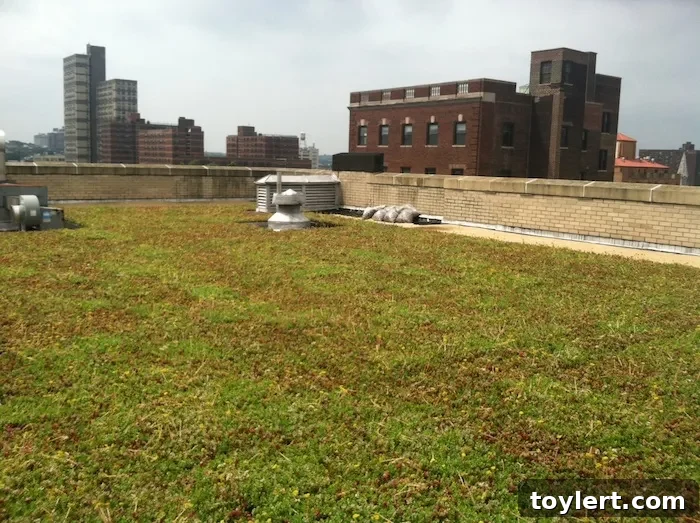
The high school partnered with Highview Creations, a leader in sustainable roofing solutions, to meticulously design and install this expansive green system. Spanning an impressive 18,000 square feet, the rooftop garden is currently in its initial phases, with approximately one-eighth of the total area already blanketed in lush vegetation. The remaining installation is projected to take an additional two to three weeks, after which the entire rooftop will be a thriving ecosystem that promises to endure for many years to come.
Innovative Design and Sustainable Plant Selection
The core of Bishop Loughlin’s green roof is its carefully curated selection of plants, specifically chosen for their resilience and low-maintenance requirements. The robust turf mix features a variety of sedum species, hardy succulents, native grasses, and other drought-tolerant plants. This diverse botanical palette ensures that once fully established on the roof, these plants will require no irrigation or regular replacement, making it a remarkably self-sustaining system. Even during the colder winter months, the plants will maintain their vitality, merely receding slightly and undergoing subtle color changes rather than losing their leaves entirely. This inherent hardiness is a testament to the thoughtful planning behind the project, emphasizing long-term sustainability and minimal resource consumption.
Supporting this vibrant flora is a specialized growing medium primarily composed of expanded shale. This lightweight yet incredibly sturdy substrate offers exceptional structural integrity, making it resistant to the forces of wind and heavy rain. Its porous nature also contributes to the roof’s impressive water retention capabilities, playing a crucial role in its overall environmental efficacy. The careful engineering of both the plant life and the substrate ensures the green roof’s longevity and its ability to thrive in the demanding urban environment of Brooklyn.
Multifaceted Benefits for the School and the City
The advantages of Bishop Loughlin’s new green roof are extensive, extending far beyond aesthetic appeal to deliver profound environmental, economic, and educational benefits.
Enhanced Building Longevity and Energy Efficiency
One of the immediate structural benefits is the protective layer provided by the four inches of specialized soil. This growing medium acts as a natural membrane, shielding the underlying roof structure from the harsh effects of UV radiation, extreme temperature fluctuations, and physical wear and tear. This protection significantly extends the lifespan of the existing roof, drastically reducing the need for costly replacements and repairs over time. Furthermore, the insulating properties of the soil and plant layers help regulate the building’s internal temperature. In the summer, the green roof reduces heat absorption, mitigating the urban heat island effect and lowering air conditioning demands. During winter, it acts as an additional layer of insulation, helping to retain warmth within the building and consequently reducing heating costs. This translates directly into substantial energy savings for the school, contributing to a more sustainable operational model.
Revolutionizing Stormwater Management
Perhaps one of the most critical environmental benefits of this green roof is its exceptional capacity for stormwater management. In densely populated urban areas like Brooklyn, impervious surfaces contribute significantly to stormwater runoff, overwhelming drainage systems and leading to street flooding and pollutant discharge into waterways. Bishop Loughlin’s green roof actively collects and retains rainwater, absorbing a substantial volume before it ever reaches the city’s storm sewers. Any excess water that isn’t absorbed by the plants or soil is efficiently channeled away through specially installed drainage systems located beneath the plantings. This innovative approach to water management helps to reduce the strain on municipal infrastructure, prevents localized flooding, and minimizes the amount of pollutants carried into local rivers and harbors, thereby improving overall water quality in New York City’s ecosystem.
A Living Laboratory for Environmental Education
Beyond its ecological and economic advantages, the green roof serves as an unparalleled educational resource for Bishop Loughlin students. The school is committed to integrating this living laboratory into its curriculum, providing students with hands-on opportunities to study a wide array of environmental issues pertinent to urban settings. From biology and ecology lessons focused on plant life cycles and biodiversity to practical applications in urban planning, engineering, and climate science, the green roof offers a dynamic, real-world classroom. Students can engage in scientific observation, collect data on plant growth and water retention, and understand the intricate balance of urban ecosystems. This direct engagement fosters a deeper appreciation for environmental stewardship and empowers the next generation to become active participants in creating sustainable communities. It’s an invaluable tool for inspiring future scientists, engineers, and environmental advocates.
The Broader Impact of Green Infrastructure in New York City
The development of Bishop Loughlin’s green roof is not an isolated incident but rather a significant contribution to a larger movement of green infrastructure development across New York City. Programs like the DEP’s Green Infrastructure Grant are vital in supporting initiatives that combat the effects of climate change and enhance urban resilience. By promoting projects that integrate natural systems into the built environment, the city aims to improve air quality, foster urban biodiversity, mitigate the urban heat island effect, and create more livable and sustainable neighborhoods.
Green roofs, in particular, are becoming increasingly recognized as essential components of modern urban planning. They offer a multitude of benefits, from reducing the carbon footprint of buildings to providing crucial habitats for pollinators and other urban wildlife. The success of Bishop Loughlin’s project serves as a compelling case study and an inspiring example for other educational institutions and private entities considering similar sustainable upgrades. It demonstrates that with strategic planning, collaboration, and a commitment to environmental responsibility, even large-scale urban centers can integrate natural solutions to address complex environmental challenges.
A Vision for a Greener Future
As Bishop Loughlin Memorial High School’s green roof approaches full completion, it stands as a powerful symbol of innovation and a commitment to a greener, more sustainable future. This project not only enhances the school’s infrastructure and provides tangible environmental benefits to Brooklyn but also cultivates a culture of environmental awareness and responsibility among its students. It is a testament to what can be achieved when educational institutions, city agencies, and specialized firms collaborate to implement forward-thinking, eco-friendly solutions. The Bishop Loughlin green roof is more than just a garden on a rooftop; it is a living lesson in sustainability, resilience, and the endless possibilities of urban ecological design.