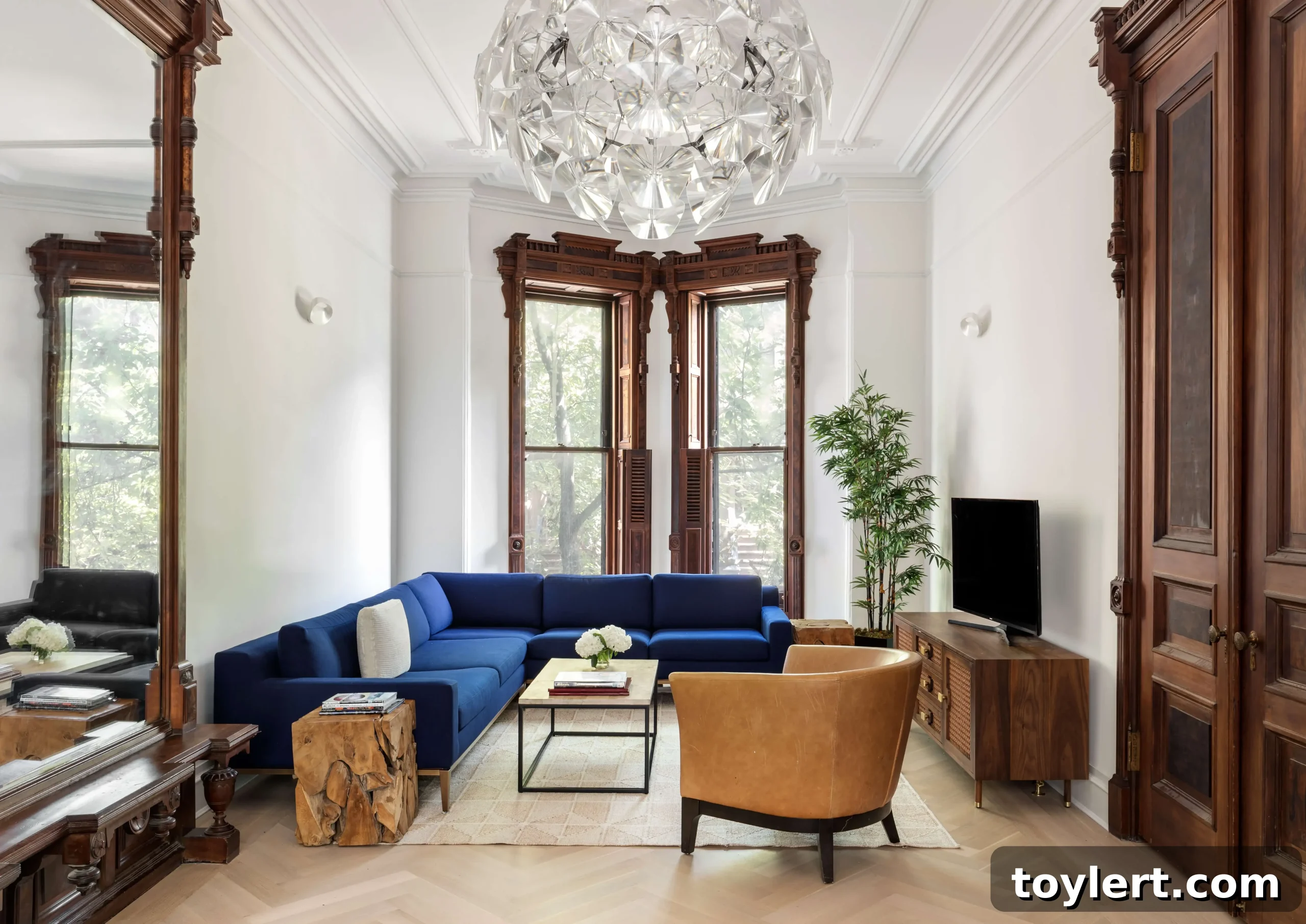
The allure of a classic brownstone, with its rich history and distinctive architectural character, often captivates those seeking a unique urban dwelling. However, these venerable structures, often dating back to the 19th century, frequently come with decades of untouched interiors, presenting both a challenge and an extraordinary opportunity for transformation. This is the familiar, yet always inspiring, narrative of a recent project: a young couple’s vision to breathe new life into a magnificent 20-foot wide, bay-windowed brownstone nestled within a coveted Historic District block. With its abundant original mahogany woodwork hinting at its former grandeur, the stage was set for a tasteful, well-funded renovation spearheaded by experts, promising predictably beautiful and highly functional results.
Transforming a Historic Brooklyn Brownstone: A Masterful Blend of Classic Charm and Modern Living
Embracing the Past, Envisioning the Future: The Brownstone Renovation Journey
For many homeowners embarking on a brownstone renovation, the primary goal echoes a universal desire: to infuse more light into spaces that can often feel shadowed by time and traditional layouts. “They wanted to bring in more light, as everybody does,” explained architect Kim Letven, a principal at NV/design.architecture, a distinguished firm based in the Financial District. This fundamental aspiration became the guiding principle for a project that meticulously walked the tightrope between preserving the home’s intrinsic historical details and crafting a brighter, more open, and distinctly modern living environment tailored to contemporary family needs.
The journey of renovating a 19th-century brownstone within a Historic District is inherently complex. It demands not only an understanding of modern design principles but also a profound respect for architectural heritage and the stringent regulations governing such protected properties. This particular brownstone, with its elegant bay window facade and extensive mahogany millwork, was a treasure trove of historical elements. The challenge was to modernize without erasing its soul, to illuminate without blinding its character. NV/design.architecture approached this delicate balance with a philosophy rooted in enhancing the building’s inherent beauty while introducing thoughtful interventions that cater to a vibrant family life.
Architectural Vision: Harmonizing History with Contemporary Design
Kim Letven and her team at NV/design.architecture are renowned for their ability to navigate the intricacies of historic renovations, demonstrating a keen eye for detail and an innovative approach to modern living. Their work on this Brooklyn brownstone exemplified a design philosophy focused on creating continuity between eras. The objective was not merely to update but to elevate, to design a home where original architectural elements could coexist seamlessly with sleek, contemporary finishes and a more open, airy aesthetic. The firm’s expertise in spatial planning and material selection was crucial in achieving the desired outcome: a home that feels both deeply rooted in its past and perfectly adapted for the future.
The quest for increased natural light was addressed through strategic design decisions. This involved not only optimizing existing window openings but also reconfiguring interior spaces to allow light to penetrate deeper into the floor plan. The renovation aimed to create visual corridors and open vistas that enhance the flow of light and air, transforming previously compartmentalized rooms into interconnected spaces that feel expansive and welcoming. This thoughtful integration of light became a hallmark of the project, fundamentally altering the home’s ambiance and functionality.
A Floor-by-Floor Transformation: Crafting Functional Elegance
The renovated brownstone was meticulously organized to accommodate the family’s lifestyle, with distinct zones for various activities while maintaining a cohesive aesthetic throughout. The homeowners occupy three of the home’s four levels, reserving the garden level for the comfort and privacy of visiting relatives. This thoughtful segregation ensures both family intimacy and guest independence, a common yet often challenging aspect of multi-level urban living.
The Garden Level: A Welcoming Retreat for Guests
Designed with hospitality in mind, the garden level was transformed into a self-contained suite for extended family. This space typically features a comfortable living area, a private bedroom, and a modern bathroom, offering guests all the amenities they need for an independent stay. The design here prioritized warmth and functionality, possibly incorporating durable, easy-to-maintain materials and direct access to an outdoor garden space, enhancing the overall experience for visitors. The aim was to create a bright and inviting environment that feels separate yet connected to the main house, maximizing privacy without compromising on style.
The Parlor Floor: The Heart of the Home Reimagined
Ascending to the parlor floor reveals the vibrant social hub of the brownstone. This level traditionally boasts grander proportions and higher ceilings, making it ideal for entertaining and daily family life. Here, the existing living room was meticulously restored, preserving its original grandeur and rich mahogany details while subtly integrating modern comforts. Adjacent to this, the space was dramatically reconfigured to house a brand-new, open-concept kitchen and dining area. This represents one of the most significant interventions, replacing compartmentalized spaces with a bright, expansive zone designed for culinary exploration and shared meals.
The new kitchen is a chef’s dream, featuring state-of-the-art appliances, custom cabinetry, and sleek countertops, all chosen to complement the historic backdrop without mimicking it directly. A spacious island often serves as both a prep area and a casual gathering spot, fostering interaction. The dining area, seamlessly flowing from the kitchen, benefits from ample natural light, creating an inviting atmosphere for both everyday family dinners and more formal occasions. This open layout not only enhances the sense of space but also allows light from the front and rear of the house to penetrate deeper into the core, aligning perfectly with the homeowners’ desire for a brighter home.
The Second Floor: Private Sanctuaries and Productive Spaces
The second floor is dedicated to the primary suite and a versatile study. The primary bedroom was conceived as a serene sanctuary, designed for ultimate comfort and relaxation. Here, the blend of old and new is particularly evident, with restored architectural details providing a backdrop for contemporary furnishings and sophisticated finishes. Large windows ensure abundant natural light, creating an airy and tranquil ambiance. A luxurious new en-suite bathroom accompanies the primary bedroom, featuring high-end fixtures, elegant tiling, and perhaps a spacious walk-in shower or a freestanding tub, offering a spa-like experience within the home.
Adjacent to the primary suite, a dedicated study or home office provides a quiet space for work or contemplation. This room is designed for both functionality and aesthetic appeal, likely incorporating custom built-in shelving, ample task lighting, and ergonomic considerations. The strategic placement of this study allows for easy access while maintaining a sense of separation from the more social areas of the house, catering to the evolving needs of modern work-from-home lifestyles.
The Third Floor: Children’s Realms and Family Comfort
The uppermost floor of the brownstone is thoughtfully designed for the family’s younger members, featuring two children’s rooms and two brand-new bathrooms. Each child’s room is crafted to be bright, inspiring, and adaptable, providing personal spaces that can evolve with their needs. Durable, child-friendly materials and smart storage solutions are often integrated into these designs, ensuring both safety and longevity. The introduction of two new bathrooms on this floor significantly enhances convenience and privacy for the children, eliminating morning rush hour conflicts and providing individual comfort. These bathrooms typically feature modern, easy-to-clean fixtures and a cheerful design aesthetic, completing the transformation of the home into a truly functional and harmonious family dwelling.
Key Design Principles: Crafting a Luminous and Timeless Home
The success of this brownstone renovation lies in the diligent application of several core design principles, meticulously executed by NV/design.architecture. These principles ensured that the home not only met the aesthetic and functional demands of modern living but also respected and celebrated its historical provenance.
Maximizing Natural Light: An Illuminating Strategy
The pervasive request for “more light” was addressed through a multi-faceted strategy. This included optimizing existing window sizes where permissible within historic district guidelines, carefully selecting interior finishes that reflect and amplify light, and reconfiguring internal partitions to create more open sightlines. The strategic use of lighter color palettes on walls and ceilings, combined with thoughtful artificial lighting design, further enhances the overall brightness. In some cases, light wells or internal glass partitions might be introduced to draw natural light into previously dim areas, ensuring every corner of the home feels open and inviting.
Harmonizing Old and New: A Dialogue Between Eras
One of the project’s most commendable aspects was the masterful integration of historic elements with contemporary design. The existing mahogany woodwork, a testament to 19th-century craftsmanship, was meticulously restored to its original glory. Instead of clashing, new modern elements, such as sleek kitchen cabinetry, minimalist bathroom fixtures, and contemporary furnishings, were chosen to complement these historical details. This dialogue between old and new creates a rich, layered aesthetic, where each element enhances the other, resulting in a home that feels both current and timeless.
Sustainable and Smart Living: Future-Proofing a Historic Gem
While not explicitly stated in the initial brief, modern renovations often incorporate sustainable practices and smart home technologies. This brownstone likely benefited from updated insulation, energy-efficient windows, and high-efficiency HVAC systems, significantly reducing its environmental footprint and operational costs. Smart home systems for lighting, climate control, and security would seamlessly integrate into the renovated structure, offering convenience and enhancing the residents’ quality of life, positioning the historic home for the future.
Craftsmanship and Attention to Detail: The Mark of Excellence
Every aspect of the renovation, from the restoration of intricate moldings to the installation of custom millwork, spoke to a commitment to exceptional craftsmanship. The collaboration between the architects, contractors, and artisans ensured that each detail was executed with precision and care, honoring the original construction while introducing modern refinements. This meticulous attention to detail is what elevates a good renovation to an extraordinary one, creating a home of enduring quality and beauty.
The Enduring Appeal of Brownstone Living in Historic Districts
Brownstones, particularly those in historic districts like the one this home inhabits, offer a unique blend of urban living with a profound sense of history and community. Their distinctive architecture, tree-lined streets, and proximity to vibrant neighborhoods make them highly sought-after properties. A well-executed renovation, such as this one, amplifies this appeal by merging the timeless charm of these homes with the comforts and efficiencies demanded by contemporary life. It proves that historic properties need not be museum pieces but can be dynamic, evolving spaces that serve as the perfect backdrop for modern family life.
Living in a historic district also means being part of a larger story, contributing to the preservation of a city’s architectural legacy. Navigating the regulatory landscape of such districts requires specialized expertise, making the role of experienced architects like NV/design.architecture indispensable. Their ability to work within these guidelines while delivering innovative and beautiful designs ensures that renovations not only meet homeowners’ desires but also respect the community’s heritage.
The Result: A Luminous, Modern Family Home with a Soul
The culmination of this extensive renovation project is a brownstone that has been utterly transformed, yet still feels authentically itself. It is a home that beautifully marries the grandeur of the 19th century with the sleek functionality and brightness of 21st-century design. The young couple’s vision for a light-filled, modern family home has been realized with elegance and sophistication, creating spaces that are both aesthetically pleasing and highly practical for their daily lives. From the welcoming garden level for guests to the vibrant parlor floor and the serene upper-level retreats, every inch of this brownstone now reflects a harmonious balance of preservation and innovation.
This project stands as a shining example of how thoughtful architectural design can revitalize historic properties, making them relevant and desirable for generations to come. It underscores the value of investing in quality design and construction, especially when dealing with the irreplaceable character of a brownstone in a historic district. The result is not just a renovated house, but a re-envisioned home, ready to create new memories within its historic walls.