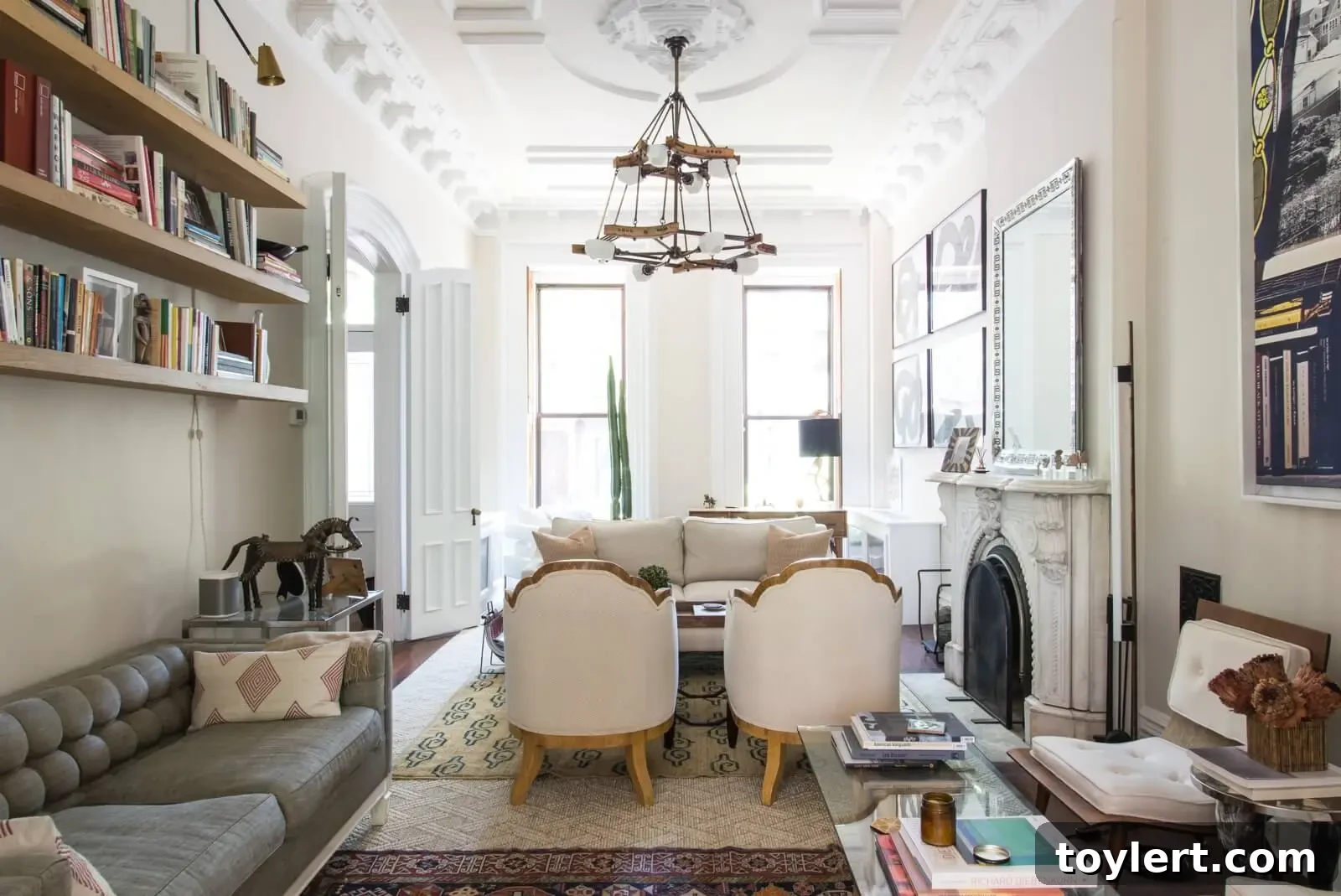
Unveiling the Eclectic Elegance: Louisa G. Roeder’s British Chic Approach to Brooklyn Brownstone Design
When asked to articulate her design philosophy, acclaimed interior designer Louisa G. Roeder often distills it into a captivating blend: “Eclectic, layered, high-low, a seamless transition from cherished family heirlooms to modern pieces from West Elm.” In essence, her mantra is refreshingly simple yet profound: “Anything goes, as long as I like it.” This deeply personal and confident approach has cemented her reputation as a formidable talent in the competitive New York City interior design landscape, particularly renowned for her exquisite transformations of Brooklyn brownstones.
Roeder’s signature style transcends fleeting trends, instead cultivating spaces that feel collected, authentic, and utterly unique. Her ability to weave diverse elements into a cohesive and inviting tapestry is not merely a skill but an inherent gift, honed by a lifetime steeped in rich visual experiences. It is this innate sensibility that allows her to craft interiors that are both sophisticated and supremely comfortable, reflecting a discerning eye that values character and personal history above all else.
The Genesis of a Distinctive Style: From London’s Chelsea to Brooklyn’s Historic Homes
A significant influence on Roeder’s aesthetic undoubtedly stems from her formative years spent in London’s prestigious Chelsea neighborhood. Growing up amidst the elegant Victorian and Georgian architecture, with its grand proportions, intricate details, and timeless charm, instilled in her a profound appreciation for historical structures and the stories they tell. This early immersion in classic European design, coupled with a distinctly British approach to comfortable, lived-in elegance, laid the groundwork for her future endeavors.
It seems almost preordained that decorating Victorian-era row houses, such as the iconic brownstones of Brooklyn, would come so naturally to Roeder. The architectural grandeur and inherent character of these homes provide the perfect canvas for her layered, eclectic vision. Unlike designers who might seek to strip away history, Roeder embraces it, allowing the bones of the building to inform and enhance her contemporary interventions. This respectful yet innovative dialogue between old and new is a hallmark of her work, creating interiors that feel both historically resonant and vibrantly modern.
Her transition from the leafy streets of London to the bustling avenues of New York City, particularly the historic enclaves of Brooklyn, offered a fresh perspective while grounding her in familiar architectural territory. The quintessential Brooklyn brownstone, much like its London Victorian counterparts, boasts a rich heritage, intricate woodwork, soaring ceilings, and a sense of enduring craftsmanship. Roeder’s genius lies in her ability to honor this legacy while infusing each space with a fresh, cosmopolitan energy that is distinctly her own.
Decoding Louisa Roeder’s Signature Aesthetic: Eclectic, Layered, and High-Low Brilliance
Louisa G. Roeder’s design philosophy is an artful masterclass in curation and confidence. When she describes her style as “eclectic,” she isn’t merely throwing disparate items together. Instead, it signifies a thoughtful blending of diverse periods, origins, and textures that, while varied, share an underlying harmony. This could mean pairing a robust antique console with a sleek, contemporary lamp, or displaying a vibrant piece of abstract art above a traditional fireplace. The result is a home that feels accumulated over time, rich with personality and a compelling visual narrative.
The term “layered” speaks to the depth and visual richness she brings to every room. Her interiors are never flat or one-dimensional. Instead, she expertly builds texture through a careful selection of textiles—plush rugs, luxurious drapes, tactile upholstery, and an abundance of cushions—creating an inviting atmosphere that begs to be explored. Artwork, personal photographs, books, and carefully chosen decorative objects are then introduced, each contributing to a rich tapestry that makes a space feel deeply personal and lived-in. This layering effect not only adds aesthetic appeal but also imbues rooms with warmth, comfort, and an undeniable sense of home.
Perhaps one of the most exciting aspects of Roeder’s design is her masterful application of the “high-low” approach. This is where her artistic intuition truly shines. She fearlessly mixes high-end, investment pieces—be it a statement antique, a bespoke piece of furniture, or original artwork—with more accessible finds from retailers like West Elm, or even flea market treasures. This intelligent juxtaposition prevents a space from feeling overly precious or like a showroom. Instead, it creates an authentic elegance, a dynamic tension that makes each item feel specially chosen and highlights its individual beauty. It’s a sophisticated balance that makes luxury approachable and everyday objects feel elevated.
At the heart of her philosophy, “Anything goes, as long as I like it,” lies a deep understanding of personal connection. Roeder believes that a home should be a true reflection of its inhabitants, filled with items that resonate with them emotionally. This confidence in her own taste, and the ability to translate a client’s unspoken desires into tangible beauty, is what truly sets her apart. Her British “chic” is not about following trends but about creating timeless, elegant, and comfortable spaces that tell a story, making every room feel both grand and intimately inviting.
A Masterpiece in Prospect Heights: Roeder’s Own Brownstone as a Showcase
The acquisition of her classic Prospect Heights brownstone in 2014 provided Louisa G. Roeder with the ultimate canvas to demonstrate her unique vision. Prospect Heights, a neighborhood renowned for its magnificent rows of brownstones, offers a quintessential Brooklyn living experience characterized by historic architecture, tree-lined streets, and a vibrant community. These homes typically feature grand stoops, original period details like intricate moldings, fireplaces, and large windows that flood interiors with natural light – all elements that Roeder skillfully integrates into her designs.
The level of assuredness evident in the decor of her own home is truly remarkable, especially considering she has been a practicing designer for only a few years and, notably, without any formal professional training in interior design. This speaks volumes about her innate talent and unwavering confidence in her aesthetic choices. Her brownstone is not just a residence; it is a living portfolio, showcasing how her eclectic, layered, and high-low approach can transform a historic space into a vibrant, contemporary sanctuary.
Within her Prospect Heights abode, Roeder has masterfully preserved and highlighted the original architectural integrity while injecting a fresh, modern sensibility. One might imagine original intricate plasterwork coexisting harmoniously with a bold, contemporary art piece. Or antique rugs layered over polished hardwood floors, juxtaposed with sleek, minimalist lighting fixtures. The assurance comes from a fearless mixing of elements, a deep understanding of scale and balance, and an uncompromising pursuit of beauty that feels authentic and personal.
Her home serves as a powerful testament to the idea that design should be intuitive and soulful. It’s a space where a treasured family heirloom can sit comfortably beside a new, design-forward furniture piece, each enhancing the other without competition. This deliberate curation creates a narrative throughout the home, inviting visitors to appreciate not just individual objects but the thoughtful connections between them. Her brownstone exemplifies the very best of British chic adapted for the American urban context: elegant, comfortable, and imbued with an undeniable sense of character.
The Unconventional Path to Interior Design Stardom: Art, Auctions, and Entrepreneurship
Louisa G. Roeder’s journey into the world of interior design is as distinctive as her aesthetic. Her career trajectory is a compelling narrative of passion meeting opportunity, defying conventional expectations of formal training. Rather than beginning with a design degree, Roeder pursued a robust academic foundation in art history at the University of Pennsylvania. This rigorous discipline, focused on understanding aesthetic principles, historical periods, cultural contexts, and the evolution of visual expression, provided an invaluable framework for developing a discerning eye for design. It taught her how to analyze form, color, composition, and the narratives embedded within objects and spaces, skills that are directly transferable and profoundly beneficial to interior design.
Following her studies, Roeder spent several years immersed in the rarefied world of Sotheby’s auction house. This experience was instrumental in shaping her appreciation for quality, provenance, and the intrinsic value of unique pieces. At Sotheby’s, she was continually exposed to an extraordinary array of fine art, antique furniture, and decorative arts from various periods and cultures. This direct interaction with rare and exquisite objects undoubtedly sharpened her ability to identify exceptional pieces, understand their historical significance, and envision how they could be integrated into contemporary settings. It’s an education that few designers receive, providing a deep well of knowledge for her “heirlooms” and “high-low” approach.
Her entrepreneurial spirit then led her into the dynamic realm of fashion. As a fashion entrepreneur, Roeder developed a keen understanding of trends, textiles, color palettes, and the art of personal style. Fashion, at its core, is about creating a cohesive look, expressing individuality, and understanding how different elements come together to form an impactful visual statement. These principles are directly analogous to interior design, where rooms are essentially “outfits” for a home, requiring careful consideration of texture, pattern, form, and how they collectively evoke a particular mood or identity. The experience also likely fostered her business acumen and client communication skills.
It was through this rich tapestry of experiences that Roeder’s true calling began to emerge organically. As friends increasingly sought her guidance in decorating their own apartments, “it snowballed from there.” This natural progression, driven by word-of-mouth and the undeniable success of her early projects, underscores the power of innate talent over traditional credentials. Her career is a powerful testament to the idea that true design sensibility often springs from a unique blend of personal history, diverse influences, and an unwavering passion for creating beautiful, meaningful spaces. Her unconventional path lends an authenticity and depth to her work that is truly inimitable.
The Enduring Appeal of British Chic in American Homes
Louisa G. Roeder’s rise in the New York design scene highlights the enduring and growing appeal of “British Chic” in American homes, especially within historic properties like Brooklyn brownstones. This aesthetic, which Roeder embodies so perfectly, moves beyond mere trends to embrace a timeless elegance characterized by comfort, character, and a sophisticated blend of old and new. British chic is not about perfection or stark minimalism; rather, it celebrates a lived-in quality, where rooms feel evolved over time, reflecting personality and a cultivated eye.
For American homeowners, particularly those living in historic structures, Roeder’s approach offers a refreshing alternative to overly staged or rigidly contemporary interiors. It speaks to a desire for homes that feel warm, inviting, and truly unique. The “anything goes, as long as I like it” philosophy resonates deeply with individuals who wish to curate spaces filled with pieces that hold personal meaning, whether they are inherited treasures, flea market finds, or bespoke creations. This approach allows for a playful yet refined eclecticism that respects the architectural integrity of a brownstone while infusing it with modern comforts and an undeniable sense of style.
The blend of family heirlooms with contemporary pieces, the layering of textures, and the confident mix of high and low design elements create an environment that is both luxurious and approachable. It’s a style that invites guests to relax and encourages occupants to truly live in their homes, surrounded by beauty and comfort. Roeder demonstrates that British chic, far from being confined to transatlantic shores, can seamlessly translate to and enrich the distinct character of American brownstones, making them feel both grand and intimately personal.
Louisa G. Roeder – Redefining Modern Eclecticism in Brooklyn
Louisa G. Roeder stands as a vibrant example of an interior designer who has redefined modern eclecticism, particularly within the beloved historic brownstones of Brooklyn. Her unique blend of a London upbringing, an art history background, experience at Sotheby’s, and a venture into fashion entrepreneurship has culminated in a design philosophy that is as rich and layered as the homes she transforms. She effortlessly fuses diverse elements, from treasured heirlooms to accessible modern furnishings, crafting spaces that are not only visually stunning but also deeply personal and imbued with character.
Her confident, intuitive approach, unburdened by formal design training, underscores the power of natural talent and a discerning eye. Roeder proves that the most captivating interiors are often those that tell a story, reflecting the lives and passions of their inhabitants rather than conforming to rigid design doctrines. Through her remarkable work, particularly evident in her own Prospect Heights brownstone, Louisa G. Roeder continues to inspire homeowners and aspiring designers alike, demonstrating that true elegance lies in authenticity, thoughtful curation, and the courageous pursuit of what you genuinely love.