Brooklyn’s Resilience: Navigating Pandemic Life and the Surge of Social Justice Movements
As New York City entered its 14th consecutive week of “sheltering in place” and marked the 59th day of city-wide home schooling, the urban landscape transformed. The once bustling streets became a testament to collective caution, while homes turned into classrooms, offices, and sanctuaries. This unprecedented period, born from the global COVID-19 pandemic, brought with it a unique set of challenges and profound shifts in daily life for millions of New Yorkers. Amidst the quietude and introspection enforced by the lockdown, another powerful movement began to swell, reminding the city that resilience isn’t just about enduring hardship, but also about actively fighting for a more just future.
The city, particularly the vibrant borough of Brooklyn, found itself at a crucial intersection: battling a public health crisis while simultaneously grappling with deeply entrenched issues of social inequality and racial injustice. From impromptu outdoor classrooms to virtual community gatherings, residents adapted with ingenuity and spirit. Yet, beneath the surface of this new normal, a fervent demand for change was brewing, soon to erupt into widespread protests and demonstrations that underscored the enduring spirit of activism deeply rooted in Brooklyn’s history.
Voices of Change: Protests for Justice in Brooklyn
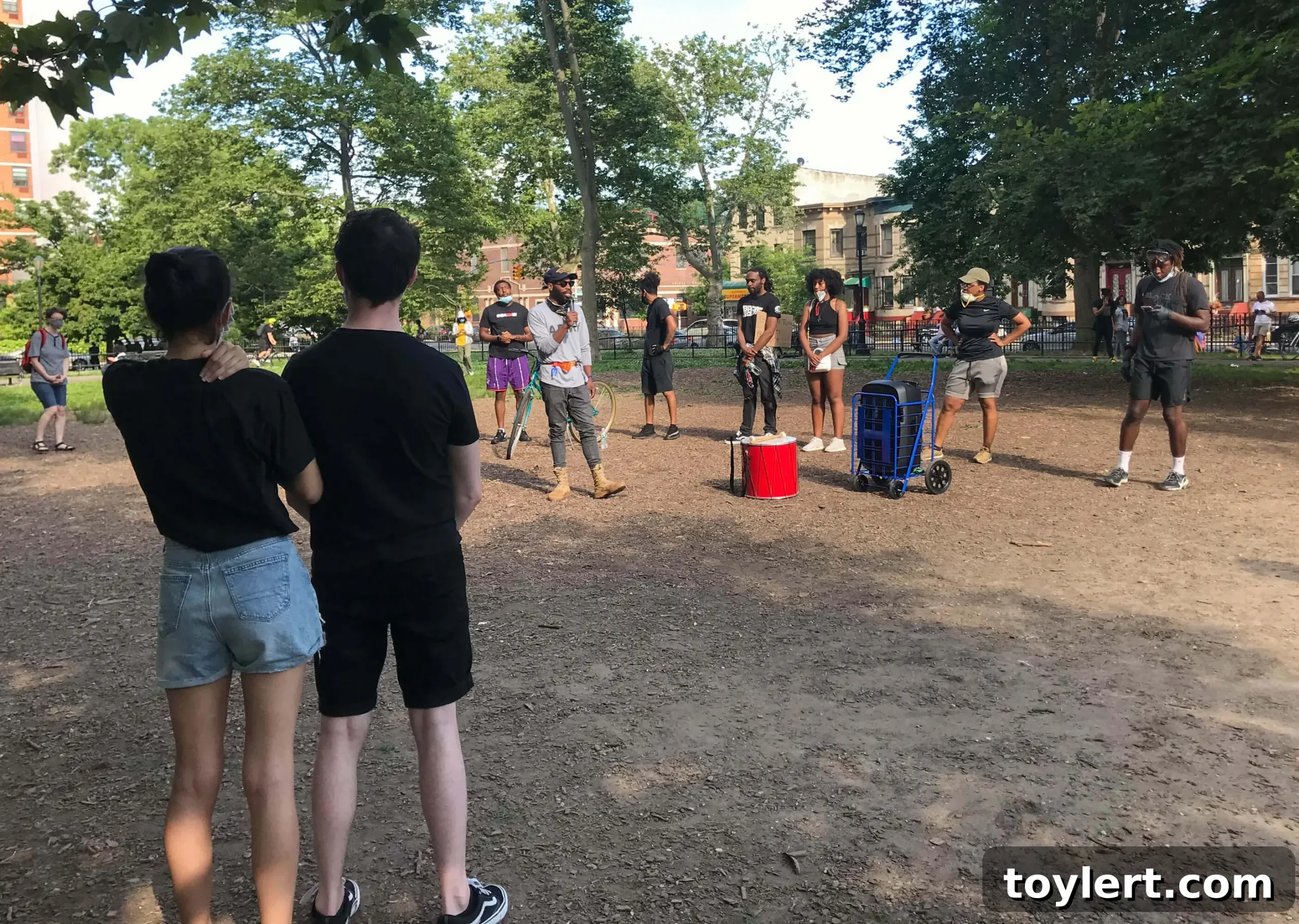
Even as the city navigated the complexities of phased reopenings and continued health precautions, the call for social justice resonated strongly across its neighborhoods. Brooklyn, a historical cradle of activism and a mosaic of diverse communities, became a focal point for powerful demonstrations advocating for fundamental human rights and systemic change. These gatherings not only spoke to contemporary issues but also honored the legacies of past struggles and the individuals who paved the way for progress.
A March for Legacy: Honoring Dr. Joan Maynard and Weeksville
On a significant afternoon, a march was meticulously scheduled for 1 p.m. at 159 Dr. Joan Maynard Way, located at the intersection of St. Marks and Buffalo Avenue in the heart of Crown Heights. This location, directly across the street from the esteemed Weeksville Heritage Center, was chosen with profound symbolic intent, serving as a powerful reminder of the enduring fight for Black heritage and community preservation.
The naming of the street itself, Dr. Joan Maynard Way, pays homage to a truly extraordinary figure. Dr. Joan Maynard was not just an activist; she was a visionary who dedicated her life to preserving the invaluable history of Weeksville, one of the nation’s few remaining 19th-century free Black communities. Her tireless efforts were instrumental in saving the historic houses on Hunterfly Road from demolition, a monumental feat that ensured future generations could connect with this vital piece of American history. She subsequently co-founded and served as the executive director of the Weeksville Heritage Center, transforming it into a living monument to Black resilience, self-determination, and cultural achievement.
The Weeksville Heritage Center stands as a beacon of Black history in Brooklyn. It tells the story of an independent African American community established in 1838, predating the Emancipation Proclamation. It offers a glimpse into the lives of free Black Americans who built their own schools, churches, and businesses, fostering a vibrant self-sufficient society. The Center serves as a vital educational institution, a cultural hub, and a powerful symbol of the ongoing struggle for racial equality and historical recognition. A march converging at this site during a period of intense social justice activism underscored the deep historical roots of the current movement, drawing strength and inspiration from the trailblazers like Dr. Maynard who came before.
In connecting present-day protests with the fight Dr. Maynard championed decades ago, participants reaffirmed that the struggle for justice is continuous. Her legacy reminds us that preserving history is not just about looking backward, but about empowering communities to shape their future and assert their right to existence, representation, and respect.
Community Vigil: McCarren Park and the Spirit of Collective Action
Beyond the specific march in Crown Heights, the spirit of collective action permeated other parts of Brooklyn. The nightly vigil at McCarren Park in Williamsburg, scheduled for 7 p.m., exemplified the sustained commitment of many New Yorkers to the cause of justice. These regular gatherings, often characterized by silent reflection, shared stories, and unified calls for change, created powerful spaces for community solidarity. They demonstrated that even in the face of ongoing health concerns and personal anxieties, the demand for social equity remained paramount. Such vigils, occurring consistently over weeks, became a pulse point for the city’s collective conscience, ensuring that the movement for change remained visible and vocal.
A Historic Gathering: The Black Trans March
Perhaps one of the most powerful and visually striking demonstrations during this period was the Black Trans March. The New York Times meticulously chronicled how this momentous event came together, detailing the grassroots efforts and the fervent dedication that culminated in a truly historic gathering. On a Sunday, an estimated 15,000 people converged, all united in purpose, dressed predominantly in white, and wearing masks – a testament to both solidarity and responsibility in challenging times.
The Genesis of a Movement: Uniting for Black Trans Lives
The Black Trans March wasn’t merely a protest; it was a profound declaration of existence, resilience, and unwavering demand for justice for Black trans individuals. Organized swiftly and organically, it underscored the urgent need to address the intersectional challenges faced by this community – challenges that often place them at the crosshairs of both racial and gender-based discrimination, leading to disproportionately high rates of violence, poverty, and marginalization. The sheer turnout, far exceeding initial expectations, highlighted a deep-seated desire within New York City and beyond to stand in unequivocal solidarity with Black trans lives.
The visual impact of 15,000 individuals, all in white, moving through the streets of Brooklyn was breathtaking. The choice of white symbolized purity, unity, and a collective mourning for lives lost, while the masks served as a crucial health measure and, for many, an additional layer of anonymity and protection. This powerful display sent an undeniable message: Black trans lives matter, they deserve to be seen, heard, and protected, and their struggle is an integral part of the broader fight for human rights and racial justice.
Art and Activism: Boosting the Message
The march’s widespread impact was also significantly amplified by the power of art and creative collaboration. The wonderful poster announcing the event, which quickly went viral and became synonymous with the march, was the brilliant work of Queens illustrator Mohammed Fayaz. His artistic contribution not only captured the essence and urgency of the movement but also played a crucial role in mobilizing participants and spreading awareness. Art, in its most potent form, serves as both a catalyst for change and a medium for expressing collective emotion, and Fayaz’s poster became an iconic representation of this historic event.
Furthermore, Fayaz’s work has been instrumental in boosting the profile and mission of the Brooklyn queer and trans people of color art collective, Papi Juice. Papi Juice is more than just an art collective; it’s a vibrant cultural platform dedicated to celebrating and affirming the lives of queer and trans people of color through art, music, and community events. By providing spaces for expression, connection, and joy, Papi Juice actively contributes to building stronger, more visible, and more resilient queer and trans communities in Brooklyn. Their collaboration with artists like Mohammed Fayaz exemplifies how art and activism can merge to create powerful movements that transcend traditional boundaries and foster genuine social change.
Brooklyn’s Enduring Spirit: A Call for Unity and Progress
The period described, marked by extended lockdown measures and a surge in social justice activism, showcases Brooklyn’s profound resilience and its unwavering commitment to progress. From the challenges of adapting to a new normal during the pandemic to the courageous acts of protest for racial and LGBTQ+ justice, the borough has consistently demonstrated its capacity for collective action and profound community spirit.
The legacies of figures like Dr. Joan Maynard, the sustained efforts of nightly vigils, and the overwhelming success of events like the Black Trans March all weave together to form a rich tapestry of activism. They remind us that Brooklyn is not just a collection of neighborhoods but a dynamic ecosystem where diverse voices converge, where history is honored, and where the fight for a more equitable future continues with passion and persistence. As the city moves forward, the lessons learned and the movements sparked during these challenging times will undoubtedly continue to shape its identity, reinforcing its role as a beacon of hope and a powerful force for change.