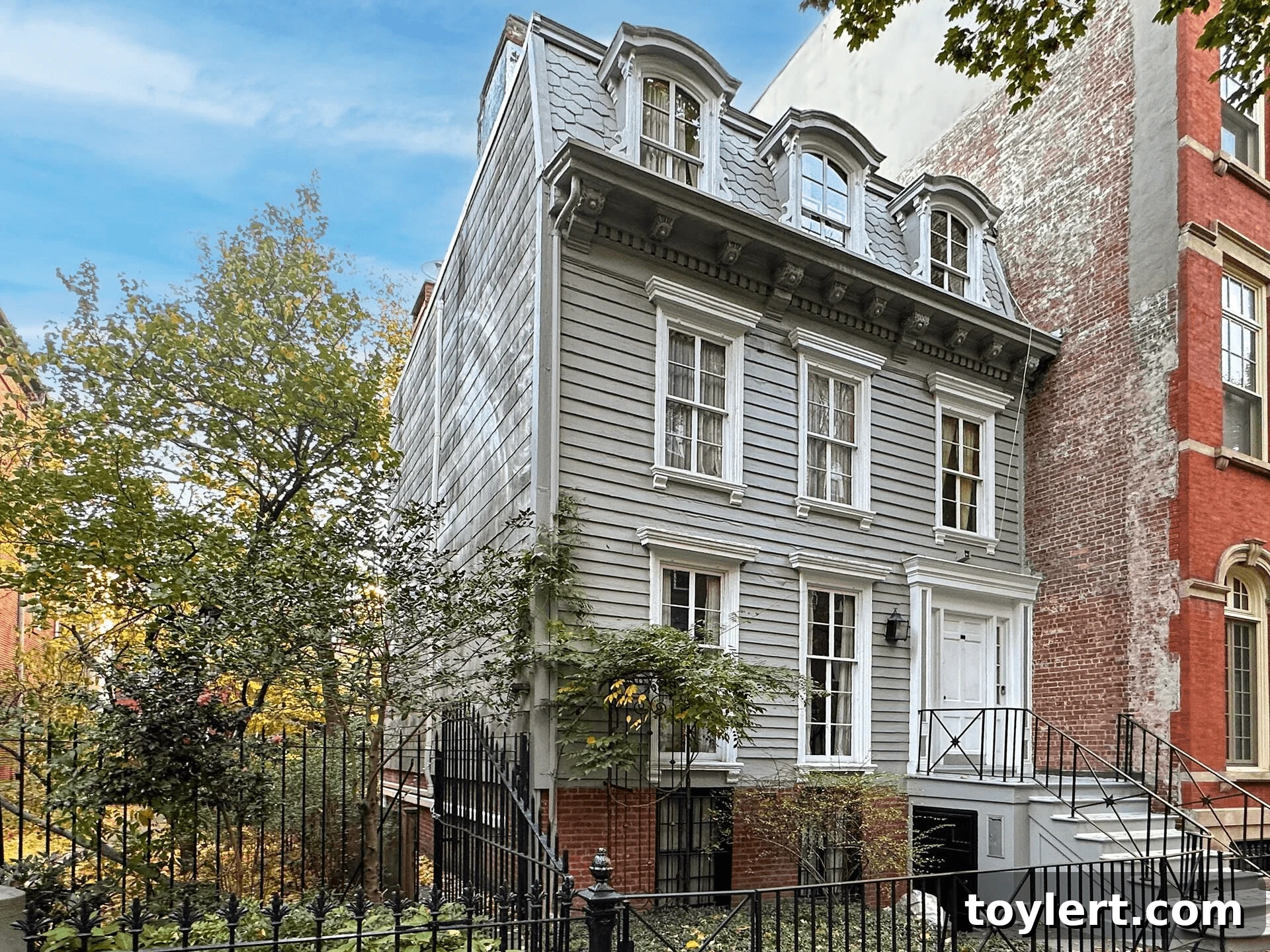
Discover the Enduring Charm of 69 Orange Street: A Historic Wood Frame Gem in Brooklyn Heights
Nestled within the cobblestone charm of Brooklyn Heights, a truly rare and picturesque property has emerged on the market for the first time in decades. At 69 Orange Street, history and elegance intertwine in a magnificent wood frame house, presenting an unparalleled opportunity to own a piece of New York City’s most coveted architectural heritage. This distinguished dwelling not only captudes the essence of its storied past with remarkable exterior appeal but also boasts a prime location on one of the area’s beloved “fruit streets,” with the iconic Plymouth Church standing as its venerable neighbor. Located squarely within the esteemed Brooklyn Heights Historic District, this residence offers more than just a home; it offers a legacy.
Stepping inside, one is immediately greeted by a rich tapestry of interior details that tell the tale of the house’s over 190-year history. Original mantels, gleaming wood floors, and an intricately carved newel post are testaments to the various eras of ownership and the enduring craftsmanship that has preserved this home through generations. Each element reflects a different chapter, inviting occupants to imagine the lives lived within these walls and to appreciate the blend of historical authenticity with modern potential. This exceptional property is not merely a house; it is a living document of Brooklyn’s architectural and social evolution, waiting for its next custodian to cherish its unique story.
An Architectural Journey Through Time: The Evolution of 69 Orange Street
Originally constructed circa 1829, 69 Orange Street began its life as a testament to early 19th-century residential architecture in Brooklyn. Measuring an impressive almost 25 feet wide, this home stood as a grand statement even in its nascent years. However, like many buildings of its age, it underwent significant transformations to keep pace with evolving architectural trends and aesthetic sensibilities. The most notable of these makeovers occurred in the mid-19th century, profoundly reshaping its facade and granting it a distinct character that resonates to this day.
This comprehensive mid-century renovation introduced a fashionable mansard roof, a defining feature of the Second Empire style, which was highly popular during that period. Complementing the mansard roof were a meticulously crafted bracketed cornice and elegant dormers, adding layers of architectural sophistication and grandeur. These additions not only enhanced the visual appeal of the house but also likely expanded the usable space within its upper levels, reflecting a growing demand for more comfortable and stylish urban living. The house, therefore, became a harmonious blend of its early Federal origins and the more ornate Second Empire influences, a true architectural palimpsest.
The facade of 69 Orange Street has continued its evolution throughout the decades. Historical records, including a fascinating 1920s photograph, reveal that the house once featured a charming bay window positioned above a front portico. This detail, characteristic of late 19th and early 20th-century residential design, offered an additional aesthetic flourish and likely provided an inviting nook within the interior. However, in the 1930s, as architectural tastes shifted once again, new owners made the decision to remove this feature. This removal, documented in contemporary newspapers, stripped away one layer of its architectural history while highlighting the continuous adaptation that houses of this age often undergo. Today, the facade stands as a refined composition, hinting at its many transformations while maintaining an enduring elegance that captures the eye of every passerby.
A Location Steeped in History: Neighboring Plymouth Church and the Fruit Streets
One of the most compelling aspects of 69 Orange Street is its unparalleled location within the Brooklyn Heights Historic District. This designation ensures the preservation of the neighborhood’s distinctive character, with its tree-lined streets, stunning brownstones, and charming wood frame houses. Living here means being part of a community committed to safeguarding its architectural legacy, where every stroll feels like a journey through time. The specific placement on one of Brooklyn Heights’ coveted “fruit streets”—streets named after various fruits, adding a whimsical and unique touch to the area—only enhances its desirability and charm. These quaint street names are a nod to the area’s historical past, when it was a more pastoral setting before becoming the residential haven it is today.
Moreover, the proximity of 69 Orange Street to the historic Plymouth Church is a significant feature, elevating its status from a beautiful home to a landmark property with deep historical connections. Just one lot separates the residence from this nationally significant institution, a church renowned for its fervent abolitionist activities and its iconic pastor, Henry Ward Beecher. This close relationship offers more than just a picturesque view; it weaves 69 Orange Street into the very fabric of American history.
The property between the house and Plymouth Church holds its own interesting narrative. For many years, another frame house occupied this lot, contributing to the residential density of the early 20th century. However, this structure was eventually removed, and the space was transformed into what is now the Plymouth Bell and a serene garden area owned by the church. This green space not only provides a tranquil buffer but also ensures unobstructed views and a sense of open air, a rare commodity in such a densely populated urban area. The presence of the Plymouth Bell itself, a symbol of the church’s enduring mission and history, adds an almost sacred dimension to the immediate surroundings of 69 Orange Street.
Echoes of the Past: Notable Residents and Community Connections
The historical ties between 69 Orange Street and Plymouth Church run deeper than mere geographical proximity. The residence and its 19th-century inhabitants, Henry L. and Frances Stoughton Pratt, shared a profound connection with the church and its charismatic leader, Henry Ward Beecher. As meticulously explored by Brownstoner columnist Suzanne Spellen in her insightful history of the house, the Pratts were active members of the Plymouth Church community, placing their home at the heart of the social and intellectual ferment of the era. Henry Ward Beecher, a towering figure in American religious and political life, preached sermons that resonated far beyond the walls of his church, influencing public opinion on issues such as abolitionism and women’s suffrage. To live in a house so closely associated with such figures is to truly inhabit a piece of living history.
The Pratts’ tenure at 69 Orange Street likely saw the house host numerous gatherings, discussions, and perhaps even clandestine meetings related to the abolitionist cause. Their presence underscores the role that private residences played in the public life of Brooklyn Heights during a period of intense social change. The mantels, wood floors, and newel post that remain today would have witnessed these moments, silently absorbing the conversations and aspirations of those who sought to shape a better future. Owning 69 Orange Street is not just about acquiring property; it is about becoming a steward of this rich and compelling human story.
The Brooklyn Heights Lifestyle: Unmatched Elegance and Community
Beyond its individual charms, 69 Orange Street offers access to the unparalleled lifestyle that defines Brooklyn Heights. This neighborhood is renowned for its idyllic, tree-lined streets, historic architecture, and breathtaking views of the Manhattan skyline, the Brooklyn Bridge, and the Statue of Liberty. It is a community that seamlessly blends historic grandeur with modern sophistication, offering residents a tranquil retreat from the bustle of city life while keeping them mere minutes away from its vibrant pulse.
Residents of Brooklyn Heights enjoy an abundance of amenities. The iconic Brooklyn Promenade provides an expansive public space for leisurely strolls, offering some of the most spectacular waterfront vistas in the city. Nearby Brooklyn Bridge Park, a sprawling urban oasis, offers recreational facilities, cultural events, and stunning landscapes. The neighborhood is also home to a diverse array of independent boutiques, gourmet food shops, and acclaimed restaurants, catering to every taste and preference. Excellent public transportation options, including multiple subway lines, ensure easy access to all corners of New York City, making it an ideal location for commuters and urban explorers alike.
The cultural richness of Brooklyn Heights is further enhanced by institutions such as the Brooklyn Historical Society, now the Center for Brooklyn History at Brooklyn Public Library, which preserves and shares the stories of the borough. The neighborhood also hosts various community events and farmers’ markets, fostering a strong sense of local identity and camaraderie. For families, the area boasts highly-regarded schools and a safe, welcoming environment, making it a desirable destination for long-term residency. Living at 69 Orange Street means immersing oneself in a vibrant, historic community that offers an exceptional quality of life.
A Rare Opportunity: Why 69 Orange Street Stands Apart
The availability of 69 Orange Street represents a truly rare moment in the Brooklyn Heights real estate market. Properties of this caliber, with such a deep historical narrative, architectural integrity, and prime location, seldom come to market. It is a property that speaks to discerning buyers who appreciate the value of history, craftsmanship, and community.
The blend of its circa 1829 origins with mid-19th century architectural updates, the distinct charm of its wood frame construction in a district known for brownstones, and its direct historical links to prominent figures and institutions make it exceptionally unique. For those seeking an alternative to the ubiquitous brownstone, this wood frame house offers a different, yet equally captivating, aesthetic and structural character, often allowing for more natural light and a distinct sense of quaintness.
This house presents not only a beautiful place to call home but also a significant investment in a historically protected and consistently appreciating neighborhood. The opportunity to acquire a dwelling that has been cherished by families for nearly two centuries, reflecting multiple architectural eras and intimately connected to the social fabric of its time, is truly unparalleled. It is a chance to not just buy a house, but to inherit a legacy, to become part of a continuing story, and to contribute to the preservation of one of New York City’s most cherished historic districts.
Conclusion: Embrace History, Embrace Home
69 Orange Street is more than just a listing; it is an invitation to embrace a lifestyle steeped in history, charm, and community. From its picturesque wood frame exterior to its meticulously preserved interior details, every aspect of this home whispers tales of a bygone era, while offering the comfort and sophistication demanded by modern living. Its prime location on a serene fruit street, with the historic Plymouth Church as a close companion, solidifies its status as a truly exceptional property.
For decades, this house has been a private sanctuary, a silent witness to the evolving grandeur of Brooklyn Heights. Now, as it prepares for its next chapter, it offers a unique opportunity for a new owner to become part of its continuing narrative. Whether drawn by its architectural significance, its historical connections, or the unparalleled lifestyle of Brooklyn Heights, 69 Orange Street stands ready to welcome those who appreciate the profound beauty and enduring value of a truly historic home. This is not just a house for sale; it is a legacy waiting to be continued, a piece of living history ready to be cherished by its next fortunate stewards.