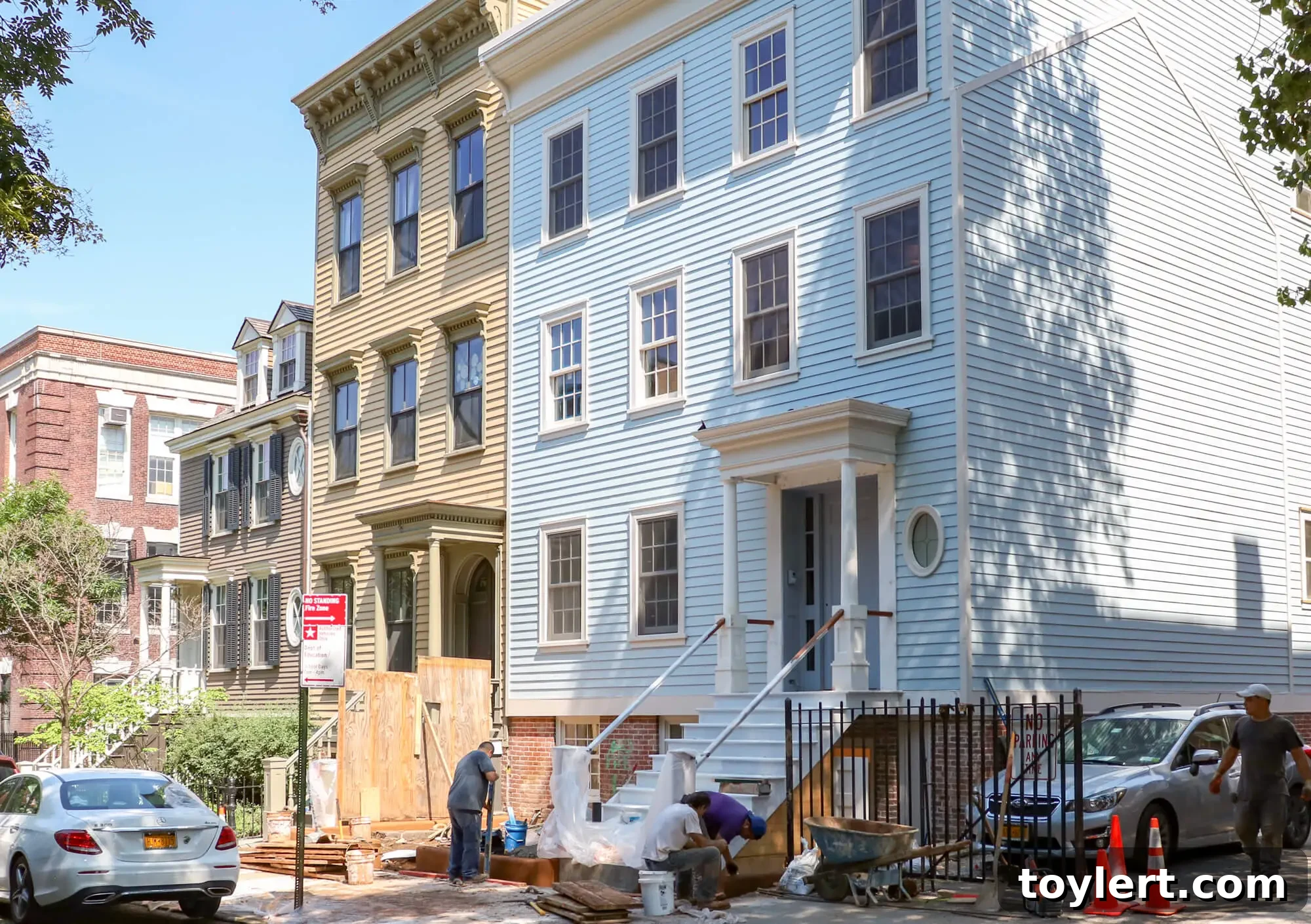
In the vibrant heart of Brooklyn Heights, where historic brownstones and tree-lined streets tell tales of bygone eras, a rare Federal-era wood-frame house at 59 Middagh Street has recently unveiled its nearly complete transformation. The temporary removal of the construction fence this week offered a first glimpse into a meticulous, yet at times contentious, renovation journey that has captivated local preservationists and residents alike. This extensive project, undertaken by two dedicated developers, has navigated a path filled with dramatic twists and turns, highlighting the intricate dance between preserving architectural heritage and adapting historic properties for contemporary living.
The Enduring Charm of 59 Middagh Street: A Federal-Era Gem
Dating back to approximately 1832, 59 Middagh Street stands as a testament to Brooklyn’s rich architectural past. Its designation as a Federal-era wood-frame house makes it particularly unique, given that many structures from this period, especially in urban settings like Brooklyn Heights, were eventually replaced or heavily modified. Federal style architecture, prevalent in the United States between 1780 and 1830, is characterized by its elegance, symmetry, and classical details, often featuring balanced facades, delicate ornamentation, and fanlights above doorways. A wood-frame construction from this period is especially noteworthy in a neighborhood now predominantly known for its masonry buildings, underscoring the house’s exceptional historical significance and its rarity.
The house’s presence on Middagh Street contributes significantly to the unique character of Brooklyn Heights, one of New York City’s most cherished historic districts. Its survival through nearly two centuries of urban development speaks volumes about its inherent value and the community’s commitment to safeguarding its architectural legacy. As such, any renovation project concerning 59 Middagh Street is naturally subject to intense scrutiny, particularly from the vigilant Landmarks Preservation Commission (LPC).
Navigating Preservation: The Role of the Landmarks Preservation Commission
The Brooklyn Heights Historic District, established in 1965 as New York City’s first historic district, is a protected zone where the aesthetic and historical integrity of buildings are meticulously maintained. At the forefront of this preservation effort is the Landmarks Preservation Commission (LPC), an agency tasked with safeguarding the city’s architectural, historical, and cultural heritage. For property owners within these districts, any exterior modifications, including renovations, expansions, or even minor alterations, require prior approval from the LPC.
The process of obtaining LPC approval is rigorous, involving detailed submissions of architectural plans, material samples, and often public hearings. The Commission strives to ensure that proposed changes are consistent with the building’s historical period and the overall character of the historic district. This regulatory framework, while sometimes perceived as challenging by developers, is crucial for preventing insensitive alterations that could erode the unique charm and historical value of neighborhoods like Brooklyn Heights. The case of 59 Middagh Street perfectly illustrates both the necessity and the complexities of this oversight.
The Initial Vision: Approved Alterations in 2015
The renovation journey for 59 Middagh Street officially began with a spirit of collaboration and adherence to regulations. In 2015, the developers successfully secured approval from the Landmarks Preservation Commission for a significant renovation plan. This initial approval encompassed the addition of a rooftop extension and a rear extension. Such additions are often sought by owners looking to expand living space, enhance functionality, and adapt historic homes to modern family needs, particularly for single-family conversions. The LPC’s approval of these plans indicated that the proposed designs were deemed sympathetic to the existing structure and the surrounding historic streetscape, demonstrating a careful consideration for preservation principles while allowing for necessary modernization.
These initial plans represented a thoughtful balance: augmenting the living area of the historic house while attempting to maintain its outward integrity. The expectation was a smooth execution of these approved modifications, leading to a beautifully restored and expanded historic home. However, as is often the case with complex historic renovations, the path ahead proved to be anything but straightforward.
An Unforeseen Detour: Unauthorized Changes Spark Controversy
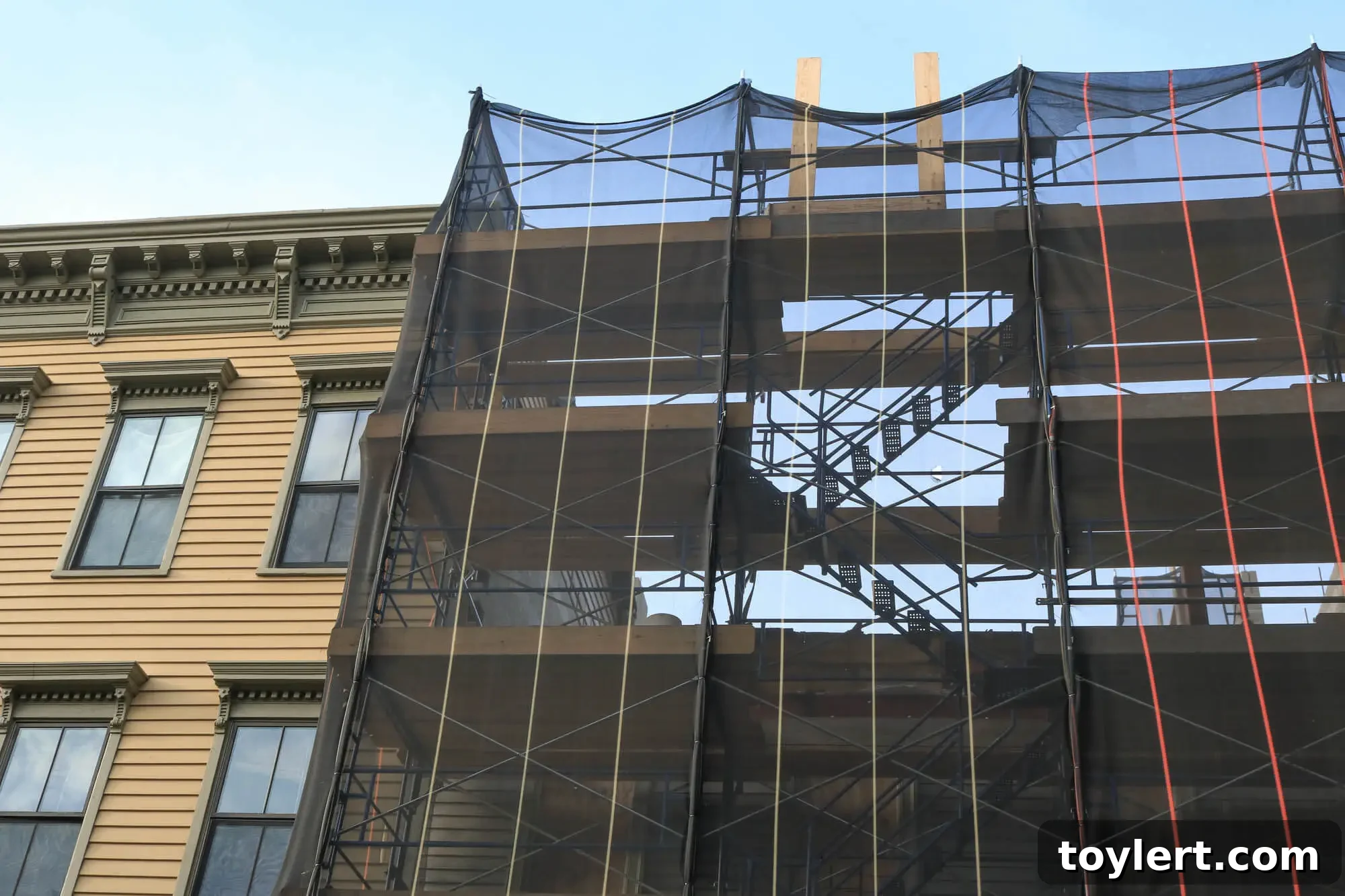
As work progressed in the spring of 2017, the renovation of 59 Middagh Street took an unexpected and controversial turn. Reports emerged that sections of the historic house’s original walls were unexpectedly removed, a significant alteration that had not been sanctioned by the LPC. Specifically, workers proceeded to remove portions of the exterior walls, which were covered in what was described as non-historic wood siding, without the necessary permits and approvals from the Landmarks Preservation Commission.
Such an action, especially on a protected landmark property within a historic district, is a grave concern for preservationists. The removal of original building fabric, even if concealed by later, non-historic additions, can compromise the structural integrity and historical authenticity of a building. It raises questions about the motivations behind the unauthorized work – whether it was an oversight, an attempt to cut corners, or an unexpected discovery during construction that was handled improperly. Regardless of the reason, this deviation from the approved plans ignited a significant debate about the boundaries of renovation and the imperative of strict adherence to preservation guidelines.
The LPC’s Firm Hand: Issuing a Warning and Demanding Accountability
True to its mandate, the Landmarks Preservation Commission quickly responded to the unauthorized alterations at 59 Middagh Street. In May 2017, the LPC issued a formal warning letter regarding the unapproved changes, effectively halting work on the affected sections and demanding an explanation. This action underscores the Commission’s unwavering commitment to enforcing preservation laws and protecting New York City’s precious architectural assets. A warning letter from the LPC is a serious matter, often preceding more stringent enforcement actions like stop-work orders or fines if compliance is not met.
The owners of the property, Brenda Walker and Jennifer Robertson, operating under the entity 59 Middagh LLC, were faced with the task of rectifying the situation. Their intention for the property was to transform it back into a one-family home, a vision that was now complicated by the unauthorized work. To address the LPC’s concerns and justify the alterations, representatives for the owners submitted an amended application to the Commission. This subsequent application likely detailed the extent of the work performed, provided structural assessments, and proposed a new plan for reconstruction or restoration that would, hopefully, meet LPC standards and gain retrospective approval.
Reconciling Past and Present: The Ongoing Challenge of Historic Renovation
The saga of 59 Middagh Street is a microcosm of the broader challenges inherent in historic renovation and preservation. On one hand, there is the undeniable need to preserve the unique architectural character and historical narrative embedded in structures like this Federal-era gem. These buildings are not just bricks and mortar; they are tangible links to our past, contributing significantly to the identity and charm of neighborhoods like Brooklyn Heights. The LPC’s role is to ensure these stories are not lost to modern expediency.
On the other hand, property owners and developers often seek to adapt historic homes for contemporary living. This can involve increasing living space, upgrading infrastructure to modern standards, and incorporating amenities that today’s homeowners expect. The conversion of 59 Middagh Street back into a one-family home, for instance, suggests a desire for expansive, luxurious living tailored to modern tastes. The tension arises when these modernization efforts clash with preservation guidelines, particularly when structural changes affect original building fabric.
The delicate balance lies in finding innovative solutions that respect historical integrity while allowing for functional and aesthetic improvements. This often requires deep historical research, skilled craftsmanship, and a collaborative approach with preservation authorities. The process at 59 Middagh Street has certainly put this balance to the test, illustrating the complex negotiations and compromises that define significant historic renovation projects.
The Near Completion: A Glimpse into the Future of 59 Middagh Street
With the construction fence briefly lowered this week, Brooklyn Heights residents were afforded a tantalizing glimpse into the near-complete transformation of 59 Middagh Street. The visible changes suggest that the developers, after navigating the complexities with the LPC, have successfully brought their vision to fruition. While the full extent of the interior work remains private, the exterior reveals a carefully executed blend of restoration and new construction, presumably in line with the finally approved plans.
The rooftop addition and rear extension, once points of contention and regulatory oversight, now appear to seamlessly integrate with the historic structure, adding valuable space without overtly detracting from the Federal-era aesthetic. The challenge of restoring or reconstructing the “unexpectedly lost sections of its original walls” would have been immense, and their current appearance is a testament to the intricate work involved in such a project. This historic home is poised to re-emerge as a stunning example of thoughtful historic renovation, capable of offering luxurious, modern living while honoring its profound heritage.
A Landmark Legacy: Enduring Lessons from Brooklyn Heights’ Renovation Saga
The renovation of 59 Middagh Street serves as a powerful case study in the world of historic preservation and urban development. It highlights the invaluable role of bodies like the Landmarks Preservation Commission in safeguarding our architectural treasures. It also underscores the importance of diligent planning, strict adherence to approved designs, and open communication between property owners, developers, and regulatory agencies. The “dramatic twists and turns” endured throughout this project ultimately reinforce the idea that historic properties require a unique level of care, respect, and expertise.
As the finishing touches are applied and 59 Middagh Street fully reclaims its place on one of Brooklyn Heights’ most historic thoroughfares, it will stand as more than just a beautifully renovated home. It will serve as a living reminder of the ongoing dialogue between the past and the present, a testament to the enduring value of architectural heritage, and a beacon for responsible development within New York City’s cherished historic districts. Its story will undoubtedly resonate for years to come, affirming Brooklyn Heights’ commitment to preserving its unparalleled legacy for future generations.