New York City’s Short-Term Rental Battle: Hosts Rally Against Local Law 18
by Gabriele Holtermann, Brooklyn Paper
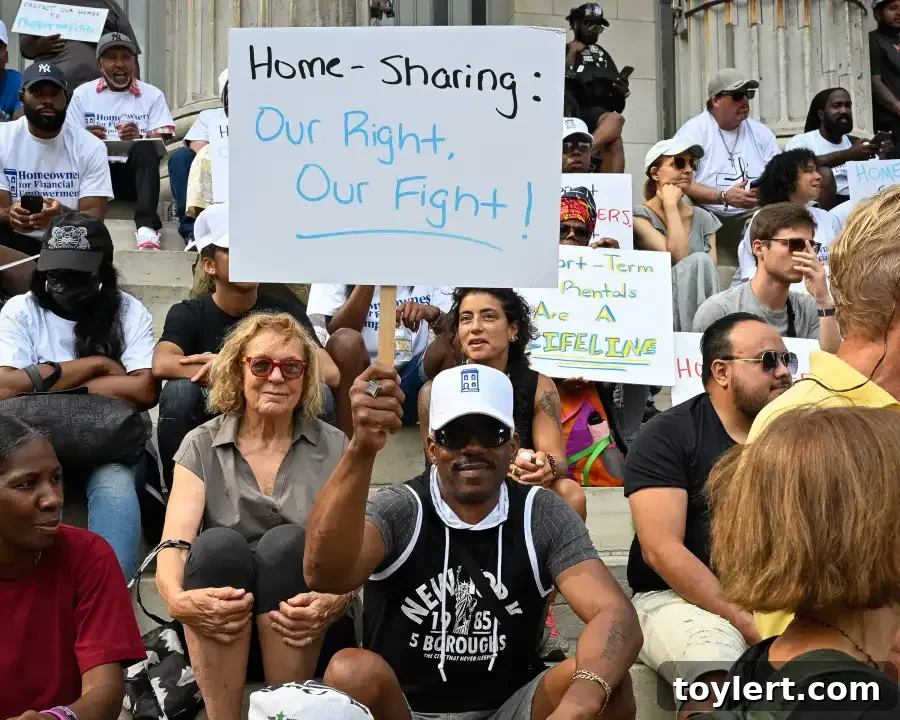
A groundswell of discontent swept through Brooklyn Borough Hall this week as dozens of New Yorkers gathered to voice their opposition to the city’s stringent short-term rental regulations. The rally, marked by impassioned speeches and fervent calls for change, spotlighted the ongoing struggle between local policymakers and thousands of residents who rely on platforms like Airbnb and VRBO to supplement their incomes or simply make ends meet.
At the heart of the controversy is Local Law 18, a piece of legislation that took effect in September 2023. Proponents of a new bill, currently under consideration, argue that Local Law 18 has effectively crippled their ability to host guests, thereby devastating their livelihoods and curtailing a vital source of revenue for many New York families. The proposed legislation seeks to roll back key provisions of the existing law, aiming to restore a more balanced approach to short-term accommodations in the bustling metropolis.
Unpacking Local Law 18: What It Means for NYC Hosts
Local Law 18 was introduced with the stated goal of regulating the burgeoning short-term rental market, addressing concerns around housing affordability, neighborhood disruption, and the operation of what critics often termed “illegal hotels.” Under the law, any resident wishing to rent out their home or a portion of it for fewer than 30 days must first register their dwelling with the Mayor’s Office of Special Enforcement (OSE). This registration process is not merely a formality; it comes with a strict set of conditions that hosts argue are practically insurmountable for the vast majority.
The most contentious requirements of Local Law 18 include:
- Mandatory Host Presence: The law stipulates that the host must be physically present in the unit during a guest’s stay. This means an entire apartment cannot be rented out if the owner is away, effectively limiting rentals to spare rooms within an occupied residence.
- Two-Guest Occupancy Limit: Stays are capped at a maximum of two guests. This provision has drawn particular ire, as it renders short-term rentals impractical for families, small groups, or even couples traveling with a child. Critics argue it severely restricts who can visit New York City through these platforms.
- Rigorous Registration Process: Hosts must navigate a complex registration system, which involves demonstrating compliance with various building and safety codes, providing proof of residency, and obtaining a special permit. The process has been described as lengthy, confusing, and often frustrating for applicants.
These conditions, say hosts and their advocates, make it “nearly impossible” to operate a viable short-term rental business in the city. For many, the income generated from hosting was a crucial factor in affording New York’s notoriously high cost of living, enabling them to pay mortgages, cover property taxes, or save for their children’s education. The sudden and severe restriction has left thousands scrambling to find alternative income streams.
The Economic Fallout: A Devastating Blow to Incomes
The rally at Brooklyn Borough Hall served as a powerful testament to the financial strain many New Yorkers are experiencing due to Local Law 18. Speakers at the event highlighted how the law has not only affected individual homeowners but also rippled through the local economy. For years, short-term rentals provided a flexible income opportunity for a diverse group of residents, from retirees looking to supplement their pensions to young professionals offsetting rent costs, and even artists and freelancers seeking financial stability in an unpredictable city.
One host, who asked to remain anonymous, tearfully shared how the income from her spare room allowed her to afford essential medical treatments. “Now, with this law, that income is gone,” she stated, her voice trembling. “It feels like the city is punishing us for trying to survive.” Such anecdotes underscore the human impact of the legislation, moving beyond abstract policy discussions to reveal the real-world consequences for everyday New Yorkers.
The economic impact extends beyond individual hosts. The influx of tourists using short-term rentals also supported local businesses, including restaurants, cafes, boutiques, and attractions in neighborhoods across the boroughs. When fewer visitors opt for short-term stays, or when those stays are restricted, the spending power they bring to local economies diminishes, potentially affecting jobs and small business vitality.
The Rationale Behind the Regulations: Housing Affordability and Community Concerns
While hosts decry the severe restrictions, city officials and housing advocates argue that Local Law 18 is a necessary measure to combat the city’s severe housing crisis. They contend that unregulated short-term rentals convert much-needed residential units into de facto hotel rooms, thereby reducing the available housing supply for long-term residents and driving up rental costs. The argument is that returning these units to the long-term rental market will alleviate some of the pressure on housing affordability.
Furthermore, concerns about quality of life in residential neighborhoods have long been a driver for stricter regulations. Residents in buildings with high concentrations of short-term rentals often report issues such as increased noise, transient visitors, security concerns, and a disruption of community cohesion. Local Law 18 was designed, in part, to address these grievances by ensuring that short-term rentals operate within a more residential framework, with the host present to mitigate potential disturbances.
However, critics of Local Law 18 argue that the law is overly broad and punishes responsible hosts who contribute positively to their neighborhoods. They point out that many hosts rent out spare rooms, not entire apartments that would otherwise be on the long-term rental market. They also contend that the law fails to differentiate between legitimate home-sharing and commercial operations, effectively lumping all short-term rentals into a single, highly regulated category.
A Call for Compromise: The Proposed New Bill
The rally on the steps of Brooklyn Borough Hall was not just a protest; it was also a unified call for support for a new bill aimed at easing Local Law 18’s most burdensome provisions. While the specifics of the proposed legislation are still being debated and refined, its primary goal is to introduce more flexibility and fairness into the regulatory framework.
Advocates for the new bill propose amendments that could include:
- Relaxing the Host Presence Rule: Allowing hosts to rent out their entire primary residence when they are away, provided they meet other safety and registration requirements. This would enable New Yorkers to utilize their homes to generate income during their own travels.
- Adjusting Occupancy Limits: Increasing the guest limit to accommodate small families or groups, recognizing that many legitimate travelers visit New York with more than one companion.
- Streamlining the Registration Process: Simplifying the application process and providing clearer guidelines to ensure that compliant hosts can more easily navigate the system without excessive bureaucratic hurdles.
- Differentiating Between Host Types: Creating categories for different types of short-term rentals, perhaps distinguishing between primary residents sharing a spare room and those operating multiple properties for purely commercial purposes, allowing for varied regulatory approaches.
Supporters believe that such amendments would strike a better balance between protecting housing stock and enabling responsible home-sharing. They argue that a more nuanced approach would allow New York City to benefit from the tourism generated by short-term rentals while still addressing legitimate concerns about affordability and neighborhood quality of life.
The Future of Short-Term Rentals in the Big Apple
The debate surrounding Local Law 18 is far from over. It represents a microcosm of a larger, global struggle as cities grapple with the disruptive yet economically beneficial nature of the sharing economy. New York City, a global hub for tourism and a city with persistent housing challenges, finds itself at the forefront of this complex discussion.
The outcome of the proposed new bill will have significant implications for thousands of hosts, the city’s tourism industry, and potentially the wider housing market. As the legislative process unfolds, stakeholders from all sides – hosts, housing advocates, city officials, and even the short-term rental platforms themselves – will undoubtedly continue to make their voices heard.
For now, the battle lines are drawn. New Yorkers who rely on short-term rentals remain hopeful that a more equitable and pragmatic solution can be found, one that allows them to continue participating in the city’s vibrant economy without undermining its crucial housing stability goals. The coming months will reveal whether the city can find common ground that satisfies both its residents and its visitors.