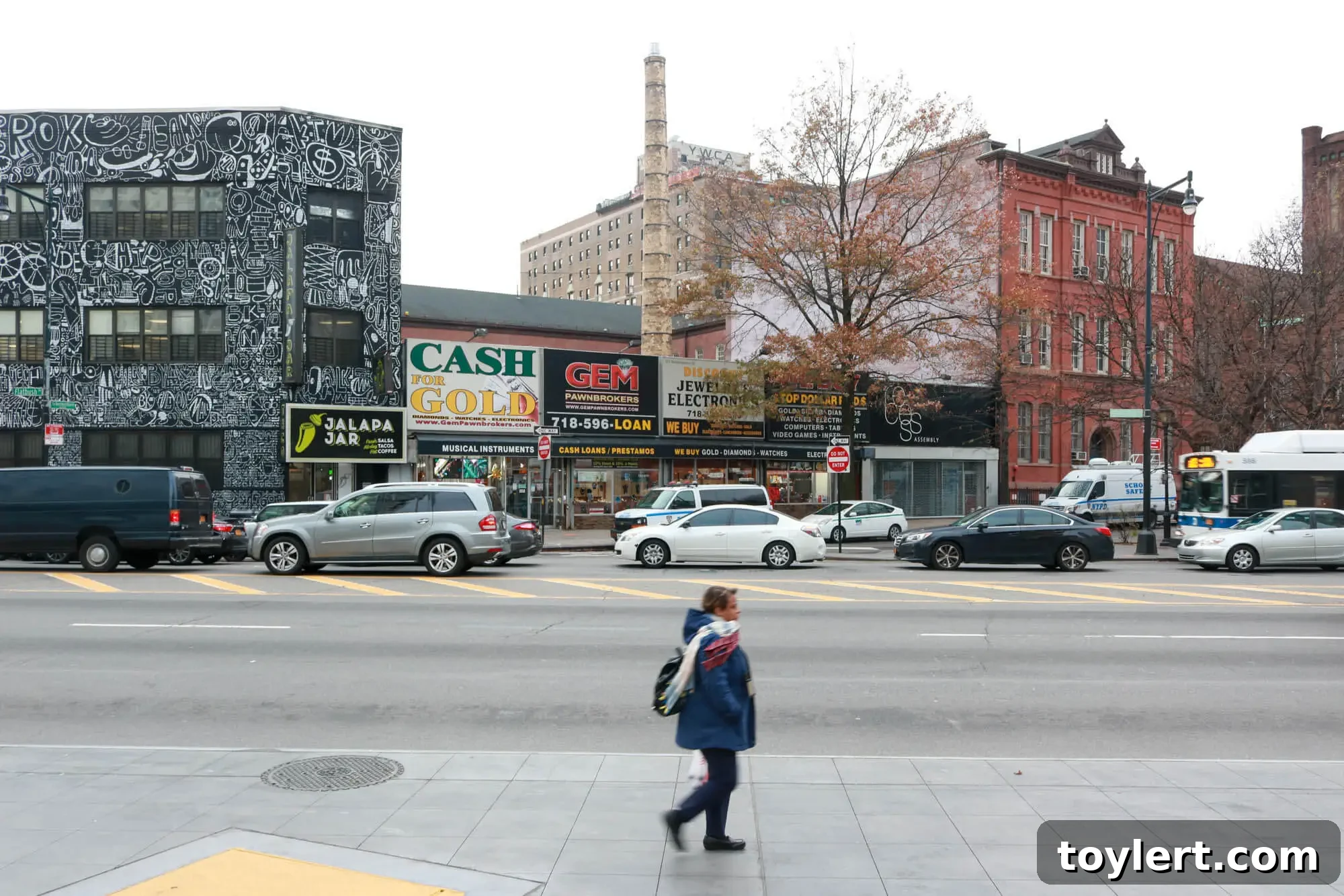
80 Flatbush Avenue: Unpacking Brooklyn’s Sky-High Controversy
The question echoed through the community meeting, a persistent refrain in the discussions surrounding the proposed development at 80 Flatbush Avenue: “How high is too high?” This pivotal query animated the Monday night gathering hosted by the Fort Greene Association, where residents convened to scrutinize a controversial development plan poised at the vibrant crossroads of Boerum Hill, Fort Greene, and Downtown Brooklyn.
For many attendees, the answer was unequivocally clear. The staggering height of 74 stories for the tallest of the two proposed towers was simply excessive, a colossal imposition on a neighborhood cherished for its distinctive character and historic charm. Beyond the sheer scale, residents voiced concerns that the towers’ modern, glassy aesthetic fundamentally clashed with the surrounding landscape of classic brownstone architecture. Adding to their dismay was the projected obstruction of iconic views, most notably the cherished vista of the Williamsburgh Savings Bank Tower, affectionately known as 1 Hanson Place, just across the street. This development, they argued, threatened to irrevocably alter the visual and cultural fabric of a beloved Brooklyn locale.
The Towering Question: How High is Too High for Brooklyn?
At the heart of the 80 Flatbush Avenue debate lies the audacious scale of its proposed architecture. A 74-story skyscraper is not merely a tall building; in the context of Fort Greene and Boerum Hill, it represents a seismic shift in the urban skyline. Residents, many of whom have lived in the area for decades, expressed profound apprehension about how such a colossal structure would integrate – or fail to integrate – with its historic surroundings. The concern isn’t just aesthetic; it’s about the very quality of life. A building of this magnitude casts long shadows, literally and figuratively, over existing homes and public spaces, potentially diminishing natural light for blocks around. The psychological impact of living in the shadow of such a giant cannot be understated, transforming a human-scaled neighborhood into a canyon of concrete and glass.
The visual contrast is jarring. For generations, the dominant architectural narrative of these neighborhoods has been told through the intricate facades of brownstones, the stately presence of pre-war apartment buildings, and the occasional, thoughtfully integrated commercial structure. A 74-story tower, even if designed with contemporary flair, stands as a stark repudiation of this established aesthetic. It represents a bold, some might say aggressive, assertion of modernity that many fear will erode the unique identity that draws people to Fort Greene and Boerum Hill in the first place. The sheer volume of new residential and commercial space also raises questions about the capacity of existing infrastructure – public transport, schools, sanitation services – to accommodate a sudden influx of thousands of new residents and workers.
A Clash of Aesthetics: Glass Against Brownstone Heritage
One of the most vociferous criticisms leveled against the 80 Flatbush Avenue proposal centers on its architectural language. Residents universally described the proposed towers as “too glassy,” a design choice perceived as diametrically opposed to the warm, textured brick and stone of the surrounding brownstone districts. Fort Greene and Boerum Hill are celebrated for their cohesive architectural heritage, characterized by elegant 19th-century row houses, tree-lined streets, and a sense of historic continuity. These neighborhoods embody a distinct Brooklyn aesthetic, one rooted in craftsmanship, detail, and a harmonious relationship between buildings and their immediate environment.
The proposed glass towers, with their sleek, reflective surfaces and soaring heights, threaten to shatter this visual harmony. Critics argue that such designs, while perhaps suitable for the hyper-urbanized core of Manhattan or even parts of Downtown Brooklyn, are alien to the context of these predominantly residential, historically preserved areas. The feeling is one of imposition rather than integration; that the development is an object dropped into the landscape rather than a thoughtful addition that respects its surroundings. This architectural dissonance extends beyond mere superficiality; it reflects a deeper anxiety about the erosion of local identity and the homogenization of urban spaces. The fear is that if such a precedent is set, it opens the door for future developments that prioritize generic modernity over contextual sensitivity, ultimately diluting the very essence of what makes these Brooklyn neighborhoods so desirable and unique.
Obscured Horizons: The Loss of Iconic Views and Neighborhood Identity
Among the deeply personal grievances articulated by the community was the projected loss of cherished views, particularly that of the iconic Williamsburgh Savings Bank Tower. Standing majestically across the street at 1 Hanson Place, this Art Deco masterpiece is more than just a building; it is a beloved landmark, a compass point, and a symbol of Brooklyn’s rich architectural past and enduring spirit. Its distinctive clock tower and grand presence have long defined a segment of the borough’s skyline, offering residents and visitors alike a visual touchstone within the bustling urban landscape.
The prospect of the 80 Flatbush Avenue towers obscuring this iconic view stirred a profound sense of loss and frustration among the community. For many, catching a glimpse of the Williamsburgh Savings Bank Tower from their homes, local parks, or even while walking down the street, is a small but significant part of their daily experience of Brooklyn. It connects them to the borough’s history and offers a sense of rootedness amidst constant change. To have this view blocked by new, towering structures feels like a disregard for the emotional and historical connections residents have to their environment. It highlights a broader concern that development decisions often prioritize new construction over the preservation of existing assets, both tangible and intangible, that contribute to a neighborhood’s unique identity and the well-being of its inhabitants. The loss of such a view is not just an aesthetic complaint; it’s a diminishment of shared heritage and a cultural amenity that once belonged to the public domain.
Community Mobilization: Voices from Fort Greene and Beyond
The Fort Greene Association meeting was far from an isolated incident; it was a potent demonstration of a deeply engaged and mobilized community. Residents from Fort Greene, Boerum Hill, and even parts of Downtown Brooklyn converged, their collective voice a powerful testament to the widespread opposition to the 80 Flatbush Avenue proposal. Beyond the headline-grabbing height and architectural style, attendees articulated a myriad of interconnected concerns that painted a picture of a neighborhood under siege. Traffic congestion emerged as a significant worry, with existing streets already struggling to cope with current volumes. The addition of thousands of new residents and potentially hundreds of new vehicles would, many argued, push the local transportation network to its breaking point, transforming once-walkable streets into gridlocked thoroughfares.
Similarly, the strain on public services was a recurring theme. Schools in the area are already operating near or at capacity, and the prospect of accommodating an influx of new students without corresponding infrastructure improvements was a source of acute anxiety for parents. The same applies to sanitation, emergency services, and green spaces, all of which would face increased demand. Shadow studies were presented, graphically illustrating how the towering structures would cast long, oppressive shadows over neighboring brownstones, playgrounds, and even the nearby Brooklyn Academy of Music (BAM) cultural district, diminishing natural light and altering the urban microclimate. The pervasive sentiment among residents was a feeling of being unheard, of community input being sidelined in favor of developer interests. This sense of powerlessness fueled a determination to organize, advocate, and ensure that their concerns about quality of life, neighborhood character, and sustainable development were not only acknowledged but genuinely addressed.
The Developer’s Vision and Urban Necessity: A Counter-Narrative
While community opposition to 80 Flatbush Avenue has been robust, it is important to acknowledge the perspective often articulated by developers and proponents of such projects. From this viewpoint, large-scale developments like 80 Flatbush are presented as vital components of a growing, dynamic city. Arguments typically center on the urgent need for new housing, particularly in a borough like Brooklyn where demand consistently outstrips supply, leading to skyrocketing rents and a housing crisis. Proponents argue that building vertically and increasing density in transit-rich areas is an environmentally responsible way to accommodate population growth, reducing urban sprawl and reliance on car travel.
Furthermore, such projects are often framed as economic engines, generating significant construction jobs, increasing the local tax base, and attracting new businesses and retail to the area. The modern, glassy aesthetic, while criticized by some, is championed by others as a symbol of progress, innovation, and a forward-looking urban vision. Developers might also highlight the inclusion of amenities such as public open spaces, retail components, or even some degree of affordable housing units (often mandated through zoning incentives) as benefits that contribute to the broader community. They might argue that the site, situated at the nexus of multiple major thoroughfares and subway lines, is ideally suited for higher density, serving as a transitional zone between the historic low-rise areas and the more intense commercial core of Downtown Brooklyn. This perspective frames the development not as an imposition, but as a necessary and beneficial evolution for a thriving metropolis, addressing contemporary urban challenges with modern solutions.
Navigating Brooklyn’s Future: Zoning, Density, and Character Preservation
The controversy surrounding 80 Flatbush Avenue transcends the specifics of one development; it serves as a powerful microcosm of the broader urban planning challenges facing Brooklyn and other rapidly growing cities. It ignites fundamental questions about how to balance the undeniable need for increased housing and economic development with the equally crucial imperative of preserving neighborhood character, historical integrity, and residents’ quality of life. The debate brings to the forefront the complexities of zoning laws, which dictate building heights, uses, and density. When existing zoning is deemed insufficient for a developer’s vision, requests for rezonings or special permits often become flashpoints, pitting community aspirations against city-wide development goals.
The push for increased density, particularly around transit hubs, is a consistent policy objective for urban planners seeking to create more sustainable, walkable cities. However, the execution of this policy often clashes with the lived experience of long-term residents who witness their familiar surroundings transformed at an accelerated pace. This tension highlights the critical need for robust public engagement processes, transparent decision-making, and a willingness from all stakeholders to seek genuine compromises. It’s a dialogue about what kind of city Brooklyn wants to be: a vibrant, growing metropolis that accommodates new residents, or a series of distinct, character-rich neighborhoods whose unique identities are carefully safeguarded. The struggle at 80 Flatbush Avenue is, ultimately, a struggle to define Brooklyn’s future, weighing the perceived benefits of progress against the profound value of place and community.
Conclusion: An Unresolved Debate Shaping Brooklyn’s Horizon
The impassioned debate over 80 Flatbush Avenue is far from resolved, representing an ongoing tension that will undoubtedly continue to shape Brooklyn’s evolving skyline and civic discourse. It’s a powerful testament to the enduring passion residents hold for their neighborhoods and a clear signal that growth, while inevitable, must be carefully considered and thoughtfully integrated. The questions raised – about height, aesthetics, community impact, and the very soul of Brooklyn – will continue to resonate, urging developers, planners, and residents alike to forge a future that honors both progress and preservation.