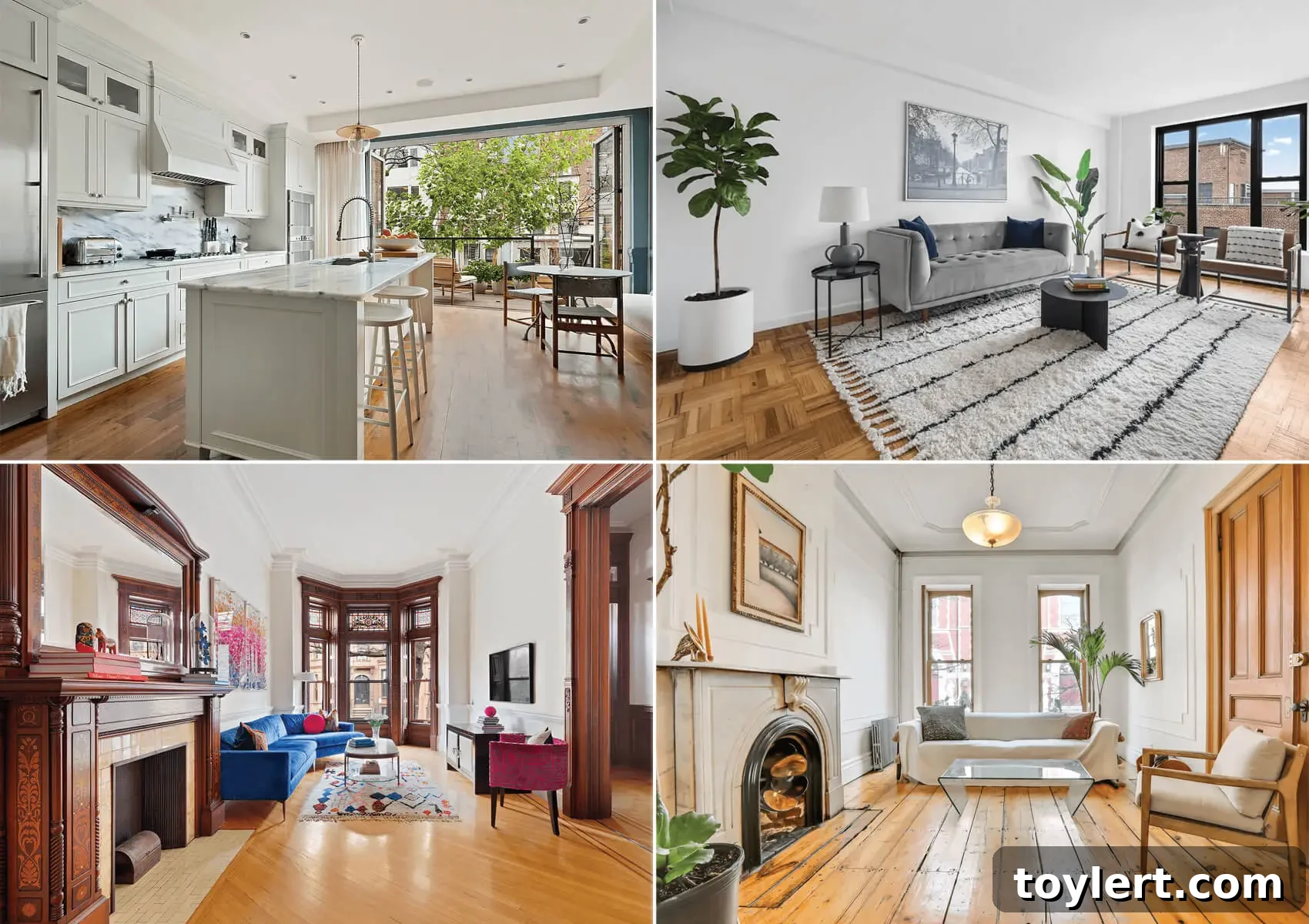
This week, we take a deep dive into the vibrant and ever-evolving Brooklyn real estate market, revisiting four distinctive listings that captivated our attention six months ago. From the historic charm of Clinton Hill to the quintessential brownstone appeal of Carroll Gardens, the industrial-chic transformation of Gowanus, and the classic elegance of Park Slope, these properties offer a fascinating snapshot of recent market dynamics. Understanding how these homes fared—whether they sold above, at, or below asking, or if their journey is still unfolding—provides invaluable insights for both prospective buyers and sellers navigating this competitive landscape. Our retrospective analysis illuminates the forces at play in some of Brooklyn’s most sought-after neighborhoods, revealing patterns of demand, the impact of unique features, and the enduring allure of specific locations.
A Closer Look: Clinton Hill Cooperatives Gem Exceeds Expectations
Six months ago, our spotlight shone on a compelling one-bedroom unit nestled within the historic Clinton Hill Cooperatives. These iconic buildings, dating back to the World War II era, are more than just residences; they represent a significant piece of Brooklyn’s post-war architectural and social history, offering robust construction and a true community feel. This particular unit, located on the 12th floor of the south campus at 361 Clinton Avenue—one of 12 formidable 14-story elevator buildings in the complex—promised not only ample space but also an abundance of natural light and generous storage, a rare find in many urban apartments. The listing highlighted its practical layout, often featuring dedicated dining and office nooks, which resonated deeply with buyers seeking functional and adaptable living spaces in a premium location.
The Clinton Hill Cooperatives are renowned for their sprawling campuses, well-maintained grounds, and a suite of amenities that typically include laundry facilities, bicycle storage, community rooms, and sometimes even resident-run gardens. The sense of security, combined with the convenience of elevator access and on-site management, makes these co-ops a perennially popular choice. Furthermore, Clinton Hill itself is a highly desirable neighborhood, celebrated for its tree-lined streets, stunning brownstones, proximity to Fort Greene Park, flourishing local businesses, and a vibrant arts scene anchored by Pratt Institute. Its excellent transportation links to Manhattan and other parts of Brooklyn further amplify its appeal, drawing a diverse mix of residents from young professionals to established families.
This particular former Co-op of the Day exemplified the strength of the Clinton Hill market. It sold in May for an impressive $805,000, which was a remarkable $60,000 over its asking price. This significant premium speaks volumes about the intense demand for well-maintained, spacious one-bedroom units in prime Brooklyn locations, especially within a beloved cooperative complex. Factors contributing to this successful sale likely included the unit’s high-floor placement offering superior light and views, its move-in ready condition, and the overall scarcity of quality inventory in the neighborhood. For sellers in Clinton Hill, this outcome underscores the potential for competitive bidding and exceeding expectations when a property is strategically priced and thoughtfully presented. For buyers, it highlights the need for swift action and strong offers in a fast-paced market.
Carroll Gardens Row House: Charm Meets Urban Realities
Our journey through Brooklyn’s past listings brings us to Carroll Gardens, a neighborhood celebrated for its distinctive brownstones, lush front gardens, and an undeniable old-world charm. Six months ago, a three-family row house at 130 Summit Street captured our imagination with its promise of wide planked floorboards, elegant marble mantels, and an abundance of vintage details—a true testament to Brooklyn’s architectural heritage. These types of homes offer a rare blend of historical authenticity and modern living potential, often attracting buyers eager to preserve original features while customizing spaces to their taste. The multi-family configuration also presented an attractive investment opportunity, allowing for owner-occupancy with rental income from additional units, a common and highly sought-after setup in this part of Brooklyn.
Carroll Gardens exudes a serene, village-like atmosphere, characterized by its quiet, tree-lined streets, independent boutiques, acclaimed restaurants, and strong community bonds. Families are drawn to its excellent schools and abundance of green spaces, while commuters appreciate its convenient access to public transportation. The neighborhood’s unique aesthetic, particularly its renowned front gardens (“Carroll Gardens” derived from this very feature), sets it apart, creating a tranquil urban oasis. Properties like 130 Summit Street, with their classic brick facades and interior details such as original moldings, high ceilings, and potentially garden-level access, embody the quintessential Brooklyn dream.
However, the listing for 130 Summit Street also came with a noteworthy consideration: its location near the corner of Hicks Street and the sunken BQE (Brooklyn-Queens Expressway). While offering unparalleled convenience for drivers and access to major thoroughfares, the proximity to a busy highway can sometimes give potential buyers pause, raising concerns about noise levels and air quality. This particular aspect often creates a nuanced valuation scenario, where the intrinsic charm and investment potential of the property are weighed against its immediate surroundings. Savvy buyers might see this as an opportunity to acquire a desirable multi-family home in Carroll Gardens at a potentially more accessible price point compared to properties deeper within the neighborhood, further from the highway.
Despite this unique location challenge, the former House of the Day demonstrated robust market activity by entering contract in April. This swift movement indicates that the property’s undeniable charm, income-generating potential, and the enduring appeal of Carroll Gardens outweighed any perceived drawbacks for the right buyer. The fact that it moved quickly suggests either a well-executed pricing strategy, a strong demand for multi-family homes, or a buyer who prioritized convenience and potential over environmental concerns. For those eyeing similar properties, this outcome underscores that even homes with specific locational quirks can find eager purchasers in a hot market, provided the property itself offers compelling value and character.
Gowanus: A Canal-Side Transformation and Its Market Impact
Our retrospective continues into Gowanus, a neighborhood that has undergone a dramatic metamorphosis from its industrial roots to becoming one of Brooklyn’s most exciting and rapidly evolving areas. Six months ago, we might have featured a loft-style condominium or a sleek new-construction townhouse, reflective of the area’s ongoing revitalization. Imagine a property on, say, Union Street near the canal: perhaps a meticulously renovated unit in a former factory, boasting soaring ceilings, oversized windows flooding the space with natural light, and exposed brick or concrete elements that pay homage to its industrial past. Alternatively, it could have been a brand-new, architecturally striking townhouse, offering modern amenities, private outdoor space, and energy-efficient design, all within steps of the burgeoning Gowanus Canal waterfront.
Gowanus’s appeal lies in its unique blend of artistic energy, industrial heritage, and burgeoning modernity. The ongoing cleanup of the Gowanus Canal, coupled with significant rezoning initiatives, has spurred a wave of new residential and commercial developments. This has transformed the area into a hub for creative businesses, innovative eateries, and contemporary living spaces. Its strategic location, bordering the established neighborhoods of Park Slope, Carroll Gardens, and Boerum Hill, allows residents to enjoy the tranquility of their immediate surroundings while having immediate access to some of Brooklyn’s best amenities. New parks, cultural venues, and a vibrant nightlife scene are continuously emerging, drawing a younger demographic and forward-thinking investors.
A hypothetical listing in Gowanus, priced around $1.5 million for a spacious two-bedroom loft or a compact townhouse, would likely have garnered significant attention six months ago. Given the neighborhood’s upward trajectory, such a property would have been snapped up relatively quickly, possibly even experiencing competitive bidding. Buyers are drawn to Gowanus for its comparative value against its more expensive neighbors, coupled with the promise of future appreciation as development progresses and the canal restoration is completed. The market here is characterized by a strong demand for modern finishes, open-concept layouts, and properties that offer a distinctive urban living experience. The sale of such a unit would not only confirm the neighborhood’s growing desirability but also signal a robust confidence among buyers in Gowanus’s long-term potential, despite its industrial legacy and ongoing environmental efforts.
The success of properties in Gowanus often hinges on their ability to blend modern luxury with respect for the area’s gritty history. Homes that feature high-end kitchens, spa-like bathrooms, and smart home technology, while retaining elements like original structural beams or industrial-style windows, tend to perform exceptionally well. Furthermore, access to shared amenities like roof decks with city views, fitness centers, and communal workspaces in newer developments significantly enhances their marketability. As Gowanus continues its remarkable transformation, properties here are not just homes; they are investments in a neighborhood on the cusp of its next great chapter, making them highly attractive to a diverse pool of buyers looking for innovation and growth in their real estate portfolio.
Park Slope: Enduring Elegance and Robust Market Stability
Finally, we turn our attention to Park Slope, a perennial favorite among Brooklyn neighborhoods, renowned for its stately brownstones, family-friendly atmosphere, and direct access to the iconic Prospect Park. Six months ago, a typical featured listing from Park Slope might have been an elegant two-bedroom cooperative apartment within a beautifully preserved pre-war building on a coveted, tree-lined block, perhaps just a stone’s throw from the park’s grand entrance. Alternatively, it could have been a classic brownstone garden-floor rental or a meticulously renovated condo, appealing to families and individuals alike who seek the quintessential Brooklyn lifestyle in a neighborhood synonymous with charm and stability.
Park Slope’s enduring appeal is multi-faceted. Its architectural grandeur, primarily manifested in its stunning rows of brownstones and limestones, forms a picturesque backdrop for daily life. The neighborhood boasts an exceptional quality of life, with top-rated public and private schools, a vibrant retail and dining scene along Fifth and Seventh Avenues, and an abundance of parks and playgrounds. Prospect Park, designed by Frederick Law Olmsted and Calvert Vaux, serves as the neighborhood’s magnificent backyard, offering vast green spaces for recreation, relaxation, and cultural events year-round. This combination of urban convenience and natural beauty makes Park Slope one of the most desirable places to live in New York City, consistently attracting a discerning demographic.
A property in Park Slope, even a well-maintained two-bedroom co-op, would typically command a premium, reflecting the neighborhood’s high demand and limited inventory. Imagine such a unit listed for around $1.1 million, featuring original hardwood floors, a decorative fireplace, high ceilings, and renovated kitchen and bathrooms that tastefully blend modern amenities with pre-war character. Six months ago, such a listing would have been met with immediate and intense buyer interest. The Park Slope market is known for its strong competition, especially for properties that offer a blend of historic charm and modern comfort, particularly those near Prospect Park or within the acclaimed school zones.
The outcome for a prime Park Slope property is almost invariably a swift and successful sale. A two-bedroom co-op or condo in this neighborhood, particularly one that is move-in ready and aesthetically pleasing, would likely have entered contract within weeks, if not days, often selling at or above the asking price. This consistent performance underscores Park Slope’s status as a stable and robust real estate market, largely immune to the more dramatic fluctuations seen in other areas. Buyers in Park Slope are often prepared for competitive bidding and are willing to pay a premium for the unparalleled lifestyle and long-term value that the neighborhood offers. For sellers, this means a reliable market with strong buyer interest, often resulting in efficient transactions and favorable terms. The continued desirability of Park Slope reinforces its reputation as a sound investment and a dream location for many Brooklynites.
Brooklyn Real Estate: A Dynamic Market Overview and Future Outlook
Our six-month look back at these diverse Brooklyn listings reveals a market characterized by both strong demand and nuanced challenges. The Clinton Hill co-op’s impressive sale over asking highlights the premium placed on well-located, well-maintained units in established cooperative complexes. It underscores a persistent appetite for quality housing in family-friendly neighborhoods with excellent amenities and strong community ties. This trend is further supported by the brisk activity seen in Carroll Gardens, where even properties with unique locational considerations, such as proximity to the BQE, can attract eager buyers due to the neighborhood’s enduring charm and the income-generating potential of multi-family homes. The market here demonstrates a resilience, with buyers often willing to weigh trade-offs for the right property in a highly desirable area.
The burgeoning market in Gowanus, illustrated by the hypothetical swift sale of a loft-style condo or townhouse, signifies a broader trend of urban regeneration and the expansion of desirable living spaces beyond traditional boundaries. This neighborhood’s transformation, driven by infrastructure improvements and rezoning, is attracting a new wave of residents and investors seeking modern living spaces and future appreciation. It showcases how strategic urban planning and investment can unlock significant real estate value, creating vibrant new communities. Gowanus embodies the dynamic spirit of Brooklyn, where innovation and historical preservation converge to create unique housing opportunities.
Finally, Park Slope’s consistent market performance reaffirms the enduring appeal of classic Brooklyn elegance and stability. Properties in this neighborhood, whether historic brownstones or pre-war co-ops, continue to command strong prices and experience rapid sales, reflecting a deep-seated demand for its unparalleled quality of life, top-tier schools, and access to iconic green spaces like Prospect Park. Park Slope represents a benchmark for long-term real estate value, appealing to those who prioritize a settled, community-oriented lifestyle combined with urban sophistication.
In summary, the Brooklyn real estate market remains a complex tapestry of localized trends, driven by factors ranging from historical charm and community amenities to urban transformation and investment potential. While some neighborhoods like Clinton Hill and Park Slope continue to demonstrate robust, consistent growth and competitive bidding, emerging areas like Gowanus are proving to be fertile ground for significant appreciation and innovative living. For prospective buyers, understanding these micro-markets is crucial for strategic decision-making. For sellers, a clear grasp of what makes their property unique and how to leverage neighborhood appeal can translate into highly successful outcomes. As Brooklyn continues to evolve, keeping an eye on these past listings offers a valuable compass for navigating its future real estate landscape.
% | % | % | % | % Single Page