By Ximena Del Cerro, Brooklyn Paper
The Unseen Economy: Immigrant Vendors Navigating Survival in NYC Subways
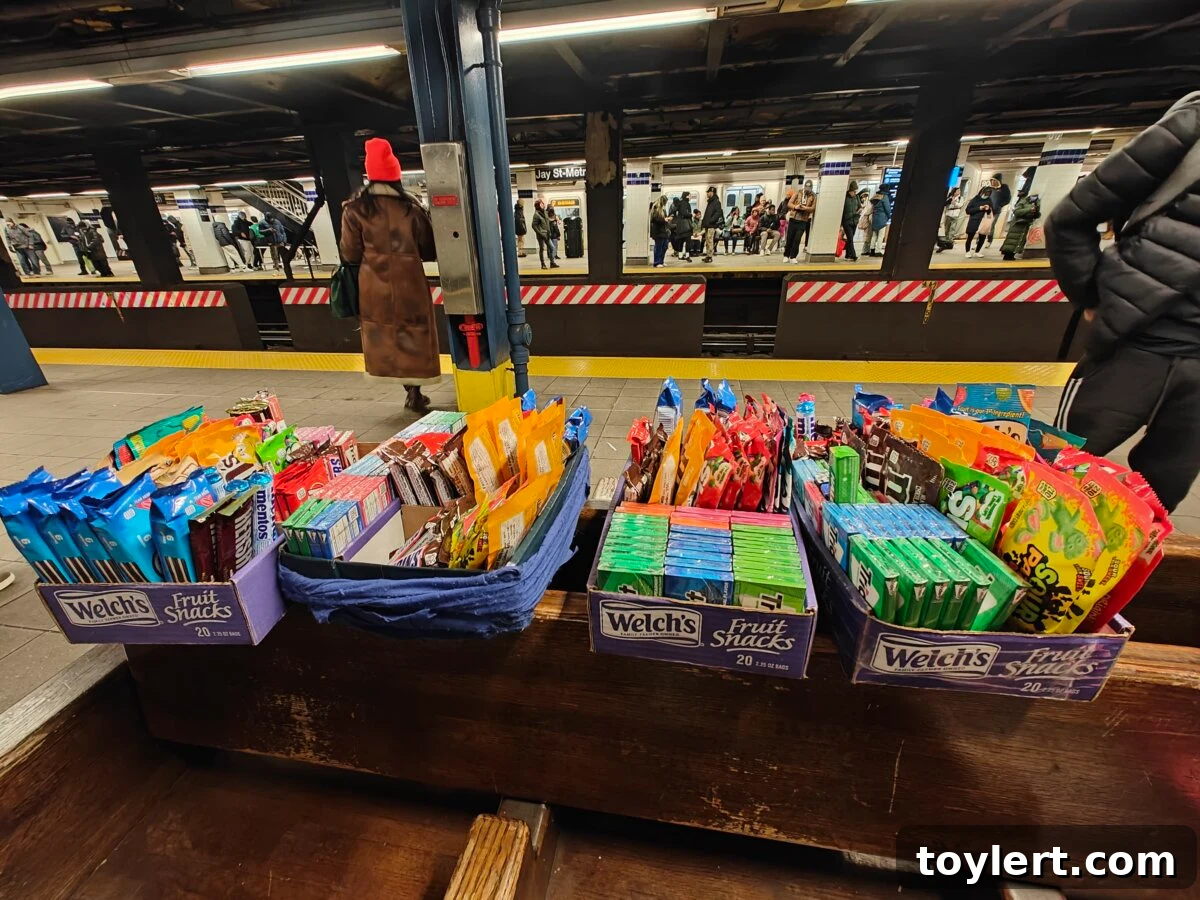
The bustling thoroughfare of the Jay Street MetroTech subway station, a critical nexus in Brooklyn’s expansive transit system, has become an unlikely marketplace for a group of resilient individuals. Here, amidst the relentless rush of daily commuters, more than half a dozen immigrants have established makeshift stands, offering an array of candies, snacks, and refreshing drinks. Their presence is a stark illustration of a growing urban phenomenon, driven by profound financial need and the complex realities faced by newcomers striving for a foothold in New York City.
These vendors, many of whom are asylum seekers or recent arrivals awaiting the legal authorization to work, turn to the informal economy as a desperate last resort to sustain themselves and their families. Their temporary stalls are not merely points of sale; they are symbols of hope and desperation, representing a daily struggle to cover ever-increasing living expenses in one of the world’s most expensive cities. This scenario at Jay Street MetroTech mirrors similar situations across the city, highlighting a systemic challenge.
A Lifeline in the Labyrinth: Why the Subway Becomes a Marketplace
The choice of the Jay Street MetroTech station is far from arbitrary; it’s a strategic decision rooted in both necessity and perceived opportunity. The station’s heavy foot traffic, characteristic of a major transit hub serving multiple subway lines, promises a constant stream of potential customers. For immigrants who are legally unable to secure formal employment due to restrictions on work permits, the subway offers an immediate, albeit precarious, avenue for earning income. It requires minimal startup capital – often just a few bags of candy, a cooler for drinks, or a selection of small packaged snacks – and avoids the lengthy bureaucratic processes associated with legitimate business operations. This direct access to a high volume of consumers allows for quick, cash-based sales, enabling vendors to “eke out a meager living,” as the original report accurately highlights.
However, this apparent simplicity belies a deeper complexity. The informal vending scene, while offering a temporary reprieve from destitution, is not without its significant drawbacks and inherent dangers. For these individuals, the quest for survival transforms into a daily tightrope walk, precariously balanced between earning just enough to get by and the constant apprehension of legal or social repercussions.
The Perilous Path: Challenges Faced by Immigrant Vendors
Navigating Legal Ambiguity and Police Scrutiny
Perhaps the most pressing concern for these subway vendors is the constant, looming threat of legal repercussions. Vending without a license in New York City subways is strictly prohibited by Metropolitan Transportation Authority (MTA) regulations. This means that every single transaction, every interaction with a customer, carries the tangible risk of being “busted by cops,” potentially leading to a series of severe consequences. These can include substantial fines that are incredibly difficult for individuals with no formal income to pay, the immediate confiscation of their limited inventory—which represents their entire capital and day’s potential earnings—or even arrest. For individuals already navigating a complex and often intimidating immigration system, any encounter with law enforcement can significantly escalate their anxieties, deepen their distrust, and potentially complicate their already precarious path to legal residency or asylum.
The pervasive fear of enforcement creates an environment of perpetual vigilance. Vendors often operate with one eye keenly focused on their goods and the other constantly scanning for approaching figures, ready to pack up their makeshift stalls and disperse at a moment’s notice. This constant, underlying stress not only impacts their mental and emotional well-being but also severely disrupts their ability to generate a consistent income, making their already meager earnings even more unpredictable and insufficient for stable living.
Harassment from Riders and Evolving Public Perception
Beyond the legal worries, immigrant vendors frequently face another layer of challenge: harassment from a segment of the commuting public. This can manifest in various forms, ranging from direct verbal abuse and derogatory comments to subtle but palpable expressions of hostility and disdain. While a portion of riders may express genuine sympathy or offer support, others view the vendors as a nuisance, an unwelcome encroachment on public space, or a blatant violation of established rules and norms. This spectrum of negative interactions adds yet another significant emotional burden to an already challenging situation, often reinforcing a sense of otherness, isolation, and acute vulnerability for the vendors.
The public’s mixed reactions underscore a broader societal debate about the rightful use of urban spaces, the role and regulation of informal economies, and the integration challenges faced by new immigrant populations. While many New Yorkers appreciate the convenience of grabbing a quick snack or a cold drink, the consistent presence of unlicensed vendors also raises legitimate questions about fairness to licensed businesses, sanitation standards, and the equitable enforcement of city ordinances across the diverse fabric of the metropolis.
Economic Precarity and the Pursuit of Basic Survival
Even when sales are successfully made, the income generated from subway vending is, by definition, often barely enough to cover the most essential costs. The term “meager living” aptly describes the harsh financial reality these individuals confront daily. Profits are razor-thin, given the typically low prices of their goods, the necessity of buying inventory at retail rates, and the growing competition among numerous vendors. It is crucial to understand that these individuals are not seeking to get rich; they are striving for basic survival – to pay for rent in an exorbitantly expensive city, to afford food for themselves and their families, and very often, to send vital remittances to loved ones in their home countries who depend on their support.
The inherent precariousness of this income stream is further exacerbated by the inability to scale or formalize their operations. They typically lack access to capital, robust business networks, and the legal protections and benefits afforded to licensed businesses. This unfortunate reality often traps them in a relentless cycle of day-to-day survival, severely hindering any prospects for long-term financial stability or meaningful integration into the formal economy, which remains their ultimate goal.
The Broader Context: Immigration, Work Permits, and NYC’s Asylum Crisis
The situation unfolding at Jay Street MetroTech is not an isolated incident; it is a poignant microcosm of a larger, systemic issue facing New York City and, indeed, the nation: the substantial influx of asylum seekers and immigrants who are legally barred from working for extended periods. Under current U.S. federal law, asylum seekers generally must endure a mandatory waiting period of 180 days after filing their asylum application before they can even apply for an Employment Authorization Document (EAD), commonly known as a work permit. This initial waiting period, frequently compounded by extensive processing backlogs at federal agencies, can often stretch for many months, sometimes even exceeding a year.
During this protracted and agonizing waiting game, new arrivals are left in a devastating limbo. They are physically present in the country, often with urgent and immediate financial needs, but are legally prevented from earning a living through conventional, formal means. This significant policy gap directly fuels the growth of informal economies, pushing countless individuals into desperate measures like unlicensed subway vending. It effectively creates a lose-lose situation: immigrants struggle profoundly to support themselves and their families, while the city grapples with the myriad challenges of regulating and managing an expanding informal workforce operating outside legal frameworks.
New York City, historically a primary gateway for immigrants from around the globe, has experienced an unprecedented surge in asylum seekers in recent years, placing immense strain on its public resources and social safety nets. While the city endeavors to provide shelter and some basic services, the fundamental human need for self-sufficiency through work remains paramount for these individuals. Expediting work permits is a key and consistent demand from immigrant advocates, who persuasively argue that such a change would not only empower immigrants to become self-reliant but would also significantly alleviate the immense pressure on municipal resources currently struggling to cope with the demand for basic services.
Seeking Solutions: Pathways to Integration and Dignity
Addressing the complex plight of immigrant subway vendors requires a nuanced, multi-faceted approach that considers both their immediate, pressing needs and the necessary long-term systemic changes. This situation calls for collaboration across different levels of government and community organizations.
Expediting Work Permit Processes
The most impactful and direct solution lies in federal policy reform to significantly shorten the mandatory waiting period for work permits for asylum seekers. Enabling new arrivals to quickly obtain legal employment would dramatically reduce the perceived necessity for informal vending, allowing them to contribute to the tax base, participate actively in the economy, and integrate more seamlessly into society. This approach aligns perfectly with sound economic principles, which suggest that productive, working individuals are invaluable assets to any thriving economy.
Support and Outreach Programs
At the local level, targeted initiatives and support programs can play a crucial role in assisting these vulnerable populations. Non-governmental organizations (NGOs) and community groups could provide essential information about legal pathways to work, offer practical small business training, or even explore micro-lending opportunities to help individuals establish legitimate enterprises. Creating designated, legal vending zones in specific urban areas, potentially with simplified and accessible permit processes tailored for new immigrants, could also offer a dignified and lawful alternative to operating in restricted subway stations.
Rethinking Urban Vending Policies
New York City, known for its progressive stance, could undertake a comprehensive re-evaluation of its existing street and subway vending regulations to create more inclusive and adaptable frameworks. While maintaining public safety, order, and accessibility in transit hubs is undeniably essential, a more nuanced and empathetic approach could balance rigorous enforcement with critical humanitarian concerns. This might involve the introduction of temporary vending permits, specialized educational programs to inform vendors about city laws and regulations, or strategic partnerships with community organizations to help vendors transition gradually and smoothly into legitimate, licensed businesses.
A Call for Compassion and Proactive Policy Action
The scene at Jay Street MetroTech is far more than just a fleeting daily interaction; it is a vivid and enduring reflection of human resilience in the face of profound adversity. The immigrants selling candy and snacks are not merely rule-breakers in a simplistic sense; they are complex individuals striving with all their might for dignity, economic stability, and the promise of a better future for themselves and their families. Their pervasive presence highlights the urgent and undeniable need for comprehensive immigration reform, particularly concerning the often-crippling delays in work authorization, and for local policies that actively foster integration and opportunity rather than leading to criminalization and further marginalization.
As New York City continues its historic role as a beacon and welcoming destination for newcomers from around the world, it faces the ongoing and critical challenge of adapting its systems to support their integration effectively and humanely. The story of the subway vendors is a powerful and poignant reminder that behind every transaction, behind every makeshift stand, is a profound human story, a struggle for survival, and an unyielding hope for a new beginning. Addressing these intertwined social, economic, and policy issues with profound empathy, thoughtful foresight, and proactive solutions is not just a matter of bureaucratic policy; it is, fundamentally, a testament to the enduring values and compassionate spirit of a city proudly built by generations of immigrants.