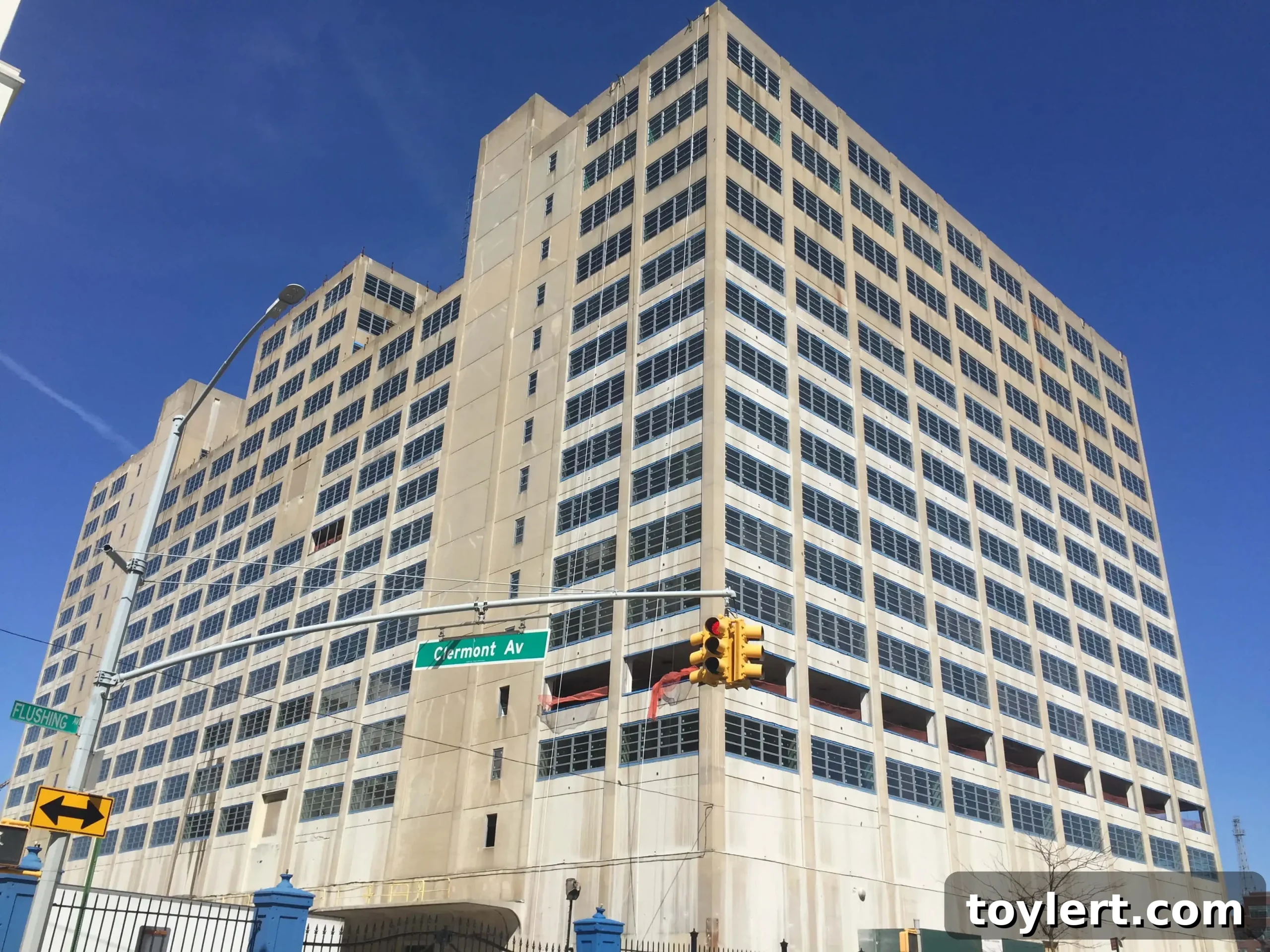
What an extraordinary transformation a well-conceived architectural intervention can bring! In the heart of Brooklyn, a dramatic metamorphosis has reshaped a colossal structure, turning it from a relic of the past into a beacon of future industry. The striking difference that thousands of newly installed windows can make is perhaps nowhere more evident than at Building 77 within the iconic Brooklyn Navy Yard.
For those familiar with the history of urban revitalization, the sight of a massive, windowless industrial edifice might not immediately inspire awe. Yet, the exterior renovation of Building 77 is now nearing completion, revealing a startling and inspiring new facade. This monumental undertaking, as vividly captured in a recent photograph shared by a Brownstoner reader, transcends a mere facelift; it represents a profound reimagining of purpose and potential. While to the casual observer, the building might once have appeared as a mundane, no-frills storage facility, its captivating past and vibrant future unveil a narrative far richer than its former austere appearance suggested.
From Naval Stronghold to Modern Industrial Hub: The Evolution of Brooklyn Navy Yard’s Building 77
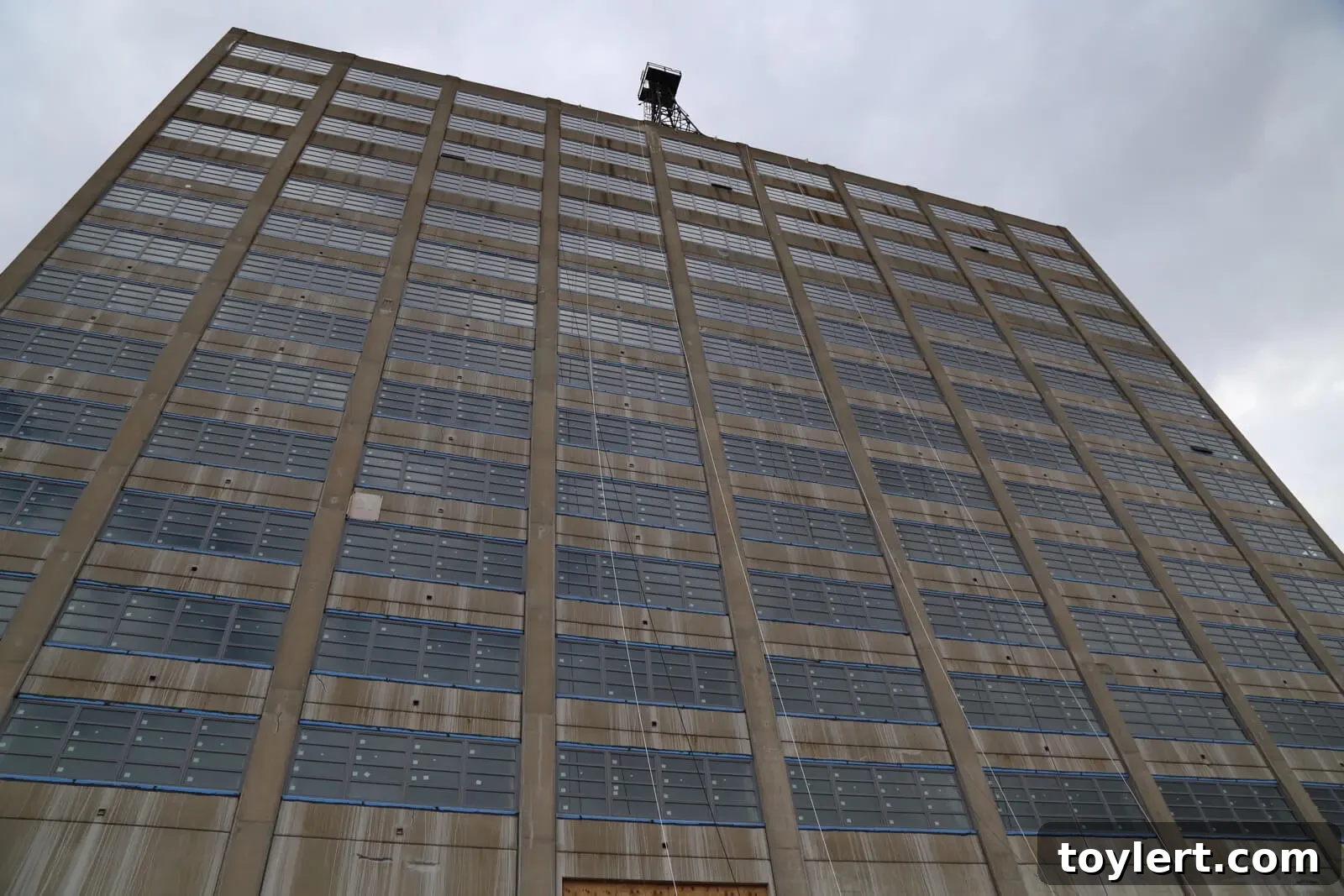
Spanning an immense one million square feet, Building 77 once served as a critical storage facility for the U.S. Navy. Its sheer scale and fortress-like construction were designed for robust utility, not human comfort or contemporary workspace demands. Historically, most of its floors were deliberately devoid of windows, a design choice typical for secure storage and military operations. This crucial absence of natural light rendered vast portions of the building “essentially uninhabitable for non-vampiric workers,” as an earlier article aptly observed, presenting a significant challenge for any modern adaptive reuse project.
The strategic decision to transform Building 77 was a bold move by the Brooklyn Navy Yard Development Corporation (BNYDC), aligning with a broader vision to revitalize the historic shipyard into a thriving 21st-century manufacturing and innovation campus. The goal was not merely to renovate, but to fundamentally redefine the building’s utility, creating a dynamic environment capable of attracting diverse businesses and generating thousands of jobs. This ambitious undertaking required a comprehensive strategy that respected the building’s heritage while equipping it with the infrastructure necessary for modern industrial and commercial tenants. It marked a pivotal moment in the Navy Yard’s ongoing journey to reclaim its status as an economic engine for Brooklyn and New York City.
The Vision Unfolds: Crafting a 21st-Century Manufacturing Ecosystem in Brooklyn
The transformation of Building 77 represents a cornerstone of the Brooklyn Navy Yard’s ambitious redevelopment plan. Recognizing the urgent need for accessible, affordable industrial space within New York City, the BNYDC envisioned Building 77 as a vertical manufacturing center. This innovative concept aims to house a diverse ecosystem of tenants, from light manufacturers and tech innovators to creative businesses and food production companies, all operating within a single, vertically integrated structure. The sheer scale of the project, coupled with its strategic location, made it a prime candidate for fostering significant economic growth and job creation in the area.
Architectural firms like Beyer Blinder Belle, renowned for their expertise in historic preservation and adaptive reuse, were instrumental in translating this vision into a tangible design. Their challenge was immense: how to inject natural light and modern functionality into a massive, windowless concrete behemoth while preserving its historical integrity. The solution involved the meticulous insertion of thousands of windows, transforming the exterior façade and fundamentally altering the internal environment. This design approach sought to create bright, airy, and flexible workspaces that would attract a new generation of entrepreneurs and skilled workers, thereby cementing Building 77’s role as a catalyst for urban economic development.
Architectural Alchemy: The Art of Adding Light and Life to a Historic Structure
The most visually striking aspect of Building 77’s renovation is undoubtedly the addition of its myriad windows. This architectural feat was far more complex than simply cutting holes in a wall. It involved a careful study of the building’s original structure, a strategic assessment of how to maximize natural light penetration, and the precise execution of installing thousands of new openings across its vast concrete facade. Each window serves not only as a source of illumination but also as a deliberate design element, collectively transforming the building’s imposing, monolithic presence into one that feels open, inviting, and connected to its surroundings.
The infusion of natural light has revolutionized the interior spaces, making them suitable and desirable for a wide range of human activities, from intricate manufacturing processes to collaborative office environments. What was once a dark, uninviting interior has been bathed in sunlight, offering views of the bustling Navy Yard and the Manhattan skyline. This thoughtful design choice significantly enhances the quality of life for the building’s future occupants, fostering productivity, creativity, and well-being. Furthermore, the new windows contribute to energy efficiency by reducing reliance on artificial lighting during daylight hours, aligning the project with contemporary sustainability goals. The modern industrial aesthetic achieved through this thoughtful design respects the building’s past while firmly planting it in the future of urban architecture.
Building 77: A Catalyst for Brooklyn’s Economic Renaissance and Job Creation
The completion of Building 77’s exterior is just the beginning of its journey as a pivotal economic engine for Brooklyn. With its one million square feet of flexible, modern industrial and commercial space, the building is poised to become a vibrant hub for diverse industries. Tenants are expected to range from advanced manufacturers utilizing cutting-edge robotics to innovative tech startups, creative agencies, and artisan food producers. A prime example of the caliber of tenants attracted is the beloved New York institution, Russ & Daughters, which has established a significant production facility within the building, blending tradition with modern industrial capabilities.
This mix of tenants is deliberately curated to foster collaboration and create a dynamic ecosystem. The concept of “vertical manufacturing” allows businesses to operate efficiently within a multi-story structure, optimizing space in a dense urban environment. This model not only provides much-needed industrial space but also creates a significant number of jobs across various skill levels, from skilled tradespeople to engineers and designers. The economic ripple effect extends throughout the community, supporting local businesses, enhancing property values, and drawing new investment into the area, solidifying Brooklyn Navy Yard’s role as a vital economic engine.
Building 77 within the Brooklyn Navy Yard Ecosystem: A Model of Urban Adaptive Reuse
Building 77 is more than just an individual project; it is an integral piece of the larger narrative of the Brooklyn Navy Yard’s remarkable revitalization. Once a formidable naval shipbuilding facility, the Yard has systematically transformed over decades into a leading model for urban industrial renewal. It now serves as a thriving hub for over 500 businesses, employing thousands of New Yorkers and contributing billions to the city’s economy. The Yard is a testament to the power of adaptive reuse, demonstrating how historical industrial sites can be successfully re-envisioned for the 21st century.
Building 77’s transformation encapsulates the Navy Yard’s ethos: honoring history while aggressively innovating for the future. It stands alongside other successful projects within the Yard, collectively creating an environment where traditional manufacturing converges with cutting-edge technology and creative enterprises. This unique synergy fosters a culture of innovation, providing a crucial platform for businesses to grow and thrive in a distinctly Brooklyn setting. The continued evolution of the Brooklyn Navy Yard, with Building 77 at its forefront, offers a compelling blueprint for sustainable urban development worldwide.
A Bright Future Unveiled: The Enduring Legacy of Building 77 in New York City
The remarkable journey of Building 77, from a dark, windowless storage facility to a luminous, state-of-the-art industrial complex, stands as a powerful testament to the vision and ingenuity behind adaptive reuse. What began as a strategic necessity has culminated in an architectural triumph that not only preserves a significant piece of Brooklyn’s history but also propels it firmly into a future defined by innovation and economic vitality. The addition of thousands of windows is more than an aesthetic enhancement; it symbolizes a new era of transparency, connectivity, and opportunity.
As the exterior transformation completes and businesses begin to fill its bright, expansive spaces, Building 77 is poised to become an enduring symbol of Brooklyn’s relentless spirit of reinvention. It represents the successful convergence of thoughtful design, strategic urban planning, and a deep commitment to fostering local economic growth. This once-dormant giant has awakened, ready to serve as a vibrant anchor for the Brooklyn Navy Yard and a dynamic catalyst for New York City’s thriving industrial landscape for generations to come.