NYC Public Housing Transformation: Tenants Grapple with Promises and Realities of Private Management in Brooklyn
In a significant shift for public housing in New York City, several properties previously managed by the New York City Housing Authority (NYCHA) in Brooklyn transitioned to private oversight late last year. This ambitious move, primarily through the federal Rental Assistance Demonstration (RAD) program, aimed to inject much-needed capital for repairs and improve living conditions for thousands of residents. However, the reality on the ground, particularly for tenants at complexes like Linden Houses and Penn Wortman Houses, presents a more nuanced picture. While the conversions promised a reprieve from the myriad long-standing issues endemic to NYCHA, many residents report that these problems persist, and new challenges frequently associated with privately managed buildings have begun to emerge, casting a shadow over the promised transformation.
The transition of these crucial housing developments represents a pivotal moment in the ongoing efforts to revitalize NYC’s aging public housing infrastructure. Proponents of the RAD program highlight its potential to unlock billions in federal funding for capital improvements, allowing for comprehensive overhauls that NYCHA, facing chronic underfunding, has struggled to deliver. The expectation was that private management, backed by substantial investment, would lead to swifter repairs, more responsive service, and a higher quality of life for residents. Yet, for many who call these apartments home, the experience so far has been a complex mix of hope and frustration, where the promises of a better future are still battling the deeply entrenched realities of urban public housing challenges.
Understanding the Rental Assistance Demonstration (RAD) Program
The Rental Assistance Demonstration (RAD) program, initiated by the U.S. Department of Housing and Urban Development (HUD), offers public housing authorities a powerful tool to preserve and improve public housing. Faced with a nationwide capital backlog estimated to be in the tens of billions, RAD allows public housing agencies to convert their properties to Section 8 contracts. This conversion enables them to leverage private financing—like Low-Income Housing Tax Credits and tax-exempt bonds—to address critical repair needs, which is often impossible under traditional public housing financing structures. The program is designed to protect tenant rights and maintain the affordability of units, ensuring that residents do not pay more than 30% of their adjusted income for rent and utilities.
For NYCHA, a sprawling entity responsible for housing over half a million New Yorkers in more than 170,000 apartments, the RAD program has become a cornerstone of its strategy to address an estimated $40 billion in deferred maintenance. The authority has embraced RAD as a viable pathway to secure the necessary funding to renovate decades-old buildings, many of which suffer from severe disrepair, including failing infrastructure, outdated heating systems, and pervasive pest issues. The logic behind the program is clear: by bringing in private sector efficiency and capital, NYCHA can modernize its portfolio, enhance resident quality of life, and ensure the long-term viability of affordable housing for its tenants. However, the implementation of such a massive program across diverse communities inevitably presents its own set of operational and social challenges, as the experiences in Brooklyn illustrate.
Linden and Penn Wortman Houses: A Brooklyn Case Study
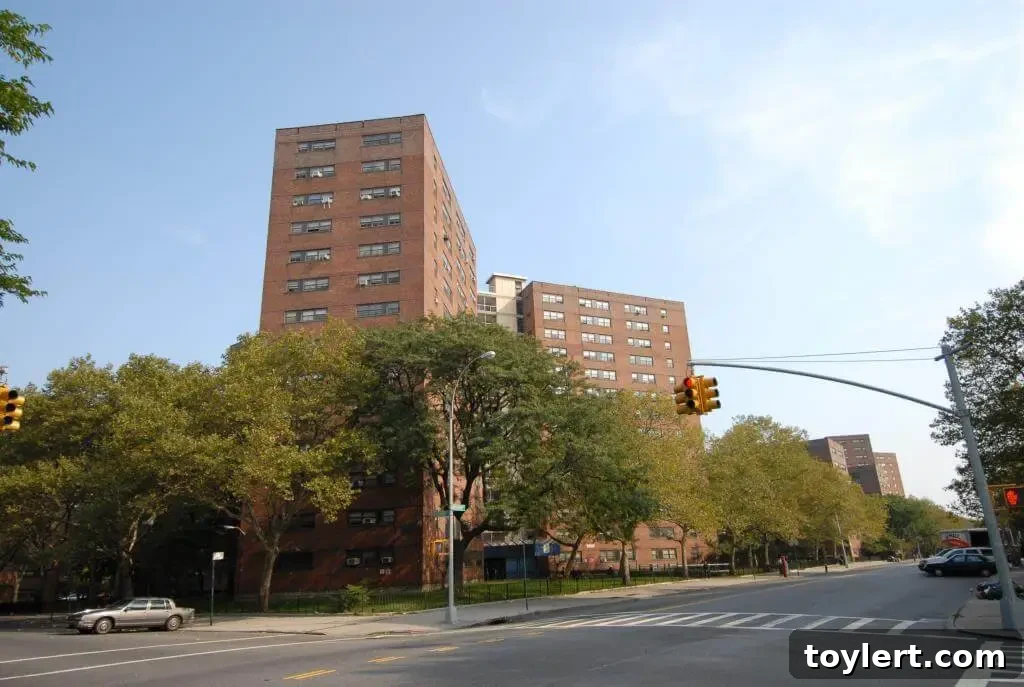
Among the six Brooklyn properties that underwent RAD conversion last month, the Linden Houses in East New York stand out as a significant example. This complex, along with the neighboring Penn Wortman Houses, forms a substantial housing community, encompassing nearly 2,000 apartments spread across 22 buildings. The conversion brought with it a staggering investment of over $400 million earmarked specifically for repair work and capital improvements across both developments. This substantial financial injection was intended to be a game-changer, addressing years of neglect and deteriorating conditions, from leaky roofs and crumbling facades to unreliable heating systems and outdated plumbing.
Concurrently with the RAD conversion, the management of Linden Houses was taken over by a consortium of developers, with C+C Apartment Management assuming primary duties at the sprawling complex. This transition marked a formal handover of day-to-day operations, maintenance, and tenant relations from NYCHA to a private entity. The expectation was that this new management structure, backed by fresh capital, would introduce a more efficient, responsive, and tenant-focused approach to property administration. For residents, this meant the promise of a departure from the frustrations often associated with NYCHA’s bureaucratic processes and resource constraints. However, as subsequent reports and tenant testimonies indicate, the shift has not been an immediate panacea, with residents still navigating a complex landscape of persistent and novel issues.
Tenant Voices: Unpacking Life Under New Management
For the thousands of residents living in these converted Brooklyn developments, the change in management was met with a mix of cautious optimism and underlying apprehension. Many had endured years, if not decades, of suboptimal living conditions under NYCHA’s stewardship, desperately hoping that the private sector’s involvement would finally usher in a new era of reliability and comfort. However, early reports from tenants at Linden and Penn Wortman Houses suggest that the anticipated reprieve from pervasive housing issues has yet to fully materialize. Instead, many find themselves caught between the familiar struggles of public housing and the emerging complexities often encountered in privately managed properties.
Persistent Problems: The Echoes of NYCHA’s Past
Despite the substantial investment and new management, tenants frequently report that many of the core issues that plagued their buildings under NYCHA continue to persist. These are not minor inconveniences but fundamental problems that deeply impact their quality of life:
- Inconsistent Heating and Hot Water: A perennial problem across NYCHA, tenants often face frigid apartments in winter and a lack of hot water for bathing and cleaning. Despite promises of system upgrades, reliable heat and hot water remain an elusive commodity for many, forcing residents to rely on inefficient and sometimes unsafe alternative heating methods.
- Pest Infestations: Roaches, rodents, and other pests are a common complaint. While private management is expected to implement more rigorous extermination protocols, residents often report ongoing battles with infestations, indicating a need for more comprehensive and sustained pest control strategies that address the root causes and structural vulnerabilities.
- Mold and Water Leaks: Chronic leaks from roofs, plumbing, and building exteriors contribute to widespread mold growth, posing significant health risks. Residents highlight slow response times to repair these leaks, allowing mold to proliferate and degrade indoor air quality, despite the new management’s mandate for expedited repairs.
- Maintenance Backlogs: Even with a new management team, the sheer volume of deferred maintenance means that many repair requests still face significant delays. Tenants describe waiting weeks or even months for essential repairs, from broken appliances and light fixtures to damaged floors and structural issues, leading to frustration and a sense of neglect.
- Elevator Malfunctions: For residents in multi-story buildings, especially the elderly or those with disabilities, malfunctioning elevators are more than an inconvenience; they are a critical accessibility issue. Breakdowns continue to be a concern, leaving some residents stranded or forced to navigate numerous flights of stairs, highlighting the scale of infrastructure challenges that even new funding struggles to immediately resolve.
Emerging Challenges: The New Landscape of Private Oversight
Beyond the continuation of old problems, tenants are also beginning to face new types of challenges commonly associated with private sector management, which can feel alien and sometimes more bureaucratic than the NYCHA system they knew:
- Communication Barriers: While theoretically more efficient, the transition has sometimes led to confusion regarding who to contact for issues, new complaint procedures, and perceived less direct communication from management compared to the more familiar (though often frustrating) NYCHA channels. Tenants express a desire for clearer, more consistent communication.
- Increased Scrutiny and Enforcement: Some residents report a stricter enforcement of rules and regulations, and in some cases, perceived increased surveillance. While some level of order can be beneficial, concerns arise about potential overreach or disproportionate disciplinary actions that could impact tenant security and peace of mind.
- Fear of Displacement and Gentrification: Despite protections built into the RAD program, a lingering anxiety persists among tenants about the long-term intentions of private developers. There are fears that the focus on capital improvements and private sector efficiency might, over time, subtly erode the community’s character or eventually lead to conditions that indirectly encourage long-term residents to leave.
- Changes in Tenant Engagement: The shift can alter the dynamics of tenant associations and resident councils. While new management might introduce different engagement models, there’s concern that traditional tenant advocacy structures, which were accustomed to dealing with NYCHA, might need to adapt significantly or risk having their voices diluted in the new private management framework.
The Financial Injection vs. On-the-Ground Impact
The allocation of over $400 million for repairs at Linden and Penn Wortman Houses is undeniably a substantial financial commitment, one that far surpasses the annual capital funding NYCHA typically receives for a single complex. This investment signifies a serious intent to address the decades of underinvestment and neglect that have plagued these buildings. However, the disconnect between this massive funding injection and the slow pace of noticeable improvements for tenants underscores the immense scale of the problems at hand. Rehabilitating thousands of aging apartments across dozens of buildings is not a simple or swift undertaking. It involves complex structural repairs, system replacements (plumbing, electrical, heating), remediation of environmental hazards like lead paint and asbestos, and comprehensive apartment renovations, all while residents continue to live on site.
The sheer logistics of coordinating such extensive repair work, ensuring minimal disruption to residents, and adhering to strict building codes and timelines can be daunting. Furthermore, the initial phases of renovation often focus on critical infrastructure and external elements that, while vital for the building’s longevity and safety, may not immediately translate into tangible day-to-day improvements inside individual apartments. For example, replacing a boiler system might take months, and during that time, residents might still experience heat outages. Similarly, roof repairs, while essential, don’t instantly solve a mold problem in an apartment that has developed over years. This gap between the investment timeline and the immediate experience of tenants creates frustration and fuels skepticism, even as the long-term benefits are being worked towards.
Navigating the Future: Accountability and Advocacy
Amidst these challenges, the role of tenant advocacy and transparent oversight becomes paramount. Residents, often through tenant associations and community organizations, are actively working to hold both the new private management and NYCHA accountable for the promises made during the RAD conversion process. These groups serve as critical conduits for reporting persistent issues, demanding timely repairs, and ensuring that tenant rights, particularly regarding rent affordability and protection against displacement, are upheld. Their collective voice is essential in shaping how these conversions evolve and in pushing for adjustments where the system falls short.
City officials and housing authorities, while championing RAD as a solution, also bear a significant responsibility for rigorous oversight. This includes establishing clear performance metrics for private managers, implementing robust complaint resolution mechanisms, and conducting regular inspections to verify that repair work is completed to standard and that living conditions genuinely improve. Transparency in financial expenditures and project timelines is also crucial to rebuild trust among residents who have grown weary of unfulfilled promises. The success of RAD, therefore, hinges not just on the capital it unlocks, but equally on the ongoing commitment of all stakeholders—tenants, management, and government—to collaborate and ensure that the program ultimately serves its intended purpose: providing safe, decent, and affordable housing for all.
Broader Implications for NYC’s Public Housing Landscape
The experiences at Linden and Penn Wortman Houses offer a microcosm of the broader challenges and opportunities facing New York City’s public housing system. As NYCHA continues to pursue RAD conversions for additional properties across its vast portfolio, the lessons learned from these early transitions will be invaluable. The program, while offering a clear financial pathway, also tests the intricate balance between public responsibility and private efficiency. It raises fundamental questions about the future of publicly owned housing, the role of market forces in low-income communities, and the enduring commitment to preserving affordable housing for generations to come.
The debate surrounding RAD is multi-faceted. On one hand, it represents perhaps the most viable strategy for saving hundreds of thousands of affordable units from further decay, preventing widespread displacement that would exacerbate the city’s housing crisis. Without substantial outside investment, many NYCHA buildings face a bleak future, potentially rendering them uninhabitable. On the other hand, critics voice legitimate concerns about the long-term implications of privatizing what has historically been public infrastructure, fearing a dilution of tenant protections, a shift in community control, and the potential for a profit motive to overshadow resident well-being. Ultimately, the success of RAD in New York City will be measured not just by the dollars spent or the renovations completed, but by the tangible improvement in the daily lives of its residents and the sustained commitment to fostering thriving, affordable communities.
The journey from public to private management is undeniably complex, marked by both promising investments and challenging realities. For the residents of Linden and Penn Wortman Houses in East New York, and for countless others across Brooklyn and beyond, it is a journey that continues to unfold. Their experiences underscore the critical need for vigilance, advocacy, and a shared commitment from all parties to ensure that the promise of improved living conditions truly translates into a lasting reality, securing the future of public housing for those who need it most.