Brooklyn Officials Demand Full BQE Redesign: State’s Limited Commitment Sparks Outrage
A chorus of Brooklyn’s most influential elected officials has vehemently criticized the New York State Department of Transportation (NYS DOT) following its confirmation that there are no immediate plans to comprehensively refurbish the state-owned sections of the Brooklyn-Queens Expressway (BQE). This revelation has ignited a fierce debate about the future of one of New York City’s most critical, yet deteriorating, infrastructure arteries and the broader implications for environmental justice and community well-being in Brooklyn.
Eighteen officials, representing a broad spectrum of the borough’s political landscape, united to issue a blistering joint statement. Their message was unequivocal: “New York State DOT’s refusal to commit to participating in NYC DOT’s visioning process for their portions of the BQE is completely unacceptable and irresponsible.” This strong rebuke underscores a deep-seated frustration among local leaders who believe the state is failing its residents by adopting a piecemeal approach to a problem demanding a holistic, future-oriented solution.
The Call for a Unified Vision: Beyond the Triple Cantilever
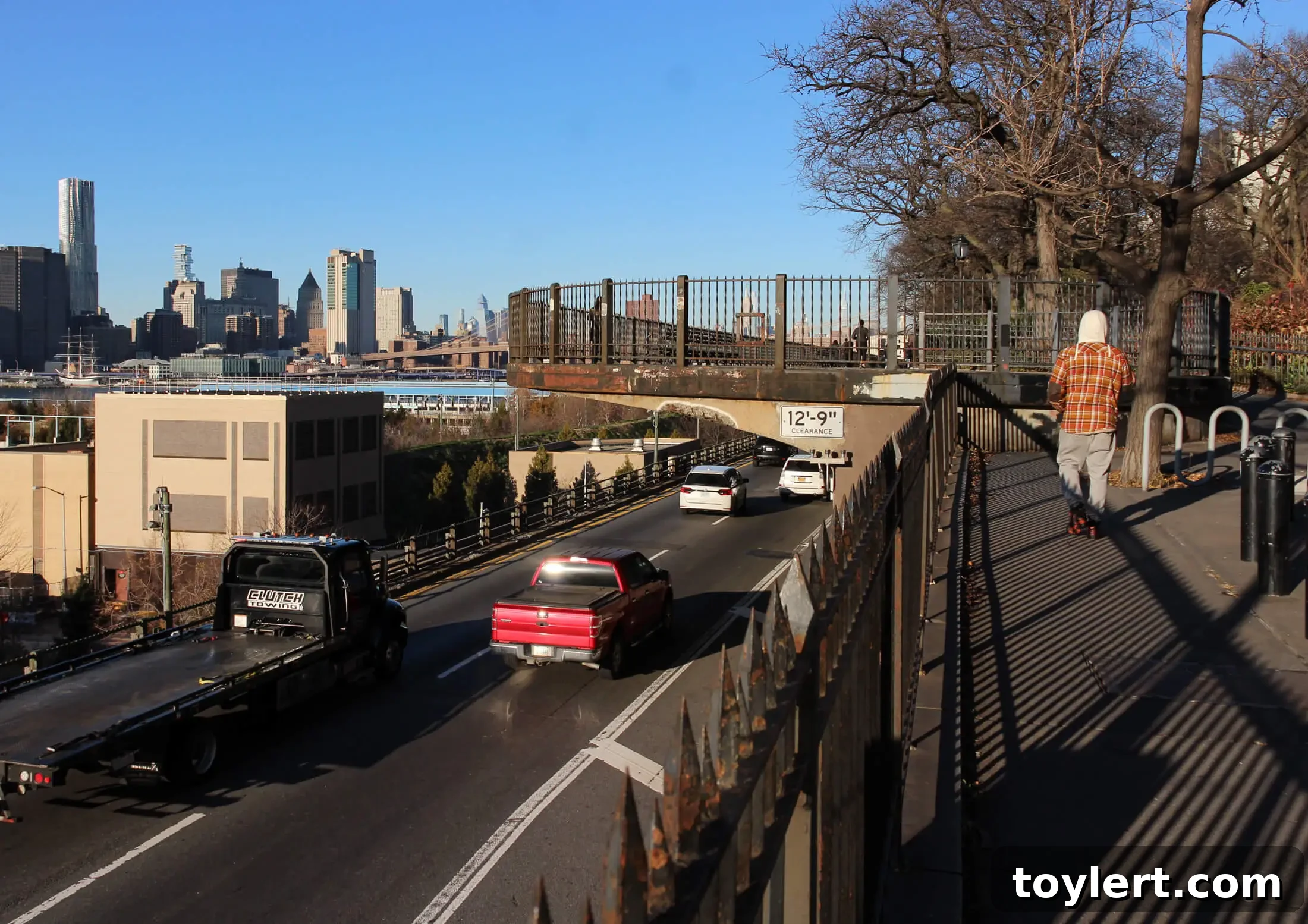
The core of the officials’ grievance lies in the perceived short-sightedness of the state’s stance. They emphasize that the “historic opportunity to rebuild the BQE extends beyond the triple cantilever,” referring to the highly visible 1.4-mile section of the highway in Brooklyn Heights that is notoriously complex and currently under the purview of the New York City Department of Transportation (NYC DOT). While the state has indicated a willingness to assist NYC DOT with its redesign efforts for this specific segment, it has explicitly ruled out any broader engagement concerning the state-owned portions of the expressway.
This limited commitment is viewed by Brooklyn’s leadership as a grave misstep. They argue that their communities “deserve a forward-thinking vision that redesigns the entire BQE and addresses the significant environmental justice impacts of the thruway.” For decades, the BQE has not merely been a transportation corridor; it has been a dividing line, severing communities, contributing to chronic air and noise pollution, and imposing substantial quality-of-life burdens on adjacent neighborhoods, many of which are predominantly low-income and communities of color.
Understanding the BQE’s Complex Ownership and Deterioration
The Brooklyn-Queens Expressway, a vital artery for freight and commuter traffic, spans multiple jurisdictions, contributing to the complexity of its maintenance and redesign. While parts are managed by NYC DOT, significant sections fall under the jurisdiction of NYS DOT. This fragmented ownership often leads to disjointed planning and a lack of coordinated efforts, a problem starkly highlighted by the current impasse.
The BQE is more than 70 years old, a relic of mid-20th-century urban planning characterized by elevated highways that prioritized vehicular traffic over community cohesion. Its aging infrastructure is in constant need of repair, leading to frequent lane closures, traffic disruptions, and significant financial outlays for ongoing maintenance. Experts and residents alike agree that patchwork repairs are no longer sustainable; a comprehensive overhaul is not just desirable but urgently necessary to ensure safety, reduce long-term costs, and address its pervasive negative impacts.
Key Voices Leading the Charge for Comprehensive Reform
The unified missive, a powerful display of political solidarity, was signed by a broad coalition of elected representatives. These included prominent figures such as U.S. Representative Nydia Velázquez, whose district encompasses significant portions of the BQE, and Brooklyn Borough President Antonio Reynoso, a staunch advocate for community-centric urban planning. Their signatures, alongside numerous local council members and state legislators, signal a borough-wide consensus that the status quo is unacceptable and that state-level inaction is impeding critical progress.
The collective pressure from such a diverse group of officials underscores the widespread concern among Brooklyn residents regarding the expressway’s future. Their advocacy highlights the pressing need for the NYS DOT to recognize the BQE not as a series of isolated segments but as an interconnected system whose fate affects millions of New Yorkers, both directly and indirectly.
Environmental Justice: A Central Pillar of the Redesign Debate
The plea for a “forward-thinking vision” heavily emphasizes addressing the “significant environmental justice impacts” of the BQE. For decades, communities situated along the expressway, particularly those in South Brooklyn and beyond, have borne the brunt of its existence. High levels of vehicular emissions contribute to elevated rates of respiratory illnesses, while incessant noise pollution degrades quality of life and affects mental health. The physical barrier created by the elevated highway has also historically segregated neighborhoods, limiting access to waterfronts and green spaces and stifling economic development in certain areas.
A comprehensive redesign offers a transformative opportunity to rectify these historical injustices. By reimagining the BQE, there is potential to introduce measures such as capping sections to create new public spaces, investing in green infrastructure to mitigate pollution, and exploring alternative transportation solutions that reduce reliance on single-occupancy vehicles. Such changes could lead to cleaner air, quieter streets, and more vibrant, connected communities, fostering genuine equity for residents who have long suffered from the highway’s adverse effects.
The Origin of the Controversy: Streetsblog Report Sparks Outcry
The officials’ joint statement came on the heels of a Streetsblog report that brought the state’s limited commitment to light. The investigative piece revealed that despite repeated inquiries and requests for collaboration from local elected officials, NYS DOT’s involvement in the broader “reimagining” of the BQE would be restricted to assisting NYC DOT with the 1.4-mile city-owned portion. This report served as a catalyst, galvanizing Brooklyn’s political leadership to articulate their collective disappointment and demand a more proactive and responsible approach from the state.
The Road Ahead: Demanding Coordinated Action and Sustainable Solutions
The current standoff highlights a critical need for enhanced inter-agency collaboration between NYS DOT and NYC DOT. The magnitude of the BQE challenge necessitates a unified strategy that transcends jurisdictional boundaries, pooling resources, expertise, and vision to develop a solution that benefits all New Yorkers. A piecemeal approach, focused solely on the most critical immediate repairs without considering the expressway’s overall impact and long-term future, is increasingly being viewed as fiscally irresponsible and socially unjust.
Brooklyn’s elected officials are calling for nothing less than a paradigm shift in how the BQE is perceived and managed. They envision a future where the expressway, if it must exist, is integrated into the urban fabric in a way that minimizes harm and maximizes community benefit. This could involve exploring various innovative proposals, from subterranean tunneling options to partial removal with enhanced public transit alternatives, or capping sections to create parks and development opportunities that reconnect communities.
The economic stakes are also significant. Investing in a comprehensive redesign offers opportunities for job creation, property value appreciation in previously blighted areas, and improved connectivity that can spur local commerce. Conversely, continued inaction risks escalating maintenance costs, persistent traffic congestion that stifles productivity, and a worsening of public health outcomes for those living nearest to the highway.
Ultimately, the saga of the BQE redesign is a test of political will and commitment to urban equity. The unified voice from Brooklyn’s leadership signals a clear mandate for the New York State Department of Transportation to step up, engage meaningfully, and collaborate on a forward-thinking vision that truly serves the public interest and rectifies the long-standing environmental injustices caused by the Brooklyn-Queens Expressway.