Unveiling Brooklyn’s Enduring Charm: A Six-Month Real Estate Retrospective
The dynamic landscape of Brooklyn’s real estate market is a constant source of fascination, marked by rapid shifts, competitive bidding, and the timeless appeal of its architectural heritage. To truly understand its pulse, it’s often insightful to look back. This week, we’re taking a deep dive into our archives, revisiting some of our most compelling featured listings from six months ago, specifically from the bustling fall season. By examining their journeys since then, we gain invaluable insights into market trends, buyer preferences, and the inherent value of these storied properties. Join us as we explore the captivating narratives of homes that captivated us then, and continue to inform our understanding of Brooklyn’s vibrant housing scene now.
The Irresistible Allure of Brooklyn’s Historic Homes
Brooklyn stands as a testament to architectural diversity and historical richness. From the iconic brownstones of its central neighborhoods to the grand, standalone homes in its more suburban enclaves, these properties are more than just dwellings; they are living pieces of history. Buyers are drawn not only to the robust construction and unique character of these homes but also to the promise of community, cultural vibrancy, and long-term investment potential that defines life in Brooklyn. Whether it’s the ornate detailing of an Italianate façade or the sprawling elegance of an Edwardian estate, these homes continue to command attention and drive the market.
Clinton Hill’s Italianate Masterpiece: A Symphony of Old and New
Our first spotlight falls on a truly stunning brownstone nestled in the prestigious Clinton Hill neighborhood, an area renowned for its tree-lined streets, preserved architecture, and a harmonious blend of historical grandeur and contemporary cool. This particular property, a meticulously renovated four-story Italianate residence on Washington Avenue, perfectly embodies the art of blending eras. The Italianate style, popular in the mid-19th century, is characterized by its low-pitched roofs, wide overhanging eaves with decorative brackets, tall narrow windows, and often, an ornate front door. This home proudly showcased these classic elements, providing a magnificent canvas for its transformation.
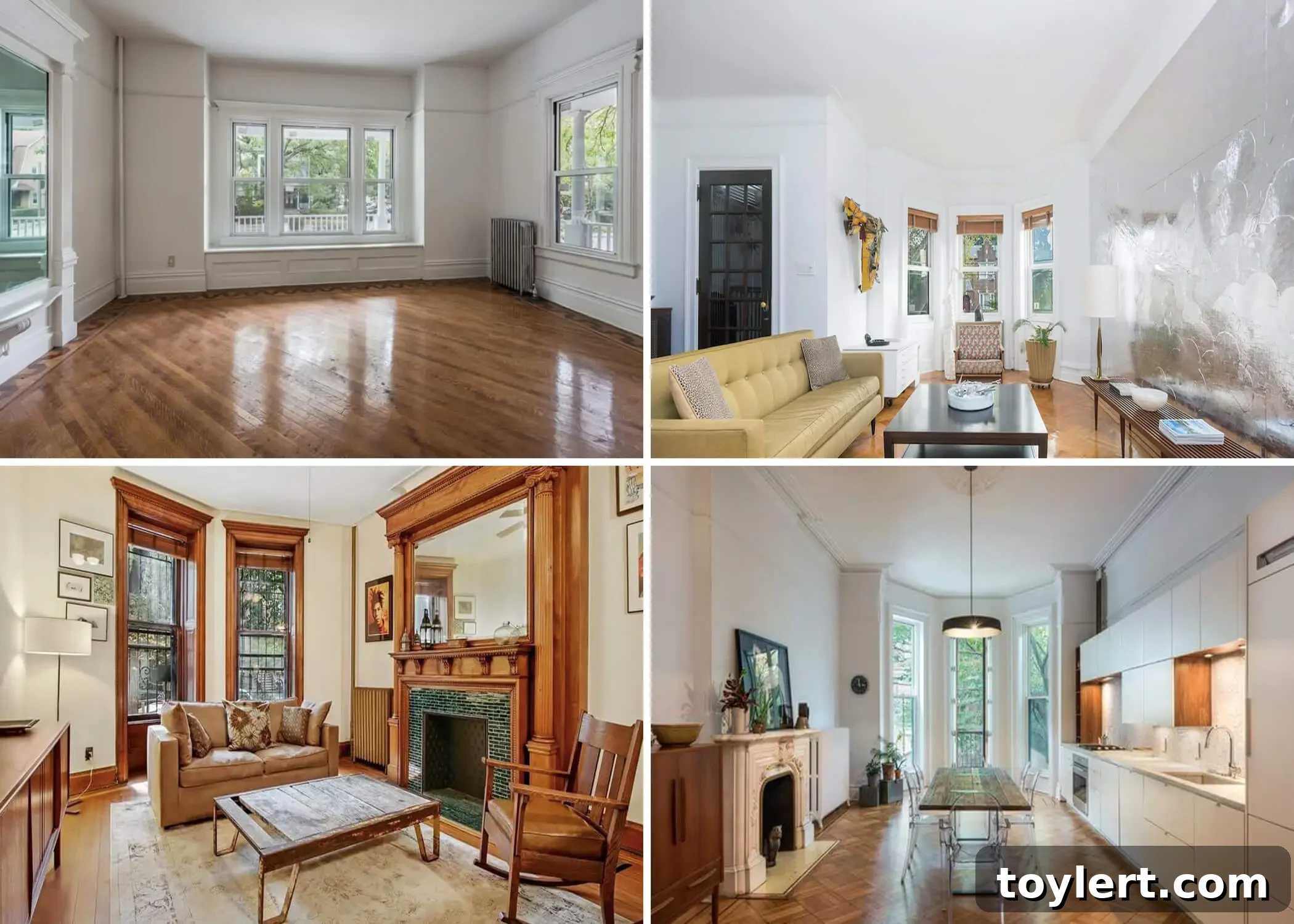
What truly set this brownstone apart was its seamless integration of graceful original details with sophisticated modern updates. Upon entry, guests were greeted by the warmth of exquisite parquet floors, a hallmark of artisanal craftsmanship that speaks to the home’s rich past. Throughout the residence, lovely marble mantels served as focal points in various rooms, each a unique work of art reflecting the period’s aesthetic sensibilities. Delicate crown moldings adorned the ceilings, adding a layer of architectural refinement, while arched door frames provided elegant transitions between spaces, enhancing the sense of flow and grandeur. Practical yet charming pocket shutters offered both privacy and historical authenticity, and a magnificent mahogany newel post anchored the sweeping staircase, a silent testament to the home’s enduring character.
Yet, this property was far from a museum piece. The modern updates were executed with an eye for both luxury and functionality. The centerpiece of this contemporary reimagining was a minimalist Henrybuilt kitchen. Henrybuilt is synonymous with high-end, custom kitchen systems known for their sleek design, superior craftsmanship, and intelligent organization. This kitchen wasn’t just a place to cook; it was a testament to modern living, offering state-of-the-art appliances and an uncluttered aesthetic that perfectly complemented the historic backdrop. The synergy between the original features and the cutting-edge design created an atmosphere of sophisticated comfort, appealing to discerning buyers who sought both timeless elegance and contemporary convenience.
This former House of the Day generated significant buzz and closed in October for an impressive $3.85 million. Notably, this figure was a staggering $500,000 above its asking price, a clear indicator of its exceptional appeal and the intense demand for meticulously renovated, turn-key historic homes in prime Brooklyn neighborhoods. This remarkable sale underscored several key market dynamics: the premium placed on quality renovations, the enduring desirability of Clinton Hill, and the fierce competition among buyers for unique properties that require no immediate work. Such a robust sale price also reflects the growing investment value of Brooklyn’s luxury real estate, particularly for homes that artfully bridge historical integrity with modern living standards.
South Midwood’s Edwardian Estate: A Canvas for Visionary Buyers
Shifting our focus to another distinct facet of Brooklyn’s housing market, we revisit a seven-bedroom Edwardian standalone residence located at 2201 Glenwood Road in South Midwood. This neighborhood offers a different flavor of Brooklyn living – typically characterized by larger lot sizes, a quieter, more residential ambiance, and a charming array of architectural styles, including many grand standalone homes. Edwardian architecture, which emerged in the early 20th century, often emphasized spaciousness, light, and more practical layouts compared to its Victorian predecessors. These homes frequently feature wider hallways, larger windows, and a less ornate, more functional aesthetic, though still retaining a sense of stately elegance.
This particular Edwardian home, with its generous seven bedrooms, presented a different kind of opportunity. While the listing candidly stated that it “needs work,” it simultaneously promised a “ton of space and some choice original details,” suggesting a profound potential waiting to be unleashed. For a certain type of buyer, a property needing renovation isn’t a drawback but an exciting prospect – a chance to imprint their personal vision, to restore forgotten grandeur, and to craft a custom dream home tailored precisely to their tastes and needs. The inherent value of its substantial footprint, a rarity in many parts of Brooklyn, coupled with the promise of salvaged original details, made this a compelling proposition for those with an eye for potential and a passion for restoration.
The original details that often survive in Edwardian homes can include impressive fireplaces, intricate staircase balustrades, detailed wood paneling, original hardwood floors, and period hardware. These elements, when carefully preserved and integrated into a modern renovation, can elevate a home from merely updated to truly exceptional. The sheer volume of space, a coveted commodity in urban environments, provided ample room for expansion, reconfiguration, and the creation of versatile living areas – from home offices and gyms to multiple family zones.
This former House of the Day continues to be available through another broker, now priced at $1.26 million. This current price reflects a strategic drop of $39,000 since its initial listing, indicating a recalibration to meet market expectations for properties that require significant investment in renovation. The fact that it remains on the market, even with a price adjustment, highlights the nuanced nature of selling a “diamond in the rough.” While the potential is immense, such properties often appeal to a more specific buyer pool – those who possess the financial resources, time, and vision to undertake a substantial renovation project. This listing exemplifies the opportunities that exist for patient, discerning buyers willing to invest in creating equity through thoughtful restoration and modernization, acquiring a significant piece of Brooklyn’s architectural legacy at a more accessible price point than fully renovated counterparts.
Understanding Brooklyn’s Diverse Real Estate Landscape
The contrasting journeys of these two distinct Brooklyn homes offer a microcosm of the borough’s diverse real estate market. The Clinton Hill brownstone, a turn-key luxury renovation, commanded a significant premium and sold well above asking, reflecting the robust demand for perfectly executed, ready-to-move-in historic properties in highly sought-after neighborhoods. This segment of the market thrives on immediate gratification and a willingness to pay for perfection.
Conversely, the South Midwood Edwardian, though boasting immense potential and significant space, presents a different value proposition. Its price point and continued availability, even with a reduction, underscore that properties requiring extensive work appeal to a more niche buyer base. These are individuals or families who are either developers or homeowners with a clear vision, eager to undertake a transformative project, understanding that their investment of time and capital will ultimately yield a personalized home of considerable value. This segment of the market caters to those who prioritize customization, future equity growth, and the unique satisfaction of bringing a historic property back to its full glory.
The Enduring Appeal of Brooklyn: Key Takeaways
Our six-month look back at these featured listings reinforces several key insights into the Brooklyn real estate market. Firstly, the demand for historic properties, particularly those that blend original charm with modern amenities, remains incredibly strong. Buyers are willing to pay a premium for architectural integrity and convenience. Secondly, there is a clear and robust market for properties that offer significant renovation potential. These homes represent an opportunity for substantial value creation, attracting buyers with a strategic long-term perspective.
The geographical diversity within Brooklyn also plays a crucial role. Neighborhoods like Clinton Hill continue to lead in luxury sales, while areas like South Midwood offer enticing opportunities for those seeking more space and a chance to build equity through renovation. Both scenarios underscore the dynamic and multifaceted nature of Brooklyn’s housing market, where historical significance, strategic location, and renovation status collectively dictate property value and buyer interest.
In conclusion, revisiting these properties from the fall season has provided a valuable lens through which to view the ongoing evolution of Brooklyn’s real estate. From the bidding wars over a pristine brownstone to the patient search for the right visionary to restore an Edwardian estate, these homes tell compelling stories about market trends, architectural legacies, and the enduring dream of owning a piece of this vibrant borough. As Brooklyn continues to evolve, its historic homes remain not just structures, but cherished assets embodying the borough’s rich past and promising future.