As the vibrant hues of summer deepen, we’re taking a timely dive back into the dynamic Brooklyn real estate market. Six months ago, we featured a diverse selection of properties across some of the borough’s most sought-after neighborhoods: Mapleton, Ditmas Park, Brooklyn Heights, and Clinton Hill. Now, we revisit two of those distinctive listings to uncover their journeys in the ever-evolving market. Tracking these properties offers invaluable insights into current trends, buyer demand, and the unique characteristics that define Brooklyn living. From an income-restricted co-op steeped in prewar charm to a semi-detached brick house ripe for restoration, let’s explore how these homes have fared and what their stories tell us about the current real estate landscape in these beloved Brooklyn enclaves.
Clinton Hill: A Prewar Gem with Affordable Living Potential
Our first spotlight shines on a compelling two-bedroom apartment nestled within the historic and picturesque streets of Clinton Hill. This unit presents a unique opportunity for aspiring homeowners, particularly those seeking entry into a desirable Brooklyn neighborhood through an HDFC (Housing Development Fund Corporation) co-op. HDFC co-ops are designed to provide affordable housing opportunities for moderate-income New Yorkers, offering a pathway to homeownership that might otherwise be out of reach in a competitive market like Clinton Hill. For those who meet the specific income requirements, this property offers not just a home, but a gateway to a vibrant community.
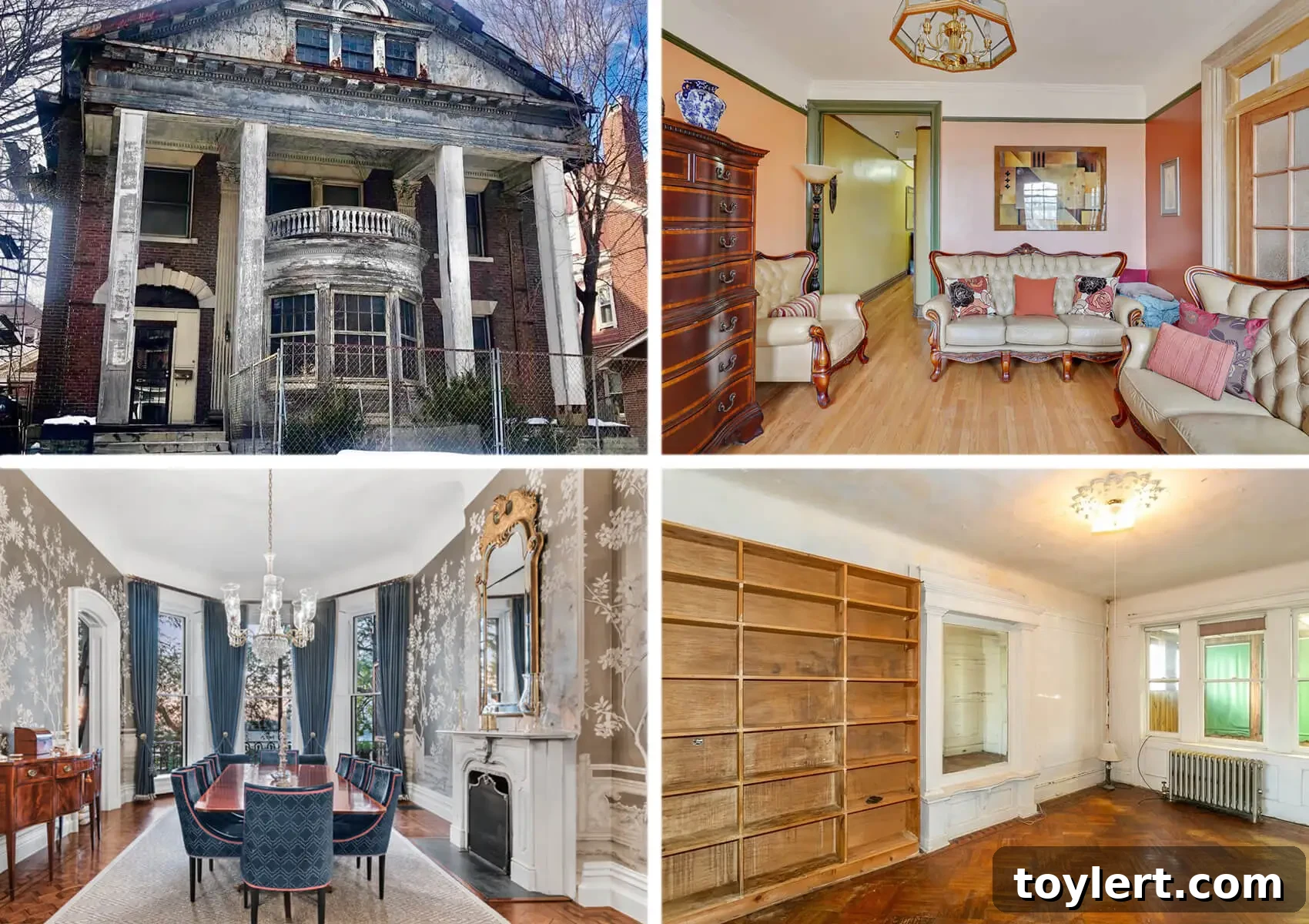
Located on the fourth floor of a classic walk-up building, this apartment boasts an appealing blend of historical character and practical living. The building itself exudes prewar elegance, a style celebrated for its robust construction, generous proportions, and timeless architectural details. Inside, the unit continues this narrative with its inherent prewar charm, likely featuring high ceilings, hardwood floors, and sturdy plaster walls that stand testament to quality craftsmanship. These details often lend a sense of grandeur and solidity that modern constructions struggle to replicate, providing a unique ambiance that many buyers actively seek.
The layout of this two-bedroom residence is notably flexible, a significant advantage for urban living where space is at a premium. The core design includes two well-proportioned bedrooms, each thoughtfully equipped with a closet for essential storage. The living and dining rooms are elegantly separated by classic French doors, a design element that is both aesthetically pleasing and functionally versatile. These doors allow for an open, airy flow when desired, connecting the spaces for larger gatherings or creating a sense of expansiveness. Conversely, they can be closed to provide privacy and define distinct areas.
This flexibility is currently demonstrated by the owner, who has ingeniously configured the dining room as a third bedroom. This adaptability highlights the unit’s potential to cater to various lifestyle needs, whether it’s accommodating a growing family, creating a dedicated home office, or simply enjoying an expansive living and dining area. The option to easily revert the space allows future owners to tailor the apartment precisely to their preferences, maximizing its utility and comfort.
Understanding the HDFC Co-op Financials and Restrictions
As an HDFC co-op, this property comes with specific financial stipulations designed to ensure its affordability for the target demographic. Income restrictions are a key component, with eligible buyers needing to fall within an annual income range of $99,500 to $153,500. This range typically accommodates single individuals up to families of five people, making it accessible to a broad spectrum of moderate-income households. A critical condition for ownership is that the apartment must serve as the owner’s primary residence, preventing it from being used purely as an investment property or a secondary home, further reinforcing its commitment to providing stable housing.
The listing notes offer encouraging news regarding financing options: gifting of the down payment or even the full purchase price is permitted, providing flexibility for buyers who may receive financial assistance from family or other sources. Traditional bank financing is also allowed, simplifying the mortgage process for qualified purchasers. However, prospective buyers should be aware of another unique HDFC co-op characteristic: a flip tax. Sellers in this particular building are subject to a flip tax equivalent to 50 percent of the profit made upon a sale. This policy is generally put in place to discourage speculative buying and ensure the long-term affordability of the units. While it might seem significant, it’s a factor to be carefully considered in a long-term investment strategy.
Monthly maintenance fees for the unit are remarkably reasonable at $622.60, especially for a two-bedroom apartment in a prime Brooklyn location. This relatively low carrying cost adds to the overall affordability of the property. Previously featured as a “Co-op of the Day,” this enticing unit remains on the market, currently listed for $575,000. For an eligible buyer, this presents a rare opportunity to secure a spacious, character-filled home in the heart of the Clinton Hill Historic District at a highly competitive price point, offering not just a residence but a genuine investment in community and lifestyle.
Mapleton: A Semi-Detached Brick House Awaiting a Visionary Touch
Shifting our focus south to Mapleton, we find a semi-detached brick house that captivated us with its undeniable potential and existing architectural integrity. Mapleton is a charming, often overlooked residential neighborhood in Brooklyn, known for its tree-lined streets and a mix of single and multi-family homes, offering a quieter, more suburban feel than some of its northern counterparts. This particular house stands as a testament to early 20th-century craftsmanship, retaining several original details that speak volumes about its heritage and offer a fantastic foundation for restoration.
The exterior immediately draws the eye with its classic brick facade and distinctive original elements, including a stepped and curved parapet and decorative brackets. These details are not merely superficial; they are integral to the architectural style of the era, adding significant character and curb appeal that modern homes often lack. Such features hint at a rich history and provide a solid starting point for a buyer looking to honor and enhance the home’s original grandeur.
Inside, this single-family residence, while described as being in “estate condition,” holds immense promise. “Estate condition” typically implies that while the property requires significant updates and renovations, it often comes with a treasure trove of original features that have largely been preserved, albeit perhaps obscured or in need of revival. Amidst elements like dropped ceilings and wall-to-wall carpeting, which were popular mid-century additions, discerning eyes will appreciate the underlying original details that patiently await restoration.
These hidden gems include original wall moldings that add a touch of classic elegance to the rooms, a grand pier mirror—a quintessential piece of period decor often found in entryways or living rooms—and beautiful parquet floors. The presence of these elements suggests that with careful renovation, the home could be transformed back to its former glory, blending historic charm with modern conveniences. The kitchen, for instance, features mid-20th-century cabinets complete with their original pulls and charming scalloped trim. While a full contemporary kitchen renovation might be on a new owner’s agenda, these details could also inspire a thoughtful, retro-inspired update that celebrates the home’s timeline.
Layout, Outdoor Space, and Market Performance
Spanning an generous 18 feet in width, the house offers a comfortable layout spread across its two main levels. The first floor is dedicated to the primary living spaces, featuring a well-proportioned living room, a dining area perfect for family meals, and the kitchen. Enhancing the usability of the space are both front and rear enclosed porches, which offer versatile additional square footage. These porches can serve as sunrooms, mudrooms, or quiet retreats, extending the living space and providing transition zones between the indoors and the property’s exterior.
Upstairs, the second floor houses four bedrooms, offering ample space for a family, guests, or dedicated home office setups, along with one full bathroom. This traditional bedroom configuration is highly practical and appealing to many buyers. The property also includes a rear yard, which, according to the listing, “appears in need of a gardener with vision.” This phrase charmingly indicates a blank slate or a space requiring significant landscaping effort, yet it also promises a wonderful opportunity to create a personalized urban oasis for outdoor entertaining, gardening, or relaxation.
This Mapleton house, previously highlighted as an “Open House Pick,” successfully navigated the market, selling in June for $830,000. This price point was $69,998 below the initial asking price, a common occurrence in a market where properties requiring substantial renovation often see a slight adjustment from their initial listing. The sale demonstrates a healthy demand for homes with good bones and potential in Mapleton, particularly for buyers willing to invest in a renovation project. It underscores the value of space, original details, and the opportunity to customize a home in a solid, residential Brooklyn neighborhood. This outcome provides a realistic snapshot of the market for properties in estate condition, highlighting that while vision and investment are required, the reward of owning a custom-restored home in a charming community is well within reach.
Reflections on the Brooklyn Real Estate Landscape
Revisiting these two distinct Brooklyn properties offers a compelling look into the borough’s diverse real estate market. The Clinton Hill HDFC co-op stands as a beacon of affordable homeownership within a historic and highly desirable neighborhood, demonstrating that with specific eligibility, charming prewar homes are indeed accessible. Its continued availability at a competitive price, coupled with flexible layout options and reasonable monthly maintenance, makes it an attractive proposition for the right buyer committed to primary residence ownership.
On the other hand, the Mapleton semi-detached brick house, now sold, illustrates the enduring appeal of homes with architectural character and renovation potential. Despite being in “estate condition,” its original details and solid structure resonated with a buyer willing to undertake a transformation. The sale price, slightly below asking, reflects the market’s assessment of properties requiring significant investment, yet it affirms the strong underlying value of well-located homes in desirable neighborhoods like Mapleton.
These two stories underscore a crucial theme in Brooklyn real estate: variety. From regulated co-ops offering structured affordability to traditional houses awaiting a new lease on life, the market caters to a broad spectrum of needs and aspirations. For prospective buyers, understanding these nuances—from specific co-op regulations to the true cost and potential of an “estate condition” home—is paramount. For sellers, accurate pricing and transparent representation of a property’s condition are key to a successful transaction. As we move deeper into the season, these revisited listings serve as excellent case studies, reminding us that every home tells a story, and every market update brings new lessons in the vibrant world of Brooklyn real estate.