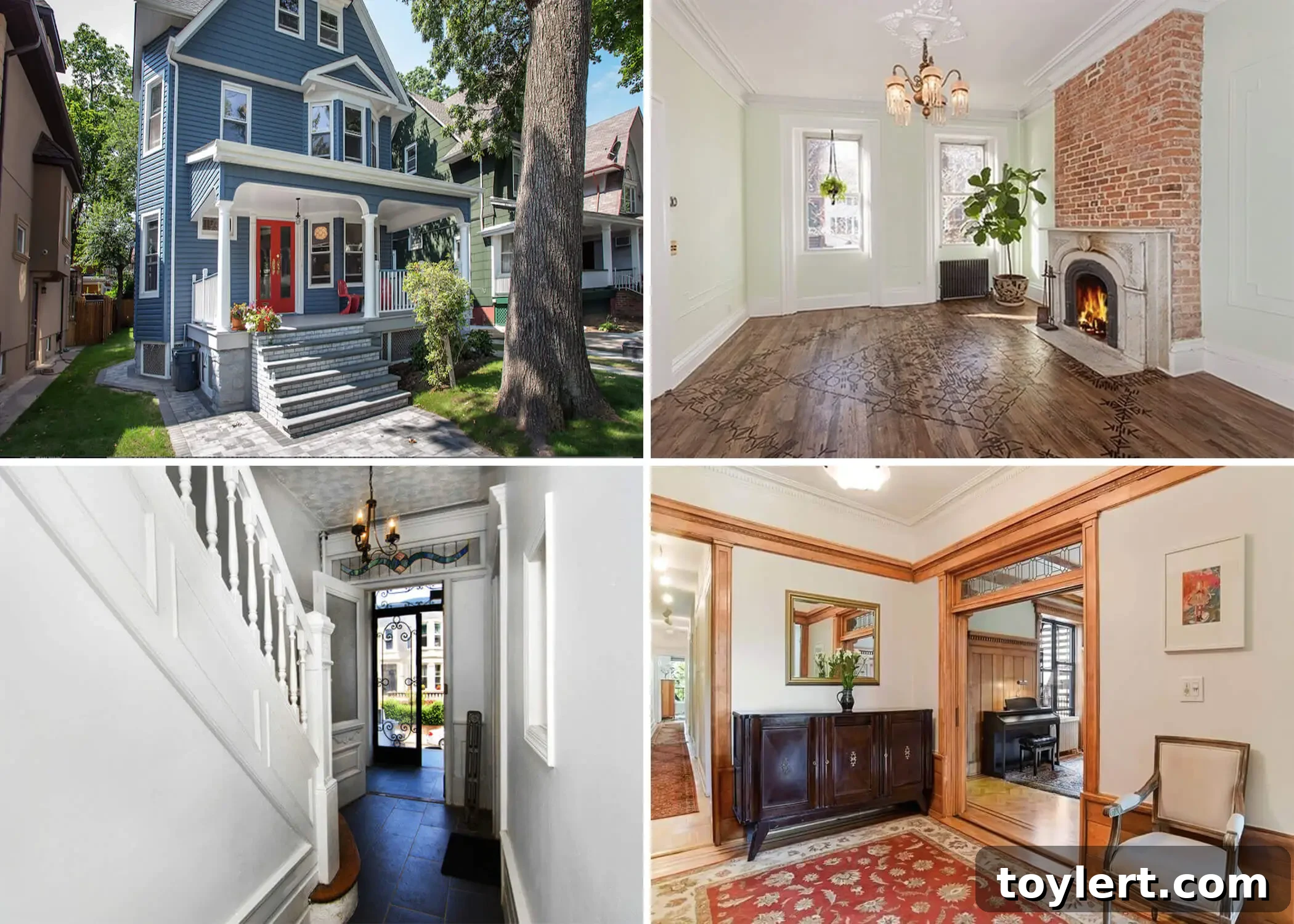
Navigating the Brooklyn Market: A Mid-Season Retrospective on Featured Listings
As the crisp air of autumn gently nudges out the last vestiges of summer, the real estate market continues its dynamic rhythm. The “dog days of summer,” often characterized by a slight lull, can sometimes mask underlying market currents. To gain a clearer perspective on these shifts, we’re taking a detailed look back at four of our previously featured Brooklyn listings from July. This retrospective offers valuable insights into how these diverse properties performed on the market, revealing trends in buyer demand, pricing strategies, and the unique appeal of different Brooklyn neighborhoods. From historic brownstones to spacious co-ops, each sale tells a story about the intricate dance between property value and market sentiment in one of New York City’s most vibrant boroughs.
Understanding these past performances is crucial for both prospective buyers and sellers navigating the ever-evolving Brooklyn real estate landscape. Did certain features command a premium? Were specific neighborhoods experiencing a surge in demand? Join us as we uncover the fates of these noteworthy properties and glean lessons for the future.
1. Crown Heights Charm: 1628 Union Street’s Impressive Sale
Our first stop takes us to the historic and increasingly sought-after neighborhood of South Crown Heights, where 1628 Union Street presented a classic Brooklyn opportunity. This striking barrel-fronted limestone property immediately captured attention with its distinctive architectural style and the promise of ample space. Beyond its elegant facade, the home boasts a wealth of preserved original details, offering a glimpse into the craftsmanship of a bygone era. Think intricate moldings, well-maintained hardwood floors, and period-specific fixtures that blend seamlessly with modern living potential.
Priced at what was considered a relatively gentle figure for such a substantial property in a burgeoning area, it came with a specific configuration that defined its market appeal: a two-family home comprising a pair of spacious, floor-through apartments situated above a high cellar. While this layout might not cater to every buyer dreaming of an expansive owner’s duplex or a single-family restoration project, it presented an undeniable advantage for those seeking either significant rental income potential or a flexible living arrangement for extended family. The two separate units offer unparalleled versatility, appealing to investors looking to capitalize on Brooklyn’s robust rental market, or owner-occupants wishing to subsidize their mortgage with rental income.
This property, previously highlighted as a “House of the Day,” clearly resonated with a segment of the market appreciative of both its architectural integrity and its practical two-family setup. The robust demand for multi-family homes in Brooklyn, particularly in neighborhoods like Crown Heights that offer a rich blend of history, community, and evolving amenities, certainly played a role in its swift sale. The outcome was nothing short of remarkable: 1628 Union Street sold in September for an impressive $1.25 million, exceeding its asking price by a significant $50,000. This indicates strong buyer competition and a recognition of the property’s inherent value and investment potential in a thriving Brooklyn submarket.
The success of this sale underscores the continued appetite for well-maintained, income-generating properties in Brooklyn’s prime locations. Crown Heights continues to attract buyers drawn to its tree-lined streets, grand architecture, and vibrant community, making properties like 1628 Union Street highly desirable.
2. Prospect Park Prestige: A Co-op’s Journey at 90 Prospect Park West
Next, we shift our focus to the highly coveted and perennially elegant neighborhood of Park Slope, and specifically to a magnificent three-bedroom co-op located at 90 Prospect Park West. This address alone signals a premium living experience, offering direct frontage and unparalleled access to the sprawling urban oasis of Prospect Park. The apartment itself lived up to its prestigious location, described as spacious and inherently elegant. Its most striking feature, without a doubt, was the “killer views” of Prospect Park, showcased through three expansive front windows. These windows not only flood the living spaces with natural light but also provide a breathtaking, ever-changing panorama of greenery, sky, and seasonal beauty – a truly rare commodity in New York City.
Beyond the views, the co-op boasted exquisite internal details, including exceptionally well-preserved woodwork. This speaks volumes about the building’s historical pedigree and the meticulous care taken by its residents and the cooperative board. Such original architectural elements, from ornate moldings to rich paneling and finely crafted doors, contribute significantly to the apartment’s charm and intrinsic value, appealing to buyers who appreciate classic pre-war elegance over modern, minimalist designs.
This “Co-op of the Day” pick, despite its undeniable allure, navigated a different market trajectory. It ultimately sold in October for $1.765 million, which was $84,000 below its original asking price. This outcome prompts an interesting discussion about the nuances of the luxury co-op market. While the prestige of Prospect Park West, the spacious layout, and the stunning views are immense assets, selling below ask can be influenced by several factors inherent to co-op sales. These might include stringent co-op board approval processes, high monthly maintenance fees, limitations on financing, or specific buyer preferences regarding renovation levels or immediate occupancy. Sometimes, an ambitious initial asking price in a market with discerning buyers can also lead to a price adjustment. Regardless, the sale at $1.765 million still represents a significant transaction in one of Brooklyn’s most desirable residential enclaves, reflecting the enduring appeal of Park Slope’s unique blend of urban sophistication and natural beauty.
3. Clinton Hill Classic: A Brownstone’s Timeless Allure on Lafayette Avenue
Our journey through Brooklyn’s market next takes us to Clinton Hill, a neighborhood celebrated for its grand architecture, tree-lined streets, and vibrant artistic community. Here, a quintessential brownstone on Lafayette Avenue, a property we once featured for its historical significance and potential, demonstrated the enduring appeal of classic Brooklyn homes. This particular residence, while presenting opportunities for a personalized touch through renovation, possessed the coveted “good bones” that discerning buyers often seek. Its multi-story layout, original stoop, and intricate facade details spoke to the architectural grandeur of the late 19th century, making it a canvas for restoration enthusiasts or those desiring a home with character and history.
The interior showcased high ceilings, original fireplaces, and well-proportioned rooms, hinting at its past elegance and future potential. The home was marketed to a buyer who appreciated the blend of historical charm with the possibility of modern upgrades, someone eager to invest in a property that would appreciate both in value and in personal significance. Clinton Hill itself adds significantly to the property’s desirability, offering proximity to Pratt Institute, a burgeoning restaurant scene, and easy access to Manhattan, making it a top choice for professionals and families alike.
The market’s response to this Clinton Hill gem was swift and positive. Recognizing the intrinsic value of its location, architectural integrity, and the strong demand for brownstones in this prime area, the property sold in late September for $2.1 million. This figure represented a sale slightly above its asking price, underscoring the fierce competition for well-located, architecturally significant homes in Clinton Hill. The slight premium paid suggests that buyers were willing to stretch their budgets for a piece of Brooklyn’s rich architectural heritage, especially one in a neighborhood that continues to grow in prestige and popularity. This sale reaffirms the robust health of the brownstone market in established Brooklyn neighborhoods, where historical charm, community amenities, and investment potential converge.
4. West Midwood Modernity: A Condo’s Quiet Success on Rugby Road
Finally, we venture to the picturesque and more suburban-feeling enclave of West Midwood, a hidden gem often lauded for its detached homes, manicured lawns, and tranquil atmosphere. Our last featured listing was a spacious, modern condominium located on Rugby Road, an area distinct from the borough’s more urban cores. This property offered a refreshing contrast to the historical brownstones and co-ops, appealing to buyers seeking contemporary living spaces with the conveniences of condo ownership in a quieter, family-friendly setting. The unit featured updated interiors, including a modern kitchen, luxurious bathrooms, and an open-plan living area that maximized light and space. Private outdoor space, a rare commodity in denser parts of Brooklyn, was also a key selling point, providing a serene retreat for residents.
West Midwood offers a unique lifestyle, characterized by its tree-lined streets, sense of community, and larger properties, providing a peaceful escape within city limits. It attracts families and individuals looking for more space and a suburban feel without sacrificing access to Brooklyn’s vibrant offerings. The condo on Rugby Road was positioned as an ideal choice for those valuing modern comforts, low-maintenance living, and a strong sense of neighborhood belonging.
Despite its appealing features and prime location within West Midwood, this condominium’s journey to sale was reflective of a specific market niche. It sold in early October for $950,000, which was slightly below its initial asking price. This outcome can be attributed to several factors. The condo market, while strong, can sometimes be more sensitive to very specific buyer preferences and the overall volume of available inventory. While the property itself was highly desirable, its specific price point or features might have appealed to a slightly narrower pool of buyers compared to, for instance, a classic brownstone in a hyper-competitive market. Alternatively, the pricing strategy might have aimed for a quicker sale, or market comparables within West Midwood might have led to a final adjustment. Nevertheless, the sale at nearly a million dollars highlights the continued desirability of modern, well-appointed condominiums in Brooklyn’s diverse neighborhoods, particularly those offering unique lifestyle benefits like those found in West Midwood.
Key Takeaways from the Brooklyn Real Estate Market
These four diverse property sales from July offer a microcosm of the dynamic Brooklyn real estate market. They underscore several crucial themes for both buyers and sellers as we move through the seasons:
- Location is Paramount: Whether it’s the evolving appeal of Crown Heights, the established prestige of Park Slope, the historical charm of Clinton Hill, or the suburban tranquility of West Midwood, a property’s location remains a primary driver of value and demand.
- Property Type Matters: Multi-family homes in competitive markets often command a premium due to income potential, while luxury co-ops, despite their grandeur, can be subject to specific market dynamics and buyer sensitivities. Brownstones maintain their iconic status and strong demand, while modern condos appeal to those seeking convenience and contemporary design.
- Pricing Strategy is Critical: While some properties, particularly those in high demand with unique characteristics, can exceed asking prices, others require a more strategic approach to pricing to achieve a timely and successful sale. Over-ambitious pricing, even for exceptional properties, can lead to longer market times and eventual price reductions.
- Original Details vs. Modern Updates: Both impeccably preserved original details and sleek, modern updates have their dedicated buyer base. Understanding the target audience for a property is key to its successful marketing and sale.
- Market Nuances: Each neighborhood and property type has its own set of market forces. What drives a sale in Crown Heights might differ from what drives one in Park Slope or West Midwood.
As we observe the market transitions from summer to fall, these retrospectives provide invaluable lessons. For sellers, understanding what features drive buyer enthusiasm and how to price strategically is paramount. For buyers, these examples illustrate the diversity of opportunities available across Brooklyn and the importance of being prepared to act decisively when the right property emerges. The Brooklyn real estate market continues to evolve, but its fundamental appeal – a rich tapestry of history, community, and opportunity – remains constant.