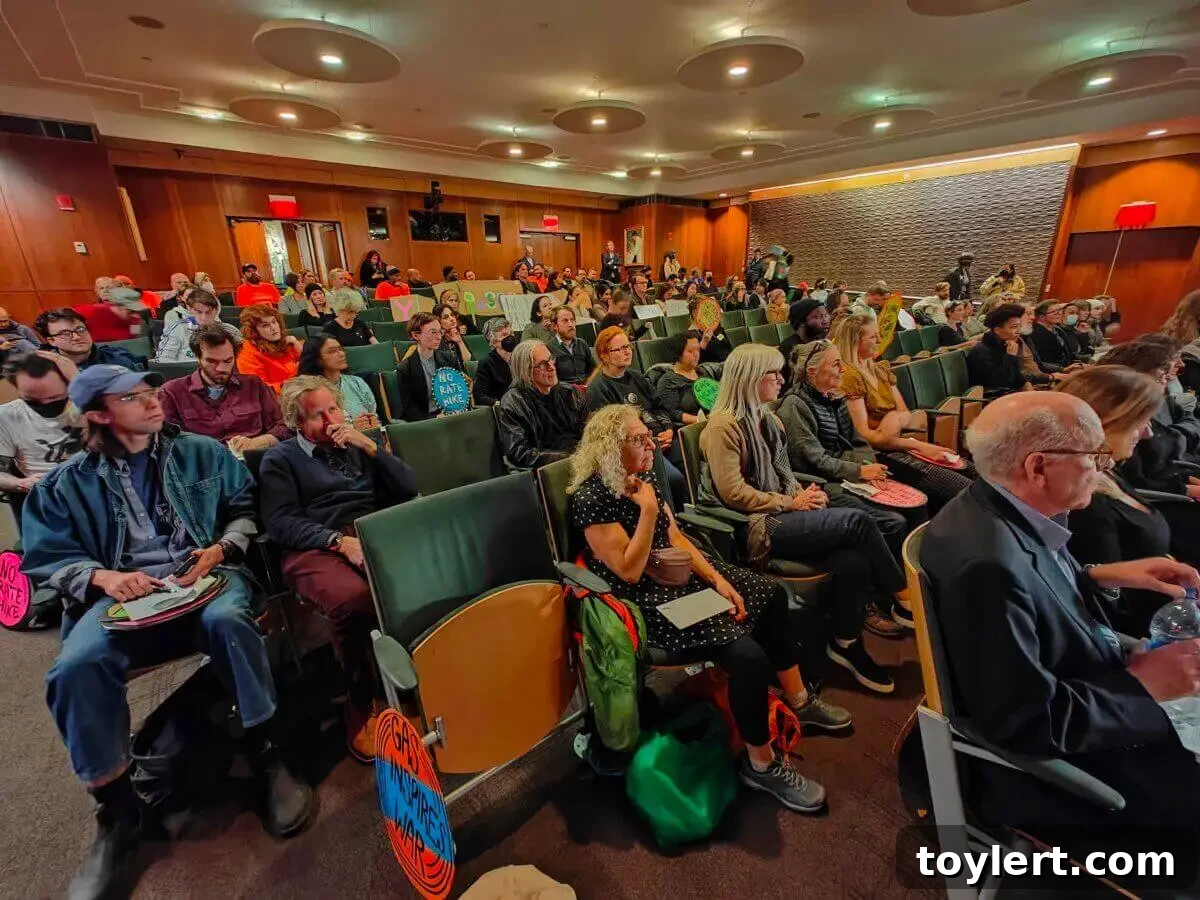
National Grid’s Proposed Rate Hike: Unpacking the Impact on New York City and Long Island
By Ximena Del Cerro, originally reported by Brooklyn Paper
A significant financial challenge looms for millions of New York residents as utility titan National Grid proposes a substantial increase in its natural gas rates. This move, poised to impact customers across New York City and Long Island, has already sparked considerable concern and dissatisfaction among Brooklynites and broader communities.
National Grid, a crucial provider of natural gas services to over 2 million homes and businesses spanning Brooklyn, Queens, Staten Island, and Long Island, is seeking regulatory approval for a hike that would see average monthly bills in New York City climb by approximately $30. This increase is projected to boost the company’s annual revenue by a staggering $414 million. Similarly, residents on Long Island face a proposed increase of around $28 per month, contributing an additional $228 million annually to the utility’s coffers. The collective implications of these proposed adjustments are far-reaching, setting the stage for crucial debates on energy affordability, infrastructure investment, and regulatory oversight.
The Specifics of the Proposed Increases
The core of National Grid’s proposal revolves around a two-pronged approach to revenue generation, targeting distinct geographical segments of its vast customer base. For its New York City service area, which includes the boroughs of Brooklyn, Queens, and Staten Island, the utility aims to secure an additional $414 million in annual revenue. This translates to an average increase of roughly $30 on monthly natural gas bills for residential and commercial customers alike. Such a rise represents a notable percentage jump for many households, particularly those with moderate to high natural gas consumption for heating, cooking, and hot water.
Long Island customers, served by a different operational arm of National Grid, are not exempt from these proposed adjustments. The company is seeking an additional $228 million in annual revenue from this region, which would result in an average monthly bill increase of approximately $28. While slightly lower than the NYC average, this figure still represents a substantial financial burden for families and businesses already grappling with the rising cost of living in one of the nation’s most expensive areas. These figures underscore the significant financial impact across the diverse communities National Grid serves, prompting calls for detailed scrutiny and justification.
Why the Hike? National Grid’s Rationale
Utility companies typically justify rate increases by citing a range of operational necessities and strategic investments. While the full detailed rationale from National Grid is subject to regulatory review, common reasons for such proposals include:
- Infrastructure Modernization and Safety: Investing in aging pipelines, updating distribution networks, and implementing advanced safety measures are crucial for reliable service and public safety. These upgrades often require substantial capital expenditure.
- Meeting Customer Demand and Growth: As populations grow and urban areas expand, utilities must expand their capacity and infrastructure to serve new customers and maintain service quality.
- Operational Costs: The cost of labor, materials, maintenance, and complying with environmental regulations can escalate over time, necessitating adjustments to revenue streams.
- Clean Energy Transition: Many utilities are under mandates or are proactively investing in reducing greenhouse gas emissions. This can involve modernizing gas networks to accommodate cleaner fuels or supporting the transition away from fossil fuels, which incurs costs.
- Inflation and Economic Pressures: Like any business, utilities are subject to macroeconomic pressures, including inflation, which drives up the cost of doing business.
Understanding these underlying factors is essential for both regulators and the public to evaluate the necessity and fairness of the proposed increases. National Grid will be expected to present a compelling case to demonstrate how these funds are vital for maintaining and improving service quality, safety, and long-term sustainability.
The Public Outcry: Voices of Concern from Brooklyn and Beyond
The immediate reaction from the public, particularly in Brooklyn, has been one of apprehension and outright opposition. For many New Yorkers, utility bills already represent a significant portion of their monthly expenses, and an additional $30 or $28 hike could push household budgets to their breaking point. This sentiment is echoed across various communities:
- Affordability Crisis: Residents, especially those on fixed incomes, low-income households, and small business owners, fear that increased utility costs will exacerbate an already challenging affordability crisis in the region. Housing, food, and transportation costs continue to rise, making every additional expense feel monumental.
- Impact on Small Businesses: Local businesses, the backbone of many New York neighborhoods, rely heavily on natural gas for heating, cooking, and industrial processes. A substantial rate hike could force them to cut costs elsewhere, potentially leading to higher prices for consumers or even business closures.
- Transparency and Justification: Many citizens are questioning the transparency of National Grid’s financial operations and demanding clear, verifiable justifications for such a significant revenue increase, especially given the company’s profitability.
- Environmental Concerns: Amidst calls for a faster transition to renewable energy sources, some advocates argue that investing heavily in natural gas infrastructure might contradict broader environmental goals and Lock in fossil fuel dependency for longer.
Community organizations, consumer advocacy groups, and local elected officials are expected to play a crucial role in amplifying these concerns during the public review process, advocating for the interests of millions of affected New Yorkers.
Navigating the Regulatory Landscape: New York’s Public Service Commission
In New York, utility rate increases are not enacted unilaterally. They must undergo a rigorous review and approval process by the New York State Public Service Commission (PSC). The PSC is an independent state agency responsible for ensuring that utility services are safe, reliable, and reasonably priced. The process typically involves several key stages:
- Filing of the Proposal: National Grid has formally submitted its rate hike proposal to the PSC, outlining its requested revenue increase and the justification behind it.
- Staff Review and Discovery: PSC staff, including economists, engineers, and attorneys, meticulously review the utility’s proposal, request data, and conduct their own analyses.
- Public Comment Period: A critical phase where the public can submit written comments, attend public hearings, and voice their opinions directly to the PSC. This is where consumer advocacy groups often mobilize their efforts.
- Evidentiary Hearings: Formal proceedings where the utility, PSC staff, and other intervenors (parties with a direct interest, such as consumer advocates or large industrial customers) present evidence, cross-examine witnesses, and argue their cases.
- Negotiations and Settlement: Often, the utility and various stakeholders engage in settlement negotiations to reach a compromise that avoids protracted litigation and aims for a balanced outcome.
- Commission Decision: The PSC Commissioners ultimately vote on the proposal, which can be approved as filed, modified, or rejected. Their decision considers the evidence presented, public input, and the broader public interest.
This process emphasizes the importance of public engagement. Residents and businesses affected by the proposed hike are encouraged to participate by submitting comments, attending hearings, or reaching out to their elected officials to ensure their voices are heard by the decision-makers at the PSC.
Mitigating the Impact: What Customers Can Do
While the regulatory process unfolds, New Yorkers can explore various strategies to manage their energy consumption and potentially mitigate the impact of rising bills:
- Energy Efficiency Upgrades: Implementing home energy efficiency measures, such as sealing drafts, improving insulation, upgrading to energy-efficient appliances, or installing smart thermostats, can significantly reduce natural gas consumption.
- Energy Assistance Programs: Low-income households may be eligible for programs like the Home Energy Assistance Program (HEAP) or specific payment assistance programs offered by National Grid. It’s crucial for eligible customers to apply for these supports.
- Budget Billing: National Grid offers budget billing plans that average out annual energy costs, allowing customers to pay a consistent amount each month, which can help in financial planning and avoid seasonal bill spikes.
- Monitor Usage: Regularly tracking natural gas consumption through online accounts can help identify trends and areas where usage can be reduced.
- Advocate: Participate in the PSC public comment period, contact local representatives, and support consumer advocacy groups working on behalf of ratepayers. Collective action can influence regulatory decisions.
Proactive steps taken by individual customers, combined with robust advocacy from community groups, can collectively shape the outcome and help buffer the financial blow of potential rate increases.
Beyond the Immediate Hike: Long-Term Energy Strategy
The proposed National Grid rate hike also sparks broader discussions about New York’s long-term energy strategy. The state has ambitious climate goals, aiming for a significant reduction in greenhouse gas emissions and a transition to renewable energy sources. This raises questions about:
- Investment Priorities: Should significant investments continue in natural gas infrastructure, or should resources be redirected more aggressively towards electrification and renewable energy alternatives?
- Equitable Transition: How can the transition to cleaner energy be managed in a way that doesn’t disproportionately burden low-income communities or those dependent on natural gas?
- Energy Independence: What role do local renewable energy projects and community-based solutions play in reducing reliance on traditional utility models and their associated costs?
The decision on National Grid’s rate proposal will not only affect immediate household budgets but also potentially influence the pace and direction of New York’s energy future, highlighting the intricate balance between affordability, reliability, and environmental sustainability.
Conclusion: A Critical Juncture for New York’s Energy Future
National Grid’s proposed rate hike represents a critical juncture for millions of New Yorkers, demanding careful consideration from regulatory bodies and active engagement from the public. The prospect of higher monthly utility bills arrives at a time when many are already struggling with economic pressures, making the call for transparency, fairness, and robust justification more urgent than ever. As the New York State Public Service Commission deliberates, the collective voices of residents, businesses, and advocacy groups will play a vital role in shaping a decision that balances the financial needs of a major utility with the fundamental right of New Yorkers to access affordable and reliable energy. The outcome will undoubtedly have lasting implications for the financial well-being of communities and the broader trajectory of energy policy in the Empire State.