The Enduring Magic of Christmas: A Glimpse into Brooklyn’s 1899 Celebrations and Victorian Roots
Editor’s note: This story is an update of one that ran in 2013, offering a fresh perspective on timeless traditions. For historical context, you can read the original here.
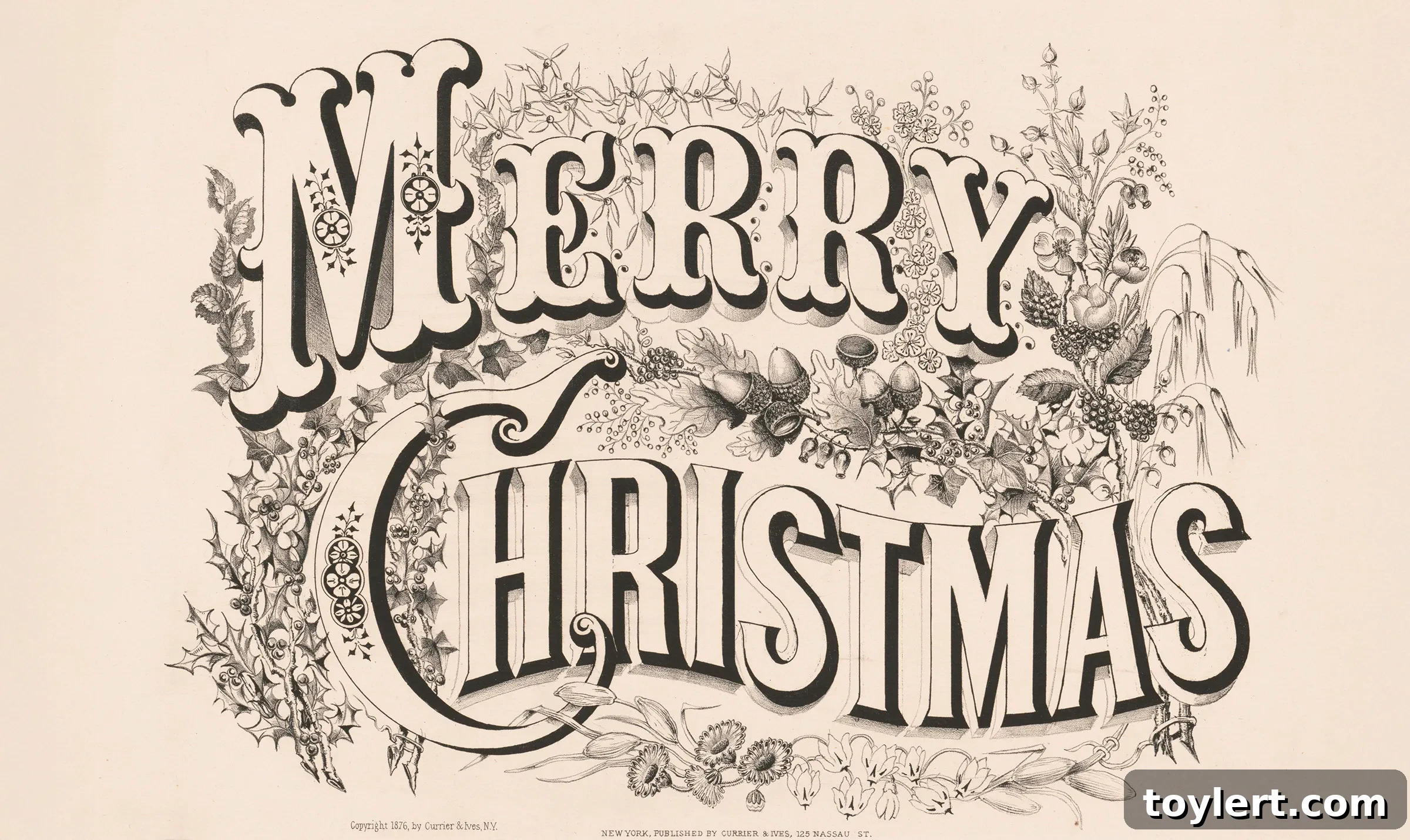
Christmas, a holiday steeped in wonder and tradition, holds a special place in the collective heart of American society. Many of our most cherished customs, the very fabric of our festive season, trace their origins back to the transformative Victorian Age. This pivotal period, spanning much of the 19th century, was a crucible where the modern idea of Christmas was forged, shaping everything from our perception of Santa Claus to the very decor that adorns our homes. The spirit of giving, the emphasis on family, and the joyous anticipation that defines the holiday season today were profoundly influenced by the social and cultural shifts of this era.
The Victorian Cradle of Christmas Traditions
The Evolution of Santa Claus
Perhaps no figure embodies the spirit of Christmas more vividly than Santa Claus, the benevolent giver of gifts. His modern image, a plump, jolly man with a white beard and a sack full of toys, became fully imagined and widely embraced during the 19th century. Drawing inspiration from the European figure of Saint Nicholas, a 4th-century bishop known for his generosity, the American Santa Claus began to take distinct shape. Landmark works such as Clement Clarke Moore’s 1823 poem, “A Visit from St. Nicholas” (more famously known as “‘Twas the Night Before Christmas”), painted a vivid picture of Santa as a magical, sleigh-riding figure. Later, the iconic illustrations by Thomas Nast for Harper’s Weekly solidified his visual identity, cementing the image of a merry, gift-bestowing patriarch who visited homes on Christmas Eve, fostering a universal belief in generosity and childhood wonder.
Dickensian Charm and the Spirit of Redemption
From mid-century England, the literary genius of Charles Dickens gifted us an enduring vision of Christmas, a setting rich with top hats, tail coats, and the warmth of a Christmas dinner. His timeless novella, “A Christmas Carol,” published in 1843, did more than just tell a ghost story; it profoundly influenced the way Christmas was perceived and celebrated. Through the transformative journey of Ebenezer Scrooge, Marley, and the spectral visitors, Dickens presented the quintessential example of greed and stinginess being redeemed into profound charity and selfless giving, all illuminated by the miracle of love, family, and friendship. This narrative struck a chord with a society grappling with industrialization and poverty, elevating Christmas from a mere religious observance to a holiday focused on compassion, social responsibility, and the potential for personal change. The imagery of carolers singing in gas-lit streets and families gathered around a festive table became synonymous with the ideal Christmas spirit, fostering a widespread desire for goodwill towards all.
European Roots: Carols, Music, and the Christmas Tree
Our European Christmas traditions continued to flourish, incorporating the joy of carols, the cheer of festive music, and the symbolic beauty of decorated Christmas trees. The latter, a deeply Teutonic tradition rooted in ancient pagan and early Christian practices, gained immense popularity in England, and subsequently in America, thanks to Queen Victoria and her German-born husband, Prince Albert. In 1846, an illustration in the London News depicted the Royal Family gathered around a decorated evergreen, instantly popularizing the custom among the British middle and upper classes. This trend quickly crossed the Atlantic, transforming the Christmas tree into a central element of holiday decor, symbolizing life, hope, and the festive spirit. The twinkling lights, shimmering ornaments, and the gathering of family around its boughs became an integral part of the Christmas experience, a tradition that continues to bring warmth and beauty to homes worldwide.
These rich European and American traditions, each building upon the other, laid the groundwork for how Christmas would be celebrated for generations to come. They emphasized not just religious significance but also the importance of social connection, generosity, and the joyous creation of memories, making Christmas a holiday that appealed to both the spiritual and the communal aspects of human experience.
Christmas in Brooklyn, 1899: A Tale of Two Cities
The last Christmas of the 19th century in Brooklyn offered a snapshot of its day, a scene that, surprisingly, was not so very different from the present. Modern 21st-century inhabitants would likely feel right at home amidst the bustling streets and diverse populace of late 19th-century Brooklyn. In many fundamental ways, our society, at least until quite recently, bears striking similarities to what it was in 1899. By then, Brooklyn had shed its independent city status and was firmly integrated into greater New York City. And New York City, then as now, was a society of stark contrasts – a vibrant mosaic of “haves” and “have-nots.”
The Affluent Celebrations: Grandeur and Plenty
For Brooklyn’s more prosperous residents, Christmas 1899 was a season of opulent celebration. Their children were immersed in a world of fine clothing, elaborate gatherings, and an abundance of expensive gifts. Homes in neighborhoods like Brooklyn Heights, Park Slope, and Bedford-Stuyvesant (then primarily residential for the affluent) would have been sumptuously decorated with imported ornaments, fresh evergreens, and perhaps even the newly popular electric lights, a marvel of the era. Lavish Christmas dinners featured roasted fowl, decadent desserts, and rare delicacies, all served in grand dining rooms. Children eagerly unwrapped gifts ranging from imported dolls with porcelain heads and miniature trains to richly bound books and intricate puzzles. For these fortunate families, Christmas was a time of immense joy, security, and gracious living, a testament to their prosperity and a reinforcement of their social standing. They often engaged in performative charity, hosting balls or contributing to established institutions, but their own celebrations remained largely untouched by the hardship of others.
The Struggles of the Less Fortunate: Survival Over Celebration
However, only blocks or a neighborhood away, a starkly different reality unfolded. For countless other children in Brooklyn, Christmas 1899 was a season not of toys and feasting, but of relentless struggle for survival. Many were thrust into adulthood far too early, their childhoods curtailed by the harsh realities of poverty. These children were concerned not with holiday wishes or festive cheer, but with finding enough food for the day, keeping warm in unheated tenements, or earning a meager wage to support their families. Child labor was rampant, with young hands toiling in factories, workshops, or selling newspapers on street corners, often the sole means of support for their entire households. The very idea of gifts was an unimaginable luxury.
For those without families, orphans, or children abandoned due to illness or extreme poverty, the situation was even more dire. Their existence depended almost entirely on the charity of others, on soup kitchens run by benevolent societies, or the sparse accommodations of orphanages. Organizations like the Salvation Army, still relatively new to the American landscape, played a crucial role, attempting to provide warm meals, basic clothing, and a fleeting moment of kindness to those most in need. Yet, even with these efforts, the holiday season for the city’s poor was often underscored by hunger, cold, and the profound ache of unmet needs. Christmas 1899, therefore, like most Christmases before and since, was truly a tale of two cities within one bustling borough, a vivid illustration of societal disparities that, even today, resonate with our contemporary experiences.
The Enduring Spirit: Bridging Past and Present
Despite the century that separates us from Brooklyn’s Christmas of 1899, the threads connecting that era to our present are remarkably strong. The juxtaposition of opulent celebrations alongside desperate struggles for survival remains a poignant reality in our own communities today. The commercial aspects of Christmas, too, were already burgeoning in the late 19th century, with department stores showcasing elaborate displays and advertising the latest consumer goods, much like they do now. Yet, beyond the consumerism and the social divides, the core essence of Christmas — the focus on family, the yearning for connection, and the aspiration towards generosity — has remained steadfast.
The spirit of hope and the call for charity that defined the Victorian Christmas, amplified by stories like Dickens’, continue to inspire acts of kindness and community support. From toy drives for underprivileged children to food banks ensuring no family goes hungry, the legacy of 1899’s charitable efforts persists. The enduring power of Christmas lies in its ability to transcend time and circumstance, offering a shared season for reflection, gratitude, and the timeless pursuit of peace and goodwill. It reminds us that while the outward manifestations of celebration may evolve, the inward spirit of love, family, and communal responsibility remains the true, unwavering heart of the holiday.