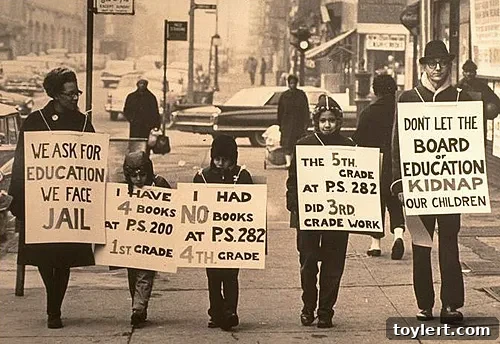
Brooklyn’s Fight for Freedom: The Overlooked Chapter of the Civil Rights Movement
When the story of the American Civil Rights Movement is told, the focus often shines brightly on the Deep South—places like Montgomery, Birmingham, and Selma. These iconic locations, with their visible signs of formal, legally enforced segregation, are etched into our collective memory. However, this narrative, while profoundly important, only captures a part of the struggle. It overlooks the crucial battles fought in countless other communities across the nation, far beyond the Mason-Dixon Line, where racism manifested in insidious, yet equally devastating, ways. Brooklyn, New York, stands as a testament to this broader, more complex fight for equality and justice.
This common misconception that the Civil Rights Movement occurred solely in the deep South, where formal segregation was deeply entrenched after the end of Reconstruction, obscures the vital contributions of Northern activists. In vibrant urban centers like Brooklyn, residents rose to challenge deeply ingrained systemic racism that, while not always codified by law, was undeniably prevalent. Brooklynites, alongside many other communities beyond the South, united during this pivotal era to confront relevant forms of discrimination directly within their own neighborhoods. Their struggle, though often distinct from the Southern experience in its specific challenges, was no less fervent or significant in the broader arc of civil rights history.
Challenging the Northern Myth: De Facto Segregation in Urban Landscapes
While the South grappled with Jim Crow laws and overt racial discrimination, Northern cities like Brooklyn faced a different, yet equally oppressive, beast: de facto segregation. This form of discrimination was not mandated by law but arose from a combination of social practices, economic policies, and residential patterns. It created segregated neighborhoods, schools, and opportunities, effectively relegating African American communities to marginalized spaces with fewer resources. In Brooklyn, the fight for civil rights primarily centered on dismantling these informal yet powerful barriers that stifled progress and perpetuated inequality. Activists here understood that true freedom extended beyond legal desegregation; it demanded equitable access to the building blocks of a dignified life.
The urban landscape of Brooklyn, with its diverse population and burgeoning communities, became a microcosm of these nationwide challenges. African American families migrating from the South, seeking better opportunities, often found themselves confronted with new forms of discrimination. Promises of better jobs and housing frequently turned into the grim realities of redlining, restrictive covenants, and employment discrimination. These practices systematically denied Black residents access to homeownership in desirable areas, limited their career prospects, and concentrated them in overcrowded, under-resourced neighborhoods. The fight in Brooklyn was a battle for economic justice, housing equality, and dignity, demonstrating that the struggle for civil rights was a multifaceted movement requiring diverse strategies and unwavering determination in every corner of America.
The Pervasive Nature of Discrimination in Brooklyn
In Brooklyn, the front lines of the Civil Rights Movement were drawn across several critical sectors. The targets of activism were clear: systemic barriers that prevented African Americans from achieving economic stability, adequate housing, and equal access to public services. These were not abstract ideological debates but tangible issues that impacted daily lives, shaping the very fabric of communities like Bed-Stuy. Understanding these specific challenges is crucial to appreciating the unique flavor and profound importance of Brooklyn’s contributions to the national movement.
Housing Inequality and Redlining
One of the most insidious forms of discrimination in Brooklyn was in housing. Practices like redlining, a discriminatory practice by which banks and insurance companies refused or limited loans, mortgages, and insurance to residents in specific geographic areas, often predominantly Black neighborhoods, effectively starved these communities of investment. Simultaneously, restrictive covenants prevented property owners from selling their homes to non-white buyers, legally enforcing segregation. This led to overcrowding, deteriorating infrastructure, and a lack of investment in African American neighborhoods. Activists fought tirelessly against these practices, demanding fair housing policies that would allow Black families to purchase homes in any neighborhood they could afford, breaking down the invisible walls of residential segregation and ensuring equitable access to stable and safe living conditions. The battle for fair housing in Brooklyn was a foundational pillar of their civil rights agenda, recognizing that a stable home was a prerequisite for upward mobility and community strength.
Employment Barriers and Economic Injustice
Employment inequality was another major battleground. African Americans in Brooklyn frequently faced discrimination in hiring, promotion, and wages. Many were relegated to low-paying jobs with limited opportunities for advancement, regardless of their skills or qualifications. Labor unions, too, often excluded Black workers or confined them to less desirable positions. This economic injustice perpetuated a cycle of poverty and limited access to the middle class. Civil rights leaders in Brooklyn spearheaded boycotts, protests, and negotiation efforts to demand equal employment opportunities, fair wages, and access to training programs. Their calls for economic justice highlighted the inextricable link between civil rights and economic empowerment, arguing that true freedom could not exist without the ability to earn a living wage and build generational wealth.
Unequal Services: The Fight for Basic Dignity
Perhaps one of the most tangible and frustrating manifestations of systemic racism in Brooklyn was the blatant discrimination in public services. These services, which many took for granted, were often neglected in predominantly Black neighborhoods. A prime example was garbage collection. Areas like Bed-Stuy frequently experienced infrequent trash pickup, leading to overflowing bins, rat infestations, and unsanitary living conditions. This was not merely an inconvenience; it was a profound insult and a clear indicator of how the city valued its Black citizens less. Beyond trash collection, unequal access to quality schools, adequate street maintenance, and responsive police services also fueled community outrage. Activists organized to demand their fair share of municipal resources, understanding that equitable services were a fundamental aspect of civic dignity and human rights. Their efforts exposed the hypocrisy of a city that claimed to be progressive while allowing such disparities to persist within its own boroughs.
Bed-Stuy: Brooklyn’s Birmingham and the Battle for Revitalization
The neighborhood of Bedford-Stuyvesant, affectionately known as Bed-Stuy, emerged as the vibrant heart of Brooklyn’s Civil Rights Movement. Its struggles and resilience mirrored those of Southern cities, earning it the poignant moniker, “Brooklyn’s Birmingham.” By the 1960s, Bed-Stuy was a burgeoning Black community, but it was also a neighborhood blighted by years of neglect, discriminatory practices, and a severe lack of investment. Its residents faced dire living conditions, including dilapidated housing, high unemployment rates, and a stark absence of basic city services, such as regular garbage collection and adequate public amenities. These systemic failures fueled a potent sense of injustice and galvanized a powerful local movement determined to reclaim their neighborhood and demand equitable treatment.
Inspired by the courage and direct action tactics of the South’s Freedom Fighters, activists in Bed-Stuy mobilized with unwavering determination. They recognized that local action was essential to addressing the specific grievances within their community. Their efforts were not just about protest; they were fundamentally about community revitalization and empowerment. They sought to raise awareness about the profound inequities faced by Bed-Stuy residents, shedding light on how discriminatory housing policies and economic marginalization had created a cycle of poverty and blight. The ultimate goal was to transform their neighborhood, ensuring that it received the same level of attention, investment, and respect as any other community in Brooklyn.
The Visionary Leadership of Dr. Robert Palmer
At the forefront of this burgeoning movement in Bed-Stuy was Doctor Robert Palmer, a dynamic and influential figure whose leadership proved instrumental in organizing and energizing the community. Dr. Palmer, drawing inspiration from the impactful strategies employed by civil rights leaders in the South, understood the power of collective action and sustained advocacy. He became a pivotal organizer, rallying residents around shared goals of economic uplift, housing justice, and improved municipal services. His approach was comprehensive, blending direct protest with strategic community development initiatives aimed at long-term change. He recognized that revitalizing Bed-Stuy required not only challenging discriminatory systems but also building internal strength and self-sufficiency within the community itself.
Dr. Palmer’s leadership helped to consolidate various grassroots efforts into a formidable force. He worked tirelessly to highlight the specific issues plaguing Bed-Stuy, from the chronic problem of uncollected refuse to the widespread joblessness that crippled families. By connecting these local grievances to the broader national struggle for civil rights, he gave voice to the often-overlooked urban experience of racial discrimination. His vision extended beyond immediate fixes; he aimed for systemic transformation that would ensure Bed-Stuy residents could live with dignity, security, and equal opportunity, cementing his legacy as a true champion for urban civil rights.
Tactics, Tenacity, and Community Empowerment
The civil rights activists in Brooklyn, particularly in Bed-Stuy, employed a range of creative and persistent tactics to push for change. They organized powerful street demonstrations, including picketing and marches, to draw public attention to issues like housing discrimination and employment barriers. Boycotts of businesses that refused to hire Black workers or provide fair services were common, leveraging economic pressure to force concessions. Community meetings were vital hubs for organizing, educating residents, and fostering a sense of collective power, ensuring that the movement was rooted in the voices and needs of those most affected.
Beyond these visible forms of protest, activists also engaged in direct advocacy with city officials, demanding accountability and policy changes. They presented detailed reports on housing conditions, employment disparities, and the shameful state of public services, forcing authorities to confront their responsibilities. The fight for improved garbage collection, for instance, evolved from simple complaints to organized protests at sanitation depots, highlighting the stark contrast in service quality between white and Black neighborhoods. This tenacity, combined with a deep commitment to empowering local residents, gradually built momentum, demonstrating that even in the face of entrenched systemic discrimination, an organized community could indeed make its voice heard and demand justice.
The Lasting Impact and Legacy of Brooklyn’s Civil Rights Activism
The Civil Rights Movement in Brooklyn, though often overshadowed by its Southern counterparts, left an indelible mark on the borough and contributed significantly to the national dialogue on racial equality. The tireless efforts of activists like Dr. Robert Palmer and countless community members brought much-needed attention to the pervasive nature of de facto segregation in Northern cities. Their campaigns against housing discrimination, employment inequality, and unequal city services not only raised awareness but also often led to concrete policy changes and a greater commitment from municipal authorities to address these inequities.
The struggles in Brooklyn helped to broaden the understanding of what civil rights truly encompassed, pushing the movement beyond legal segregation to include economic justice, urban revitalization, and the right to equitable living conditions. The legacy of Brooklyn’s civil rights pioneers lives on in the ongoing efforts to ensure fair housing, create economic opportunities, and dismantle systemic barriers that continue to affect marginalized communities. Their story serves as a powerful reminder that the fight for freedom and equality was, and remains, a nationwide endeavor, shaped by diverse voices and actions in every corner of the country.