Unlocking Urban Potential: The Debate Over Vacant Lot Taxes and Affordable Housing
The issue of vacant lots in bustling urban environments like New York City presents a unique challenge and opportunity. These undeveloped parcels of land, often scattered across the outer boroughs, can be seen as wasted potential in the face of a persistent housing crisis and the ongoing need for urban revitalization. For years, policymakers have grappled with strategies to encourage development on these sites, transforming them from sources of blight into vibrant community assets. One such controversial yet compelling proposal involves the implementation of a targeted tax on vacant land.
Back in 2013, then-Mayor-elect Bill de Blasio put forth a bold plan to address this issue head-on. As reported by Crain’s, his proposal aimed to stimulate development on these empty lots by imposing a new tax. The core idea was straightforward: make it financially less attractive for landowners to hold onto undeveloped property indefinitely, thereby incentivizing them to build. The proposed mechanism involved a five-year phase-in period, after which taxes on vacant land would progressively increase by approximately $15,300 annually. De Blasio’s administration estimated that this new tax could generate a substantial $162 million each year, with all proceeds earmarked for the creation of much-needed affordable housing across the city.
The Rationale Behind Taxing Vacant Land
The motivation behind such a tax is multi-faceted. Firstly, it seeks to combat land speculation, where investors purchase land in anticipation of future price increases, often leaving it vacant for extended periods. This practice can artificially inflate land values and restrict the supply of developable land, exacerbating housing shortages. By increasing the cost of holding undeveloped property, a vacant lot tax aims to push these parcels back into productive use.
Secondly, the policy is fundamentally about urban revitalization. Vacant lots often become eyesores, attracting illegal dumping, fostering crime, and becoming havens for vermin. These issues not only detract from the aesthetic appeal of a neighborhood but also actively diminish the property values of surrounding homes and businesses. A tax, therefore, acts as a powerful incentive for property owners to either develop their land or sell it to someone who will, leading to cleaner, safer, and more attractive communities. This transformation can inject new life into neglected areas, fostering economic growth and improving the overall quality of life for residents.
Finally, and perhaps most critically for a city like New York, the revenue generated from such a tax can be strategically directed towards addressing critical social needs. De Blasio’s proposal specifically aimed to funnel the $162 million annual revenue into affordable housing initiatives. In a city where housing costs are notoriously high and the demand for affordable units consistently outstrips supply, a dedicated funding stream of this magnitude could make a significant impact on expanding access to safe, stable, and affordable homes for thousands of New Yorkers. This dual benefit—incentivizing development and funding public good—makes vacant lot taxation a compelling policy tool for many urban planners and policymakers.
Potential Roadblocks and Criticisms
While the concept holds promise, it’s not without its critics and potential drawbacks. One significant concern raised during the initial discussions was that the tax, rather than spurring development, could actually inhibit it. Developers, especially those undertaking large-scale projects, often need to assemble multiple adjacent lots over time to create a sufficiently sized parcel for their vision. An escalating tax on vacant land could make this acquisition process prohibitively expensive, forcing developers to rush into projects prematurely or abandon them altogether. This could paradoxically lead to less comprehensive and less thoughtfully planned development, or even deter developers from investing in certain areas.
Another point of contention comes from property owners themselves. Small landowners, or those holding onto property for legitimate future expansion (such as a family business planning to grow), might find themselves unfairly burdened by the tax. There are also nuanced situations involving “brownfields” – formerly industrial sites that require extensive environmental remediation before development can proceed. The costs and time associated with cleaning up such sites can be immense, making immediate development unfeasible. A blanket vacant lot tax might penalize owners for these unavoidable delays, rather than offering incentives for remediation and responsible development.
Furthermore, some developers argue that vacant lots, particularly in lower-income neighborhoods, are not merely inert spaces but active contributors to community blight. As one developer quoted in the original report articulated, empty lots often attract crime, foster vermin infestations, and become unofficial dumping grounds for garbage. These issues collectively lower surrounding property values, creating a cycle of decline. While a tax aims to mitigate this, critics suggest that the fundamental issues might lie deeper than mere land ownership costs, involving market demand, zoning regulations, and the overall economic viability of projects in certain areas.
A Glimpse into Urban Neglect: The Bed Stuy Example
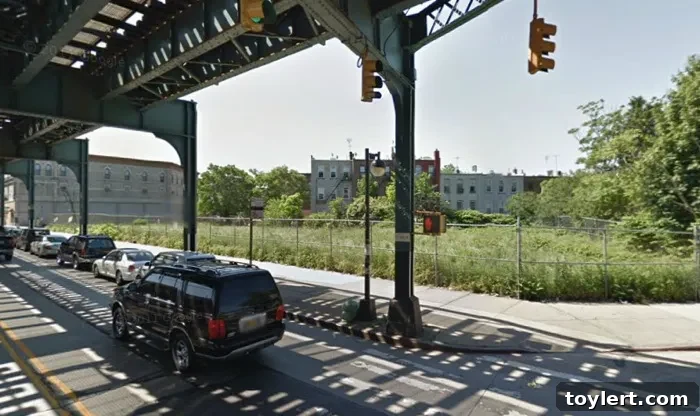
To truly understand the impact of long-term vacancy, consider the vivid example of a lot on Broadway, nestled between Decatur and Rockaway in Bed Stuy. This specific parcel, once bustling with commercial buildings, has likely stood empty for decades, a silent testament to a forgotten past. Its current state is a direct consequence of the devastating fires that swept through this area in the 1970s, leaving a trail of destruction and numerous vacant sites in their wake. For nearly half a century, this particular lot has remained undeveloped, a gaping void in a rapidly evolving neighborhood.
The existence of such a long-vacant lot illustrates the critical problem that policies like a vacant lot tax aim to address. It’s not just about aesthetic appeal; it’s about lost opportunities for housing, businesses, green spaces, and community facilities. It represents unrealized tax revenue for the city and a constant reminder of urban decay for local residents. The challenge lies in crafting policies that are robust enough to tackle these entrenched issues without creating unintended negative consequences for responsible landowners or stifling genuinely beneficial development initiatives.
Crafting Effective Urban Policy
The debate surrounding vacant lot taxes underscores the complexity of urban planning and real estate economics. While a vacant lot tax holds significant promise as a tool to incentivize development, generate revenue for affordable housing, and combat urban blight, its implementation requires careful consideration of its potential impacts on different stakeholders. Policymakers must strike a delicate balance, ensuring that such taxes are structured to target speculative landholding effectively, without unduly burdening small property owners, hindering large-scale development efforts, or penalizing those dealing with legitimate developmental challenges like environmental remediation.
Ultimately, the goal is to transform neglected urban spaces into assets that contribute positively to their communities. Whether through direct taxation, incentive programs, streamlined permitting processes, or a combination of these, unlocking the potential of vacant lots is crucial for addressing urban housing crises, fostering economic vitality, and building more equitable and sustainable cities for all residents. The discussions initiated by proposals like Bill de Blasio’s continue to shape how cities approach land use, development, and the pursuit of affordable housing in the 21st century.