Navigating New York City’s Housing Crisis: A Deep Dive into Affordability, Displacement, and the Path Forward
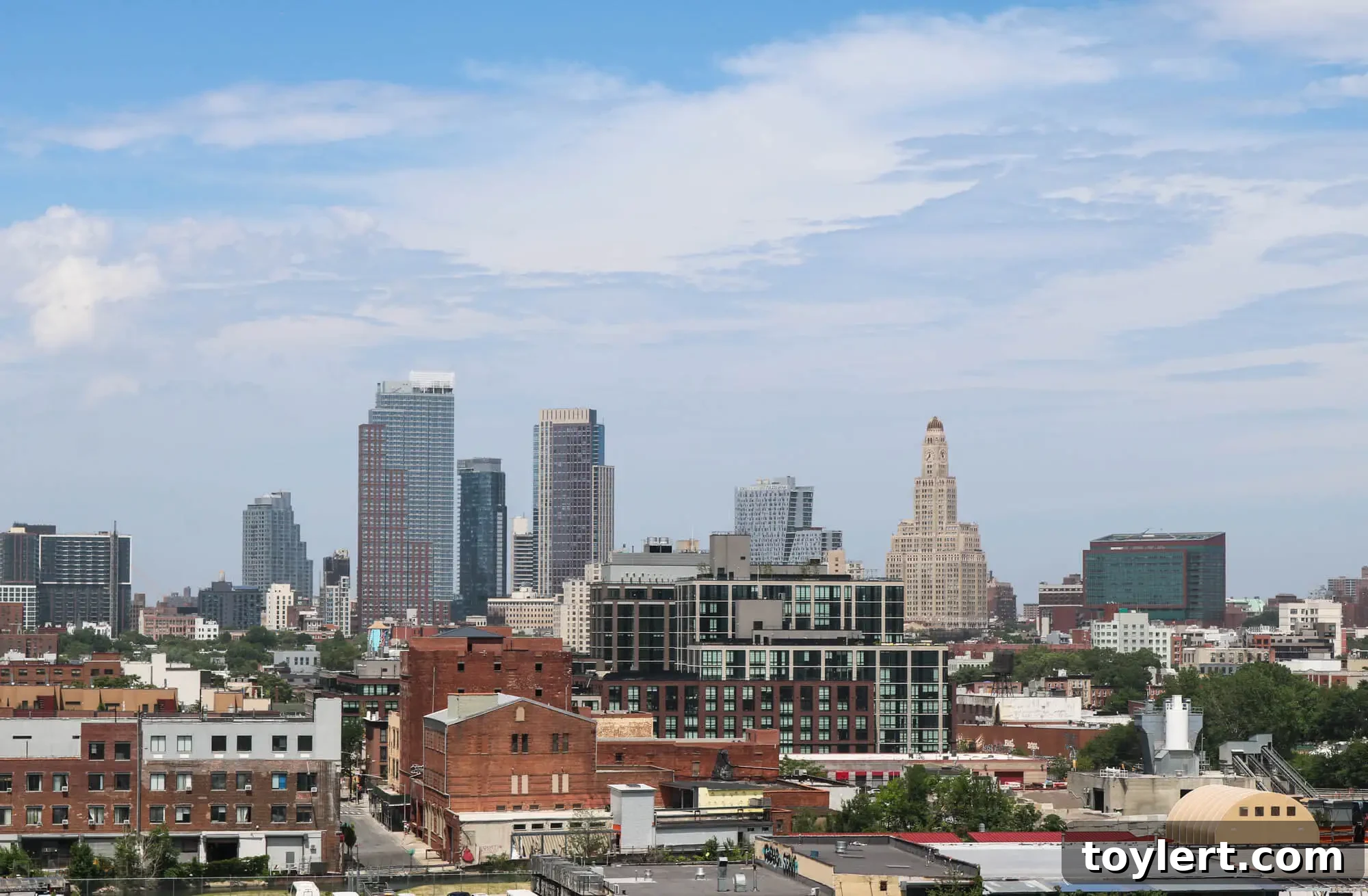
New York City, a global beacon of culture and commerce, finds itself ensnared in an escalating housing crisis that casts a long shadow over its vibrant landscape. The stark reality reveals a paradoxical situation: a burgeoning glut of high-end luxury rentals stands in sharp contrast to a severe and persistent scarcity of truly affordable housing options. This widening chasm between the opulent and the essential has dire consequences, most notably a disturbing rise in homelessness, particularly affecting the city’s working families. As Brooklyn’s iconic skyline continues its vertical ascent, so too does the struggle for economic stability, making the city increasingly unaffordable for households earning less than $80,000 annually. This challenging dynamic, as highlighted in a comprehensive report by the New York Review of Books, persisted and in some ways worsened under the previous de Blasio administration, despite its stated intentions to address the issue.
The Multifaceted Nature of NYC’s Housing Dilemma
The roots of New York City’s housing crisis are complex, deeply embedded in a combination of economic, social, and policy factors. On one hand, the city’s enduring appeal as a hub for finance, technology, arts, and education drives relentless demand. A growing population, coupled with a constant influx of new residents seeking opportunities, exerts immense pressure on a finite supply of housing units. On the other hand, the supply side faces significant constraints. Land is scarce, construction costs are among the highest in the nation due to intricate labor regulations, material expenses, and complex permitting processes. Restrictive zoning laws in many areas further limit the density and type of new development, often prioritizing existing community character over the urgent need for more housing. This imbalance between escalating demand and constrained supply creates an environment where housing costs continuously outpace wage growth for a significant portion of the population.
Adding to this complexity is the pervasive influence of global capital. New York real estate is often seen as a secure investment, attracting foreign and domestic investors who sometimes purchase properties not for residential occupancy but as wealth storage, further tightening the rental and sales markets. This speculative investment contributes to inflated property values, making homeownership an increasingly distant dream for many New Yorkers and pushing up rental prices across the board. The consequences are far-reaching, eroding the city’s economic diversity and threatening its long-term social fabric. Essential workers, artists, teachers, and service industry professionals, who are vital to the city’s functioning and vibrancy, find themselves increasingly priced out of the neighborhoods they serve.
De Blasio’s “Housing New York” Plan and Its Unintended Outcomes
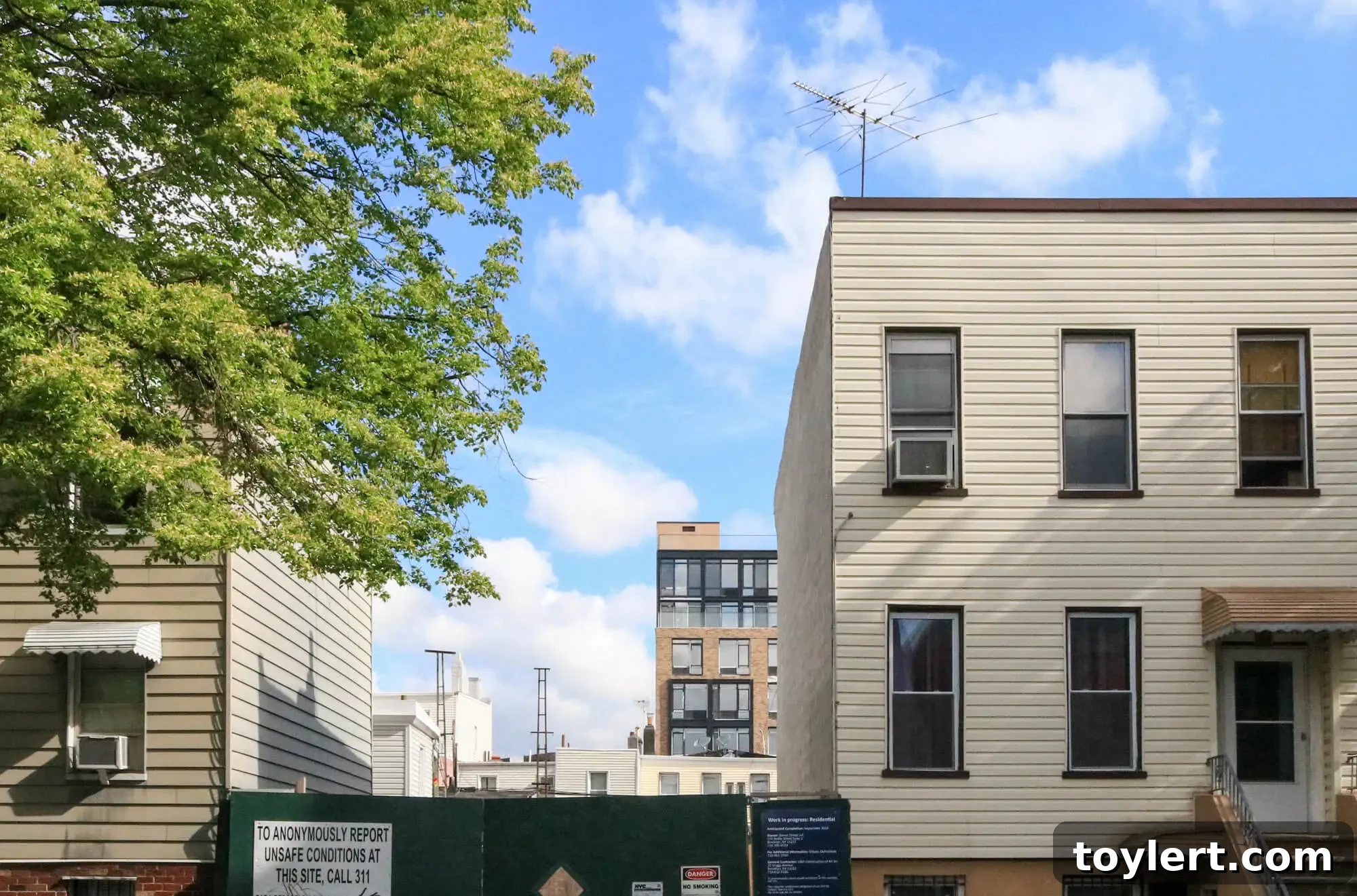
Former Mayor Bill de Blasio’s administration embarked on an ambitious plan, “Housing New York,” aiming to create or preserve 300,000 units of affordable housing. A cornerstone of this strategy involved rezoning low-income neighborhoods, particularly in outer boroughs like Brooklyn, with the intention of spurring development that would include a percentage of affordable units. The underlying theory was that by enabling higher-density construction, the city could leverage private development to achieve its affordable housing goals. However, as the aforementioned report and numerous critics contend, these very solutions often exacerbated the problem, leading to unintended and adverse outcomes.
One primary critique leveled against these policies is their role in accelerating gentrification and displacement. When neighborhoods are rezoned for higher density, it often signals an influx of new development, which in turn drives up property values and market rents. While new “affordable” units might be built, their affordability thresholds are frequently set at income levels (e.g., 80% or 120% of the Area Median Income – AMI) that are still too high for the existing low-income residents of these neighborhoods. This mismatch means that the very people who need affordable housing most are often overlooked, while rising market rents and property taxes make it impossible for them to remain in their homes or businesses. The result is a cycle of displacement, where long-standing communities, often comprising minority groups, are pushed out of their neighborhoods, losing their cultural roots and social networks.
Brooklyn: A Microcosm of the Crisis and the Cost of Hyperinvestment
Michael Greenberg, in his insightful analysis, succinctly describes Brooklyn as “emblematic of New York’s housing emergency.” The borough’s transformation over the past decade serves as a stark illustration of the forces at play. Since 2011, when the credit freeze that followed the 2008 financial crisis began to thaw, Brooklyn has experienced an unprecedented wave of “hyperinvestment” in its real estate market. Its proximity to Manhattan, coupled with its burgeoning cultural scene, vibrant neighborhoods, and the conversion of former industrial spaces into residential lofts, made it an irresistible magnet for developers and high-income residents.
This surge in investment, while bringing new construction and some economic activity, has come at a steep human cost. The past six years alone have witnessed an extraordinary amount of displacement, with the majority of those affected being African-American communities. Greenberg highlights a critical demographic fact: “Seven of Central Brooklyn’s most vulnerable neighborhoods have a combined population of 940,000, 82 percent of which was black in 2010. It is the largest concentration of African-Americans (and Afro-Caribbeans) in the United States.” These communities, historically underserved and often victims of discriminatory housing practices like redlining, found themselves at the forefront of the gentrification wave. As property values soared and rents escalated, families living on fixed incomes or working low-wage jobs could no longer afford to stay, forcing them to relocate further out into the periphery of the city or even out of New York entirely, fracturing established social networks and cultural institutions.
The Irony of Unfilled Units and the Misalignment of “Affordability”
Further compounding the crisis is a striking irony: affordable rentals aimed at higher-income households often go unfilled. This phenomenon underscores a fundamental misalignment in how “affordable” housing is defined and implemented. When units are designated as “affordable” for households earning 80% or 120% of the Area Median Income (AMI), they often cater to individuals or families who, while not wealthy, are also not among the city’s most vulnerable. Many in this income bracket, particularly those who have been in New York for some time, might prefer to purchase property rather than rent, or they may find the “affordable” rent in certain developments still too high for the value offered, especially when compared to what they might find in a market-rate apartment slightly further afield or with different amenities. This leaves a critical gap, as the units that are truly needed for very low-income families remain scarce, while a segment of “affordable” housing struggles to attract tenants.
This situation highlights the need for a more nuanced approach to affordable housing policy. It suggests that simply building “affordable” units isn’t enough; the units must be affordable at a range of income levels, with a significant focus on deeply affordable housing for those earning below 30% or 50% of the AMI. Without this focus, policies risk creating housing that doesn’t meet the needs of the most impacted communities, further exacerbating the homelessness crisis and the struggles faced by working families trying to carve out a stable existence in one of the world’s most expensive cities.
Towards Sustainable Solutions for New York’s Housing Future
Addressing New York City’s housing crisis requires a comprehensive, multi-pronged approach that moves beyond past shortcomings. Future strategies must prioritize not just the quantity of affordable units, but their true affordability relative to the incomes of the city’s most vulnerable populations. This means investing significantly in deeply affordable housing programs, expanding rental assistance initiatives, and strengthening tenant protections to prevent unlawful evictions and harassment. Policies promoting community land trusts and cooperative housing models could empower residents and ensure long-term affordability insulated from market volatility.
Furthermore, a critical re-evaluation of zoning laws is necessary. While some argue for deregulation to increase supply, others advocate for “upzoning” strategically in transit-rich areas while simultaneously implementing robust anti-displacement measures like universal affordable housing requirements and robust community benefits agreements. Streamlining the bureaucratic process for housing development, without compromising safety or quality, could also reduce construction costs and accelerate the delivery of much-needed housing. Ultimately, New York City’s future as an inclusive, diverse, and thriving metropolis hinges on its ability to confront this housing emergency head-on, ensuring that all its residents, regardless of income, can find a stable and affordable place to call home.