As summer’s vibrant warmth slowly begins its gentle retreat, Labor Day arrives, not merely as a three-day weekend, but as a profound marker for most Americans. It signifies the unofficial close of summer and heralds the bustling onset of the fall season. For Brooklynites, this holiday holds a particularly deep resonance, rooted in their borough’s rich industrial past and its pivotal role in the American labor movement. Established in 1882 as a fervent celebration of the American worker, Labor Day has been observed in Brooklyn with an unwavering spirit ever since. This article delves into the fascinating history of work in Brooklyn and explores how the borough has honored its hardworking citizens through the decades, reflecting on the evolution of labor and its enduring legacy.
The Origins of Labor Day: A Brooklyn Connection
The genesis of Labor Day is intrinsically linked to the struggles and triumphs of the American labor movement in the late 19th century. As the nation industrialized rapidly, workers faced grueling conditions, long hours, meager wages, and unsafe environments. In response, a powerful movement emerged, advocating for fair treatment and dignity in the workplace. While the first Labor Day parade is widely credited to New York City on September 5, 1882, a significant portion of the participants and organizers hailed from Brooklyn, which was then a separate, thriving city.
This inaugural parade, marching from City Hall to Union Square, saw thousands of workers take to the streets, demanding an eight-hour workday and improved conditions. It was a pivotal moment, demonstrating the collective power of labor and laying the groundwork for a national holiday. Many historians credit Peter J. McGuire, co-founder of the American Federation of Labor, and Matthew Maguire, a machinist and secretary of the Central Labor Union of New York, with the initial concept of a “workingmen’s holiday.” Their vision resonated deeply within the industrial hubs of New York, including the burgeoning factories and bustling docks of Brooklyn.
The movement quickly gained momentum, with other cities adopting similar celebrations. Within a few years, several states recognized Labor Day as a holiday. It wasn’t until 1894, following the Pullman Strike and growing pressure from labor unions, that President Grover Cleveland signed legislation making Labor Day a federal holiday, observed annually on the first Monday of September. This official recognition was a testament to the persistent efforts of countless workers and organizers, many of whom were Brooklynites dedicated to improving the lives of their communities.
Brooklyn’s Industrial Backbone: A Legacy of Hard Work
Brooklyn, often referred to as a “city of homes,” was equally a “city of work” throughout the 19th and early 20th centuries. Its strategic waterfront location and access to major shipping lanes transformed it into an industrial powerhouse. The borough’s economy was built on the sweat and skill of its diverse workforce, who toiled in a myriad of industries that shaped not just New York, but the nation itself.
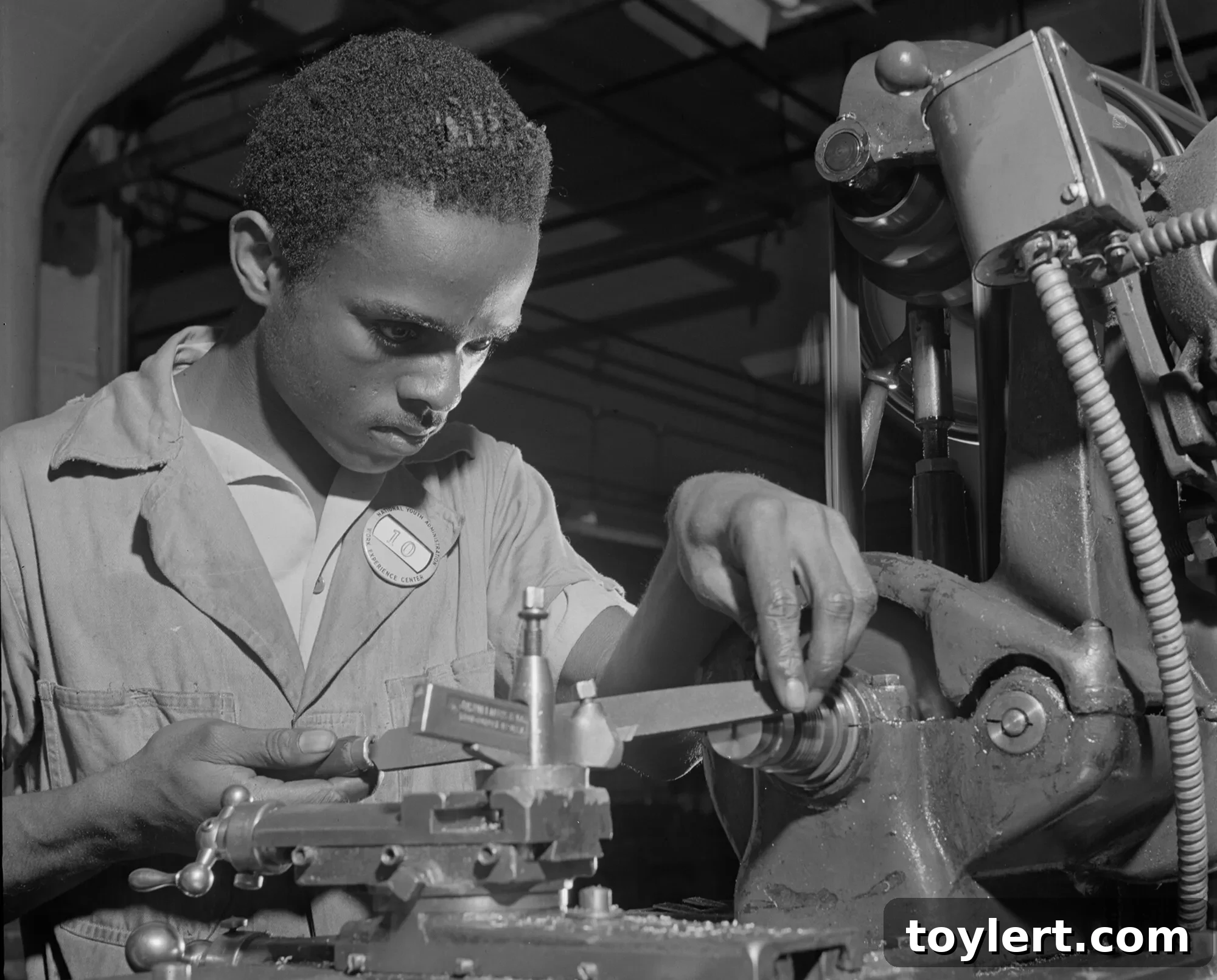
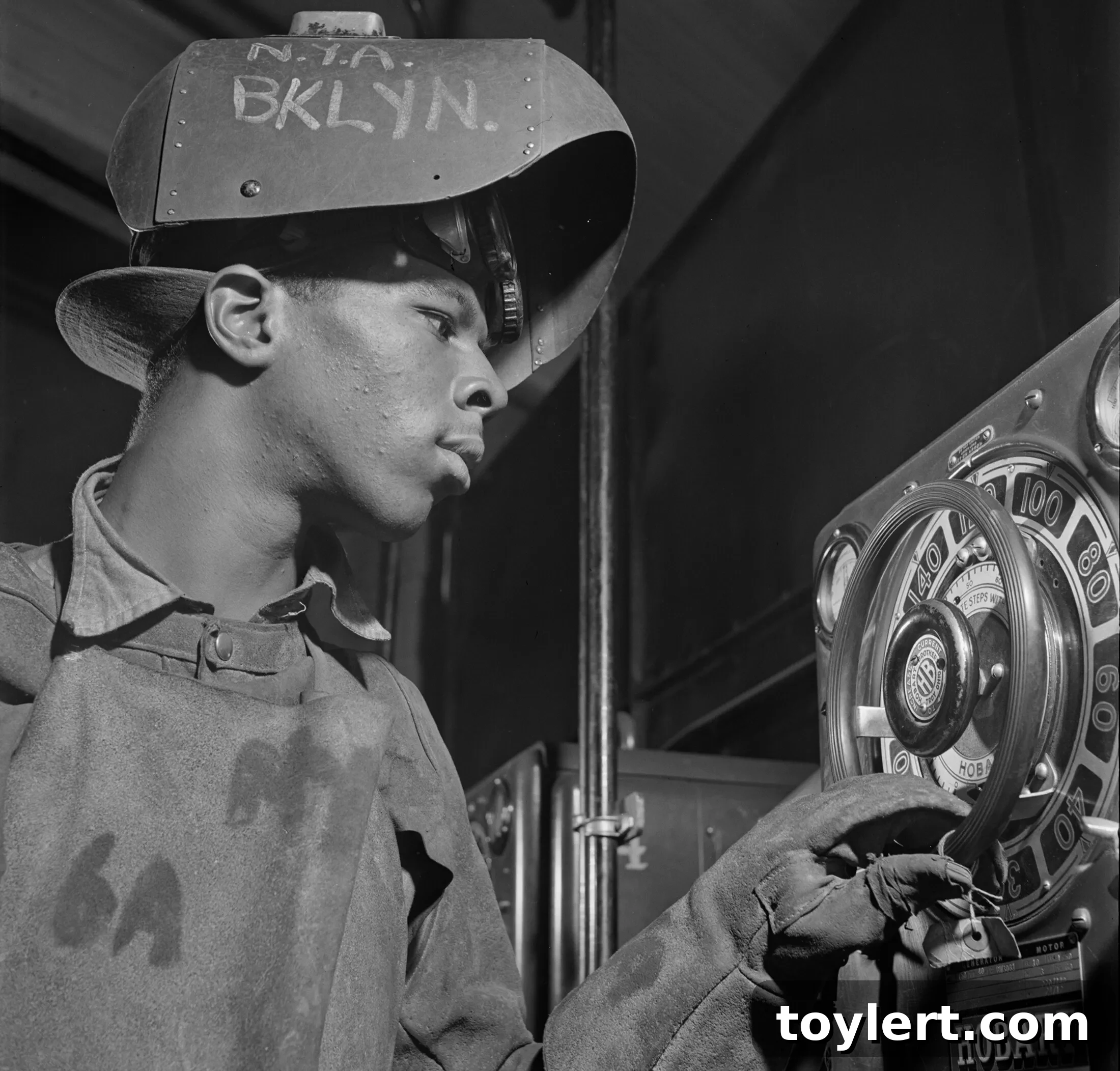
Perhaps the most iconic symbol of Brooklyn’s industrial might was the Brooklyn Navy Yard. For over 165 years, this sprawling complex was a hive of activity, constructing and repairing some of the most formidable warships in American history. Thousands of shipbuilders, welders (like the young man pictured above), engineers, and laborers found employment here, contributing directly to national defense and technological innovation. Beyond the Navy Yard, Brooklyn boasted a remarkable array of manufacturing industries. The Domino Sugar Refinery, towering over the East River, processed vast quantities of sugar, employing generations of workers. Breweries like Schaefer and Ebinger produced beverages that were enjoyed far and wide. Pharmaceutical companies, machinery manufacturers, and countless smaller workshops dotted the landscape, each contributing to the borough’s economic vitality.
The docks of Red Hook, Bushwick, and Sunset Park were ceaseless arenas of activity, with longshoremen loading and unloading goods from around the world. These port operations were critical to New York City’s status as a global trade center and provided livelihoods for thousands of immigrant families who settled in Brooklyn seeking opportunity. This rich tapestry of industrial activity not only provided jobs but also fostered a strong sense of community and solidarity among workers, laying fertile ground for the labor activism that defined the era.
Faces of Labor: Brooklynites at Work Through the Decades
Looking back at Brooklyn’s history reveals a captivating panorama of its residents hard at work. From the industrious spirit of the 19th century to the exigencies of 20th-century war production, vintage images and historical accounts vividly depict the realities of making a living in this dynamic borough. These snapshots offer more than just historical data; they provide a human connection to the broader narrative of labor and progress.
In the 19th century, work in Brooklyn was incredibly diverse and often demanding. Many families engaged in various forms of “family labor,” particularly in artisan trades or small businesses. Children, as noted in the original text, often played a role in these endeavors, whether assisting in workshops, delivering goods, or helping with household chores that contributed to the family’s economic survival. Domestic service was a significant employer, particularly for women, while men often found work as skilled craftsmen, factory hands, or dockworkers. The pace was relentless, and the social safety net virtually nonexistent, underscoring the necessity of collective action for worker rights.
As the 20th century dawned, Brooklyn’s industrial landscape continued to evolve. Larger factories replaced smaller workshops, and mass production became the norm. This era saw a dramatic increase in immigrant labor, with new arrivals from Europe and beyond finding their first foothold in America within Brooklyn’s factories and burgeoning service industries. The growth of unions provided a crucial counterbalance to powerful industrialists, advocating for better wages, safer conditions, and shorter workdays. Brooklyn became a hotbed of union activity, with many landmark labor struggles unfolding within its boundaries.
The mid-20th century brought new challenges and opportunities, particularly with the advent of World War I and World War II. Brooklyn transformed into a vital cog in the nation’s war machine. The Brooklyn Navy Yard, in particular, was in constant operation, producing and repairing an astonishing number of naval vessels. This period also saw a significant shift in the workforce, as women stepped into roles traditionally held by men, becoming welders, riveters, and factory workers – the real-life “Rosie the Riveters” who kept the industrial engines running while men served overseas. The image of the young welder from 1942 perfectly encapsulates this era of national effort and vocational training, showing the specific skills acquired to support the war effort.
After the wars, Brooklyn’s economy began a slow but significant transition. While heavy industry eventually declined due to globalization and technological shifts, the borough reinvented itself. The focus shifted towards a more diverse economy, embracing service industries, healthcare, education, and eventually, the creative and tech sectors that define much of modern Brooklyn.
Celebrating Labor Day in Brooklyn: An Evolving Tradition
For Brooklynites, Labor Day has always been more than just a federal holiday; it’s a deeply ingrained tradition. Beyond the initial parades that established the holiday, Brooklyn has embraced various ways to celebrate the achievements and spirit of its workers. Family picnics in Prospect Park, community gatherings, and festive block parties have become synonymous with the holiday weekend, offering a well-deserved respite after a long summer.
One of the most prominent and vibrant celebrations around Labor Day in Brooklyn is the West Indian Day Parade and Carnival. While not directly a “Labor Day” parade in the traditional sense, its timing on the first Monday of September has made it an integral part of the borough’s Labor Day weekend festivities. This spectacular event celebrates Caribbean culture, heritage, and the contributions of the West Indian community to the fabric of Brooklyn and New York City. Its joyous energy and colorful spectacle draw millions, turning Eastern Parkway into a dynamic showcase of music, dance, and community spirit, underscoring the diverse ways Brooklynites celebrate and come together.
The holiday also serves as a poignant reminder of the ongoing importance of advocating for workers’ rights. Even as the nature of work evolves, the core principles of fair wages, safe conditions, and the dignity of labor remain paramount. Brooklyn’s numerous community organizations, local businesses, and cultural institutions often host events that reflect on this legacy, ensuring that the historical context of Labor Day is not forgotten amidst the end-of-summer revelry.
The Evolving Landscape of Work in Contemporary Brooklyn
Today, Brooklyn continues to be a hub of innovation and diverse labor, albeit with a significantly different economic landscape than a century ago. While the heavy industries have largely faded, replaced by parks and renovated spaces, the entrepreneurial spirit and a strong work ethic endure. Brooklyn is now celebrated globally for its burgeoning tech scene, creative industries, and vibrant small business ecosystem. From independent artists and designers in Bushwick to tech startups in DUMBO, and the world-renowned culinary establishments across the borough, Brooklynites continue to shape their livelihoods with creativity and dedication.
Healthcare and education sectors are significant employers, reflecting the borough’s growing population and its commitment to public services. The waterfront, once dominated by industrial shipping, has been revitalized with new parks, residential developments, and cultural institutions, creating new jobs and transforming the borough’s aesthetic. This modern Brooklyn workforce, while engaged in different professions, carries forward the legacy of perseverance, community, and innovation that has always defined the borough’s labor history.
Reflecting on Labor’s Enduring Legacy in Brooklyn
As Brooklynites observe Labor Day, whether with a family barbecue, a community gathering, or by simply enjoying a well-deserved day of rest, the underlying significance of the holiday remains. It is a moment to reflect on the immense contributions of generations of workers who built this borough, from the foundational infrastructure to the cultural institutions that define it today. It acknowledges the struggles endured, the victories won, and the ongoing efforts to ensure equitable and dignified work for all.
The history of Labor Day in Brooklyn is a testament to the power of collective action, the resilience of its people, and the borough’s continuous transformation. It’s a holiday that honors the past, celebrates the present, and inspires future generations to continue striving for a society where all labor is valued and respected. This Labor Day, we pause to appreciate every individual who contributes to the vibrant tapestry of Brooklyn, ensuring its continued growth and prosperity.
Explore More: Brooklynites at Work (Historical Photos)
In honor of Labor Day, we invite you to delve deeper into Brooklyn’s past through captivating historical images. These vintage photographs showcase Brooklynites from various walks of life and eras, diligently at work throughout the borough. From children participating in family labor in the bustling 19th century to the intensive war production efforts of the 20th century, these images vividly depict the diverse realities and unwavering spirit of making a living in the ever-evolving city of Brooklyn.