The Fading Colors of a Counterculture: The Melting Pot and Boerum Hill’s Transformation
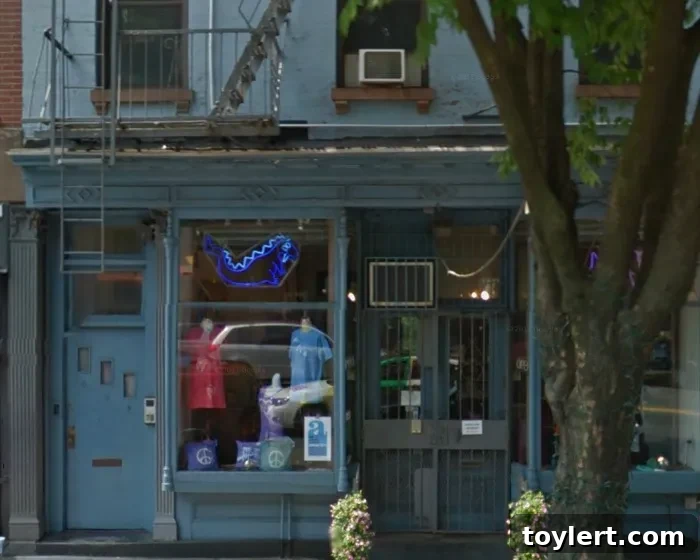
For over four decades, The Melting Pot stood as a vibrant, if quiet, testament to a different era on Atlantic Avenue’s antique row in Boerum Hill, Brooklyn. When Nancy Cogen first opened the doors to her batik store 41 years ago, the neighborhood pulsed with a unique bohemian energy. It was a landscape of weathered brownstones, some housing struggling families in rooming houses, others serving as communal havens for artists and free spirits. In those days, a brownstone, a coveted piece of Brooklyn real estate today, could be acquired for a mere $25,000. This September, however, marks the end of an extraordinary journey, as The Melting Pot is set to close its doors for good. The primary reason, as The New York Times reported, is the increasing unavailability of the specialized supplies essential for creating intricate hand-dyed batik fabrics.
The closure of The Melting Pot is more than just the end of a retail business; it is a profound symbol, a “coda of sorts,” marking the final curtain call for the heady days of hippiedom that once flourished in Brooklyn’s more raffish, accessible quarters and across much of New York City. Nancy Cogen, like many of her original clientele—the actual hippies and their fellow travelers—has reached an age where the concerns have shifted from social change and artistic revolution to the more immediate realities of retirement and Social Security. The very fabric of Boerum Hill, once a haven for such ideals, has undergone a breathtaking metamorphosis.
From Bohemian Enclave to Upscale Urban Hub: The Evolution of Boerum Hill
The brownstones that once sheltered communes and offered affordable living to artists and activists for a mere fraction of today’s prices have been meticulously renovated and repurposed. They are no longer the domain of bohemians but have become coveted residences, fetching upwards of $4,000,000 from discerning buyers, including prominent bankers and Hollywood actors like Ethan Hawke. This dramatic surge in property values and the accompanying demographic shift paint a vivid picture of urban gentrification, transforming the very essence of a neighborhood that once prided itself on its counter-cultural spirit and affordability.
The physical landscape of Boerum Hill mirrors this transformation. Where independent bookstores and eclectic cafes once thrived, now yoga studios are as ubiquitous as Starbucks cafes, signaling a shift towards a more polished, upscale urban experience. The unique, often gritty, charm that characterized “hippie Brooklyn” has largely faded, leaving behind only faint echoes of its former self. The story of The Melting Pot and Boerum Hill is a quintessential tale of urban evolution, illustrating the powerful forces that reshape cities and the poignant loss of the unique cultures that once defined them.
The Art of Batik: A Craft Lost to Time?
Batik, the ancient wax-resist dyeing technique that was the heart and soul of The Melting Pot, is a craft steeped in history and artistry. Originating in Indonesia, particularly on the island of Java, batik involves meticulously applying wax to fabric to create patterns, then dyeing the cloth. The waxed areas resist the dye, resulting in intricate designs when the wax is removed. This process can be repeated multiple times with different colors, leading to layers of stunning detail and vibrant hues. Each piece of handmade batik is unique, a labor of love that reflects the skill and patience of its maker. For Nancy Cogen, it was not merely a business but a passion, a way to share this beautiful, tactile art form with her community.
The store was a treasure trove of vibrant fabrics, intricate designs, and the earthy aroma of natural dyes. It offered not just finished products but also the raw materials and tools for enthusiasts to explore the craft themselves. The challenge of sourcing these specific materials – specialized waxes, dyes, and tools – in a globalized economy increasingly geared towards mass production highlights a broader issue: the vulnerability of niche crafts and independent artisans. When supply chains for specialized materials dwindle, unique art forms and the businesses that sustain them face an existential threat, making The Melting Pot’s closure a symptom of a larger cultural shift away from the handmade and towards the homogeneous.
Echoes of Hippiedom: Remembering Brooklyn’s Counterculture
The “hippie era” in New York City, and particularly in Brooklyn, was more than just a fashion statement; it was a socio-cultural phenomenon. It embodied a spirit of rebellion, a quest for authenticity, communal living, artistic freedom, and a desire for social and political change. Neighborhoods like Boerum Hill, with their affordable housing and relatively unpolished charm, became natural magnets for this counterculture. Artists, musicians, writers, and activists flocked to these areas, establishing collectives, independent art spaces, and businesses that reflected their values. The Melting Pot, in its unassuming way, was a cornerstone of this movement, offering handcrafted goods that stood in stark contrast to the burgeoning consumerism of the mainstream.
These were the days when creativity bloomed in unexpected corners, when community was forged in shared ideals, and when the pursuit of an alternative lifestyle was paramount. Brownstones were not just buildings but canvases for communal experiments, places where ideas were exchanged, and where a different vision for society was nurtured. The aging of this generation, as the New York Times so aptly noted, means that many of these pioneers are now contemplating their golden years, a natural transition that also marks the symbolic winding down of the movement they helped define. Their concerns have naturally shifted from grand societal transformations to more personal, pragmatic ones, signifying a generational passage that inevitably alters the landscape of a city.
Gentrification: A Complex Narrative of Urban Change
The story of Boerum Hill is a quintessential case study in urban gentrification, a phenomenon that has reshaped countless neighborhoods across the globe. Gentrification, in essence, is the process of renovating and improving a house or district so that it conforms to middle-class taste, often leading to increased property values and the displacement of earlier, usually poorer, residents. In Boerum Hill, this process has been particularly pronounced. What began as an organic revitalization by artists and young professionals seeking affordable alternatives to Manhattan eventually attracted a wealthier demographic, drawn by the neighborhood’s newfound charm, proximity to Manhattan, and architectural beauty.
The benefits of gentrification are often touted: increased tax revenues, improved infrastructure, a decrease in crime rates, and the infusion of new businesses and amenities. However, the costs are equally significant, if not more so, for the original community. Long-standing residents and small businesses, unable to cope with escalating rents and property taxes, are often forced out, leading to a loss of cultural diversity and the erosion of the neighborhood’s unique character. The arrival of upscale boutiques, gourmet restaurants, and high-end fitness studios, while offering convenience to new residents, often signifies the departure of the independent, quirky establishments that once defined the area. Boerum Hill, once a melting pot of diverse socio-economic groups and artistic expression, has arguably become more homogenous, albeit more affluent.
The End of an Era, The Dawn of Another: Contemplating Brooklyn’s Future
The closure of The Melting Pot serves as a poignant reminder that cities are not static entities; they are living, breathing organisms constantly in flux. Each closure, each new development, contributes to the ongoing narrative of urban change. While the loss of such a unique establishment and the broader disappearance of “hippie Brooklyn” might evoke nostalgia and a sense of loss for some, it is also a testament to the city’s enduring dynamism and its capacity for reinvention. The challenge lies in balancing progress and development with the preservation of cultural heritage and the promotion of inclusivity.
What remains of the counterculture spirit that once thrived in Boerum Hill? Perhaps its legacy endures in the independent thought of its residents, the continued appreciation for art and craft, and a subtle undercurrent of community engagement. However, the physical manifestations—the affordable brownstones, the communal living spaces, the bohemian storefronts—have largely been swept away by the currents of economic prosperity and urban renewal. As The Melting Pot extinguishes its last flame, it leaves behind a rich legacy of vibrant colors and the indelible memory of an era when Brooklyn offered a different kind of dream. Its closing is not just the end of a store, but a final, quiet acknowledgment of a neighborhood’s complete transformation, inviting us to reflect on the nature of change and the ever-evolving identity of our urban landscapes.