Brooklyn’s Literary Soul: A Deep Dive into its Iconic Authors and Revered Libraries
Brooklyn, New York, is more than just a borough; it’s a living, breathing testament to the power of the written word. Throughout its storied history, Brooklyn has served as both a crucible and a muse for countless literary giants, embedding “writer’s ink” deep within its very foundations. From the bustling streets of Williamsburg to the quiet elegance of Brooklyn Heights, this vibrant locale has continuously inspired, nurtured, and celebrated some of America’s most influential voices.
The roll call of authors linked to Brooklyn is astonishingly long and diverse. Legendary figures like Walt Whitman, the “Poet of Democracy,” Truman Capote, known for his incisive prose, the prolific science fiction master Isaac Asimov, the insightful Richard Wright, and the distinctive poet Marianne Moore all either drew their first breath here, honed their craft within its dynamic confines, or found profound inspiration in its unique tapestry of cultures and experiences. Alongside them, contemporary luminaries such as Jonathan Safran Foer, Jennifer Egan, Paul Auster, Colson Whitehead, and Jacqueline Woodson continue to enrich Brooklyn’s literary legacy, ensuring its magnetic pull on creative minds endures.
But Brooklyn’s literary narrative isn’t solely defined by its celebrated authors; it’s also inextricably linked to the sacred spaces where words are preserved, shared, and born: its libraries. These institutions, particularly the renowned Brooklyn Public Library system, stand as monumental anchors in the borough’s intellectual landscape, serving as both havens for contemplation and vibrant community hubs. Through the intertwined stories of its writers and its libraries, we can truly understand the profound and enduring literary heritage that makes Brooklyn so unique.
Brooklyn: The Muse for Literary Minds
What is it about Brooklyn that has consistently captivated the imagination of so many writers? Perhaps it’s the borough’s unparalleled diversity, a vibrant mosaic of cultures, languages, and socio-economic strata that provides an endless wellspring of human experience. From the working-class narratives of Sunset Park to the bohemian enclaves of Greenpoint, every neighborhood tells a different story, offering a rich tapestry for authors to weave their tales.
For many, Brooklyn offers a distinct sense of place – a gritty authenticity blended with a burgeoning sophistication. It’s a borough of brownstones and bodegas, sprawling parks and intimate cafes, towering bridges and hidden alleyways. This intricate blend of the old and new, the grand and the everyday, provides a fertile ground for character development, plot twists, and philosophical musings. Writers often seek environments that offer both stimulation and solitude, and Brooklyn, with its endless nooks and crannies, delivers both in abundance. The rhythmic pulse of city life, coupled with the quiet respite found in its many parks or within the hallowed halls of its libraries, creates an ideal ecosystem for creative thought.
Legendary Authors and Their Brooklyn Chapters
To truly appreciate Brooklyn’s literary impact, one must delve into the lives and works of the authors who called it home:
- Walt Whitman (1819-1892): Often called “America’s Bard,” Whitman’s formative years and early career were deeply rooted in Brooklyn. He worked as an editor for the *Brooklyn Eagle* and lived in various parts of the borough. It was here that he began to develop the revolutionary poetic style that would culminate in *Leaves of Grass*, a work that celebrated American democracy, individualism, and the common man – themes undoubtedly influenced by the diverse populace he observed daily on Brooklyn’s streets and ferries.
- Truman Capote (1924-1984): The celebrated author of *Breakfast at Tiffany’s* and *In Cold Blood* resided in a picturesque brownstone in Brooklyn Heights for two decades. His time in Brooklyn was incredibly productive, and the sophisticated, somewhat insulated world of Brooklyn Heights likely influenced the elegant yet often dark undertones of his work. It’s easy to imagine him observing the intricate social dynamics that would later inspire his compelling narratives.
- Richard Wright (1908-1960): A seminal figure in African American literature, Wright spent significant time in Fort Greene, Brooklyn, following his move north from the segregated South. His experiences with racism and the complexities of urban life in America deeply informed his groundbreaking novels like *Native Son* and his powerful memoir *Black Boy*. Brooklyn provided a backdrop for his continued exploration of race, identity, and the American dream.
- Isaac Asimov (1920-1992): The revered science fiction writer, whose prolific output includes the *Foundation* series and *I, Robot*, spent a significant portion of his adult life in Brooklyn. He was a long-time resident of Prospect Heights and a professor at Boston University, but his intellectual world often revolved around the academic and cultural vibrancy of his Brooklyn surroundings. His meticulous mind and vast curiosity found fertile ground in the borough.
- Marianne Moore (1887-1972): An eccentric and highly influential modernist poet, Moore lived in Fort Greene, Brooklyn, for over 30 years. Her distinctive, precise, and often analytical poetic style developed profoundly during her time there. She drew inspiration from her observations of urban life, animals, and art, frequently incorporating them into her highly structured and intellectually rigorous verse. Her presence solidified Brooklyn’s reputation as a haven for experimental and profound literary artistry.
- Pete Hamill (1935-2020): A true Brooklyn native, journalist, novelist, and chronicler of New York City, Hamill embodied the spirit of the borough. His work, including *A Drinking Life* and countless newspaper columns, provided an authentic voice for the working class and captured the changing face of Brooklyn and New York with a keen eye and deep affection.
- Nelson George (b. 1957): Another Brooklyn-born talent, George is a prominent author, journalist, and filmmaker known for his insightful work on African American culture, music, and urban life. His books, such as *The Death of Rhythm and Blues*, are deeply informed by his Brooklyn roots and provide a crucial perspective on the borough’s cultural evolution.
The Enduring Power of Brooklyn’s Libraries
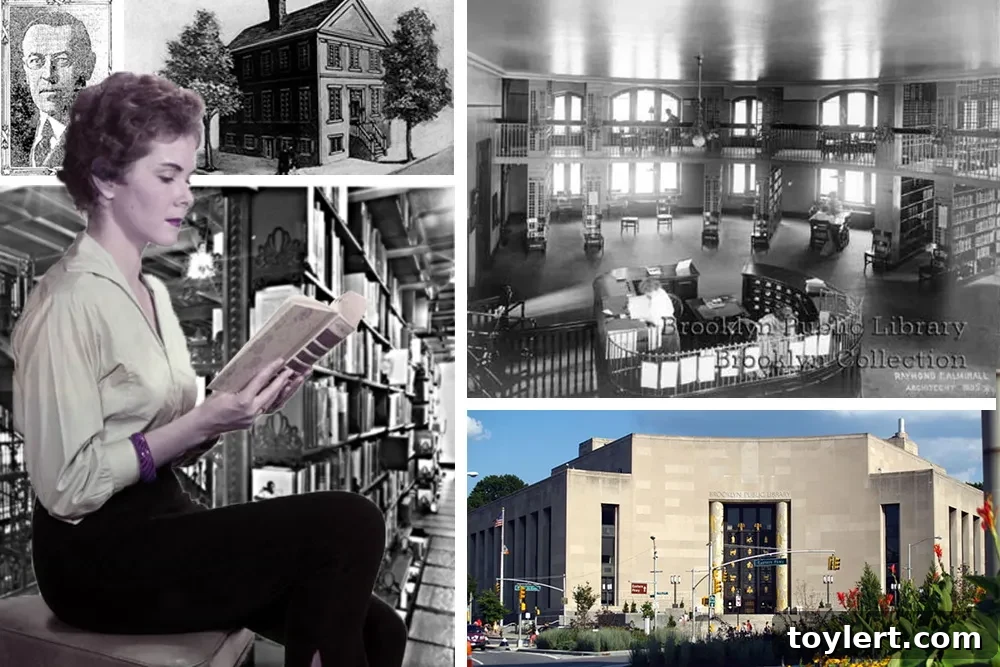
Just as the authors shaped Brooklyn’s literary identity, so too did its libraries provide the essential infrastructure for literacy, learning, and creative incubation. The Brooklyn Public Library (BPL) system is a jewel in the borough’s crown, a network of 60 branches serving millions of residents. More than just repositories of books, these libraries are vital community institutions, offering everything from early literacy programs to author readings, job search assistance, and access to digital resources.
At the heart of the system lies the iconic Central Library at Grand Army Plaza. This magnificent Beaux-Arts building, with its towering bronze doors depicting scenes from American literature, is more than just a library; it’s a cathedral of knowledge. Its vast collections, quiet reading rooms, and impressive architecture have undoubtedly inspired countless writers, researchers, and thinkers over the generations. For many aspiring authors, the BPL Central Library was, and remains, a place of quiet refuge, a sanctuary where ideas can germinate and grow, surrounded by the wisdom of ages.
Beyond the grandeur of the Central Library, each neighborhood branch plays a critical role in fostering literacy and creativity at the grassroots level. Libraries in diverse neighborhoods like Bushwick, Flatbush, and Brighton Beach reflect the unique character of their communities, offering tailored programs and resources that speak directly to the needs and aspirations of local residents. These branches are often the first introduction to the world of books for many Brooklynites, sowing the seeds of future literary endeavors.
Libraries in Brooklyn have historically served as democratic spaces, open to all regardless of background, providing free access to information and culture. For writers, this means an unparalleled resource for research, a quiet place to work away from the distractions of home, and a venue for connecting with readers and fellow creatives. They host workshops, book clubs, and author events, creating a vibrant literary ecosystem that extends far beyond the printed page.
Brooklyn’s Contemporary Literary Scene
The literary flame in Brooklyn continues to burn brightly. Today, the borough remains a magnet for writers, boasting a thriving contemporary scene characterized by independent bookstores, literary festivals, and a new generation of groundbreaking authors. Neighborhoods like Fort Greene, Park Slope, and Greenpoint are dotted with charming independent bookstores suches as Books Are Magic, Greenlight Bookstore, and Community Bookstore, which serve as vital community hubs, hosting readings and fostering discussions.
The annual Brooklyn Book Festival is a testament to the borough’s enduring literary power, drawing hundreds of authors and tens of thousands of readers for a celebration of literature, ideas, and community. This festival, one of the largest free literary events in the country, highlights Brooklyn’s unique ability to bring together diverse voices and perspectives, cementing its status as a literary capital.
Writers like Jonathan Safran Foer, known for *Everything Is Illuminated*, continue to push literary boundaries from their Brooklyn homes. Paul Auster’s distinctive postmodern narratives are deeply intertwined with the borough’s streets and atmosphere. Jennifer Egan, Colson Whitehead, and Jacqueline Woodson are just a few of the contemporary authors who draw on Brooklyn’s rich tapestry to create their acclaimed works, contributing to the borough’s ongoing story as a fertile ground for literary excellence.
An Everlasting Legacy of Words
Brooklyn’s literary history is not a static collection of past achievements; it is a dynamic, evolving narrative that continues to unfold with each new voice. The borough’s unique blend of grit and charm, its unparalleled diversity, and its unwavering commitment to intellectual inquiry have ensured its place as a cornerstone of American literature. From the poetic verses of Walt Whitman to the compelling narratives of today’s literary stars, Brooklyn has consistently proven itself to be a place where words come alive, where stories find their voice, and where the enduring power of literature is cherished and celebrated.
The relationship between Brooklyn, its authors, and its libraries is symbiotic. The borough inspires the writers, the writers immortalize the borough in their work, and the libraries preserve and propagate this rich literary heritage for future generations. As long as there are stories to be told and words to be written, Brooklyn will undoubtedly remain a beacon for literary aspiration and achievement, its literary soul tattooed deep within its very fabric.