Transforming Brooklyn: The Ambitious Brooklyn Waterfront Greenway Project
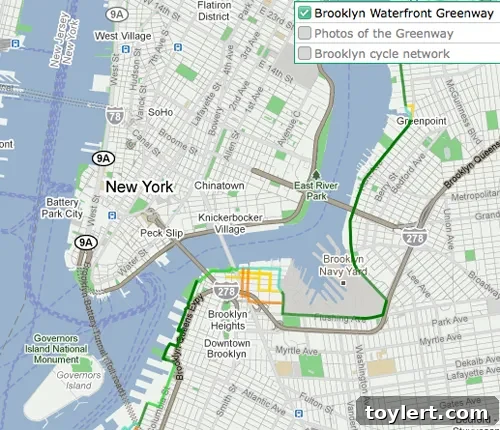
Brooklyn, a borough renowned for its vibrant neighborhoods and dynamic urban landscape, is on the cusp of a significant transformation. The long-envisioned Brooklyn Waterfront Greenway, a monumental project designed to connect the entire borough’s waterfront, is steadily moving from drawing boards to construction sites. Spearheaded by the Department of Transportation (DOT), this ambitious initiative aims to create a continuous 14-mile pedestrian and bike path stretching from the southern tip of Bay Ridge all the way to Greenpoint in the north, with future plans to extend its reach into Queens. This comprehensive greenway promises to redefine urban mobility, enhance community access to the waterfront, and foster a more sustainable, connected Brooklyn.
The latest updates indicate substantial progress in securing the necessary permissions and approvals for various segments of the greenway. As reported by The Wall Street Journal, construction is slated to commence in Red Hook this summer, marking a pivotal moment for this transformative urban planning endeavor. Once fully realized, the Brooklyn Waterfront Greenway will not only serve as a vital transportation artery for cyclists and pedestrians but also as a scenic corridor, offering unparalleled views of the harbor, the Manhattan skyline, and Brooklyn’s diverse waterfront communities.
The city Department of Transportation has put three more sections of the planned 14-mile Brooklyn Waterfront Greenway on the construction schedule, pushing forward a project that will ultimately simplify travel for pedestrians and cyclists between Greenpoint and Bay Ridge. The DOT hopes to begin construction on the pedestrian-and-bike path in parts of Red Hook this summer. Preliminary plans for two additional portions of the greenway have also been approved in Greenpoint and near the Brooklyn Navy Yard, indicating a robust progression towards the project’s completion.
A Vision for Connectivity and Community Enhancement
The core philosophy behind the Brooklyn Waterfront Greenway is rooted in connectivity. For too long, segments of Brooklyn’s waterfront have remained fragmented, disconnected, or inaccessible to the public. This project seeks to stitch together these disparate pieces, creating a cohesive urban fabric that promotes active lifestyles, environmental stewardship, and community cohesion. By providing a dedicated and safe route for bikes and pedestrians, the greenway addresses several critical urban challenges:
- Improved Mobility and Commuting: Offering a viable and enjoyable alternative to vehicular traffic, particularly for daily commutes.
- Enhanced Recreation and Public Health: Encouraging outdoor activities, cycling, walking, and access to green spaces, thereby contributing to the physical and mental well-being of residents.
- Economic Vibrancy: Attracting visitors and supporting local businesses along its route, potentially boosting tourism and neighborhood economies.
- Environmental Sustainability: Promoting non-motorized transport, integrating green infrastructure, and fostering urban biodiversity through native plantings.
- Community Linkages: Bridging the gaps between distinct neighborhoods, fostering a greater sense of borough-wide identity and shared public space.
This ambitious undertaking isn’t just about paving paths; it’s about reimagining how Brooklynites interact with their city and its most precious natural asset – the waterfront. It represents a significant investment in the borough’s future, promising a healthier, more accessible, and environmentally conscious urban environment for generations to come.
Spotlight on Key Development Areas: Red Hook, Greenpoint, and Brooklyn Navy Yard
The phased implementation of the Brooklyn Waterfront Greenway means that certain neighborhoods will see improvements sooner than others. The upcoming construction in Red Hook, along with approved preliminary plans for Greenpoint and the Brooklyn Navy Yard, highlight the diverse nature of the project and its tailored approach to each unique community.
Red Hook’s Transformative Bike Lanes
The commencement of construction in Red Hook this summer signifies a major leap forward. This portion of the greenway is strategically designed to enhance accessibility for cyclists, a growing demographic in the borough. The plans include extending the existing Columbia Street bike lanes, seamlessly integrating them with a park situated near Fairway, a popular local destination. Furthermore, Van Brunt Street, a central artery in Red Hook, is also slated to receive new dedicated bike lanes. These additions are estimated to cost approximately $12.5 million, an investment that is expected to yield substantial benefits for local residents and businesses alike.
Red Hook, with its distinctive blend of industrial heritage, creative spaces, and burgeoning residential areas, stands to gain immensely from these infrastructure improvements. Enhanced bike connectivity will not only make it safer and easier for residents to commute but also encourage more visitors to explore the neighborhood’s unique shops, restaurants, and waterfront attractions. This improved accessibility is crucial for a neighborhood that has historically faced transportation challenges, further embedding Red Hook into the broader Brooklyn network.
Greening the Brooklyn Navy Yard
Another pivotal section of the greenway will unfold within and around the historic Brooklyn Navy Yard. This transformation is poised to be significant, introducing new bike lanes along Flushing Avenue, a critical thoroughfare that borders the Yard. Beyond improved cycling infrastructure, the plans envision new parks and pedestrian paths within the Yard itself. One particularly innovative concept being explored is the creation of a meadow featuring native plants, complemented by a raised walkway. This would not only offer a unique recreational and educational experience but also contribute to the ecological health of the area by fostering biodiversity.
The Brooklyn Navy Yard, once a cornerstone of American maritime power, has evolved into a thriving industrial park and innovation hub. Integrating the greenway here underscores the project’s commitment to blending history with modernity and industry with ecology. The new paths and green spaces will provide employees and visitors with beautiful, accessible areas for breaks and recreation, further enhancing the Yard’s appeal as a vibrant urban campus. The native plant meadow, in particular, showcases a thoughtful approach to environmental design, turning a former industrial zone into a habitat for local flora and fauna, and an educational asset for the community.
Greenpoint’s Connection to the Future
While details for Greenpoint are still in preliminary stages, the approval of plans for this northern Brooklyn neighborhood is vital. Greenpoint serves as a crucial link in the chain, connecting the extensive greenway to areas further north and potentially to the proposed extension into Queens. This segment of the greenway will likely navigate Greenpoint’s unique landscape, which includes a mix of industrial sites, residential streets, and burgeoning waterfront developments. Its completion will unlock significant recreational and commuting opportunities for residents, providing direct access to the rest of the greenway and enhancing the neighborhood’s overall quality of life.
Project Scope, Funding, and the Road Ahead
The Brooklyn Waterfront Greenway is not a single construction project but rather a meticulously planned series of 23 separate capital projects, a testament to the complexity of navigating Brooklyn’s dense urban environment and diverse infrastructure. This multi-project approach allows for greater flexibility and phased implementation, addressing specific challenges and opportunities within each segment.
Of the ambitious 14-mile stretch, approximately five miles of the path already exist, forming foundational elements upon which the new sections will be built. These existing segments, often integrated with parks like Brooklyn Bridge Park or parts of the Bay Ridge promenade, demonstrate the feasibility and immediate benefits of such urban green infrastructure. The total estimated cost for the entire greenway ranges from $150 to $200 million, a substantial investment that reflects the project’s scale and impact.
Funding for this massive undertaking is equally diverse, drawing from a variety of sources including city agencies, private contributions, and federal grants. This multi-faceted funding model highlights the widespread support and recognized importance of the greenway across different governmental levels and private sectors. It underscores a shared vision for a more sustainable and connected Brooklyn, emphasizing a collaborative effort to bring this dream to fruition.
It’s important to clarify, as noted by The Wall Street Journal, that the DOT’s separate plan to remove some of Vinegar Hill’s historic cobblestones is not part of the broader Brooklyn Waterfront Greenway initiative. This distinction helps to manage public expectations and ensure that specific neighborhood-level projects are not conflated with the larger, overarching greenway development.
Challenges and the Enduring Vision
Undertaking a project of this magnitude in a dense urban environment like Brooklyn is not without its challenges. Navigating complex land ownership, existing industrial infrastructure, and diverse community needs requires careful planning, extensive stakeholder engagement, and continuous adaptation. Securing ongoing funding, managing construction logistics in active urban areas, and ensuring long-term maintenance are all critical aspects that the project team must address.
However, the enduring vision for the Brooklyn Waterfront Greenway transcends these hurdles. The ultimate goal of connecting the greenway to Queens signifies an even broader regional impact, creating a seamless network of pedestrian and cycling paths that could revolutionize how New Yorkers experience their city. This expansion would unlock even greater potential for sustainable commuting, recreational tourism, and regional connectivity, solidifying the greenway’s status as a landmark urban achievement.
A Greener, More Connected Future for Brooklyn
The Brooklyn Waterfront Greenway represents more than just a path; it is a powerful symbol of urban renewal, environmental consciousness, and community empowerment. As construction progresses, especially with the imminent start in Red Hook and the plans for the Brooklyn Navy Yard and Greenpoint, Brooklyn is moving closer to realizing a dream of a waterfront that is not just beautiful, but also accessible, functional, and deeply integrated into the daily lives of its residents.
This ambitious project will not only redefine Brooklyn’s physical landscape but also its identity as a forward-thinking, sustainable urban center. By uniting its diverse neighborhoods through a shared green artery, the Brooklyn Waterfront Greenway is paving the way for a healthier, more connected, and environmentally resilient future for one of New York City’s most dynamic boroughs.