
Editor’s note: Welcome to the 42nd installment of Brownstone Boys Reno, your essential guide to the intricate world of historic home renovation. We’re thrilled to continue sharing the detailed saga of buying and meticulously renovating a magnificent brownstone in the heart of Bed Stuy, Brooklyn. For those just joining us, you can catch up on our exciting journey from the very beginning by clicking here. Follow more of our day-to-day adventures and insights at our dedicated blog: www.thebrownstoneboys.com.
In the grand tapestry of a brownstone renovation, certain milestones, though seemingly small in the vast scope of the project, carry immense weight and anticipation. These are the moments when months of planning, laborious prep work, and meticulous execution coalesce into tangible progress. For us, these recent developments represent not just steps, but monumental leaps forward (and yes, the pun is absolutely intended!) on our path to completing this dream home. There’s a profound sense of accomplishment and genuine joy that comes with seeing these critical elements finally come to fruition.
Brownstone Boys Reno: Walking on New Ground – The Art of Stair Restoration
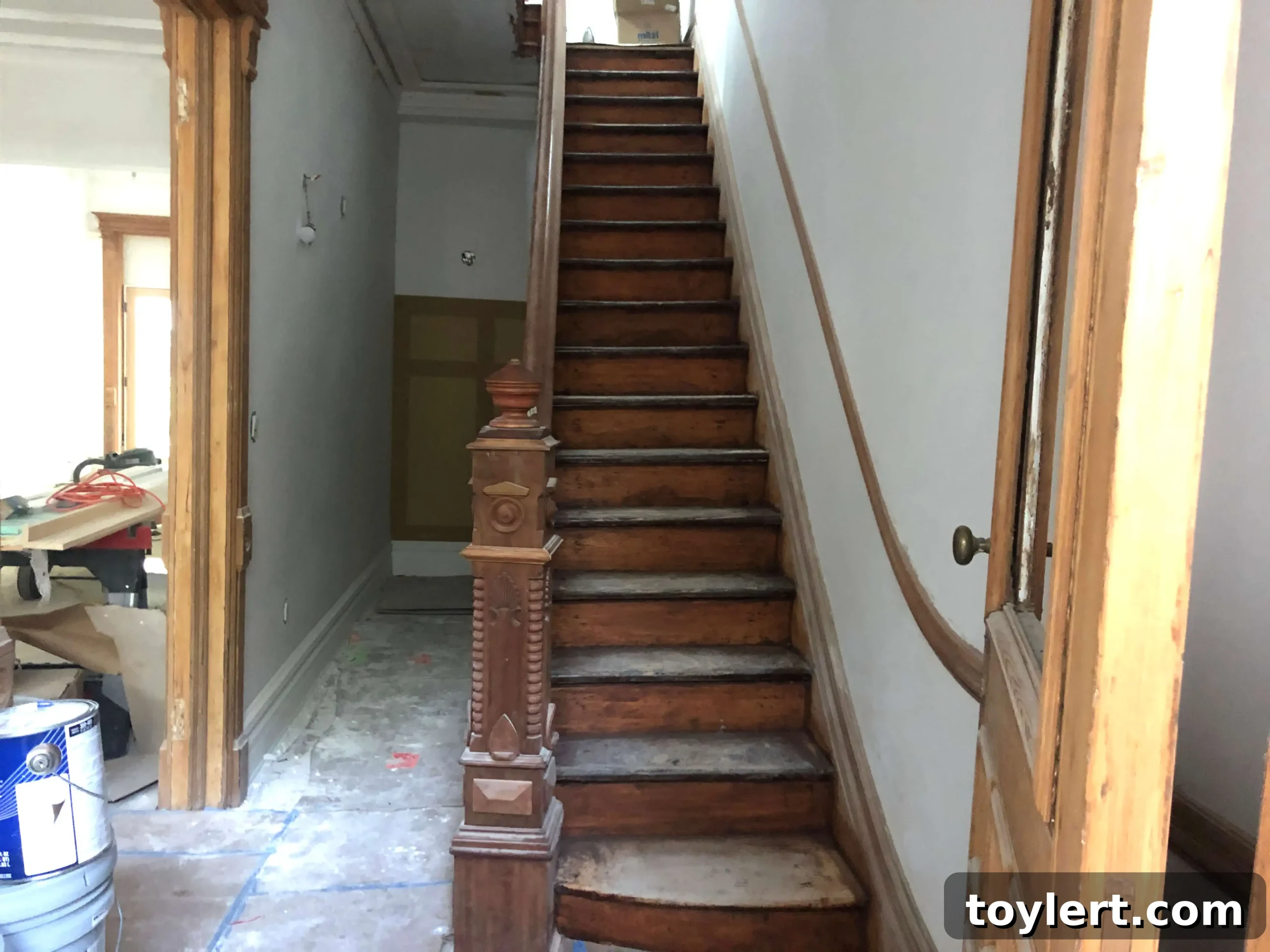
The Enduring Charm and Significance of Brownstone Staircases
In a historic brownstone, the staircase is far more than a functional connector between floors; it is the architectural heart and soul of the home. Often the first element guests encounter upon entry, it sets the tone for the entire residence, reflecting its age, craftsmanship, and original grandeur. These magnificent structures, typically crafted from rich, durable hardwoods, are masterpieces of period design, featuring intricate newel posts, gracefully turned balusters, broad treads, and detailed risers. They are the silent witnesses to generations of life within these walls, bearing the subtle marks of history.
For us, restoring our brownstone’s staircase was not merely a repair job; it was an act of reverence for the past and an investment in the future character of our home. These stairs are the vertical spine, orchestrating movement and light throughout the levels. Their condition significantly impacts the overall aesthetic and perceived value of a brownstone. A beautifully restored staircase can elevate an entire interior, breathing new life into forgotten elegance and creating a stunning focal point that draws the eye upwards.
Our Journey to Revive History: The Detailed Stair Restoration Process
The decision to undertake a full stair restoration is never taken lightly. It demands patience, precision, and a deep appreciation for the artistry of yesteryear. Our journey began with a thorough assessment of the existing staircase. Years of wear and tear, coupled with numerous layers of paint and varnish applied over decades, had obscured the original beauty of the wood. We identified areas of structural weakness, splintered treads, chipped risers, and a few missing balusters, all contributing to a staircase that had lost much of its former glory.
Assessment and Preparation: Unveiling the Past
The initial phase involved extensive preparation. Stripping away the accumulated layers of old finishes was perhaps the most labor-intensive part. We employed a combination of heat guns, chemical strippers (used with extreme caution and proper ventilation), and countless hours of scraping and scrubbing. This painstaking process slowly revealed the beautiful, often unexpected, grain of the original hardwood underneath – a hidden treasure waiting to be rediscovered. Simultaneously, we meticulously cleaned every crevice, removing decades of dirt and debris that had settled into the intricate carvings and joints.
Following the stripping, structural integrity became our top priority. We reinforced any loose newel posts, tightened wobbly balusters, and addressed any creaking or bowing treads. Minor repairs involved using high-quality wood filler for small imperfections and carefully patching larger damaged sections with matching wood to ensure a seamless blend. This stage is crucial, as a beautiful finish can only truly shine on a solid and stable foundation. Every repair was approached with the goal of preserving as much original material as possible, staying true to the staircase’s historical context.
The Art of Sanding: Achieving a Flawless Canvas
With the structure sound and old finishes removed, the real artistry of preparation began: sanding. This multi-stage process is vital for achieving a smooth, even surface that will properly absorb stain and allow the finish to adhere flawlessly. We started with coarser grits to address any remaining imperfections or stubborn patches, gradually moving to finer grits – typically 80, 120, 150, and finally 220. Each pass with a finer grit smoothed out the scratches left by the previous one, preparing the wood to take on a beautiful, uniform finish.
Sanding a staircase is particularly challenging due to its complex geometry. Reaching every nook and cranny – the tight angles of the risers, the curves of the handrail, the delicate details of the balusters – required a variety of tools, from orbital sanders for flat surfaces to detail sanders and hand-sanding for intricate areas. Dust management was also a significant consideration, as fine wood dust can permeate every corner of a renovation site. We utilized industrial vacuums and sealed off adjacent rooms to minimize spread.
Finishing Touches: Stain and Sealant Selection
Choosing the right stain was a pivotal design decision. We carefully considered the brownstone’s overall aesthetic, the natural light in the entryway, and our desire to either match an imagined original finish or complement our planned interior palette. After testing several samples on inconspicuous areas of the wood, we settled on a rich, warm tone that beautifully enhanced the natural grain without overpowering it. The stain was meticulously applied, ensuring an even coat across all surfaces, allowing the wood’s inherent character to shine through.
The final layer of protection came in the form of a durable sealant. For high-traffic areas like stairs, robustness is key. We opted for a high-quality, oil-based polyurethane, known for its exceptional wear resistance and ability to create a deep, lustrous finish. We applied multiple thin coats, allowing adequate drying time between each, and lightly sanding with a very fine grit (e.g., 320 or 400) after the first few coats to ensure optimal adhesion and a silky-smooth feel. The application itself required precision, avoiding drips and ensuring a consistent sheen across all components – from the broad treads to the slender balusters and the expansive handrail.
Beyond the Treads: Balusters and Newel Posts
While the treads and risers form the functional core of the staircase, the banister system – comprising the newel posts, balusters, and handrail – provides much of its decorative flair and structural integrity. Our restoration extended to these elements with equal care. We painstakingly stripped layers of paint from the intricately turned balusters, revealing their original wood. Any broken or missing balusters were either repaired or custom-milled to match the existing ones precisely, ensuring historical accuracy.
The stately newel posts, often the grand anchors of the staircase, also received special attention. Their often more ornate carvings required delicate cleaning and repair. The handrail, crucial for both safety and aesthetics, was smoothed and finished to a tactile perfection, inviting a confident grasp. In some brownstones, brass or other metal elements might adorn the newel posts or balusters, requiring specialized cleaning and polishing to restore their original gleam.
Overcoming Obstacles: Challenges and Triumphs
No large-scale renovation project is without its unique set of challenges, and stair restoration is certainly no exception. The sheer physical demands of crouching, sanding, and applying finishes in confined spaces can be exhausting. The time investment is substantial, often stretching over weeks as each layer dries and cures. Unexpected structural damage, hidden under years of superficial repairs, can also throw a wrench into the timeline and budget.
However, the triumphs far outweigh the tribulations. Seeing the magnificent wood grain emerge, feeling the smooth, polished surface underfoot, and witnessing the transformation from dilapidated to dazzling is profoundly rewarding. Each restored baluster and shining tread is a testament to perseverance and a rekindled appreciation for the craftsmanship of a bygone era. It transforms the feeling of the home, inviting residents and guests alike to appreciate the beauty and history underfoot.
A Significant Leap Forward: The Impact on Our Bed Stuy Brownstone
The completion of the stair restoration marks a truly significant turning point in our Bed Stuy brownstone renovation. It’s more than just a functional upgrade; it’s a visible symbol of progress, a grand statement piece that instantly elevates the entire entryway and beyond. Walking on these newly restored stairs for the first time was an emotional experience, offering a tangible connection to the home’s rich past while firmly grounding us in its vibrant future. The once-weary staircase now feels robust, elegant, and ready to welcome countless new memories.
This milestone invigorates our spirits and fuels our motivation for the remaining phases of the project. With the “spine” of the home beautifully restored, we can now confidently move forward with other critical elements, such as laying the final flooring on each level, applying the finishing coats of paint, and installing fixtures. The stairs, now a beacon of restored glory, guide our vision for the entire interior design, ensuring every new addition complements and enhances the home’s revitalized historic charm. Our Bed Stuy brownstone is steadily evolving into the stunning, timeless residence we’ve always envisioned.